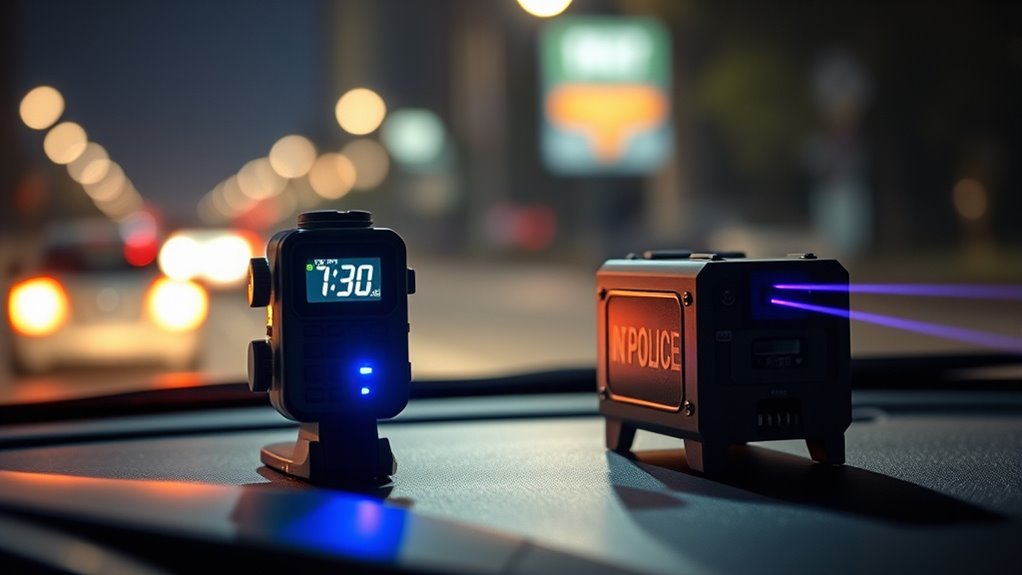

Police use radar and lidar to catch speeders, with radar bouncing radio waves off your vehicle and lidar sending laser pulses to target specific cars. Radar can monitor multiple vehicles at once, but is more prone to interference, while lidar offers precise, focused readings. Trying to evade detection with jammers or hiding won’t help, as technology keeps improving. To understand the full picture of how these devices work and what you can do, keep exploring further.
Key Takeaways
- Radar uses radio waves and Doppler effect to measure vehicle speed, capable of monitoring multiple targets simultaneously.
- Lidar employs laser pulses to target specific vehicles for precise speed measurement, offering quick and accurate readings.
- Radar is more susceptible to electronic interference, while lidar provides high precision and is harder to evade.
- Drivers can attempt to counter radar with jammers or hiding, but these are illegal; lidar’s targeted approach makes evasion difficult.
- Understanding both devices helps drivers drive responsibly and stay within legal speed limits to avoid penalties.
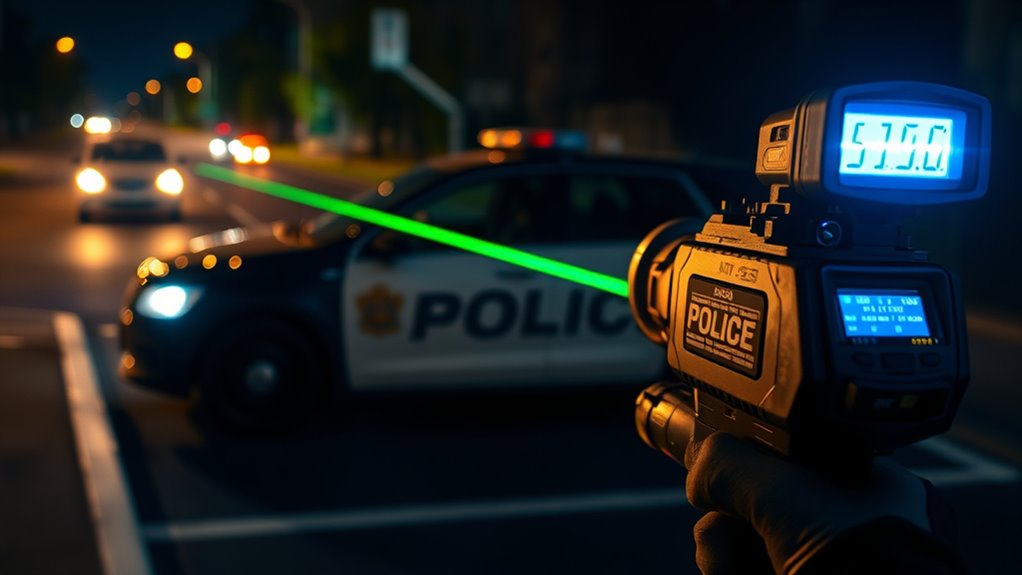
When it comes to catching speeders, police officers rely on two primary tools: radar and lidar. These devices are essential for speed detection, enabling law enforcement to identify vehicles exceeding speed limits quickly and accurately. Radar uses radio waves to measure the speed of moving vehicles by bouncing signals off the target and analyzing the frequency shift—known as the Doppler effect. Lidar, on the other hand, employs laser beams to pinpoint a vehicle’s speed. It sends out quick pulses of laser light and measures the time it takes for the reflections to return, calculating the vehicle’s speed with high precision. Both tools are crucial in law enforcement’s efforts to maintain road safety, but they operate differently and offer distinct advantages.
Police rely on radar and lidar for quick, accurate speed detection—each with unique advantages in maintaining road safety.
Radar guns are generally easier to use and can monitor multiple vehicles at once, making them popular among law enforcement officers. They can be handheld or mounted on patrol cars, providing quick readings from a distance. Radar tends to be more susceptible to interference from other electronic devices or environmental factors like rain and traffic. Lidar, however, offers a more targeted approach. Its laser beam can be aimed precisely at a specific vehicle, making it harder for drivers to evade detection. Because lidar measurements are very precise and quick, law enforcement often relies on it for accurate speed enforcement, especially in areas with high traffic density or where precise speed readings are necessary. Understanding the different technologies behind radar and lidar can help drivers better grasp their capabilities and limitations.
As a driver, knowing how these devices work can help you understand the legal landscape better. Many drivers attempt to counter these speed detection devices by using techniques like jamming devices or trying to hide their speed from view. However, law enforcement agencies continually update their technology, and using jammers is illegal in many jurisdictions. Attempting to evade detection with such methods can result in hefty fines or legal trouble. The best approach is always to follow traffic laws and drive within the speed limit. Recognizing that police use both radar and lidar to enforce laws helps you stay aware of your speed and avoid unintentional violations.
Ultimately, whether law enforcement employs radar or lidar, both are effective tools for maintaining safe roads by accurately measuring vehicle speeds. If you’re ever pulled over, understanding how these devices work can help you better grasp the situation. Staying within legal speed limits not only keeps you safe but also helps you avoid the hassle and penalties associated with speeding violations. While some drivers try to find ways to beat speed detection, the most reliable and legal approach remains simply to obey traffic laws and drive responsibly.
Frequently Asked Questions
Can Police Radar or Lidar Be Detected by Drivers?
Yes, you can detect police radar and lidar. Radar detection involves using devices that alert you when radar signals are active nearby, so you can slow down. Lidar detection is trickier, but some specialized detectors can sense the laser pulses. Keep in mind, however, that detection isn’t foolproof—radar detection is more common, whereas lidar detection may require advanced equipment, and some police use techniques to avoid detection altogether.
Are There Legal Limits on Using Radar or Lidar Detectors?
A stitch in time saves nine, so knowing the laws helps. You should know that legal restrictions vary by state regarding detector legality. In many areas, using radar or lidar detectors is illegal, especially in commercial vehicles or certain jurisdictions. Always check local laws before installing or using detectors, as violating them could lead to fines or other penalties. Stay informed to avoid unintended legal trouble while driving.
Do Weather Conditions Affect the Accuracy of Speed Guns?
Weather conditions and environmental factors can definitely affect the accuracy of speed guns. Rain, fog, snow, or strong winds can cause weather interference, making radar or lidar readings less precise. These elements may scatter or absorb the signals, leading to potential inaccuracies. As a driver, be aware that adverse weather might impact how police measure your speed, but it’s still best to obey posted limits regardless of environmental conditions.
How Quickly Can Police Officers Switch Between Radar and Lidar?
Police officers can switch between radar and lidar quickly, often within seconds, thanks to their training and experience. Proper speed gun calibration guarantees accuracy in this process. Well-trained officers know when to change devices based on traffic conditions and legal requirements. This quick switch helps maximize accuracy and efficiency during speed enforcement. Your best defense is understanding that officers are trained to use both tools effectively and precisely.
Are There Any Recent Technological Advancements in Speed Detection?
Recent speed detection innovations include advanced radar technology updates that improve accuracy and range, making it harder for drivers to evade detection. Newer lidar systems incorporate rapid scanning and adaptive targeting, enhancing precision. Some law enforcement agencies now use hybrid systems combining radar and lidar, providing versatile speed enforcement. Staying aware of these technological advancements helps you better understand how speed is monitored and how authorities are improving their detection methods.
Conclusion
Remember, knowledge is power when it comes to speed detection. While police radar and lidar each have their strengths, understanding how they work can help you stay aware and prepared. Keep in mind that honesty is the best policy—obeying speed limits keeps everyone safe. As the saying goes, “Forewarned is forearmed.” Stay informed, drive responsibly, and you’ll navigate the roads more confidently, knowing you’ve got the facts on your side.