
Car alarm systems safeguard your vehicle from theft and vandalism by combining basic horns with advanced features like remote sensors and GPS alerts. You can deter criminals with loud sirens, while sensors detect movement or tampering around your car. Proper installation guarantees these systems work accurately, providing real-time alerts to your phone if your vehicle is at risk. To understand how these layers of security work together, keep exploring the details below.

Get business pricing on garage and car supplies
- Business-only prices and quantity discounts
- Tax-exempt purchasing
- Multiple users, one account, clear invoices
Key Takeaways
- Basic alarm systems use horns and sirens to deter thieves and alert owners of potential threats.
- Remote sensors detect movement or environmental changes around the vehicle, triggering alarms when suspicious activity occurs.
- Proper placement and professional installation ensure sensors work accurately, minimizing false alarms and missed alerts.
- Modern systems incorporate GPS tracking and real-time alerts for location updates and theft recovery.
- Effective alarm systems combine sensors, sirens, lights, and smart technology to provide comprehensive vehicle security.

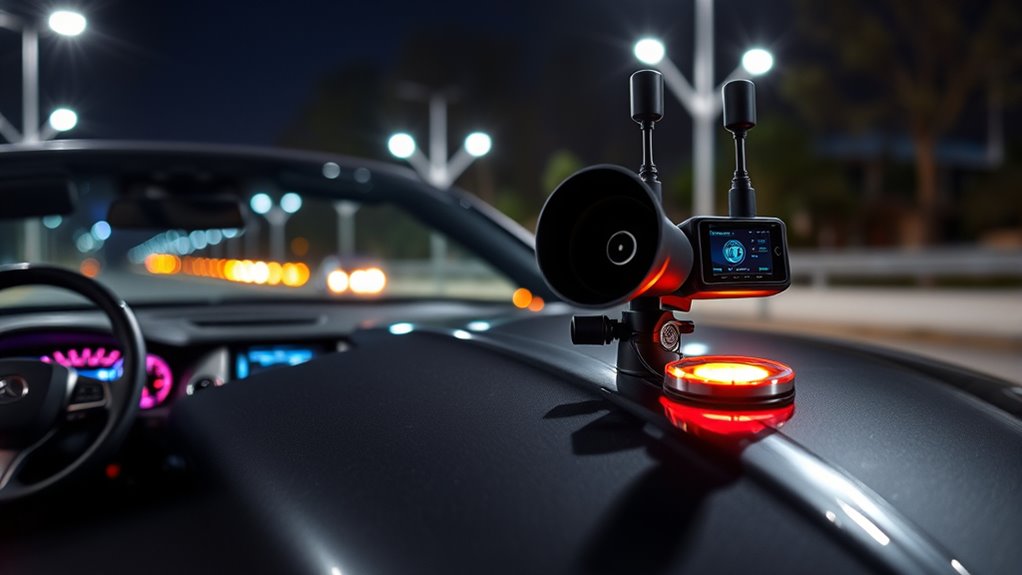
A car alarm system is an essential security feature that helps protect your vehicle from theft and vandalism. When you install an alarm system, you’re taking proactive steps to deter potential intruders and safeguard your investment. One of the key components involved in effective alarm systems is the use of remote sensors, which detect movement or changes in the vehicle’s surroundings. These sensors are strategically placed around your car to monitor for any suspicious activity, such as someone trying to break in or tamper with the vehicle. When a remote sensor detects an abnormality, it triggers the alarm, alerting you and anyone nearby that something’s amiss. This immediate response can scare off thieves before they get a chance to succeed.
Alarm installation is a vital step in ensuring your security system works seamlessly. Proper installation guarantees that the remote sensors are correctly positioned and that the entire system functions as intended. If the sensors aren’t placed correctly, they might not detect intrusions accurately, leading to false alarms or, worse, missed alerts. Professional installation is often recommended because technicians understand how to integrate sensors with your vehicle’s electronics without causing interference or malfunctions. During installation, they’ll also configure the alarm system to respond appropriately to sensor triggers, whether that means activating a siren, flashing lights, or sending alerts to your mobile device.
Proper sensor placement and professional installation ensure your alarm system functions effectively.
Modern alarm systems go beyond simple sirens; many now include features like GPS alerts that notify you of your vehicle’s location if it’s stolen or tampered with. These systems often work in conjunction with remote sensors, providing a layered approach to security. For example, if someone tries to tow or move your car without your permission, the GPS alert kicks in, sending real-time location updates to your phone. This advanced feature allows you to act quickly, whether that means contacting authorities or tracking down your vehicle yourself. The integration of remote sensors with GPS and other smart technologies makes modern car alarm systems more dependable and responsive than ever before.
In essence, a well-installed alarm system using remote sensors offers peace of mind by actively monitoring your vehicle and providing instant alerts. Whether it’s a simple horn activation or sophisticated GPS tracking, these features work together to keep your car safe. Choosing the right system and ensuring it’s properly installed means you’re always one step ahead of potential threats. With the right security setup, you can confidently leave your vehicle knowing that it’s protected by a system designed to detect, alert, and prevent theft or vandalism at every turn. Proper integration of industry trends ensures your alarm system remains effective and up-to-date with current security innovations.
Frequently Asked Questions
Can Alarm Systems Be Hacked or Bypassed?
Yes, alarm systems can be hacked or bypassed. Thieves might use remote disabling techniques to turn off alarms or employ signal jamming to block communication between the alarm and your key fob or monitoring service. To protect your vehicle, choose advanced systems with anti-jamming features and keep your software updated. Stay vigilant, and consider additional security measures like GPS alerts for added protection.
What Is the Average Cost of Installing a Car Alarm?
You’ll typically spend between $200 and $500 on installing a car alarm, depending on the system’s features. To get the best deal, compare costs and consider installation factors like vehicle make, model, and whether you opt for a basic or advanced system. Professional installation guarantees proper setup, which can influence price. Keep in mind, investing in quality may save you money on repairs or theft prevention later.
Do All Insurance Companies Offer Discounts for Alarm Systems?
Not all insurance companies offer discounts for alarm systems, but many do if your alarm meets their policy requirements. You should check with your insurer to see if installing a certified alarm system qualifies you for insurance discounts. Keep in mind that policy requirements vary, so verify your alarm system is compatible and properly installed to maximize potential savings on your premiums.
How Often Should a Car Alarm System Be Maintained?
You should maintain your car alarm system at least once a year to guarantee alarm system longevity. Follow a proper maintenance schedule by checking the batteries, sensors, and wiring regularly. If your alarm system shows signs of malfunction, get it inspected immediately. Regular upkeep prevents false alarms and keeps your system working effectively, giving you peace of mind and protecting your vehicle better over time.
Are There Legal Restrictions on Installing Certain Alarm Features?
You should check local laws before installing alarm feature regulations, as legal restrictions vary by area. Some places restrict loud alarms to prevent noise pollution, while others regulate GPS tracking to protect privacy. You need to understand alarm feature regulations, comply with noise ordinances, and respect privacy laws. By doing so, you avoid fines, legal issues, and ensure your security system is both effective and lawful, keeping your vehicle safe and compliant.
Conclusion
Now that you know the ins and outs of car alarm systems, you’re better equipped to protect your vehicle. Think of these alarms as your car’s loyal guardian, always watching over it like a hawk. Whether it’s a simple horn or a high-tech GPS alert, each system plays a crucial role in keeping your car safe. With the right alarm in place, you can rest easy knowing your vehicle is shielded from trouble, like a fortress in an ever-changing battle.
Fall Picks
fall essentials
As an affiliate, we earn on qualifying purchases.