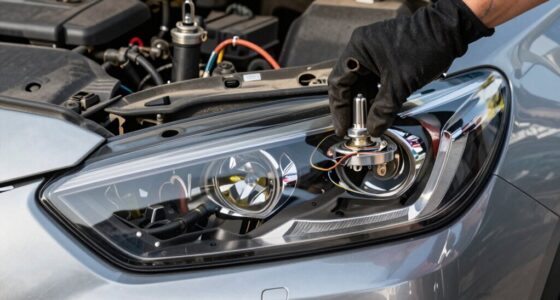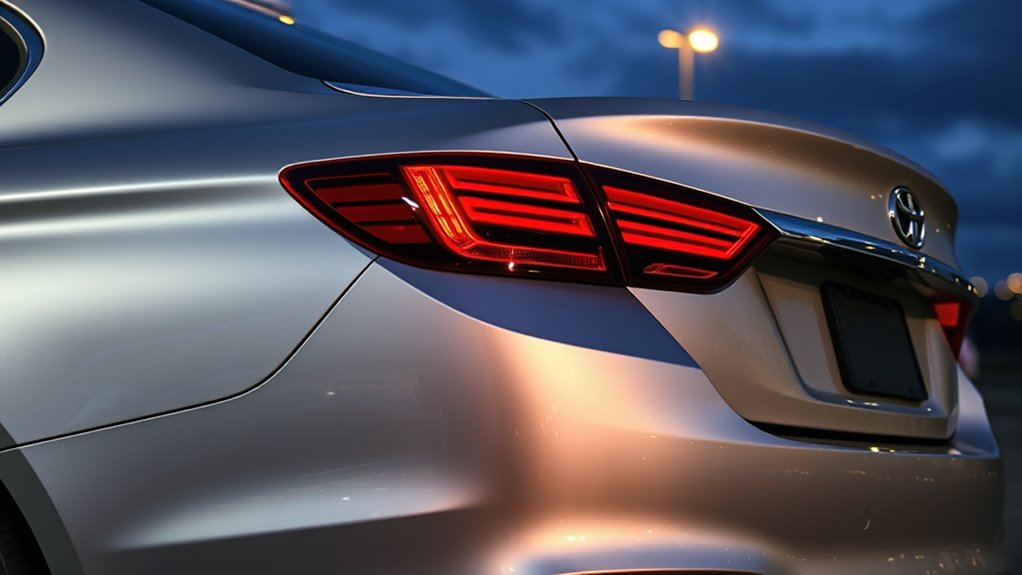

Tinting your taillights can give your vehicle a sleek, customized look, but it’s important to consider safety and legality first. Darker lights can reduce visibility for other drivers, especially at night or in bad weather, and may violate local laws or inspection standards. Always check your area’s tint regulations and choose high-quality, properly installed film to ensure safety and durability. If you want to make a smart, stylish choice without risking fines or safety issues, keep exploring the factors to consider.

Get business pricing on garage and car supplies
- Business-only prices and quantity discounts
- Tax-exempt purchasing
- Multiple users, one account, clear invoices
Key Takeaways
- Dark tinted taillights can enhance vehicle appearance but may reduce visibility, especially at night or in poor weather conditions.
- Legal tint limits vary by region; exceeding them can result in fines, vehicle inspection failures, or safety issues.
- Proper installation with high-quality film and careful application ensures durability and maintains safety standards.
- Overly dark tints can hinder other drivers’ ability to see brake signals, increasing the risk of accidents.
- Always research local regulations and test visibility before applying dark tints for a safe, compliant upgrade.

Tinted taillights have become a popular way to give your vehicle a sleek, customized look. They can instantly make your car stand out and add a touch of personal style. However, before you decide to darken your taillights, it’s important to consider the potential legal implications. Many states and countries have specific laws regarding the tint percentage allowed on taillights. If you go too dark, you risk getting pulled over, receiving fines, or even having your vehicle inspected and required to remove the tint. To avoid these issues, research your local regulations thoroughly. Understanding the legal limits helps you make an informed decision and ensures your vehicle stays compliant with traffic laws.
When it comes to installing tinted taillights, proper installation tips can make a significant difference in both appearance and safety. First, choose high-quality tint film designed specifically for automotive use. Cheaper, low-grade films may bubble, peel, or fade over time, compromising both look and function. Before applying the tint, clean the taillights thoroughly to remove dirt, wax, and grease. Any residue can cause bubbles or uneven application. Use a spray bottle with a soapy water solution to help position the film smoothly and prevent air bubbles. Carefully align the tint sheet, ensuring it covers the entire surface without overlapping edges, and then use a squeegee or a plastic card to press out any air pockets. Trim excess film with a sharp blade for a clean finish.
Another key tip for installation is to heat the film slightly with a heat gun or hairdryer during application. This makes the tint more pliable, allowing you to conform to curves and contours better. After installation, allow the tint to cure for at least 24 hours before exposing it to water or washing the vehicle. This prevents peeling and ensures the tint adheres firmly. Keep in mind, the darker the tint, the more challenging it might be to see through at night or in poor weather conditions, which can impact safety. Always test your tinted taillights after installation by checking their brightness and visibility in different lighting conditions. Additionally, proper installation techniques can help ensure your tint remains effective and safe over time.
automotive tint film for taillights
As an affiliate, we earn on qualifying purchases.
As an affiliate, we earn on qualifying purchases.
Frequently Asked Questions
Are Tinted Taillights Legal in All States?
No, tinted taillights aren’t legal in all states. You need to check your state’s regulations because each state has different rules regarding tint color restrictions and visibility requirements. Some states allow certain tint shades if they meet specific standards, while others ban tinted taillights altogether. Make sure to research your local laws before darkening your lights to avoid fines or safety issues.
How Do Tinted Taillights Affect Vehicle Resale Value?
Tinted taillights can negatively impact your vehicle’s resale value because they often lead to resale depreciation. Buyers might hesitate to purchase a car with darkened lights, fearing potential safety or legal issues. This hesitation can reduce your car’s appeal, making it harder to sell and possibly lowering its market value. If you’re considering tinting, weigh these factors carefully to avoid long-term financial drawbacks.
Can Tinted Taillights Cause Insurance Issues?
Tinted taillights can cause insurance issues if they obscure your lights and lead to legal compliance problems. If you’re involved in an accident, insurance claims might be denied or delayed if your taillights aren’t compliant with local laws. Always check your state’s regulations before tinting, and consider that non-compliant modifications could increase liability and affect your coverage. Staying within legal limits helps make certain of smooth insurance claims and safer driving.
Do Tinted Taillights Improve or Hinder Visibility?
Tinted taillights tend to hinder visibility rather than help it. While they offer aesthetic enhancement and satisfy your desire for customization options, darkened lights can obscure signals, making it harder for other drivers to see your brake or turn signals. This reduction in visibility increases risks on the road, so always weigh style against safety. Prioritize clear, bright lights to keep yourself and others safer and more seen.
How Long Does the Tint Film Last Before Replacement?
The tint film on your taillights typically lasts about 3 to 5 years, depending on your climate and how well you maintain it. To maximize durability lifespan, regularly clean and inspect the tint for signs of peeling or fading. Proper tint maintenance, like avoiding harsh chemicals and parking in shaded areas, helps extend its life. Expect to replace the tint when it starts to bubble, peel, or markedly fade for safety reasons.
high-quality car taillight tint kit
As an affiliate, we earn on qualifying purchases.
As an affiliate, we earn on qualifying purchases.
Conclusion
While tinted taillights might look sleek, they can compromise your visibility and safety on the road. Experts say darkening your lights could make it harder for others to see your signals, especially in bad weather or at night. Before you decide, consider local laws and weigh the style against safety. Remember, a stylish car is great, but staying visible and safe should always come first. Think twice—your safety depends on it.
automotive heat gun for tint application
As an affiliate, we earn on qualifying purchases.
As an affiliate, we earn on qualifying purchases.
car taillight visibility testing tool
As an affiliate, we earn on qualifying purchases.
As an affiliate, we earn on qualifying purchases.
Fall Picks
fall essentials
As an affiliate, we earn on qualifying purchases.