If your LED headlights are flickering or causing radio buzz, start by checking all wiring connections for looseness or damage, and clean any corrosion on connectors. Make sure the ballast matches your vehicle’s specs and isn’t incompatible. Proper grounding and shielding wiring can also reduce interference. If problems persist, trying different adapters or replacing the ballast might help. Continued guidance will help you master troubleshooting these issues effectively.

Get business pricing on garage and car supplies
- Business-only prices and quantity discounts
- Tax-exempt purchasing
- Multiple users, one account, clear invoices
Key Takeaways
- Check and secure all wiring connections; repair or replace damaged wires to prevent flickering.
- Ensure ballast compatibility with your LED headlights; replace incompatible units with proper, quality ones.
- Clean corrosion from connectors and verify proper grounding to reduce electrical noise and radio interference.
- Use noise filters, ferrite beads, or shielded wiring to minimize radio buzz caused by electromagnetic interference.
- Follow manufacturer installation instructions carefully and test headlights with different power sources to identify issues.
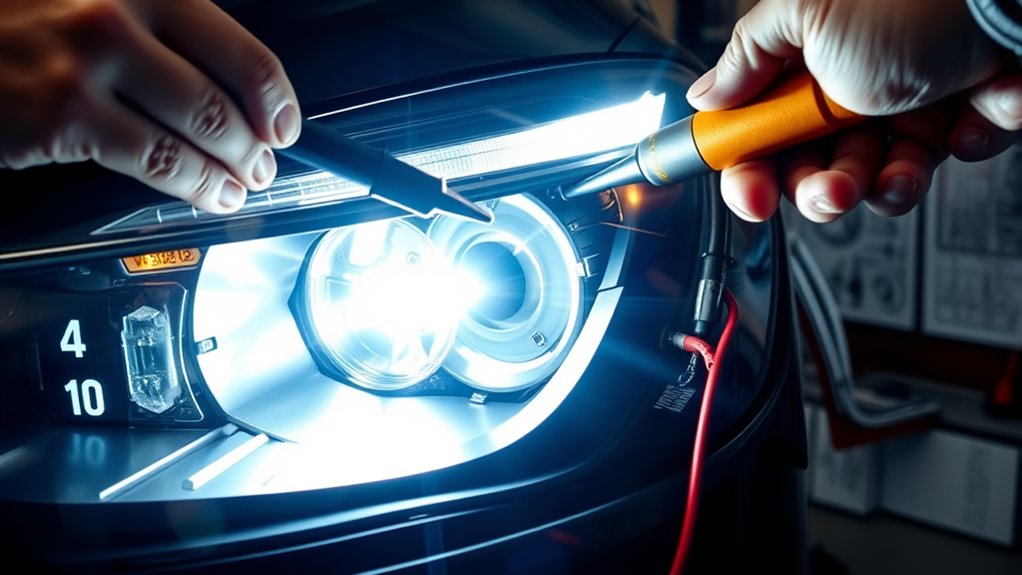
LED headlights are popular for their brightness and energy efficiency, but they can sometimes develop issues that impair their performance. One common problem you might encounter is flickering, which can be caused by wiring issues or ballast compatibility problems. If your headlights flicker intermittently, start by inspecting the wiring. Loose or damaged wires can disrupt the electrical flow, leading to inconsistent illumination. Make sure connectors are secure and that there are no frayed or broken wires. Sometimes, corrosion at the connectors can also cause poor contact, so clean them thoroughly and reconnect.
Ballast compatibility is another critical factor. LED headlights rely on ballasts or drivers to regulate power. If the ballast isn’t compatible with your LED bulbs, it can cause flickering or even complete failure. Check your vehicle’s specifications to ensure the ballast matches the LED headlights you installed. If you’ve upgraded from halogen or HID bulbs, your existing ballast might not be suitable, which can result in flickering or radio interference. Consider replacing the ballast with one designed specifically for your LED setup to guarantee proper function.
Beyond flickering, radio buzz or interference can also stem from wiring issues or incompatible ballasts. When your radio emits static whenever your headlights are on, it’s often because the electrical system is picking up interference. Verify that all wiring is properly shielded and grounded. Proper grounding minimizes electromagnetic interference that can cause radio buzz. If you notice persistent issues, installing a noise filter or ferrite bead around the wiring can help reduce interference and improve audio clarity.
Sometimes, improper installation can cause these issues right out of the box. Double-check that your LED headlights are correctly mounted and wired according to the manufacturer’s instructions. Avoid over-tightening connections, which can damage wiring or connectors. If you’ve recently added wiring adapters or extension cables, ensure they are rated for automotive use and compatible with your LED system. Using incompatible or low-quality adapters can lead to electrical noise, flickering, or even damage.
Additionally, European cloud solutions are increasingly being adopted in automotive electronics to improve reliability and reduce electromagnetic interference, which can help mitigate issues like radio buzz. Finally, if you’re still experiencing issues, it’s worth testing your headlights with a different power source or vehicle. This helps identify whether the problem lies in your current wiring setup or the headlights themselves. In many cases, resolving wiring issues and ensuring ballast compatibility can restore your LED headlights to full, flicker-free performance. Staying vigilant about electrical connections and matching components properly ensures your headlights shine brightly and reliably, avoiding unnecessary frustrations on the road.
Products Worth Considering

DEWALT 20V MAX XR Impact Driver, 1/4 Inch High Torque Brushless 3-Speed Cordless with LED Light, Extended Runtime (DCF845B)

DEWALT 20V MAX Cordless 1/2-Inch Impact Wrench Kit (DCF900P1)

Milwaukee M18 FUEL 18V Lithium-Ion Brushless Cordless 1 in. Impact Wrench Extended Reach D-Handle Kit with Two 12.0 Ah Batteries
As an affiliate, we earn on qualifying purchases.
Frequently Asked Questions
Can I Upgrade to Brighter LED Headlights Easily?
Yes, you can upgrade to brighter LED headlights easily. Just compare lumens to find a higher brightness option, guaranteeing it’s compatible with your vehicle. When installing, follow these tips: check your current bulb size, ensure proper fit, and avoid wiring issues. A straightforward upgrade boosts visibility and safety, but always verify that the new LEDs meet local regulations to prevent glare or legal trouble.
How Long Do LED Headlights Typically Last?
LED headlights typically last between 30,000 to 50,000 hours, giving you a long lifetime expectancy. You’ll find they require minimal maintenance, mainly ensuring proper installation and occasional cleaning. Since LEDs are durable and resistant to vibration, they tend to outlast traditional halogens. To maximize their lifespan, avoid frequent on-off cycling and keep electrical connections secure. With proper care, your LED headlights should serve you reliably for many years.
Are LED Headlights Legal in All States?
LED headlights are not legal in all states, as state regulations vary. You need to check your local laws to guarantee compliance, since legality concerns often revolve around brightness, color, and proper installation. Some states require specific DOT approval or restrict modifications. Ignoring these regulations can lead to fines or failed inspections. Always verify your state’s rules before upgrading to LED headlights to avoid legal issues and ensure safe, legal driving.
What Is the Average Cost to Repair Flickering LEDS?
Flickering LEDs can pinch your pocket, with average repair costs ranging from $50 to $150 depending on the problem. You might opt for simple repair options like replacing a faulty driver or adjusting wiring, which are budget-friendly, or choose more extensive fixes like upgrading entire headlight assemblies. Expect to pay more for professional service, but addressing flicker promptly keeps your headlights shining brightly and safely on the road.
Do LED Headlights Require Special Wiring or Adapters?
LED headlights generally don’t require special wiring, but you should check wiring requirements for your vehicle and the LED kit. Many LED headlights need adapters to guarantee compatibility with your existing wiring system. Confirm that your adapters match your headlight model and connector type to avoid issues. Proper wiring and compatible adapters help prevent flickering, radio buzz, and other problems, ensuring your LED headlights work smoothly and reliably.
Conclusion
Now that you’ve tackled flickering, radio buzz, and other LED headlight issues, you’re practically a lighting wizard! Remember, a small tweak can often save you from a car’s blackout scene or a radio meltdown. With patience and the right tools, you’ll keep your headlights shining brighter than a supernova. Don’t let electrical gremlins dim your drive—conquer these problems and enjoy a safer, smoother ride every time.