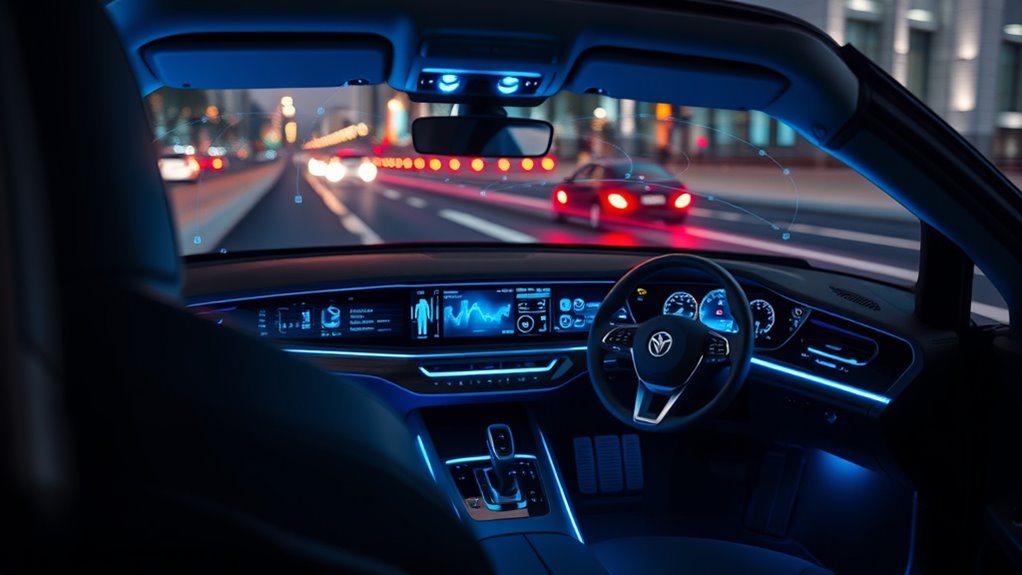

The future of car safety is full of innovations that could save your life. Autonomous vehicles will reduce human error by detecting obstacles, reading traffic signals, and making quick decisions. Connected traffic systems will communicate with your car to anticipate hazards and improve traffic flow. Advanced materials will boost crash protection and vehicle durability. Plus, stronger cybersecurity measures will keep your car safe from hackers. Keep exploring to discover how these technologies will transform road safety for everyone.
Key Takeaways
- Autonomous vehicles reduce human error, enhancing safety with sensors, cameras, and advanced decision-making algorithms.
- Connected traffic systems enable vehicles to communicate proactively, anticipating hazards before they occur.
- Continuous cybersecurity measures, including encryption and software updates, protect vehicles from hacking threats.
- Material innovations like nanotechnology improve vehicle durability and collision safety features.
- Evolving regulations and infrastructure support smarter, faster-reacting vehicles, shifting safety focus from reactive to proactive measures.

Ever wondered what the future holds for car safety? The answer is packed with exciting innovations, especially with the rise of autonomous vehicles. These driverless cars are designed to reduce human error, which is responsible for most accidents today. Instead of relying on human reflexes and judgment, autonomous vehicles use a complex network of sensors, cameras, and advanced algorithms to navigate roads safely and efficiently. They can detect obstacles, read traffic signals, and make split-second decisions that keep you safe. As these vehicles become more common, you’ll likely notice fewer accidents, less traffic congestion, and improved road safety overall. But with this technological leap comes the critical need for robust vehicle cybersecurity. Autonomous vehicles depend heavily on software and connectivity, making them prime targets for cyberattacks. If hackers gain control of these cars, the consequences could be disastrous. That’s why vehicle cybersecurity has become a top priority in the development of future car safety tech. Manufacturers are investing in encryption, secure communication protocols, and continuous software updates to protect vehicles from cyber threats. You’ll want your vehicle to have the latest security measures in place to prevent unauthorized access and guarantee your safety on the road. The future of car safety isn’t just about the vehicles themselves but also about how well they’re protected from digital threats. This integration of cybersecurity measures will be crucial in maintaining the trust and safety of autonomous vehicle technology. Additionally, as these cars get smarter, they’ll communicate more with each other and with infrastructure, creating a connected and intelligent traffic system that can anticipate and respond to potential hazards before they happen. This connected network will help reduce accidents and improve traffic flow, making your daily commute safer and less stressful. Moreover, advancements in nanotechnology could lead to the development of smarter, more durable materials for vehicle safety systems, further enhancing protection during collisions. However, the shift to autonomous vehicles and enhanced cybersecurity isn’t without challenges. Regulations, standards, and infrastructure updates need to keep pace with technological developments. Still, the direction is clear: future car safety will be more about proactive prevention than reactive responses. You’ll benefit from vehicles that not only see further and react faster but also stay protected from cyber threats that could compromise their safety. As these innovations unfold, your role as a driver might shift from actively controlling the vehicle to trusting in its smarter, safer systems that are designed to keep you protected every mile of the way.
Frequently Asked Questions
How Will AI Influence Driver Decision-Making in Emergencies?
AI will substantially influence your decision-making in emergencies by enhancing your human intuition with advanced machine learning algorithms. These systems analyze real-time data, predict potential hazards, and suggest ideal actions faster than you could on your own. As a result, you’ll receive timely alerts and guidance, helping you make smarter choices swiftly. This collaboration between human intuition and AI technology aims to improve safety and reduce accident risks during critical moments.
What Ethical Dilemmas Arise With Autonomous Vehicle Decision Algorithms?
You face ethical dilemmas with autonomous vehicle decision algorithms, especially around moral programming and liability attribution. You might wonder who’s responsible when an unavoidable accident occurs—should the car prioritize passenger safety or pedestrian lives? These moral programming decisions challenge manufacturers to balance ethical considerations, while liability attribution raises questions about accountability, insurance, and legal consequences. Maneuvering these dilemmas requires careful thought about ethics, responsibility, and technology’s role in life-and-death situations.
How Secure Are the New Safety Technologies From Cyberattacks?
Think of new safety tech as a fortress guarding your ride, but even castles face breaches. Cybersecurity vulnerabilities threaten these systems, risking hackers breaking in like digital bandits. While manufacturers work tirelessly to patch data privacy gaps, no system is completely invulnerable. You must stay vigilant, update software regularly, and trust that ongoing security measures are like digital shields, helping keep your journey safe from unseen cyber threats.
Will Future Car Safety Tech Increase or Decrease Insurance Costs?
Future car safety tech will likely decrease your insurance premiums because it improves risk assessment for insurers. As these advanced systems reduce accidents and injuries, insurance companies see less risk, leading to lower costs for you. However, if cyberattacks become a major concern, some premiums might rise to cover the increased security measures. Overall, safer technology tends to benefit you financially through reduced premiums and better risk management.
How Accessible Will Advanced Safety Features Be for All Income Levels?
Advanced safety features will become more accessible across all income levels as technology advances and costs decrease. You can expect affordable safety options to expand, making it easier for everyone to access life-saving technology. Manufacturers are working to improve technology accessibility, so more drivers, regardless of budget, will benefit from innovative safety systems. This shift aims to promote safer roads and reduce accidents for all drivers, including you.
Conclusion
As you can see, the future of car safety is looking brighter than ever with new tech on the horizon. These innovations could be the difference between life and death, giving you peace of mind on the road. Don’t wait until it’s too late—stay informed and embrace these advancements. Remember, it’s better to be safe than sorry. Buckle up and get ready for a safer driving experience that’s truly worth its weight in gold.