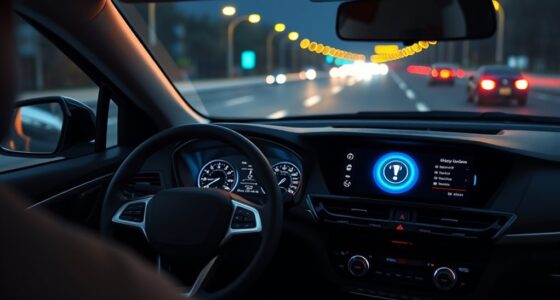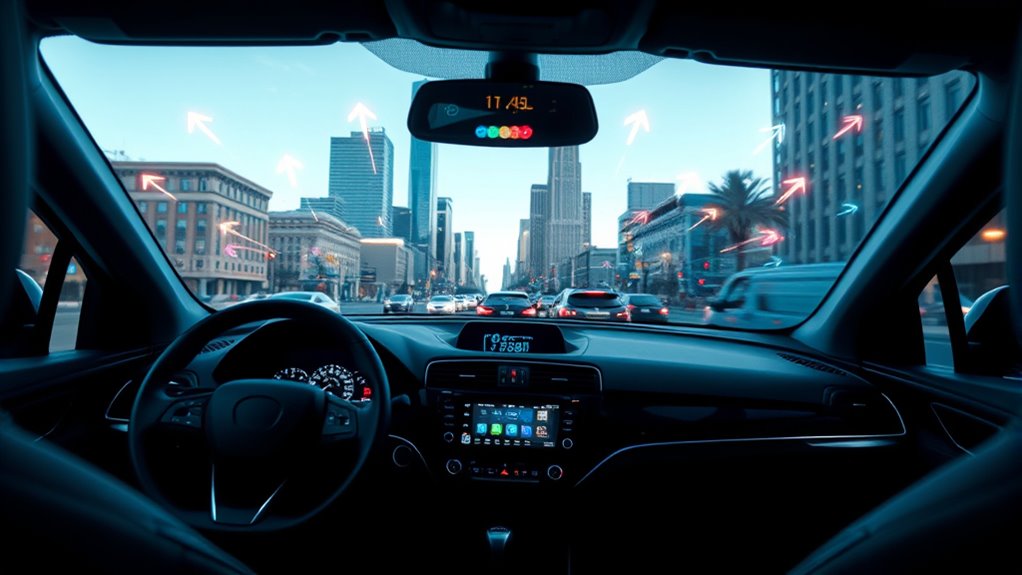

AR windshield displays are quickly becoming the future of vehicle navigation. They project digital info directly onto your windshield, making directions clearer and safer. These systems improve your driving experience by reducing distractions and providing real-time traffic updates, hazard alerts, and intuitive guidance. As tech advances and companies invest in smarter, more reliable AR solutions, you’ll see how this innovation could transform urban driving. Keep exploring to discover how this emerging technology could impact your commute.
Key Takeaways
- AR windshield displays provide real-time, intuitive navigation cues directly in the driver’s line of sight, enhancing safety and convenience.
- Integration with smart city infrastructure enables dynamic traffic updates, improving urban mobility and route efficiency.
- Advances in sensor technology and cloud computing ensure accurate, reliable virtual overlays and hazard detection.
- Challenges like driver distraction and data privacy are actively addressed through adaptive interfaces and filtering techniques.
- The growing development and pilot programs suggest AR windshield displays are poised to become a major innovation in automotive navigation.
The Evolution of Automotive Navigation Systems

The evolution of automotive navigation systems has transformed how you find your way on the road. Early GPS devices relied on manual input, but now you can use voice commands to get directions without taking your eyes off the road. This advancement makes driving safer and more convenient. As technology progressed, systems became integrated with smartphones and cloud data, offering real-time traffic updates and alternative routes. However, with these benefits come concerns about data privacy. You need to be aware of how your location and personal information are stored and shared. Modern navigation systems endeavor to balance innovation with security, ensuring your data is protected while you enjoy seamless, hands-free navigation. Additionally, connected technology continues to enhance the user experience by providing more accurate and personalized routing options. As cloud computing becomes more prevalent in automotive systems, the potential for energy-efficient and secure data management increases, shaping the future of smarter journeys. Furthermore, the integration of advanced sensors into vehicles is improving navigation accuracy and safety features. This evolution continues to shape the way you travel, making journeys smarter and more intuitive.
How AR Windshield Displays Work

Augmented reality windshield displays project navigation information directly onto your windshield, seamlessly blending digital data with your real-world view. To do this effectively, the system relies on sensor calibration, ensuring the digital overlays align precisely with actual road features. This process involves adjusting sensors so that virtual elements appear in the correct positions relative to your surroundings. Display transparency is also essential; it allows you to see through the display without obstruction, maintaining clear visibility of the road while overlaying helpful data. Advanced sensors track your vehicle’s position and orientation, continuously updating the display in real-time. This combination of sensor calibration and display transparency creates an immersive, accurate AR experience that helps you navigate more confidently without diverting your attention from the road. Proper sensor calibration ensures the overlays stay aligned even as conditions change, providing consistent guidance during your drive. Incorporating connected vehicle technology can further enhance AR navigation by enabling real-time data sharing and updates.
Benefits of Augmented Reality for Drivers
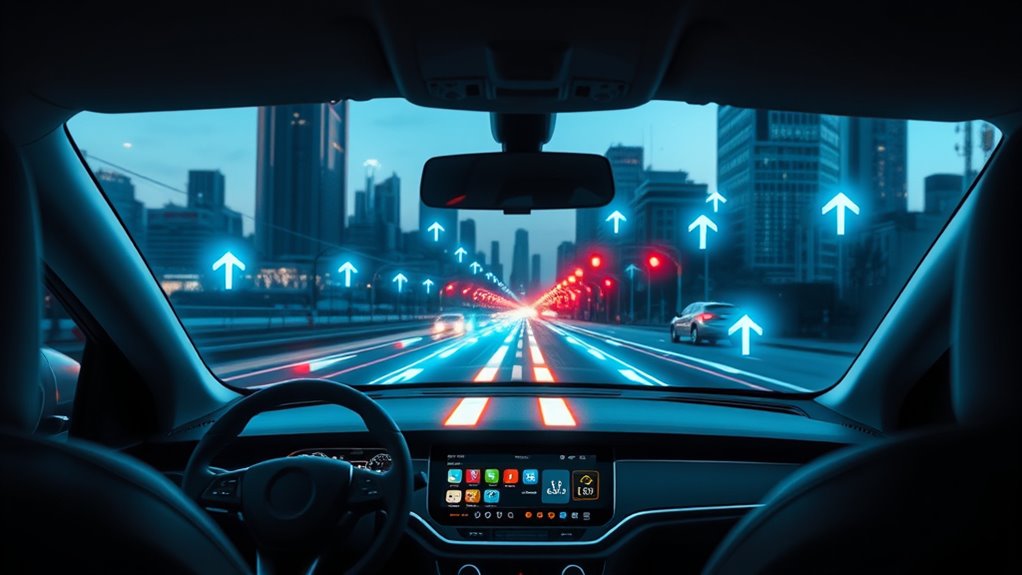
Augmented reality enhances driving by providing real-time, intuitive guidance that reduces distractions and improves safety. With AR windshield displays, you get clear, direct visual cues that keep your focus on the road. This technology boosts driver comfort by minimizing the need to glance away at dashboards or screens, making navigation smoother and less stressful. Real-time updates ensure you’re always aware of current traffic conditions, road hazards, or reroutes, helping you make quick, informed decisions. By overlaying directions onto your view of the road, AR minimizes confusion and enhances overall driving experience. This seamless integration of information supports safer, more confident driving, especially in unfamiliar areas. Additionally, understanding how affiliate marketing influences product recommendations can help drivers choose the best navigation tools. Incorporating voice over scripts in the development of AR displays can improve user interaction and clarity. Furthermore, the integration of smart home technology principles can enhance the connectivity and personalization of AR navigation systems, making them more intuitive and adaptive. As AR technology advances, the user interface design becomes increasingly important to ensure ease of use and safety. Ultimately, AR navigation makes driving more convenient, comfortable, and safer for you, especially when combined with driver assistance systems that complement augmented reality features.
Current Challenges and Limitations

Despite its advantages, AR navigation faces several challenges that can hinder its effectiveness. One concern is driver fatigue; constant information overlays may overwhelm you, leading to distraction or exhaustion over time. Making sure the display remains clear without cluttering your view is essential. Additionally, data privacy is a significant issue. AR systems often collect vast amounts of location and behavioral data, raising worries about misuse or breaches. If your data isn’t protected properly, it can compromise your privacy and security. Technical limitations also pose hurdles, such as accurate alignment of virtual cues with real-world objects, especially in varying lighting or weather conditions. Ensuring the system maintains free floating stability and precision across different environments is crucial. Moreover, advances in augmented reality hardware are necessary to address these issues effectively. Improving system robustness and resilience to environmental factors is fundamental for widespread adoption. Incorporating filtering techniques can help reduce information overload and improve user experience. Developing adaptive algorithms that respond to changing conditions can further enhance system reliability. These challenges highlight the need for careful system design and regulation to ensure AR navigation enhances safety without introducing new risks.
Leading Companies and Recent Developments

Several leading companies are at the forefront of developing AR navigation technologies, driving innovation and shaping the future of this field. They’re integrating advanced features like gesture control, allowing you to interact with navigation prompts seamlessly without touching your screen. Voice recognition also plays a vital role, enabling hands-free commands that enhance safety and convenience. Companies like WayRay, Bosch, and Navdy have recently launched prototypes featuring AR windshield displays that respond to natural language and gestures, making navigation more intuitive. These innovations aim to reduce driver distraction and improve usability. As these firms refine their systems, expect more responsive, user-friendly interfaces that combine gesture control and voice commands for a smoother, more integrated driving experience.
Safety Implications and User Experience

When using augmented reality navigation, your awareness of the road can improve with clear, real-time overlays. However, managing distraction risks is essential to prevent accidents and keep your focus on driving. Balancing enhanced road awareness with safe usage is key to a positive user experience. Additionally, understanding the safety implications of AR displays helps ensure they support rather than hinder safe driving practices. Incorporating essential oils for respiratory health into your vehicle environment might help reduce stress and improve alertness during driving, further supporting safe navigation. Being aware of how skincare ingredients like glycolic acid promote skin health can also remind drivers to maintain overall wellness for better concentration behind the wheel.
Enhanced Road Awareness
Augmented reality navigation enhances road awareness by providing real-time, context-rich information directly within your line of sight, which can substantially improve safety and decision-making. By overlaying critical data like upcoming turns, speed limits, and hazard alerts, AR windshield displays help you maintain better driver attention. This seamless information integration supports driver focus, reducing cognitive load during complex driving situations. This technology boosts road visibility by reducing the need to glance away at dashboards or external devices, allowing you to stay focused on the road ahead. When your awareness improves, you’re more likely to react promptly to unexpected situations, minimizing risks. Additionally, understanding heat distribution in the vehicle’s electronic systems can help ensure the AR display functions reliably during long drives. Moreover, advancements in security measures are essential to protect sensitive navigation data from cyber threats, ensuring user safety. Incorporating system reliability considerations, such as redundancy and fail-safes, can further enhance safety and user confidence. Ensuring consistent software updates is also crucial to maintaining optimal performance and security of AR navigation systems. Overall, AR navigation creates a safer driving environment by blending essential information seamlessly into your natural view, helping you make smarter, quicker decisions without distraction.
Distraction Risks Management
While augmented reality navigation offers significant safety benefits, it also introduces potential distraction risks that must be carefully managed. Visual overload from too much information can cause driver fatigue and impair focus, increasing accident risk. To mitigate these issues, consider these strategies:
- Limit on-screen information to essential directions
- Use adaptive displays that adjust based on driving conditions
- Incorporate subtle cues instead of bright or flashing alerts
- Enable easy toggling between AR and traditional views
Future Prospects and Potential Impact
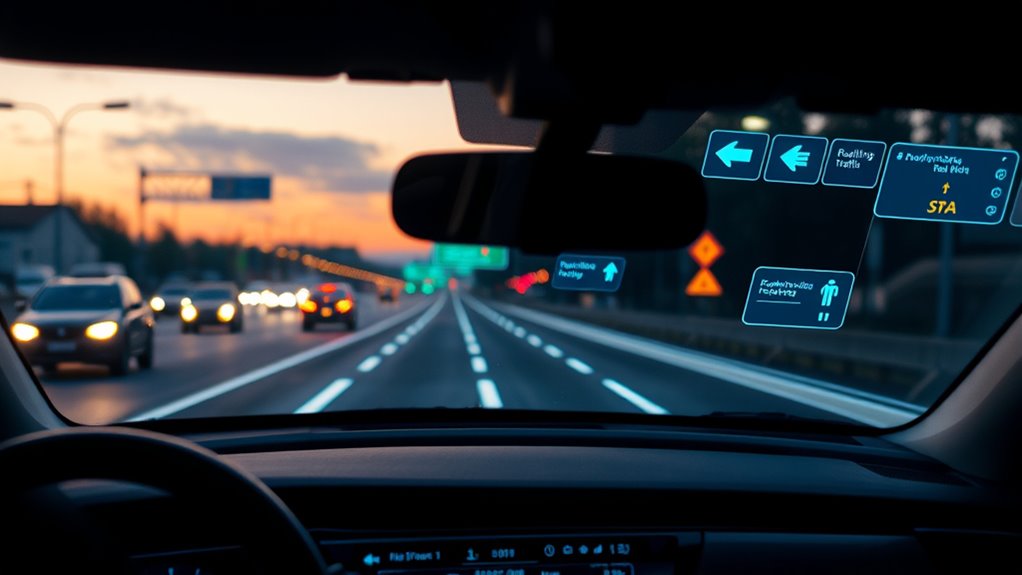
Smart city integration will make augmented reality navigation more seamless and efficient, connecting you with real-time data and infrastructure. Enhanced safety features will help protect you by providing alerts and guidance in complex environments. Additionally, trusted business listings will support users in quickly finding reliable services within these smart urban spaces. Together, these advancements could transform how you navigate urban spaces in the future.
Smart City Integration
Integrating augmented reality navigation into future smart city infrastructure promises to revolutionize urban mobility and communication. With seamless data integration, AR can enhance urban planning by providing real-time insights into traffic flow, pedestrian movement, and infrastructure needs. This integration enables smarter traffic management, reducing congestion and pollution. You’ll experience more efficient routes, as AR systems coordinate with citywide sensors and databases to suggest ideal paths. Additionally, urban development benefits from detailed spatial data, helping planners design better public spaces. The potential impacts include improved resource allocation and more sustainable city growth.
- Real-time traffic updates and route adjustments
- Enhanced urban planning through detailed spatial data
- Smarter traffic and congestion management
- Better resource allocation for city development
Enhanced Safety Features
Have you considered how augmented reality navigation can substantially enhance safety for users in urban environments? AR windshield displays can reduce driver distraction by providing real-time, intuitive directions directly in your line of sight. This minimizes the need to glance away at screens or maps, keeping your focus on the road. Improved sensor accuracy ensures the AR system accurately detects obstacles, pedestrians, and other vehicles, alerting you promptly to potential hazards. Enhanced safety features also include adaptive alerts that warn you of sudden changes, like traffic jams or accidents ahead. As sensor technology advances, these systems become more reliable, decreasing the risk of false alarms or missed dangers. Overall, AR navigation’s safety benefits could significantly lower accident rates and make urban driving safer for everyone.
Frequently Asked Questions
How Do AR Windshield Displays Compare to Traditional Head-Up Displays?
AR windshield displays surpass traditional head-up displays by providing more immersive, real-time augmented reality information directly on your windshield. You see navigation cues, alerts, and data integrated seamlessly into your view, enhancing safety and situational awareness. Unlike conventional head-up displays, AR tech makes information more intuitive and accessible, reducing distractions. This advanced technology transforms your driving experience, making navigation more efficient and engaging with augmented reality at the forefront.
What Privacy Concerns ARe Associated With AR Navigation Systems?
You should be aware that AR navigation systems can raise significant privacy concerns, particularly around data privacy and surveillance risks. These systems often collect and analyze your location, driving habits, and personal data, which could be misused or hacked. Always check how your data is stored and shared, and consider opting for systems with strong privacy protections to avoid unwarranted surveillance and safeguard your personal information on the road.
Can AR Windshields Function Effectively in All Weather Conditions?
AR windshields can face challenges in certain weather conditions, like heavy rain, fog, or snow, which limit visibility and affect sensor performance. These displays rely heavily on sensors such as cameras and lidar, making them vulnerable to weather limitations. When sensors are obstructed or impaired, the AR system’s effectiveness diminishes, so you might experience reduced accuracy or visibility issues during adverse weather.
How Affordable Will AR Windshield Technology Become for Average Consumers?
Imagine driving down a busy street, the road ahead clear and vibrant through your windshield. As technology advances, AR windshield displays will become more affordable, thanks to cost reduction and increased market accessibility. You’ll soon find these innovative systems within reach, transforming your driving experience without breaking the bank. This shift makes AR navigation accessible to more drivers, turning futuristic tech into everyday convenience.
What ARe the Legal and Regulatory Challenges Facing AR Windshield Adoption?
You’ll face legal and regulatory challenges like liability issues if AR windshield displays cause accidents. Authorities need to establish clear regulatory standards for safety, data privacy, and display content to protect users and manufacturers. As adoption grows, you’ll see governments working on these regulations, but until then, liability remains a concern, making it essential for developers and consumers to stay informed about evolving legal frameworks.
Conclusion
As AR windshield displays become more advanced, they could transform your driving experience entirely. With real-time directions and hazard alerts right in your line of sight, you’ll wonder how you ever drove without them. Are you ready to embrace this new era of navigation that promises safer, more efficient journeys? As technology progresses, one thing’s clear: AR is set to make your drives smarter, safer, and more connected than ever before.