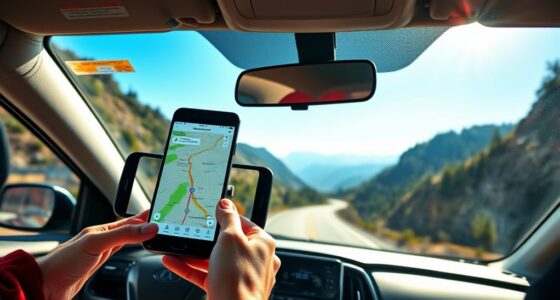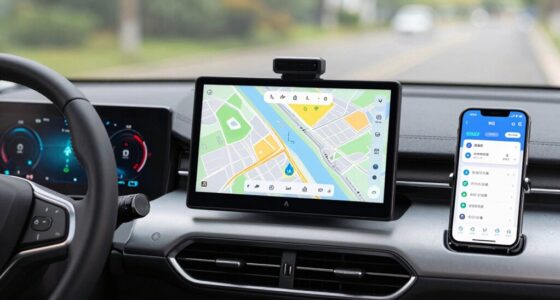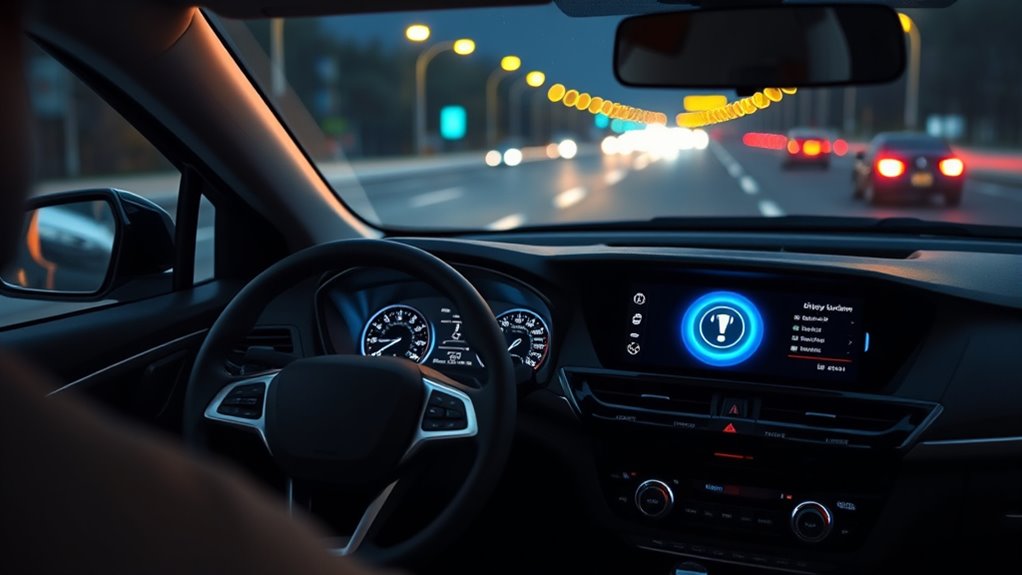

Drowsy driving detectors can actively monitor signs of fatigue, like eye movements, steering patterns, or facial cues, and issue alerts when you show signs of drowsiness. While they help reduce the risk of falling asleep behind the wheel, their accuracy can vary due to environmental factors or calibration issues. Although these technologies are promising, understanding their limitations can help you stay safer—exploring how these systems truly work might surprise you.

Get business pricing on garage and car supplies
- Business-only prices and quantity discounts
- Tax-exempt purchasing
- Multiple users, one account, clear invoices
Key Takeaways
- Drowsy driving detectors monitor facial cues, eye movements, and steering patterns to identify signs of fatigue.
- When drowsiness is detected, these systems activate alerts like sounds or vibrations to wake or warn drivers.
- Effectiveness varies based on sensor calibration, environmental factors, and system design, but they can reduce drowsy driving risks.
- Current technologies are supplementary tools; they are not foolproof and should complement good sleep habits and driver awareness.
- Advances in wearable devices and AI may further improve early detection, but technology alone cannot fully prevent falling asleep at the wheel.
As an affiliate, we earn on qualifying purchases.
The Rising Threat of Sleep-Related Road Accidents

Sleep-related road accidents are becoming an increasingly serious problem, with drowsy driving responsible for a significant number of crashes each year. Driver fatigue impairs your reaction time, decision-making, and alertness, making you more prone to errors behind the wheel. As fatigue sets in, your ability to stay focused diminishes, increasing the risk of drifting into other lanes or missing important signals. These accidents threaten road safety for everyone, not just the drowsy driver. Recognizing the rising threat of sleep-related crashes is essential for understanding why technology to detect drowsiness is so important. By addressing driver fatigue early, we can reduce accidents and improve overall safety on the roads. Incorporating high refresh rates into vehicle safety systems can help monitor driver alertness more effectively. Additionally, integrating biometric sensors can provide real-time data on a driver’s physiological state, further enhancing detection accuracy. Using advanced detection algorithms can also improve the reliability of these systems in various driving conditions. Moreover, continuous advancements in driver monitoring technology are making it easier to identify signs of fatigue before it becomes critical. Staying alert and aware is essential to protect yourself and others. Implementing vehicle-to-everything (V2X) communication can also facilitate better coordination between vehicles and infrastructure, promoting safer driving environments.
As an affiliate, we earn on qualifying purchases.
How Drowsy Driving Detectors Work

Drowsy driving detectors use advanced technology to monitor signs of fatigue and alertness levels in real time. They analyze driver fatigue by tracking various indicators, such as eye movements, blink rates, and head position. These systems often utilize cameras and sensors to observe your facial expressions and eye closure patterns, which serve as early warning signs of drowsiness. When the detector identifies increased fatigue, it activates alert mechanisms like sounds, vibrations, or visual signals to wake you up and prompt alertness. Some systems also assess steering patterns or lane deviations to gauge declining focus. By continuously monitoring these cues, drowsy driving detectors aim to prevent accidents caused by falling asleep at the wheel, keeping you safer on the road. Additionally, integrating innovative European cloud servers can enhance data processing and system reliability for these safety technologies.
As an affiliate, we earn on qualifying purchases.
Types of Drowsiness Detection Technologies

Various technologies are employed to detect driver drowsiness, each leveraging different methods to monitor alertness levels. These alert systems analyze driver behavior or physiological signals to identify signs of driver fatigue. Some systems use camera-based technology to track eye movements, blinking rates, and head position, while others monitor steering patterns or lane deviations.
| Technology Type | Detection Method | Key Feature |
|---|---|---|
| Camera-based | Eye tracking, facial analysis | Visual cues of drowsiness |
| Steering sensors | Steering input patterns | Behavioral changes |
| Heart rate monitors | Physiological signals | Bodily responses |
These alert systems aim to prevent accidents by alerting drivers as soon as signs of drowsiness are detected.
As an affiliate, we earn on qualifying purchases.
Effectiveness of Current Monitoring Systems

Current monitoring systems have shown promising results in identifying driver fatigue, but their effectiveness varies depending on the technology used. Some systems track eye movements, blinking rates, or head position to detect signs of drowsiness. Their success hinges on accurate sensor calibration, which ensures reliable data collection. Poor calibration can lead to false alarms or missed signs of fatigue, reducing trust in the system. In real-world conditions, factors like lighting, driver variability, and environmental influences can also impact performance. Additionally, understanding driver physiology can be crucial for improving detection accuracy and system reliability, highlighting the importance of personalized approaches in fatigue detection technology. Moreover, ongoing research into adaptive algorithms aims to enhance system responsiveness to individual differences, further improving effectiveness. Recognizing the impact of environmental factors can help refine sensor design and deployment strategies to better accommodate varied driving conditions. Improving sensor robustness is also essential to maintain system accuracy across diverse environments and user conditions.
Limitations and Challenges of the Technology

While drowsy driving detectors show promise, they face issues like sensor accuracy and false alarms that can undermine trust. You might also encounter concerns about the high costs and limited accessibility of these systems, making widespread adoption difficult. These challenges highlight the need for ongoing enhancements to ensure reliability and affordability. Incorporating practical leadership tips can help stakeholders prioritize effective implementation and continuous improvement efforts. Additionally, understanding home charging considerations can support drivers in adopting technological safety measures for better overall driving safety.
Sensor Accuracy Concerns
Sensor accuracy remains a significant challenge for drowsy driving detectors because these systems must reliably distinguish between alert and drowsy states in real-world conditions. Achieving this requires precise sensor calibration to account for individual differences and environmental factors like lighting or movement. Without proper calibration, false readings can occur, reducing system effectiveness. Additionally, these sensors often collect sensitive data, raising concerns about data privacy. You need assurances that your information is protected and used responsibly. Variability in sensor performance can lead to missed drowsiness cues or false alarms, undermining trust in the technology. Overcoming these accuracy issues involves ongoing calibration, rigorous testing, and addressing privacy concerns to ensure drivers feel confident using these systems safely and effectively.
False Alarm Risks
False alarms remain a major challenge for drowsy driving detectors because they can erode driver trust and cause unnecessary distractions. When your system mistakenly signals drowsiness, it might lead you to divert your attention or even ignore real warnings later. These false alarms often occur during bright sunlight, sudden head movements, or when wearing glasses, increasing driver distraction and frustration. To illustrate, here’s a comparison:
| Scenario | False Alarm Risk |
|---|---|
| Bright sunlight | High risk of false alarms |
| Sudden head movements | Triggers unnecessary alerts |
| Wearing glasses or hats | Can cause incorrect drowsiness signals |
These inaccuracies hinder the technology’s effectiveness and could make you less responsive when genuinely drowsy. Reducing false alarms remains critical for gaining trust and ensuring safety.
Cost and Accessibility
Despite their potential to improve road safety, drowsy driving detectors face significant hurdles related to cost and accessibility. Cost barriers often prevent widespread adoption, as advanced sensors and cameras can be expensive to produce and maintain. This high expense makes device affordability a concern for many drivers and fleet operators, limiting who can benefit from the technology. Additionally, high costs mean that insurance companies and governments may be hesitant to subsidize or promote these devices widely. As a result, access remains uneven, especially for lower-income drivers who could benefit most from drowsy driving detection. Without efforts to reduce costs and improve affordability, these safety innovations risk remaining out of reach for many, hindering their potential to make roads safer for everyone. Understanding imaging‑scale can help manufacturers develop more cost-effective solutions, especially by leveraging cost‑reduction strategies. Moreover, increasing awareness of the technology limitations among consumers and policymakers is crucial to fostering broader adoption. Incorporating insights from auditory processing assessments could also enhance detection accuracy, making these devices more reliable and trustworthy for users. Exploring innovations in sensor technology may further help lower manufacturing costs and expand accessibility.
Future Innovations in Sleep Prevention Devices

Future sleep prevention devices will likely include advanced wearable tech that continuously monitors your sleep patterns. AI algorithms can analyze this data to detect early signs of drowsiness before it becomes dangerous. These innovations could provide real-time alerts, helping you stay alert and safe on the road. Additionally, integrating driver alertness monitoring technology into vehicles could automate safety responses during drowsy episodes. As these systems evolve, they may incorporate sleep science insights to enhance accuracy and reliability. Incorporating biometric data analysis can further refine these systems, making drowsiness detection even more precise and personalized. Moreover, ongoing research into neurophysiological signals may lead to even more sophisticated detection methods in the future.
Wearable Sleep Monitoring Tech
Wearable sleep monitoring technology is poised to revolutionize how we prevent drowsy driving by providing real-time insights into your sleep patterns and alertness levels. These devices track signs of sleep deprivation, helping you recognize early fatigue signs before it becomes dangerous. With advanced sensors, they monitor heart rate, movement, and breathing to assess your overall alertness. This data enables better fatigue management, alerting you when you need rest or a break. By wearing these gadgets consistently, you gain a clearer understanding of your sleep quality and how it impacts your alertness on the road. Ultimately, this technology empowers you to take proactive steps to prevent drowsiness, reducing the risk of falling asleep behind the wheel and making driving safer for everyone.
AI-Driven Sleep Pattern Analysis
AI-driven sleep pattern analysis is set to transform how we detect and prevent drowsy driving by offering more precise and personalized insights. By analyzing your sleep analytics, this technology can identify early signs of driver fatigue, even before symptoms become obvious. This approach goes beyond simple monitoring, providing real-time data that adapts to your individual sleep cycles. Key benefits include:
- Detecting subtle changes in sleep quality that signal fatigue.
- Customizing alerts based on your unique sleep patterns.
- Improving overall safety by preventing drowsiness before it impacts driving performance. This innovative use of AI enhances the accuracy of sleep analytics, enabling proactive intervention. As a result, you gain better awareness of your driver fatigue levels, reducing the risk of falling asleep at the wheel and making roads safer for everyone.
Integrating Drowsy Driving Alerts Into Vehicles

Integrating drowsy driving alerts into vehicles involves embedding advanced sensors and warning systems directly into the car’s design. These systems monitor signs of driver fatigue, such as steering patterns, eye movements, and lane position, to detect when you’re becoming drowsy. When fatigue is identified, the vehicle alerts you with visual or auditory signals, prompting you to take a break. This integration enhances vehicle safety by providing real-time feedback, helping prevent accidents caused by falling asleep at the wheel. By seamlessly combining technology with vehicle design, automakers aim to create smarter, safer cars that actively assist drivers in maintaining alertness. Ultimately, these integrations aim to reduce drowsy driving incidents and save lives on the road.
Are These Devices a Reliable Solution?

While drowsy driving detection devices offer promising safety benefits, their reliability is still a subject of debate. These devices aim to detect driver fatigue and sleep deprivation, but they aren’t foolproof. Some issues include:
- Variability in accuracy depending on lighting, camera quality, and driver behavior.
- False alarms or missed signs of drowsiness, reducing trust in the system.
- Dependence on driver compliance; if you ignore alerts, the device loses effectiveness.
Although these devices can be useful tools, they shouldn’t replace good habits like proper sleep and regular breaks. Relying solely on technology isn’t enough to fully prevent drowsy driving. You need to combine these tools with awareness of your fatigue levels for true safety.
Frequently Asked Questions
How Do Drivers Respond Once a Drowsiness Alert Is Triggered?
When a drowsiness alert triggers, your immediate driver reaction is essential. You typically respond by pulling over safely or increasing alertness through movement or caffeine. The alert’s effectiveness depends on how quickly you act; it’s designed to prompt you to recognize your fatigue. By promptly responding, you reduce the risk of falling asleep at the wheel, ensuring your safety and that of others on the road.
What Legal Implications Exist for Using Drowsy Driving Detection Devices?
Ever wondered if using drowsy driving detection devices could land you in legal trouble? You might face liability issues if tech fails or gives false alarms, leading to accidents. Regulatory standards also come into play, requiring compliance to guarantee safety and legality. While these devices can help prevent crashes, understanding the legal implications ensures you stay protected and responsible on the road. Are you aware of the laws in your area?
Can These Devices Be Customized for Individual Driver Needs?
Yes, these devices can be customized for your needs with personalization options and adaptive sensitivity. You can adjust settings to match your driving habits, alert thresholds, and alert types, ensuring the device responds appropriately. Adaptive sensitivity helps the system better detect your drowsiness levels, providing more accurate alerts. This tailored approach enhances safety by making the technology more responsive to your unique behaviors and sleep patterns.
Are There Privacy Concerns Regarding Data Collected by These Systems?
You should be aware that privacy concerns and data security are common with drowsy driving detection systems. These devices collect sensitive data like your eye movements and driving patterns, which could be vulnerable if not properly protected. Always check how your data is stored and used, and prefer systems with strong security measures. Being informed helps guarantee your privacy stays protected while benefiting from the safety features.
How Cost-Effective Are Drowsy Driving Detection Technologies?
Cost-effective and clever, drowsy driving detection tech tends to be quite affordable when considering the cost benefit analysis. You’ll find that the technology’s affordability often outweighs the potential costs of accidents, injuries, and insurance hikes. While initial investments might seem steep, ongoing savings and safety benefits make these systems a smart, sensible solution. Overall, they provide a practical, protective, and reasonably priced way to promote safer driving habits.
Conclusion
So, while these drowsy driving detectors promise to save lives, don’t let your guard down just yet. After all, trusting technology to keep you awake might be your most amusing gamble yet—because nothing says “safe driving” like relying on a device that’s still figuring out how to read your eyelids. Until these gadgets graduate from toddlerhood, it’s wise to keep your own eyes open—and avoid the road’s sleepy trap altogether.
Fall Picks
fall essentials
As an affiliate, we earn on qualifying purchases.