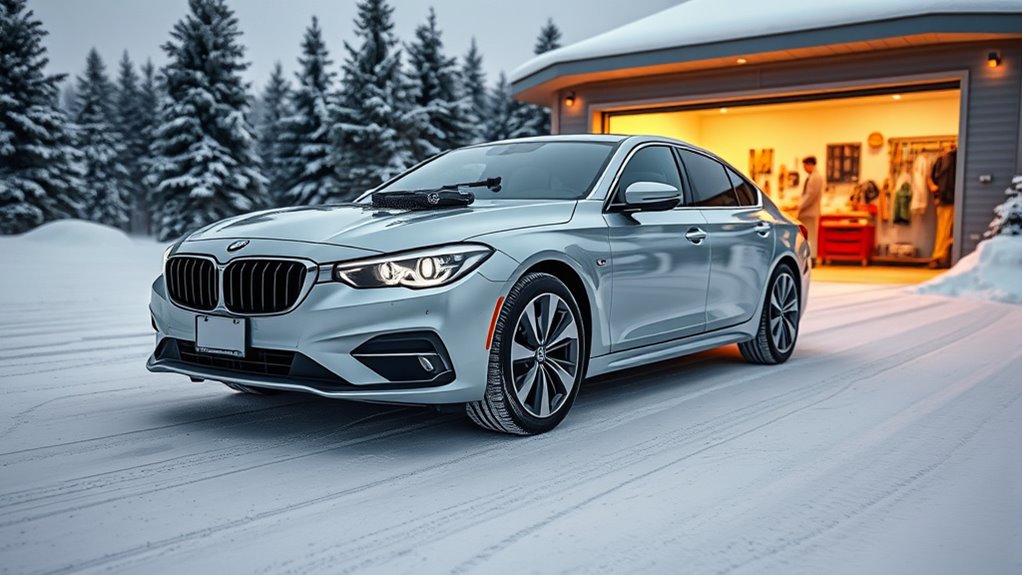

To make your old car safer on ice, start by upgrading to winter tires with deep treads and proper inflation for better grip. Add traction control and stability assist systems, and consider snow chains for extra traction. Improve visibility with LED headlights and fog lights, and install backup cameras for obstacle detection. Enhance safety further with snow sensors, remote climate control, and ensuring your battery is in good shape. Keep exploring for more tips to winter-proof your vehicle.
Key Takeaways
- Install winter tires with deep treads and proper inflation for better grip on ice and snow.
- Add traction control, stability assist, and snow/ice sensors to enhance vehicle stability and hazard detection.
- Upgrade headlights and fog lights for improved visibility in low-light and foggy winter conditions.
- Maintain the battery, check tire pressure, and ensure wipers are effective for reliable winter performance.
- Use remote start and climate control features to pre-warm the vehicle and prevent frost buildup.
Upgrading Your Tire System for Better Winter Grip
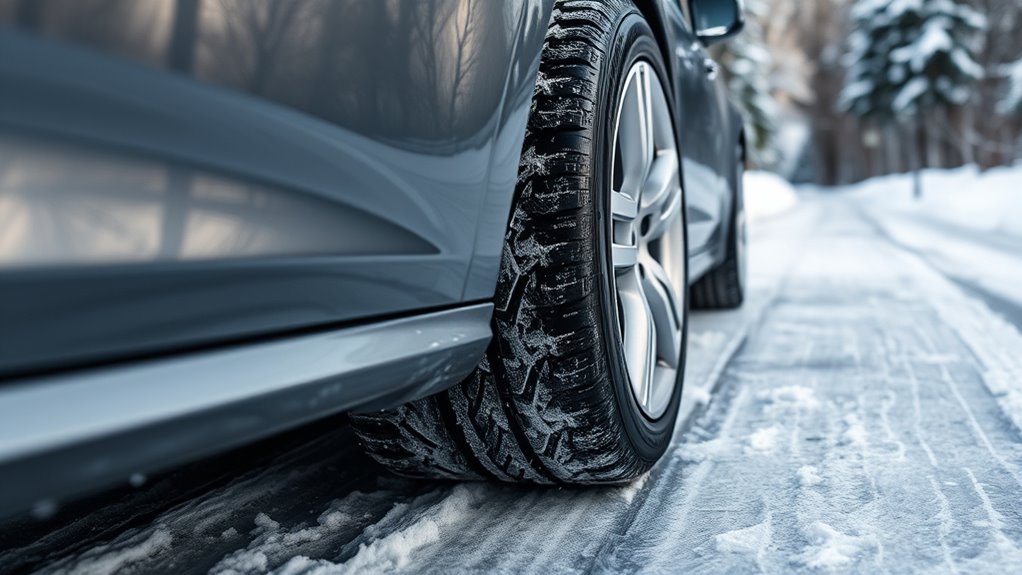
To improve your vehicle’s traction on winter roads, upgrading your tire system is essential. Better winter traction depends heavily on tire grip, which can vary notably based on the tires you choose. Switching to winter tires designed for cold temperatures, snow, and ice provides superior grip compared to all-season tires. These tires feature specialized rubber compounds that stay flexible in low temperatures, enhancing traction and control. Look for tires with deeper treads and aggressive patterns that channel snow and slush away from the contact patch. Proper inflation also plays a vital role; underinflated tires lose grip, so maintain recommended pressures. Additionally, selecting tires with quality construction and a focus on quality assessment can ensure longer-lasting performance and safety. By upgrading to high-quality winter tires, you’ll gain better tire grip, improve safety, and enjoy more confident handling in icy conditions. Moreover, regularly inspecting your tires and replacing worn ones ensures optimal tire performance, especially during harsh winter weather. Maintaining proper tire pressure is also critical for maximizing grip and preventing dangerous slipping on icy surfaces.
Installing Traction Control and Stability Assist
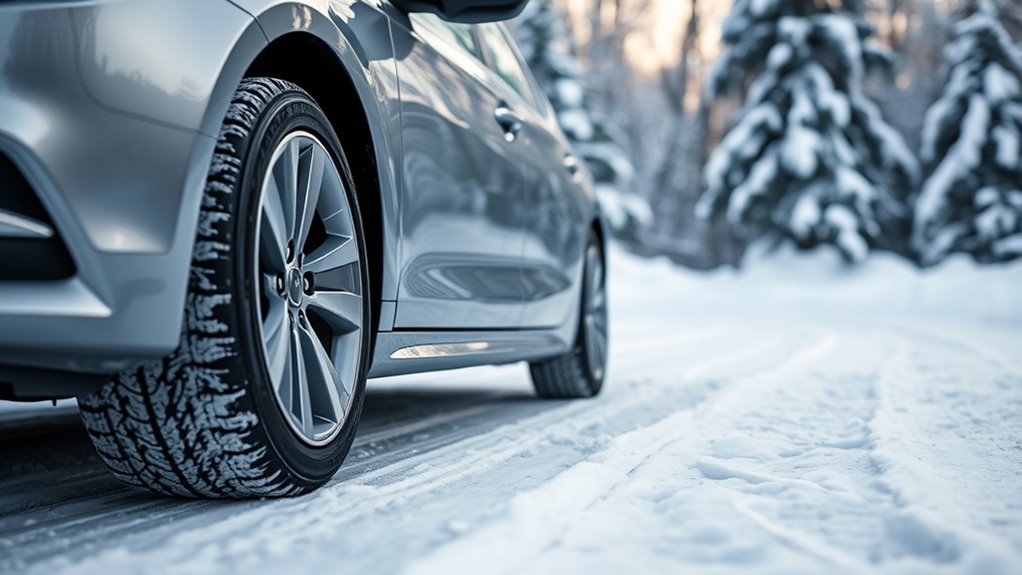
Installing traction control and stability assist helps you maintain better grip on icy roads. These systems automatically respond to slipping wheels, preventing skids before they happen. With them, you’ll feel more confident and in control during winter driving. Proper lease negotiation can also ensure you get the best vehicle features and coverage for your winter needs. Additionally, choosing vehicles equipped with European cloud innovation can enhance your vehicle’s connectivity and safety features through advanced firmware updates. The integration of advanced driver assistance systems further improves safety by providing real-time monitoring and automated responses to challenging winter conditions. Incorporating upfitting fundamentals into your vehicle setup can also optimize its winter performance and safety features, especially when paired with modern automotive technology designed for harsh weather environments.
Enhancing Grip Control
Enhancing your vehicle’s grip control during winter conditions is essential for safety and confidence on icy or snowy roads. Installing snow tires is one of the best grip enhancers, providing better traction than regular tires. These specialized tires, made with softer rubber compounds and deeper treads, grip snow and ice more effectively. Additionally, modern traction control and stability assist systems actively work to prevent wheel spin and maintain directional control. By automatically adjusting brake pressure and engine power, these features give you increased confidence when steering through slippery surfaces. Combining snow tires with grip control technology ensures your vehicle responds predictably, reducing the risk of slips and skids. Recent advances in nanotechnology have led to the development of tire materials that further improve grip and durability in winter conditions. Upgrading these systems is a smart move to stay safe and in control all winter long, especially when combined with reliable backup power to handle unexpected emergencies. Incorporating advanced sensor technology can also enhance the responsiveness of grip control systems, providing even better safety in challenging winter environments. Additionally, a comprehensive vehicle safety system that integrates these features can significantly improve overall winter driving safety. Furthermore, implementing real-time weather monitoring can help optimize the performance of your vehicle’s grip enhancements in changing winter conditions.
Preventing Skid Incidents
Equipping your vehicle with traction control and stability assist systems can considerably reduce the likelihood of skidding on icy or snowy roads. Proper tire pressure is essential; underinflated tires lose grip, increasing skid risk. Regularly check and maintain ideal pressure to ensure better traction. Additionally, road salt helps melt ice but can cause corrosion, so ensure your vehicle’s stability system is calibrated to handle slippery surfaces. These systems work together to detect slipping wheels and automatically adjust engine power or brake force, helping you stay in control. Properly maintaining vehicle systems is also crucial for ensuring these safety features operate correctly on winter roads. Understanding how driver awareness and auditory cues can aid in driver response can further enhance safety in winter conditions. Additionally, being aware of road salt effects can help you anticipate changes in road traction and adjust your driving accordingly. By keeping tires properly inflated and understanding how road salt affects road conditions, your traction control and stability assist can effectively prevent skids, making your winter drives safer and more confident.
Adding Winter-Appropriate Tire Chains or Cables
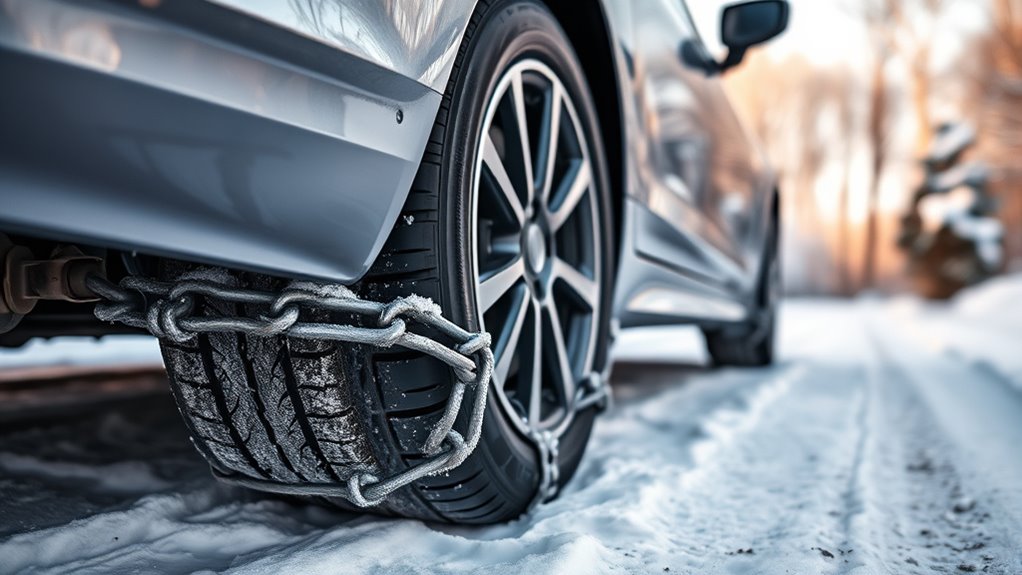
When winter weather blankets the roads with snow and ice, adding tire chains or cables can make a critical difference in your vehicle’s traction and safety. These accessories considerably improve winter traction, helping you steer through slippery surfaces. Properly installed tire chains or cables enhance tire security, reducing the risk of slipping or skidding. Make sure your chains fit your tires correctly and are installed before hitting challenging roads. Keep in mind that chains work best on packed snow and ice, so use them where conditions demand extra grip. They’re a simple, effective upgrade to prevent accidents and ensure your vehicle responds predictably in winter weather. With tire chains or cables, you’ll feel more confident maneuvering icy roads safely.
Enhancing Visibility With Advanced Lighting Options

Improving your vehicle’s lighting setup can considerably boost visibility during winter drives, especially when road conditions worsen and daylight dims. Upgrading to LED headlights provides brighter, whiter light, improving your ability to see obstacles and road signs clearly. They also last longer and consume less power than halogen bulbs, making them a smart choice for winter safety. Additionally, fog light upgrades enhance your visibility in fog, snow, and heavy rain, cutting through poor conditions and reducing glare. Properly aimed and high-quality fog lights can illuminate the road’s edges, helping you navigate icy curves safely. Combining LED headlights with upgraded fog lights ensures you’ll see better and be seen more easily during winter drives, making your old vehicle safer on icy, low-visibility roads. Using advanced lighting options can further optimize your vehicle’s illumination, especially when paired with modern, energy-efficient bulbs, and understanding industry trends can help you choose the best upgrades for your needs. Incorporating automotive safety innovations can also provide additional peace of mind during winter travel. Exploring lighting technology advancements can help you select the most effective upgrades for your vehicle’s specific needs, and staying informed about lighting standards can help ensure your upgrades meet safety regulations.
Incorporating Remote Start and Climate Control Features

Adding remote start and advanced climate control features to your vehicle can make winter driving more comfortable and safer. With remote start, you can warm up your car before stepping outside, avoiding the shock of cold surfaces. Climate control systems *guarantee* your cabin reaches a comfortable temperature quickly, reducing frost buildup on windows. Consider these benefits:
- Pre-warming your vehicle for immediate comfort.
- Defrosting windows for better visibility.
- Preventing cold-related health issues.
- Saving time by avoiding manual adjustments in freezing weather.
- Integrating smart climate control features that adapt to outside conditions for optimal comfort.
Equipping Your Vehicle With Backup Cameras and Sensors
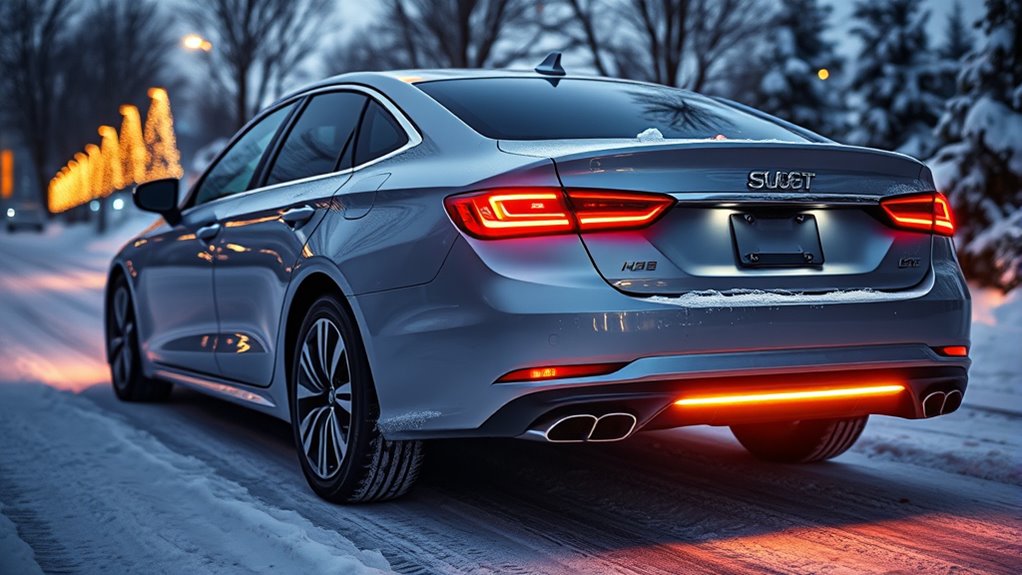
During winter, backing up can be particularly challenging due to snow, ice, and limited visibility. Installing parking sensors helps detect obstacles hidden beneath snow or ice, giving you an early warning to prevent collisions. These sensors complement your rearview camera, which offers a clear visual of what’s behind your vehicle, even in low light or snowy conditions. Additionally, blind spot alerts are essential during winter when snowbanks and icy patches limit your ability to see other vehicles. They notify you of cars or cyclists in your blind spots, reducing the risk of accidents. Together, backup cameras, parking sensors, and blind spot alerts create a safer, more confident driving experience during the winter months, especially when roads are slick and visibility is compromised.
Utilizing Snow and Ice Detection Sensors
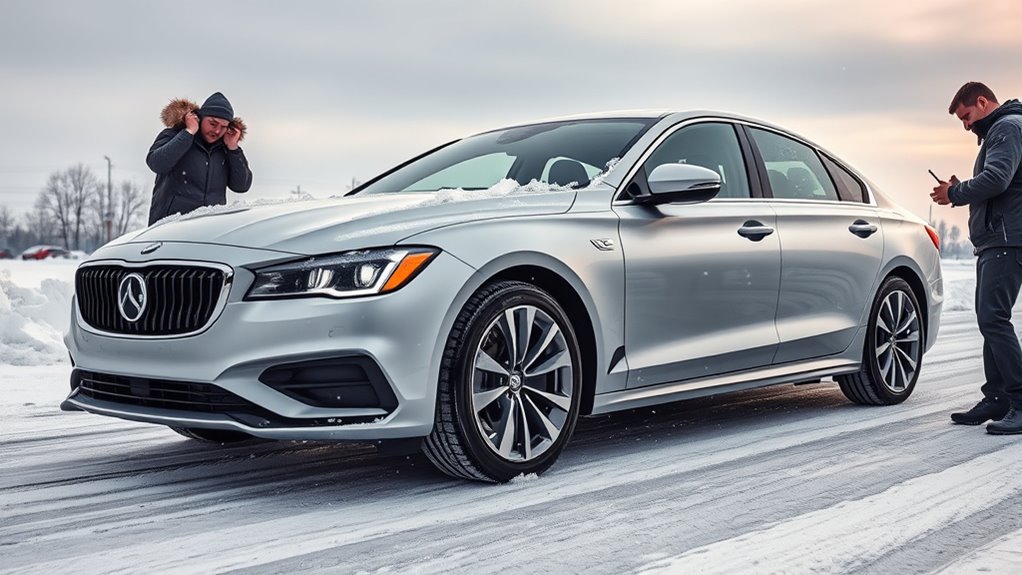
Snow and ice detection sensors take your vehicle’s winter safety features to the next level by providing real-time alerts about hazardous conditions on the road. These sensors detect snow and ice buildup on your vehicle or surrounding surfaces, triggering vital winter weather alerts. They help you react faster and more accurately to changing conditions, reducing the risk of accidents.
Consider these key benefits:
- Early warnings for snow and ice accumulation
- Improved traction control during icy conditions
- Enhanced driver awareness in low-visibility weather
- Reduced chances of slipping or skidding
Investing in Affordable Dash Cams for Safety Monitoring
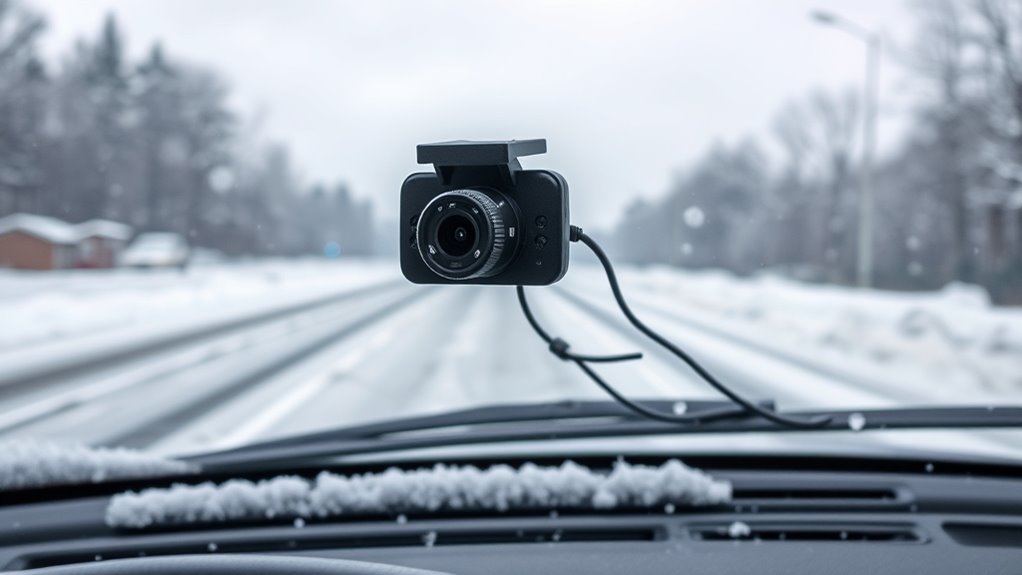
If you’re looking to boost your vehicle’s safety without breaking the bank, investing in an affordable dash cam is a smart choice. Affordable dash cams provide real-time safety monitoring, giving you peace of mind during winter drives on icy roads. They capture footage of accidents or hazardous conditions, which can be helpful for insurance claims or disputes. Many models are easy to install and operate, making them accessible for everyday drivers. Some even offer features like night vision and wide-angle lenses, ensuring clear footage in low-light or snowy conditions. By adding an affordable dash cam, you enhance your safety measures without significant expense. It’s a practical upgrade that keeps a watchful eye on your vehicle’s surroundings, especially when winter weather increases driving risks.
Maintaining Your Battery and Charging System for Cold Weather
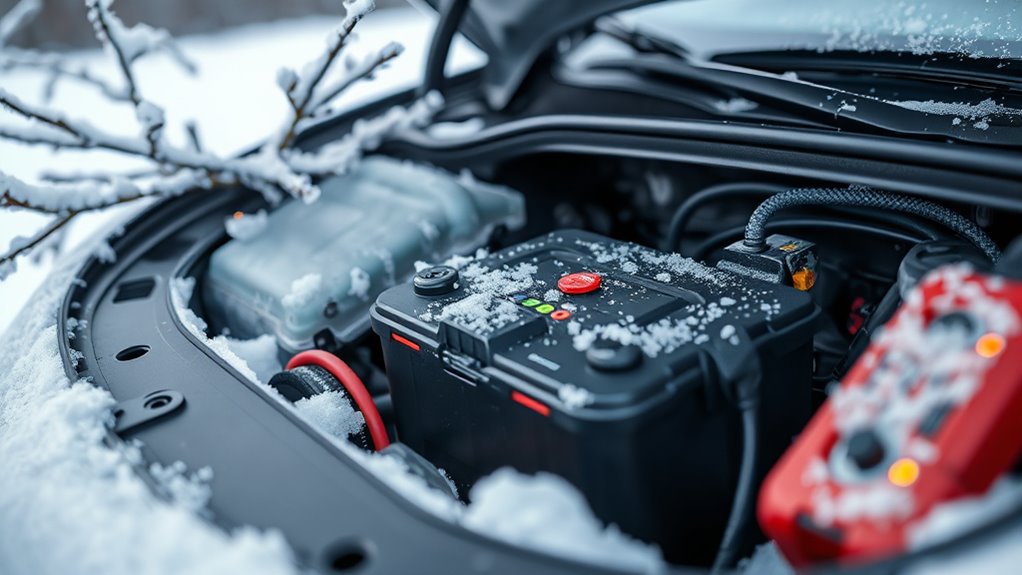
To keep your car starting reliably in cold weather, you need to focus on battery inspection tips and make certain your charging system is in good shape. Regularly check for corrosion, loose connections, and overall battery health, especially before winter hits. Preventive maintenance practices can save you from unexpected breakdowns and keep your vehicle ready for the cold months ahead.
Battery Inspection Tips
A healthy battery is essential for reliable starting during cold weather, so it’s important to inspect it regularly. Start by checking for battery corrosion on terminals, which can impede power flow. Next, perform voltage testing—your multimeter should read around 12.6 volts when the engine is off; lower readings indicate a weaker battery. Also, examine the battery case for cracks or leaks, as these can cause failure in freezing temperatures. Finally, ensure the battery is securely mounted, preventing vibrations that can damage internal components. Regular inspections help catch issues early, especially before winter’s chill sets in. Keep a close eye on corrosion buildup and test your voltage to ensure your battery can handle the cold and start reliably when needed.
Charging System Checks
Cold weather puts extra strain on your vehicle’s charging system, making it vital to keep it in top condition. Regular charging system checks help guarantee your alternator and voltage regulator are functioning properly, preventing unexpected breakdowns. Start by inspecting the battery terminals for corrosion and tightness, as poor connections can reduce charging efficiency. Battery maintenance, including testing its charge and capacity, is essential before winter hits. If your battery is weak or old, consider replacing it to avoid being stranded on cold mornings. Additionally, check the drive belt for wear and proper tension, since a slipping belt can affect the alternator’s performance. Staying proactive with these checks guarantees your charging system remains reliable, keeping your battery charged and your vehicle ready to handle harsh winter conditions.
Preventive Maintenance Practices
Preparing your vehicle for winter means staying proactive with preventive maintenance on your battery and charging system. Cold weather strains your battery, so verify it’s in good shape before icy conditions hit. Check your tire pressure regularly, as low pressure reduces traction and can drain your battery faster. Inspect your windshield wipers; icy streaks impair visibility and can lead to hazardous driving.
Here are four essential steps:
- Test your battery’s charge and replace if weak.
- Clean battery terminals to prevent corrosion.
- Keep your tires properly inflated for safety and efficiency.
- Verify windshield wipers are in top condition for clear visibility.
Frequently Asked Questions
How Can I Improve My Car’s Handling on Icy Roads Beyond Basic Upgrades?
To improve your car’s handling on icy roads beyond basic upgrades, focus on optimizing traction control settings and adjusting weight distribution. Enable your traction control system to prevent wheel spin, and add weight over the drive wheels to increase grip. You can also consider installing weight distribution enhancements or snow tires, which work together to improve stability and control, making your drive safer in winter conditions.
Are There Specific Tire Brands Recommended for Winter Safety on Older Cars?
For winter safety on your older car, choose tire brands known for excellent snow traction and ice grip like Michelin, Bridgestone, or Nokian. These brands design tires with specialized rubber compounds and tread patterns that improve grip on icy surfaces. Look for tires labeled with the “Three-Peak Mountain Snowflake” symbol, ensuring they’re rated for severe winter conditions, giving you better control and confidence on icy roads.
What Maintenance Checks Are Most Critical Before Winter Driving?
Picture your car ready for icy roads, snowflakes melting on the windshield. You need to perform critical checks before winter driving: verify your winter tire care is up to date, with proper tread and pressure for grip. Don’t forget to check your battery’s health, as cold weather strains it. A quick inspection of fluid levels, brakes, and defrost systems completes your prep, keeping you safe on icy journeys.
Can Aftermarket Lighting Upgrades Significantly Improve Night Visibility in Winter?
Yes, aftermarket lighting upgrades can substantially improve your night visibility in winter. Upgrading to LED headlights offers brighter, more focused illumination, helping you see icy patches and obstacles clearly. Fog light upgrades are also valuable, especially in snowy or foggy conditions, as they cut through low visibility. These enhancements guarantee you can drive more safely on icy roads, giving you better control and confidence during winter nights.
How Do Remote Start Features Help Prevent Engine Issues in Cold Weather?
Think of remote start benefits as a warm blanket for your cold weather engine. When you activate your remote start, it gently warms up the engine before you hop in, preventing cold starts that strain the engine. This helps avoid costly issues like oil thickening or battery drain, keeping your car running smoothly on icy mornings. With remote start, your engine’s health is protected, making winter driving safer and more reliable.
Conclusion
By boosting your brakes, batteries, and visibility, you’ll brave winter’s worst with confidence. Simple safety upgrades, smart systems, and sturdy snow gear transform your old car into a winter warrior. Stay secure, see clearly, and stay safe on icy roads. With these upgrades, you’ll turn treacherous travel into a triumphant trek. Don’t wait—winter’s wonders demand your dedication. Drive daringly, defend diligently, and dominate the icy season with your upgraded ride!