TL;DR

Get garage and car supplies delivered free — and shop member deals
- Fast, free delivery on millions of items
- Access to Prime Big Deal Days deals on October 6–7
- Prime Video, Amazon Music and more included
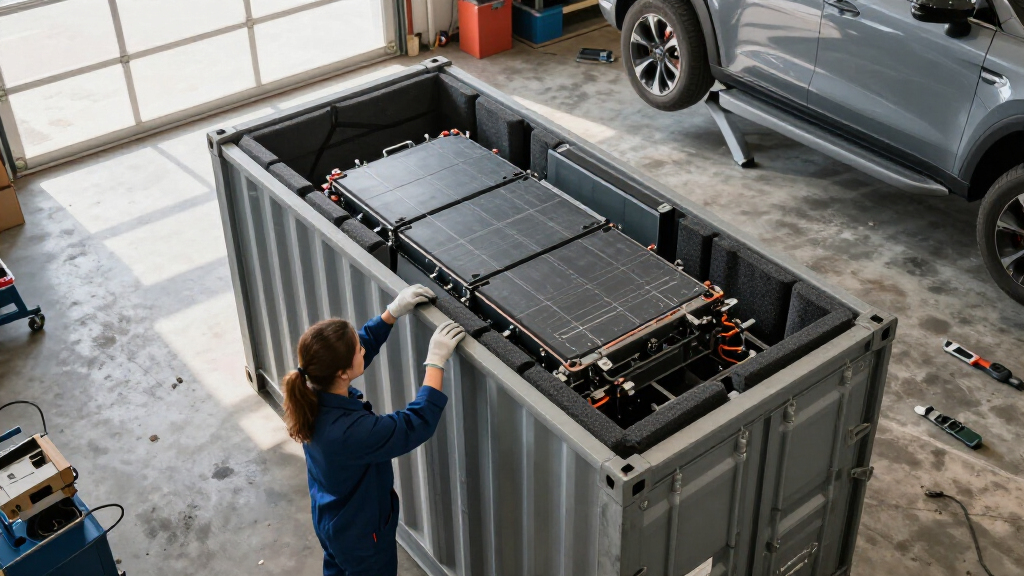
Renewance adopted Obexion AG, a reusable, stackable container designed for multiple damaged, defective or recalled batteries. The company says the packaging allows it to consolidate shipments and handle higher volumes at reduced risk, though the case study provides no quantified cost, time or safety results.
Battery-services company Renewance has adopted reusable, stackable Obexion AG containers to ship multiple damaged, defective or recalled batteries in consolidated loads, according to a sponsored case study published by Charged EVs. The approach replaces the one-battery-per-container practice described in the report and is intended to help Renewance handle larger volumes while reducing transportation risks.
The case study concerns damaged, defective or recalled (DDR) batteries, which the report describes as dangerous goods. It says the usual packaging requirement for shipping these batteries is one battery per container. For Renewance, which manages end-of-life electric-vehicle and energy-storage batteries at scale, that approach adds transportation costs and handling time, according to the report.
Renewance selected Obexion AG, a container made by DGeo and designed for multiple DDR batteries. The container is described as reusable and stackable. The report says the packaging allows the company to combine batteries into consolidated shipments rather than shipping each in its own container.
Sterling Picton, who leads solutions development for end-of-life projects at Renewance, said the container was designed for the specific application and allows the company to handle higher volumes at reduced risk. The source does not provide shipment figures or measurements showing how much the change has cut costs, handling time or risk.
Consolidating Damaged-Battery Shipments
Shipping damaged batteries presents a logistical challenge because the cargo is treated as dangerous goods, while the report describes conventional packaging as limiting shipments to one battery per container. That can mean more individual containers and handling steps when a company processes batteries at scale.
Renewance’s reported change is relevant to businesses handling end-of-life EV and energy-storage batteries: purpose-built packaging may let them consolidate loads while managing transport risks. However, the case study presents the company’s experience, not independently measured evidence that the container is safer or cheaper across the industry. It gives no comparison data on total shipments, costs, time saved or incident rates.
reusable battery shipping containers
As an affiliate, we earn on qualifying purchases.
As an affiliate, we earn on qualifying purchases.
Why Battery Packaging Matters
Electric vehicles and stationary energy-storage systems eventually produce batteries that must be managed at end of life. Some batteries may be damaged, defective or recalled, categories the case study groups as DDR batteries. The report says those batteries are classified as dangerous goods, making packaging and transport a central part of handling them.
The case study was sponsored by Labelmaster and describes a packaging product made by DGeo. Its account focuses on Renewance’s adoption of Obexion AG; it is not a regulatory notice or an independent comparison of packaging options. The material does not detail the rules that apply to particular battery types, shipment routes or conditions, so it should not be read as a substitute for applicable dangerous-goods requirements.
““It’s a more advanced product, designed for this specific application.””
— Sterling Picton, Renewance’s solutions development lead for end-of-life projects
stackable dangerous goods containers
As an affiliate, we earn on qualifying purchases.
As an affiliate, we earn on qualifying purchases.
Results the Case Study Does Not Quantify
The report does not state when Renewance adopted the containers, how many are in service, or how many batteries can be shipped in a typical load. It also provides no figures for cost savings, reduced handling time, shipment volume or changes in transport incidents.
The claim of reduced risk is attributed to Renewance, and the material does not include independent testing or comparative safety results. It also does not explain the operating procedures used with the containers or how requirements may vary by battery condition and shipment. Those details would be needed to assess the result beyond the company’s account.
damaged battery transport packaging
As an affiliate, we earn on qualifying purchases.
As an affiliate, we earn on qualifying purchases.
Further Operating Data Needed
The case study does not announce a next milestone, expansion plan or scheduled review. It presents Renewance’s packaging change and the company’s stated benefits, but offers no timeline for further results.
To judge the scale of the change, readers would need subsequent data on shipment volumes, handling time, costs and safety outcomes, alongside details of the battery types and transport conditions involved. Until such information is published, the confirmed development is the reported adoption of Obexion AG containers; the size of the operational and safety impact remains unquantified.
consolidated battery shipping containers
As an affiliate, we earn on qualifying purchases.
As an affiliate, we earn on qualifying purchases.
Key Questions
What did Renewance change?
According to the sponsored case study, Renewance adopted Obexion AG, a reusable, stackable DGeo container designed to carry multiple damaged, defective or recalled batteries.
Why did the company change its packaging?
The report says the usual approach was one battery per container, adding cost and handling time for Renewance as it managed end-of-life batteries at scale. The company says the new container lets it consolidate shipments.
What benefits does Renewance report?
Renewance says the container lets it handle higher volumes at reduced risk. The case study does not give figures to quantify that claim or provide independent safety results.
Does the report show how much money or time Renewance saved?
No. It describes the prior approach as adding cost and handling time but provides no measured savings, shipment data or comparison period.
Who sponsored the case study?
The Charged EVs report identifies Labelmaster as its sponsor. It describes DGeo’s container and Renewance’s experience using it.
Source: rss
Fall Picks
fall essentials
As an affiliate, we earn on qualifying purchases.