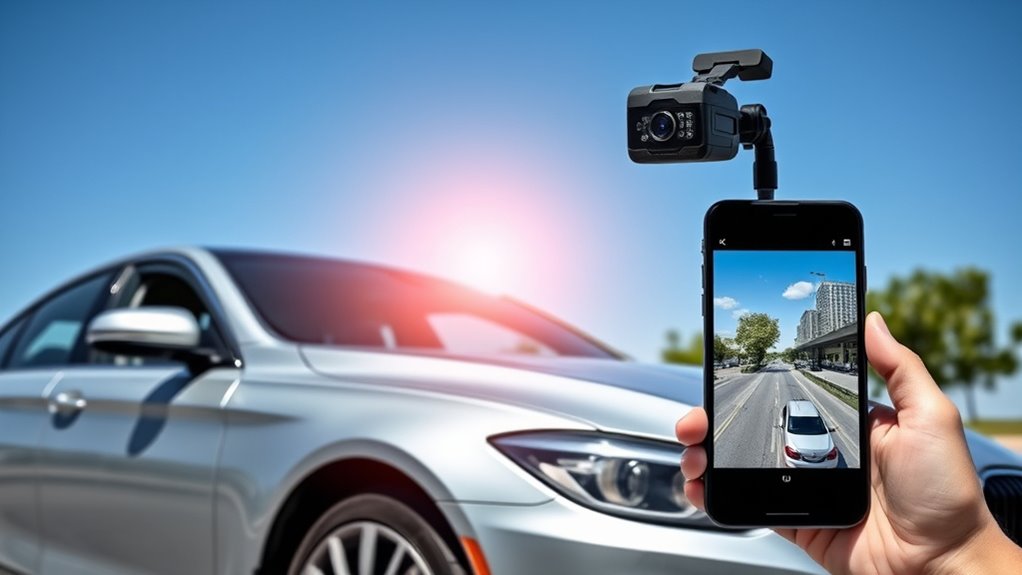

Cloud-connected dash cams let you monitor your vehicle in real time with live video feeds. They provide remote access, so you can check your car from anywhere—home, work, or on the go. These systems boost security by allowing you to see footage instantly if needed. While they improve protection, it’s important to understand privacy risks and guarantee your data stays secure. Keep exploring to discover how you can make the most of these smart security tools.

Get business pricing on garage and car supplies
- Business-only prices and quantity discounts
- Tax-exempt purchasing
- Multiple users, one account, clear invoices
Key Takeaways
- Cloud-connected dash cams enable remote live video streaming to monitor your vehicle in real-time.
- They securely transmit footage over encrypted channels, protecting your privacy and sensitive data.
- Cloud storage prevents footage loss due to theft or damage, ensuring continuous vehicle monitoring.
- Proper security features like end-to-end encryption reduce risks of unauthorized access to live feeds.
- Choosing reputable brands with transparent privacy policies enhances vehicle protection and data security.

Have you ever wondered how modern dash cams are evolving to offer more than just simple video recording? Today’s cloud-connected dash cams do much more, providing live video feeds that can be accessed remotely. This technology allows you to monitor your vehicle in real-time, whether you’re at work, on vacation, or just running errands. But with this convenience comes important considerations, especially around privacy concerns and data storage. As these devices transmit footage over the internet, you’re sharing sensitive information that could be vulnerable if not properly secured. Many manufacturers implement encryption and secure servers to protect your videos, but it’s essential to understand how your data is stored and who has access to it. Some systems store footage locally, while others upload to the cloud, making data security a key factor in your decision-making process.
Modern cloud-connected dash cams offer real-time monitoring but require careful attention to privacy and data security practices.
With cloud storage, your videos are saved remotely, freeing up space on the device itself and ensuring your footage isn’t lost if the dash cam is stolen or damaged. However, this also means relying on third-party servers, which raises questions about privacy. You need to be confident that your footage isn’t accessible to unauthorized individuals or used for purposes beyond your control. Reputable providers often have strict privacy policies and offer options to control who can view your videos. You should also consider what happens if the cloud service experiences a breach or outage—your footage might become temporarily inaccessible, which could be problematic in an emergency or dispute.
These dash cams also enable live streaming, so you can view your vehicle from anywhere with an internet connection. This feature is especially useful for fleet management, car security, or simply keeping an eye on your parked vehicle. But it also means your vehicle’s location and surroundings are constantly accessible online, which could pose privacy risks if your data isn’t properly protected. As you explore these advanced features, weigh the benefits of real-time access against potential vulnerabilities. Look for systems that prioritize data security through end-to-end encryption and transparent privacy policies. Additionally, advancements in nanotechnology could soon improve the security features of these devices by enabling more robust data encryption and tamper-proof hardware components.
In the end, cloud-connected dash cams offer remarkable benefits, but they require you to be vigilant about privacy concerns and data storage practices. By choosing reputable brands and understanding how your footage is handled, you can enjoy the peace of mind that comes with advanced vehicle monitoring while safeguarding your personal information. Remember, technology should serve your needs without compromising your privacy, so make informed choices as you upgrade your car’s security system.
Frequently Asked Questions
How Secure Is My Data Stored on Cloud-Connected Dash Cams?
Your data on cloud-connected dash cams is generally secure thanks to data encryption and strict access controls. These measures protect your footage from unauthorized access, making it difficult for hackers to breach your information. However, always guarantee you choose a reputable provider that prioritizes security, regularly updates their systems, and offers features like multi-factor authentication. Staying informed and cautious helps keep your footage safe and your privacy protected.
Can I Access Live Feeds Remotely Without Internet?
Think of your dash cam as a trusty guard dog; it can only alert you when it has a leash—an internet connection. Without internet, remote access and offline viewing aren’t possible, so you won’t be able to peek into your live feeds from afar. To access footage remotely, you’ll need a stable internet connection. Otherwise, offline viewing lets you check stored videos directly on your device, but no live updates come through.
What Happens if the Dash Cam Loses Internet Connection?
If your dash cam loses internet connection, the live feed gets interrupted during the outage. You won’t be able to view real-time footage until the internet is restored. However, your dash cam will typically continue recording locally, so nothing’s lost. Once the internet connection is back, the live feed resumes, and any stored footage uploads automatically. An internet outage temporarily limits remote access but doesn’t affect the camera’s core recording functions.
Is There a Monthly Fee for Cloud Storage Services?
Yes, there’s usually a monthly fee for cloud storage services. You’ll find different subscription costs and storage plans offered by manufacturers or third-party providers. These plans determine how much video footage you can store and how long it remains accessible. It’s important to compare options to find one that fits your needs and budget, ensuring your vehicle’s footage is safely stored without unexpected costs.
How Does Cloud Connectivity Impact Dash Cam Battery Life?
Cloud connectivity can increase your dash cam’s battery drain because it requires continuous data transfer, which consumes more power. To minimize this, use effective power management features like automatic sleep modes and motion detection. Keep your dash cam properly charged and consider parking with the engine running or connecting it to a hardwire kit. These steps help balance cloud features while protecting your vehicle’s battery life.
Conclusion
With cloud-connected dash cams, you gain real-time security and peace of mind, knowing your car is always protected. You can monitor live feeds from anywhere, ensuring you’re never out of the loop. Isn’t it reassuring to have instant access to your vehicle’s safety? Embrace this technology and keep your car safe, no matter where you are. After all, your peace of mind is worth every bit of this smart investment.
Fall Picks
fall essentials
As an affiliate, we earn on qualifying purchases.