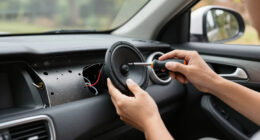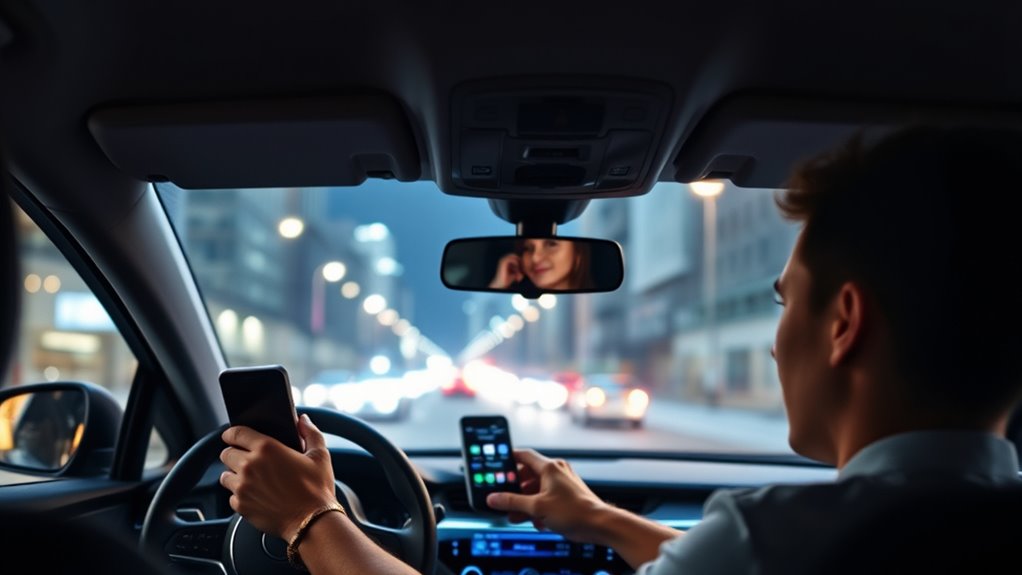

Hands-free tech can boost safety by allowing you to control calls, music, and navigation without taking your hands off the wheel. However, it’s not foolproof; clear speech and minimal background noise are essential, and misinterpretations can happen. Driver monitoring systems help assess your alertness, but they’re no substitute for staying attentive. While these features support safer driving, overreliance can lead to complacency. Keep exploring to understand how these tools truly influence your safety on the road.
Open a free Amazon Business account
Business pricing, bulk buying and tax-exempt orders.
As an affiliate, we earn on qualifying purchases.
Key Takeaways
- Hands-free tech reduces manual distractions but does not eliminate the risks of driver inattention.
- Voice commands depend on clear speech; misinterpretations can cause driver frustration or unsafe actions.
- Driver monitoring systems help detect drowsiness but are not foolproof, requiring driver vigilance.
- Overreliance on safety tech may lead to complacency, making attentive driving still essential.
- These features should supplement, not replace, responsible driving habits for overall safety.

In today’s busy world, safe driving tech features are more essential than ever to help you stay alert and avoid accidents. One of the most common innovations is voice commands, which let you control various functions without taking your hands off the wheel or your eyes off the road. With voice commands, you can make calls, change music, or set navigation routes effortlessly, reducing distractions and keeping your focus where it belongs—on driving. This hands-free approach aims to make your journey safer, but it’s important to understand how reliable and effective these systems truly are.
Modern vehicle technology also includes driver monitoring systems that continuously assess your alertness and attention levels. These systems use cameras and sensors to track your eye movements, head position, and even facial expressions. If you appear drowsy or distracted, the system can alert you with visual or auditory signals, prompting you to take a break or pay closer attention. Driver monitoring acts as an extra set of eyes, providing real-time feedback that can prevent fatigue-related accidents. When combined with voice commands, driver monitoring creates a more integrated safety network, helping you stay engaged and aware during long drives or monotonous commutes.
Driver monitoring tracks alertness and alerts you to prevent fatigue on long drives.
While these features seem to promise safer driving, it’s crucial to remember that they aren’t foolproof. Voice commands rely on clear speech and minimal background noise, and they can sometimes misinterpret your intentions, leading to frustration or distraction. You still need to speak clearly and be patient if the system doesn’t respond immediately. Similarly, driver monitoring isn’t a substitute for your own vigilance. No system can perfectly detect every sign of drowsiness or distraction, especially if your face isn’t fully visible or if the sensors are obstructed by sunglasses, hats, or dirt. These tech tools are designed to assist, but they shouldn’t encourage complacency.
In reality, safe driving tech features are most effective when used as supplementary tools, not replacements for attentive driving. Voice commands can reduce manual distractions, and driver monitoring can catch signs of fatigue you might overlook. However, your best defense remains staying alert, avoiding distractions, and practicing responsible driving habits. The technology can support you, but it can’t replace your judgment and focus behind the wheel. So, while hands-free features and driver monitoring are steps forward in road safety, they’re only part of a broader approach that puts your awareness and attentiveness at the forefront of every drive. Understanding projectors’ contrast ratio helps you appreciate how visual clarity can be enhanced in home cinema setups.
hands-free voice control car system
As an affiliate, we earn on qualifying purchases.
As an affiliate, we earn on qualifying purchases.
Frequently Asked Questions
Do Hands-Free Features Reduce Overall Accident Rates?
Hands-free features can reduce overall accident rates by promoting distraction mitigation, allowing you to keep your attention on the road. Voice control systems enable you to manage calls, navigation, and other functions without taking your hands off the wheel. However, they don’t eliminate all distractions, so you should still stay alert and use these tech features responsibly. Proper use of hands-free systems can enhance safety, but they aren’t a guarantee against accidents.
How Do Legal Regulations Vary Across Regions?
Think of legal regulations as a patchwork quilt—each region has its own pattern. Across regions, laws on hands-free tech vary widely, affecting how you stay compliant. Some areas enforce strict rules on device use, while others offer more leniency. To avoid legal trouble, you must stay informed about regional differences and verify your vehicle’s features meet local standards. Remember, legal compliance isn’t optional; it’s your best safeguard on the road.
Are There Specific Driver Demographics More at Risk?
You’re more at risk if you’re a younger driver or have a history of accidents. Driver age plays a big role, as teens and young adults often take more risks, increasing accident chances. Similarly, if you’ve had previous accidents, your likelihood of future incidents rises. Knowing this, it’s smart to stay cautious, especially when using hands-free tech, and always prioritize safe driving habits regardless of your age or past driving record.
What Are the Long-Term Impacts on Driver Attentiveness?
You might think hands-free tech is a miracle, but long-term, it could turn you into a master of driver distraction. As cognitive load increases with these features, your attention could drift like a butterfly, making you less alert over time. The more you rely on them, the more your natural focus weakens, risking dangerous lapses. Stay sharp, because losing attentiveness isn’t just a slip—it’s a potential crash waiting to happen.
Can Hands-Free Tech Prevent All Types of Crashes?
Hands-free tech can’t prevent all types of crashes because it mainly reduces distraction, but driver behavior still matters. You might feel more relaxed and less distracted, but you need to stay attentive and avoid overreliance. While distraction reduction helps, it doesn’t eliminate risks like abrupt stops or unpredictable obstacles. Always stay alert and use hands-free features responsibly to maximize safety and minimize the chance of accidents.
driver monitoring system for cars
As an affiliate, we earn on qualifying purchases.
As an affiliate, we earn on qualifying purchases.
Conclusion
While hands-free tech promises safety, don’t let it lull you into complacency. Stay alert, stay focused, and stay responsible behind the wheel. Trust the technology, but verify your surroundings. Keep your eyes on the road, your hands on the wheel, and your mind engaged. Because true safety isn’t just about gadgets; it’s about your awareness, your actions, and your commitment to driving responsibly. Only then can you truly drive safely.
As an affiliate, we earn on qualifying purchases.
As an affiliate, we earn on qualifying purchases.
Fall Picks
fall essentials
As an affiliate, we earn on qualifying purchases.