
You can equip your old car with night vision tech, but it’s not as simple as plugging in new gadgets. Compatibility issues, limited space, and outdated wiring make installation challenging. Advanced aftermarket systems with infrared or thermal cameras can boost visibility, but retrofitting often requires modifications and professional help. If you want to discover how to turn your classic car into a predator’s eye in the dark, keep exploring for more details.
Key Takeaways
- Modern night vision tech, like infrared and thermal imaging, can be adapted for older cars with custom modifications.
- Compatibility issues, wiring limitations, and space constraints make retrofitting challenging on vintage vehicles.
- Aftermarket night vision devices vary in complexity and cost, often requiring professional installation.
- High-quality displays and strategic sensor placement enhance visibility without compromising vehicle aesthetics.
- Proper calibration and integration are essential for effective night vision, turning your old car into a predator-like driving machine.

Robofinity InsightDrive Thermal Camera for Car, Infrared Dashcam with 656ft Detection & Deer Collision Alert, Car Night Vision System for Off-Road & Highway Safety
【Redefining Driving Safety】 Robofinity InsightDrive is neither an ordinary dashcam nor a regular night vision device. This AI-powered…
As an affiliate, we earn on qualifying purchases.
As an affiliate, we earn on qualifying purchases.
Understanding Night Vision Technology and Its Evolution

Night vision technology has come a long way from its early military roots to becoming a practical tool for everyday drivers. Modern systems rely on infrared imaging to detect heat signatures from objects and roadways, providing clear visibility in complete darkness. This technology captures infrared light, converting it into electrical signals to produce real-time images. Image enhancement further refines these visuals, sharpening details and reducing noise for better clarity. Over time, advancements have made night vision more compact, affordable, and user-friendly, allowing you to see beyond the limits of headlights. Additionally, the integration of contrast ratio improvements has significantly enhanced how well these systems differentiate between objects in varying lighting conditions. As a result, sensor sensitivity has improved, enabling detection of smaller and more subtle obstacles on the road. Innovations in infrared technology continue to push the boundaries of what these systems can achieve, making night driving safer. Furthermore, ongoing developments in real-time processing contribute to faster and more accurate obstacle recognition, enhancing safety during night drives. Today’s systems improve safety by revealing obstacles and pedestrians hidden in the dark, giving you a significant advantage during night drives. Moreover, ongoing research in sound wave influence suggests future systems might integrate auditory cues for even better obstacle detection. This evolution transforms how you navigate at night, making driving safer and more confident.
Robofinity InsightDrive Thermal Camera for Car, Infrared Dashcam with 656ft Detection & Deer Collision Alert, Car Night Vision System for Off-Road & Highway Safety
【Redefining Driving Safety】 Robofinity InsightDrive is neither an ordinary dashcam nor a regular night vision device. This AI-powered…
As an affiliate, we earn on qualifying purchases.
As an affiliate, we earn on qualifying purchases.
Challenges of Equipping Older Vehicles With Night Vision Systems

Equipping older vehicles with night vision systems can be tricky because they often aren’t compatible with newer technology. The cost and installation process can also be a hurdle, especially since many options are designed for modern models. Plus, limited technology choices mean you might not find a solution that fits your vehicle’s specific needs. Additionally, understanding the concept of Free Floating may be essential for customizing your vehicle’s lighting and sensor systems effectively. Incorporating adaptive lighting features can help optimize visibility and safety during night drives. To achieve reliable performance, it’s important to consider sensor integration and how it interacts with existing vehicle electronics. Moreover, understanding the principles of digital compatibility can ensure your night vision system functions seamlessly with your vehicle’s setup. Exploring smart system compatibility can further enhance integration and reliability of your night vision enhancements.
Compatibility With Older Models
Adding night vision systems to older vehicles presents several challenges, primarily because these cars weren’t designed with modern electronics in mind. Compatibility issues often arise due to outdated wiring, limited space for new components, and differences in power sources. You risk compromising vehicle preservation if modifications aren’t carefully planned, which is especially important for vintage enhancements. Some systems require digital interfaces or specific connectors that older models lack, making installation complex or impossible without extensive customization. Additionally, integrating advanced tech can affect the vehicle’s original aesthetics and functionality. To ensure a seamless upgrade, you need to contemplate the vehicle’s compatibility carefully, balancing technological improvements with the integrity of your classic car. Proper planning helps preserve your vehicle’s value while enjoying modern night vision benefits.
Cost and Installation Challenges
Upgrading older vehicles with night vision systems often involves significant costs and complex installation processes. The cost barriers can be steep, as advanced night vision technology isn’t always affordable for everyday drivers. These systems typically require specialized equipment and calibration, which adds to expenses. Installation complexity is another hurdle; many older cars lack the necessary mounting points or electrical infrastructure. You might need to retrofit your vehicle, involving modifications that can be time-consuming and costly. Additionally, professional installation is often recommended to ensure proper functionality, further increasing the overall investment. For many, these financial and technical challenges make equipping an older vehicle with night vision less practical, especially when compared to newer models designed to accommodate such systems from the factory. Compatibility with existing vehicle systems can also be a limiting factor, making integration even more challenging. Moreover, the lack of factory integration options in older cars means that custom solutions are often necessary, which can further complicate the upgrade process. The absence of standardized wiring in older models can make adapting modern night vision systems more complex and expensive.
Limited Technology Options
One of the main challenges when trying to fit night vision systems into older vehicles is the limited availability of compatible technology. Retrofit challenges stem from technological limitations that make integration difficult. You might face issues like:
- Outdated wiring and electrical systems that can’t support new hardware
- Lack of space for installing advanced sensors or displays
- Incompatibility between modern night vision tech and older vehicle electronics
These issues mean you can’t simply install a modern system without significant modifications. Manufacturers often don’t prioritize retrofitting older models, making options scarce. As a result, technological limitations restrict your choices, increasing the complexity and cost of upgrading your vehicle to enjoy night vision capabilities. Additionally, the absence of technological compatibility with older cars further complicates the process, requiring custom solutions or extensive modifications.

SHNJAUTO 3.0 Inch Bi Projector Lens Retrofit Kit-110W 20,000LM 6000K White Focus Beam Clear Cut Off Line
DOT COMPLIANCE, STREET LEGAL: This headlight conversion kit with DOT compliance designed reflector and focus lens, the focus…
As an affiliate, we earn on qualifying purchases.
As an affiliate, we earn on qualifying purchases.
Popular Aftermarket Night Vision Devices for Cars

There are several aftermarket night vision devices available to enhance your driving safety. You’ll find different types of night vision tech, popular brands and models, and options for easy installation and compatibility. Understanding these choices helps you pick the right system for your vehicle and driving needs. Additionally, considering compatibility with your vehicle can ensure seamless integration and optimal performance of the night vision system. Furthermore, considering advanced tech features can improve the overall effectiveness of the device. Additionally, researching reliable technology systems highlights the importance of dependable equipment in critical applications, especially in moments of global chaos – Microsoft outage. Furthermore, considering compassionate caregiving approaches can help ensure that older drivers receive the support they need to stay safe on the road.
Types of Night Vision Tech
When choosing aftermarket night vision devices for your car, it’s important to understand the different types available, as each offers unique advantages. First, LED headlights improve visibility by providing bright, energy-efficient light, making dark roads easier to see. Second, infrared sensors detect heat signatures, allowing you to spot animals or obstacles hidden in shadows. Third, some systems combine LED technology with infrared sensors for enhanced clarity. These options can be integrated into your existing setup or added as supplementary devices. Infrared technology is especially useful in low-light conditions, while LED headlights improve overall illumination. Selecting the right type depends on your driving environment and how much you want to invest in night vision. Each type helps you see better and drive safer at night, and exploring crochet styles for locs can inspire creative modifications to your vehicle’s interior or accessories. Additionally, understanding night vision technology can help you choose the most effective system for your needs.
Top Brands and Models
Several top brands dominate the aftermarket night vision market, offering reliable devices that enhance your driving safety. Brands like FLIR, Pulsar, and Autoliv lead with models designed for easy integration into your vehicle’s automotive lighting system. These devices improve visibility without compromising vehicle aerodynamics, maintaining your car’s sleek profile. FLIR’s thermal imaging systems are popular for their clarity and range, while Pulsar offers compact options with quick installation. Autoliv provides advanced night vision with features tailored for different vehicle types. When choosing a model, consider compatibility with your car’s design to guarantee peak performance. Understanding night vision technology is essential for selecting the right device and ensuring optimal safety during nocturnal drives. These brands focus on delivering high-quality night vision that seamlessly blends with your vehicle, helping you see clearly and stay safer on dark roads. Additionally, safe installation practices are crucial to maximize performance and maintain your vehicle’s safety standards. Proper knowledge of night vision integration can further enhance your driving experience and safety.
Installation and Compatibility
Installing aftermarket night vision devices requires careful attention to your vehicle’s compatibility to guarantee peak performance. First, check if your car’s electrical system can support lighting upgrades needed for the device. Second, verify that the device’s sensor calibration matches your vehicle’s specifications to ensure clear image quality. Third, confirm the mounting options align with your dashboard or windshield setup to avoid obstruction. Compatibility also involves evaluating your existing lighting system, as some night vision devices work best with specific lighting configurations. Proper installation ensures ideal sensor calibration, reducing glare or distortion. Before proceeding, review your vehicle’s manual and consult with professionals if needed. This careful approach enhances night vision effectiveness, making your night drives safer and more confident.
Robofinity InsightDrive Thermal Camera for Car, Infrared Dashcam with 656ft Detection & Deer Collision Alert, Car Night Vision System for Off-Road & Highway Safety
【Redefining Driving Safety】 Robofinity InsightDrive is neither an ordinary dashcam nor a regular night vision device. This AI-powered…
As an affiliate, we earn on qualifying purchases.
As an affiliate, we earn on qualifying purchases.
Installing Night Vision Cameras and Sensors in Classic Models

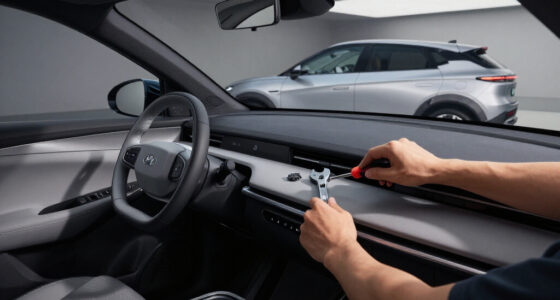
Adding night vision cameras and sensors to classic car models is a practical way to enhance visibility during night drives without compromising their vintage charm. To guarantee peak performance, proper sensor calibration is essential—you’ll need to fine-tune the sensors for accurate image capture and reliable night vision. Before installation, check battery compatibility to ensure your vehicle’s power system can support the new components without draining your battery or causing electrical issues. Choose compact, unobtrusive cameras that blend with your car’s aesthetic. Mount sensors strategically for a clear, unobstructed view of the road ahead. Once installed, test the system thoroughly to confirm calibration accuracy and battery performance, ensuring safe, enhanced night driving without sacrificing your classic’s authentic look.
Integrating Display Systems for Real-Time Night Vision Feeds

To effectively utilize your night vision system, you need to integrate a display that shows real-time feeds from your cameras and sensors. This guarantees you can quickly interpret your surroundings without distraction. Consider these key steps:
- Select a high-quality, glare-resistant display compatible with your vehicle lighting setup for clear visibility.
- Position the screen within your line of sight to maintain driver alertness and quick response times.
- Use intuitive controls to toggle between different feeds and adjust brightness for ideal viewing in varying night conditions.
Benefits and Limitations of Retrofits for Night Visibility

Retrofits for night visibility offer a practical way to enhance your vehicle’s capabilities without investing in a completely new system. They can provide significant visual enhancement, making night drives safer and more confident. However, beware of night vision myths that suggest these systems are perfect; limitations include reduced effectiveness in fog or heavy rain and potential glare. While retrofits improve visibility, they don’t offer true predator vision, and some features may be overstated. Here’s a quick comparison:
| Benefit | Limitation |
|---|---|
| Cost-effective upgrade | Limited performance in adverse conditions |
| Easy installation | Possible false sense of security |
| Enhanced peripheral awareness | May not eliminate all night blindness |
Understanding these benefits and limitations helps you make informed choices about retrofitting your car for night drives.
Future Trends: Making Old Cars Night Vision Ready

As technology advances, making older cars night vision ready is becoming increasingly feasible and affordable. Innovations are integrating advanced sensors into existing systems, enhancing visibility without major overhauls. To prepare your car for future upgrades, consider these steps:
- Improve automotive aerodynamics to optimize sensor performance and reduce interference.
- Invest in engine tuning to support added electronic components without sacrificing efficiency.
- Explore retrofit kits that incorporate night vision cameras and displays, designed for seamless integration.
These enhancements not only boost night visibility but also ensure your vehicle remains efficient and reliable. As the tech evolves, your old car can transform into a modern, night vision-enabled machine, making night drives safer and more enjoyable.
Frequently Asked Questions
Can Night Vision Technology Be Added to Vintage Cars Without Extensive Modifications?
Yes, you can add night vision technology to your vintage car without extensive modifications. You’ll need to install a compact night vision system that mounts easily and connects to your existing wiring. Many modern night vision devices are designed for quick installation, making them suitable for vintage cars. Just verify the system is compatible with your vehicle’s electrical setup and that it doesn’t interfere with your classic car’s aesthetic.
What Is the Typical Cost of Retrofitting an Old Car With Night Vision?
Getting night vision installed on your old car usually costs between $1,500 and $3,500, depending on the system and vehicle. The installation process involves mounting cameras or sensors and integrating them with your car’s electronics. Keep in mind, it’s not a cheap date, but it’s worth it if you want to see the road in a whole new light. Make sure to get a detailed cost estimate before committing.
Are There Legal Restrictions on Using Night Vision Systems in Vehicles?
You should know that legal restrictions on using night vision systems in vehicles vary by location. Some areas may ban or regulate their use due to privacy concerns, especially if the technology captures images beyond your vehicle. Check local laws before installing or using these systems to avoid fines or legal issues. Always prioritize respecting privacy rights and make sure your night vision setup complies with applicable regulations.
How Reliable Are Aftermarket Night Vision Devices Compared to Original Equipment?
Like a shaky photograph, aftermarket night vision devices can vary in reliability. They often provide decent image quality, but may not match original equipment’s clarity, especially in challenging conditions. Durability also differs; some are built tough, while others wear out faster. You might get good results for occasional use, but for consistent, reliable performance, OEM systems tend to outperform aftermarket options, ensuring safer night drives.
Do Night Vision Upgrades Affect the Vehicle’s Warranty or Insurance Coverage?
Night vision upgrades can impact your warranty and insurance coverage. You might face warranty implications if the modifications cause damage or void specific coverage clauses, so check your manufacturer’s policies first. Insurance considerations also come into play; adding aftermarket night vision could increase premiums or require notifying your insurer. Always consult with your dealer and insurer before installing such upgrades to avoid unexpected costs or coverage issues.
Conclusion
Upgrading your old car for night vision might feel like giving it a secret superpower, enhancing safety without changing its timeless charm. While it’s not a perfect magic trick, these retrofits can brighten your nighttime drives and boost confidence on dark roads. Just remember, some illusions require patience and a touch of finesse. With the right approach, you’ll enjoy clearer nights behind the wheel, turning your classic into a subtly modern marvel—ready to light up the darkness.