
Deciding whether to share your dashcam footage after an accident involves important privacy, legal, and ethical factors. You should consider if sharing might infringe on others’ privacy rights or impact ongoing investigations. Laws vary by location, so check local regulations before posting, and think about the potential consequences for everyone involved. If you’re unsure, consulting legal experts or authorities can help protect your rights and guarantee responsible handling. Discover more about steering these tricky situations.
Key Takeaways
- Consider privacy laws and whether sharing footage could infringe on individuals’ rights or lead to legal issues.
- Evaluate if sharing the footage might impact ongoing investigations, legal cases, or law enforcement procedures.
- Ensure the footage is accurate, unedited, and legally obtained before sharing to maintain credibility and avoid defamation.
- Weigh the ethical implications of exposing private moments or sensitive incidents to avoid unnecessary harm.
- When in doubt, consult legal or authorities before sharing to prevent unintended consequences and protect your rights.
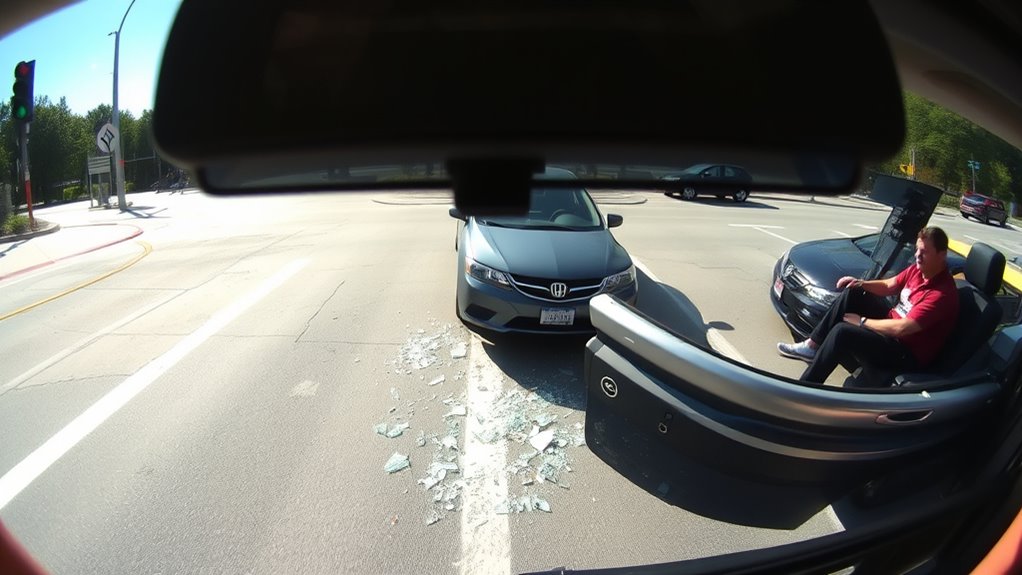
Many drivers rely on dashcams to protect themselves and document incidents, but using these devices can also lead to unexpected dilemmas. One of the main concerns is privacy. When you record footage in public or even private areas, you might inadvertently capture images of other drivers, pedestrians, or bystanders who haven’t consented to being recorded. Sharing or posting this footage online can raise serious privacy concerns, especially if it contains identifiable individuals. Some people feel uncomfortable knowing they’re being recorded and may even consider it an invasion of their privacy. As a dashcam user, you need to think about how sharing footage might impact others’ privacy rights, especially if your videos show private moments or sensitive situations. Additionally, the quality and clarity of footage can vary depending on the device used, which may affect its usefulness as evidence or for sharing.
Beyond privacy, legal implications are a significant factor when deciding whether to share your dashcam footage after an accident. Laws regarding the use and distribution of recorded footage vary by jurisdiction, and what’s legal in one area may be illegal in another. For instance, some regions have strict rules about recording without consent, and sharing videos that include identifiable individuals could lead to legal trouble, such as defamation or privacy violation claims. Additionally, if your footage is used as evidence in court, it could be scrutinized for authenticity and legality. Sharing videos publicly might also complicate legal proceedings, especially if the footage is edited or taken out of context.
You should also consider whether sharing your dashcam footage could impact the ongoing investigation or legal case. Posting videos online might influence witnesses, law enforcement, or insurance companies, potentially complicating the process. If you’re involved in an accident, it’s often best to consult with legal experts or authorities before sharing footage, to ensure you don’t unintentionally jeopardize your case or violate any laws.
Moreover, think about the ethical side of sharing footage. Do you have the right to expose someone else’s mistake or misconduct publicly? While your intention might be to document the truth or warn others, it’s important to weigh that against the potential harm or embarrassment caused to others. Sometimes, keeping footage private or only sharing it with relevant authorities is the wisest choice. It’s also worth noting that the accuracy of footage can be affected by various factors, which might influence how your evidence is perceived.
Frequently Asked Questions
Can I Share Dashcam Footage Without the Other Driver’s Consent?
You can share dashcam footage without the other driver’s consent, but you should consider privacy concerns and legal issues. Many jurisdictions have consent requirements for sharing recordings, especially if they capture others’ private moments. Before posting or sharing, check local laws to ensure you’re not violating privacy rights. It’s wise to obtain consent or anonymize footage to avoid legal complications and respect everyone’s privacy.
What Are the Privacy Laws Regarding Dashcam Footage in Different States?
Oh, surely, privacy laws are just suggestions, right? Actually, each state has its own rules about dashcam footage confidentiality and privacy regulations. Some states see dashcam videos as personal data, so sharing without consent can breach privacy laws. You should always check local laws before sharing footage, because ignoring these regulations isn’t just careless—it’s illegal. Stay informed to protect your rights and respect others’ privacy.
Does Sharing Footage Affect Insurance Claim Outcomes?
Sharing footage can influence your insurance claim outcome by impacting evidence credibility, so consider privacy concerns first. If you share your dashcam video, insurers may see your evidence as more credible, helping your case. However, sharing also raises privacy issues for others involved. Be aware that some insurers may require footage, but always weigh the privacy risks before deciding whether to share. Your choice can ultimately affect claim approval and settlement.
How Long Can I Legally Retain Dashcam Recordings?
You can typically retain dashcam recordings for 30 to 90 days, but this varies by jurisdiction. Surprisingly, over 60% of drivers aren’t aware of their data retention obligations. Legally, you must follow local laws, which may require deleting footage after a certain period or preserving it for specific purposes like insurance claims or legal proceedings. Always check your area’s regulations to stay compliant and protect your rights.
Are There Restrictions on Sharing Footage on Social Media Platforms?
Yes, there are restrictions on sharing footage on social media platforms. You need to respect privacy concerns and legal boundaries, so avoid posting identifiable details of other people without their consent. Sharing footage could violate privacy laws or lead to legal repercussions if it’s used maliciously or without permission. Always consider the potential impact on privacy and guarantee your sharing complies with local laws to avoid legal issues.
Conclusion
Ultimately, sharing your dashcam footage can be a powerful tool for justice, revealing the truth when disputes arise. Yet, it also opens doors to privacy concerns and legal complications, risking more than you might expect. Think of it like a mirror—you can see clearly, but what others see might surprise or even harm you. Weigh the clarity against the potential chaos; in the end, your choice shapes not just your story, but your peace of mind.