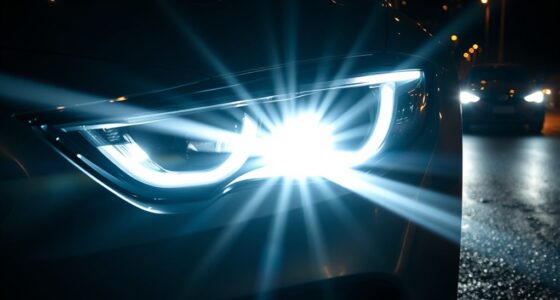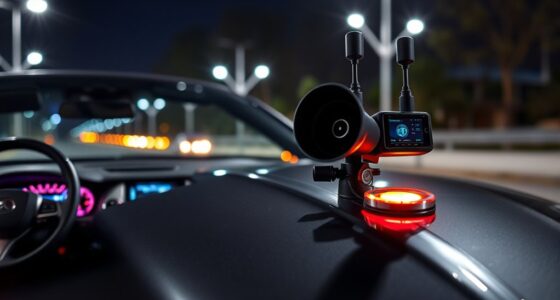

Yes, you can equip your old car with smart, adaptive headlights through retrofitting modern LED and automatic leveling systems. These upgrades improve safety and visibility without needing a full vehicle overhaul. Many aftermarket kits are available for easy installation, bringing your car up to date with features like adaptive beams and automatic leveling. Keep in mind that proper installation and compliance with local regulations are important. If you’re interested, there’s more to explore about making your car smarter.
Key Takeaways
- Many aftermarket LED headlight kits are compatible with older vehicles for retrofitting purposes.
- Automatic leveling and smart features can often be integrated into existing headlight assemblies with proper upgrades.
- Compatibility depends on vehicle design, electrical system, and local regulations; professional installation may be required.
- Modern LED headlamps with adaptive and smart features are available for older cars to enhance safety and visibility.
- Retrofitting older vehicles with smart headlamps is a cost-effective way to modernize lighting without replacing the entire vehicle.
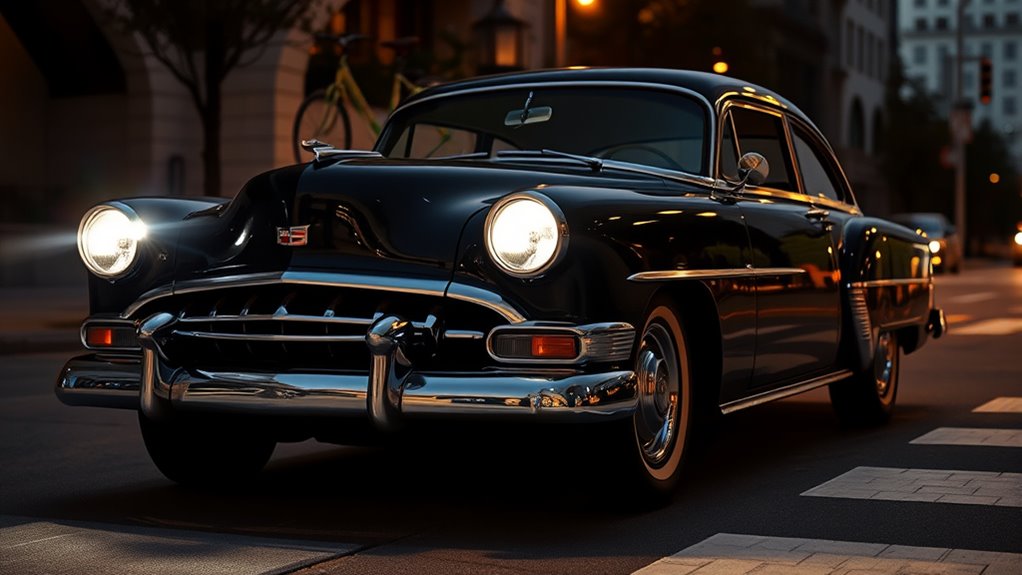
Have you ever wondered how modern headlights improve nighttime driving? It’s mainly thanks to technological advances that allow for safer, clearer visibility on the road. One key innovation is LED technology, which has revolutionized headlamp design. Unlike traditional halogen bulbs, LEDs produce brighter, more focused light while consuming less energy. They last longer and can be integrated into compact, sleek headlight assemblies, making them ideal for upgrading older vehicles. If you’re considering adding smart features to your car’s lighting, LED headlights are a smart choice because they enable more precise control over the light output. They can be programmed to adapt to different driving conditions, providing better illumination without blinding oncoming traffic. Combined with automatic leveling systems, LED technology can greatly enhance your driving experience, especially at night or on uneven roads. Additionally, projector headlamps offer a more focused and intense beam, further improving visibility and safety. Automatic leveling is another essential feature that improves headlight performance. It ensures your headlights are always aimed correctly, regardless of your car’s load or road conditions. When your vehicle is heavily loaded, the front end may dip, causing the headlights to point downward and reduce visibility ahead. Conversely, when the vehicle is unloaded, the lights may shine too high, blinding other drivers. Automatic leveling systems detect these changes in angle and adjust the headlight beams accordingly, maintaining ideal illumination. If your car doesn’t have this feature, it’s worth considering an upgrade, especially if you frequently drive at night or on poorly lit roads. Many modern LED headlight systems come equipped with automatic leveling capabilities, making the upgrade smoother and more effective. Although retrofitting an older car with adaptive headlights isn’t always straightforward, it’s definitely possible. You can replace your existing headlights with LED units that include intelligent features like automatic leveling and adaptive beam patterns. Some aftermarket kits are designed specifically for older vehicles, allowing you to improve visibility without the need for a full vehicle overhaul. Keep in mind, though, that installation might require some technical know-how or professional help to ensure everything functions properly and complies with local regulations. Ultimately, upgrading your headlights with LED technology and automatic leveling not only boosts safety but also gives your car a modern, high-tech look. It’s a smart investment that makes driving at night less stressful and more confident, even if your car is a few years old.
Frequently Asked Questions
Can Adaptive Headlights Be Installed on Any Vehicle?
Adaptive headlights can be installed on many vehicles, but their aftermarket compatibility depends on your car’s make and model. You might need specific vehicle modifications, like wiring adjustments or mounting brackets, to guarantee proper functioning. Not all older cars easily accommodate these smart headlamps, so it’s crucial to consult a professional or check compatibility before investing. Doing thorough research helps you determine if adaptive headlights are a feasible upgrade for your vehicle.
Are Retrofitting Adaptive Headlights Cost-Effective?
Retrofitting adaptive headlights is like fitting a square peg into a round hole—often not very cost-effective. The cost comparison shows they’re usually expensive, especially with retrofit challenges like wiring and sensor compatibility. You might spend more than upgrading to a newer vehicle with built-in smart headlamps. Carefully weigh the benefits against these hurdles, because sometimes, the investment doesn’t match the safety or convenience gains.
Do Adaptive Headlamps Improve Night Driving Safety?
Adaptive headlamps definitely improve night driving safety by reducing driver fatigue and handling different weather conditions better. They automatically adjust the beam direction and intensity, helping you see more clearly without blinding other drivers. This means you can respond quicker to obstacles and hazards, especially in rain, fog, or on winding roads. Overall, smart headlamps enhance your visibility and safety, making night driving less tiring and more secure.
How Long Does Installation of Adaptive Headlights Take?
The installation process for adaptive headlights typically takes around 2 to 4 hours, depending on your vehicle’s make and model. You’ll need to remove existing headlamps, install new smart headlamp components, and sometimes update the vehicle’s electrical system. It’s best to have a professional handle the installation for safety and compatibility reasons. Expect a time estimate of a few hours, but always check with your installer for specific details.
Are There Legal Restrictions for Adaptive Headlights in My Country?
You should verify your country’s vehicle regulations, as many places have strict legal compliance rules for adaptive headlights. In fact, over 60% of countries regulate headlamp modifications to ensure safety. Some regions require headlight sensors and automatic adjustments, while others ban aftermarket smart headlamps entirely. Always confirm local laws before upgrading, so you avoid penalties or insurance issues, and guarantee your vehicle remains compliant with legal standards.
Conclusion
Upgrading your old car with adaptive headlights is like giving it a new set of eyes—suddenly, every curve and corner becomes clearer and safer. Imagine driving through a foggy night, your smart headlamps slicing through darkness like a lighthouse guiding ships home. Even if your car’s age suggests it’s past its prime, this simple upgrade can renew its spirit and your confidence behind the wheel. It’s proof that innovation can breathe new life into the familiar.