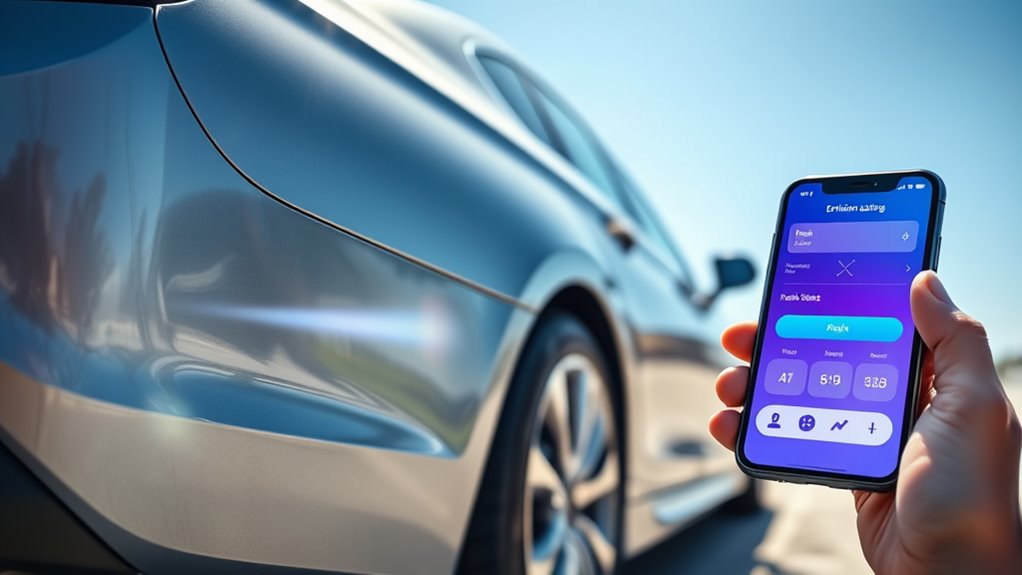
To find out if your car will pass emissions, you can use an OBD-II scanner to check for trouble codes and monitor key engine systems. Many scanners provide real-time data, letting you see if components like sensors and fuel systems are working properly. Confirming your vehicle’s emissions readiness before the test can save time, money, and stress. Keep exploring to discover how you can make sure your car passes with confidence.
Key Takeaways
- Use an OBD-II scanner to check for active trouble codes and emissions-related system readiness before testing.
- Verify the “Ready” status on your vehicle’s diagnostic system to ensure all emissions tests are complete.
- Perform a self-check for common issues like faulty oxygen sensors or dirty filters that can cause test failure.
- Review real-time data to confirm your engine runs efficiently and emissions outputs are within acceptable limits.
- Address any detected problems or incomplete tests to improve your chances of passing emissions inspections.
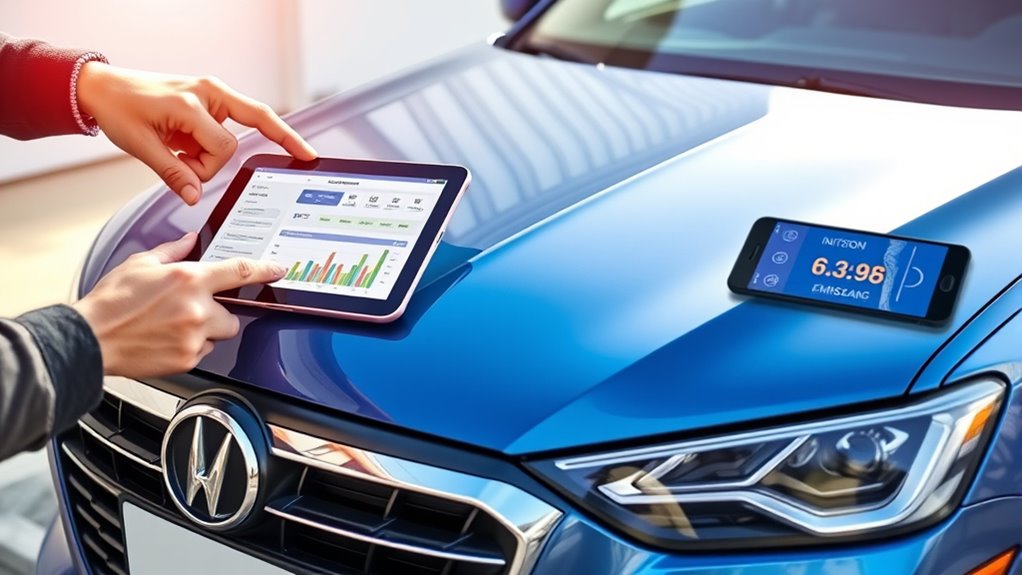
If you’re worried about whether your car will pass its upcoming emissions test, using modern technology can give you a quick and accurate answer before you head to the testing station. One of the most effective tools for this is engine diagnostics technology. Many vehicles are equipped with onboard diagnostic systems (OBD-II), which monitor various engine parameters and can alert you to issues that might cause emissions problems. By connecting an OBD-II scanner to your car, you can retrieve trouble codes that indicate if your engine is running inefficiently or producing excess pollutants. This insight helps you identify and fix potential issues beforehand, saving you time, money, and the embarrassment of a failed emissions test.
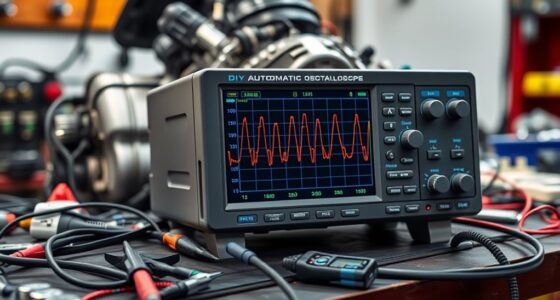
Engine diagnostics tools have become more accessible and user-friendly. You can purchase a basic scanner at an auto parts store or online, plug it into your vehicle’s diagnostic port, and instantly read any stored codes. Some advanced scanners even provide real-time data, showing you how your engine performs under different conditions. This information allows you to determine if your engine is running at its best or if there are underlying problems that could cause your vehicle to fail emissions testing. For example, issues like a malfunctioning oxygen sensor, a dirty air filter, or misfiring cylinders can all contribute to increased emissions. Catching these early gives you the chance to address them before your scheduled test.
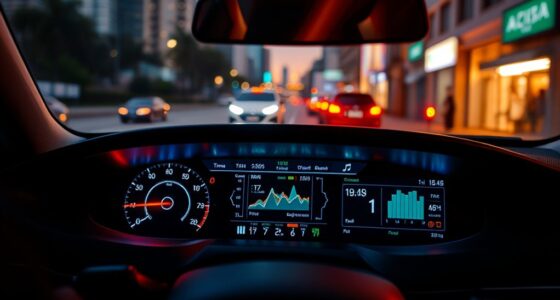
Modern engine scanners provide real-time data to detect issues causing increased emissions.
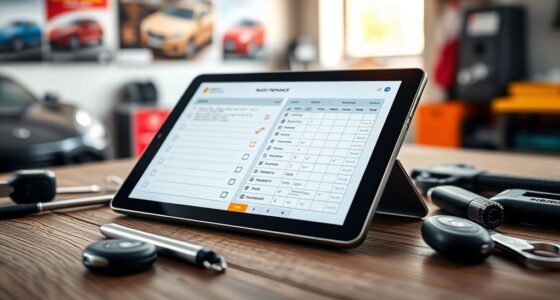
In addition to engine diagnostics, many modern vehicles come with built-in systems that can perform self-checks related to emissions readiness. These systems monitor components like the catalytic converter, exhaust sensors, and fuel systems. Before heading to the testing station, you can use an OBD-II scanner or even smartphone apps that connect wirelessly to your vehicle’s diagnostic port to see if your car is “ready” for emissions testing. If the system indicates that certain tests haven’t been completed or that emissions-related systems aren’t functioning properly, you’ll know to get those issues sorted first. Furthermore, understanding the importance of contrast ratio can help you better interpret your vehicle’s performance and emissions output.
Taking advantage of these technological tools helps you avoid surprises at the testing station. It ensures your vehicle meets the necessary emissions standards, reduces the risk of fines, and keeps your car running smoothly and efficiently. So, before you schedule your emissions testing appointment, invest a few minutes in engine diagnostics. It’s a simple step that can save you time, money, and the headache of a failed test. By proactively checking your vehicle’s health with these modern tools, you gain confidence that your car will pass and stay compliant with environmental regulations.
Frequently Asked Questions
Can I Check My Car’s Emissions Online Before Testing?
Yes, you can check your vehicle’s emissions online before your inspection. Many states offer online tools to verify if your vehicle meets emissions standards, helping you prepare for the inspection. These platforms pull data from your vehicle registration and testing history, giving you a clear idea of whether your car will pass the emissions test. Using this tech saves you time and surprises at the vehicle inspection.
Which Apps or Tools Are Best for Pre-Test Emissions Checks?
Think of emissions app reviews as your car’s crystal ball—you can peek into its future performance. Apps like OBDLink, CarScanner, and BlueDriver provide vehicle diagnostics that reveal emissions health before your test day. Using these tools, you’ll get real-time insights, helping you avoid surprises at the station. Trust these tech allies to give you peace of mind, so you can hit the road confident your vehicle’s emissions are in check.
How Accurate Are DIY Emissions Testing Kits?
DIY emissions testing kits offer moderate accuracy, but their test reliability varies. You might get a good estimate of your vehicle’s emissions, yet these kits can’t always match the precision of professional tests. Keep in mind, DIY accuracy depends on proper usage and calibration. Use these kits as a preliminary check, but for the most reliable results, consider a certified emissions test before heading to the inspection station.
Do All Vehicles Require the Same Emissions Testing Process?
Not all vehicles require the same emissions testing process because vehicle standards and testing procedures vary based on factors like age, type, and location. You should check your local regulations to determine your specific requirements. Modern tech can help you understand your vehicle’s emissions status beforehand, ensuring you’re prepared for the test. This way, you avoid surprises and make sure your vehicle meets the necessary standards before heading to the testing center.
What Are Common Reasons for Emissions Test Failure?
Failing an emissions test is like a warning shot; common reasons include outdated vehicle maintenance, such as worn spark plugs or a dirty air filter. If your car doesn’t meet emissions standards, it may have faulty catalytic converters or an improper fuel mixture. Regularly checking and maintaining your vehicle guarantees it runs cleanly and passes tests easily. Staying on top of emissions standards and vehicle upkeep helps prevent surprises at the testing station.
Conclusion
Don’t leave your emissions test to chance—think of it as checking your car’s health before a big journey. Using tech tools is like having a crystal ball, revealing hidden issues before they become costly surprises. Stay ahead of the game and keep your vehicle running smoothly, so you don’t get caught in the trap of failed tests. With a little prep, you can cruise confidently, knowing your car’s emissions are in check and ready to hit the road.