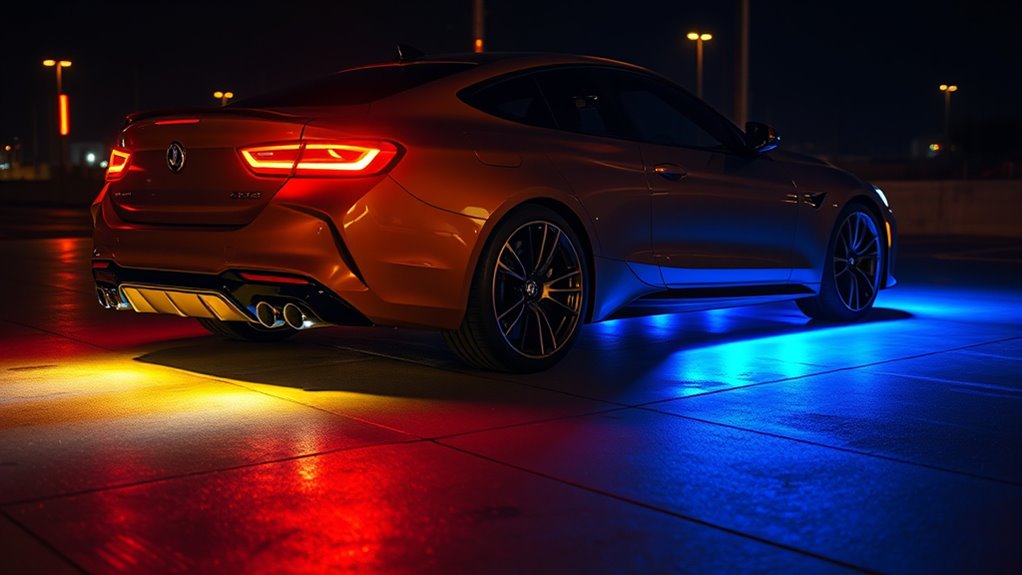
If you’re torn between neon and LED underglow, consider what matters most to you. Neon offers a nostalgic, vintage glow with vibrant, fixed colors but can be tricky to install and less durable. LEDs provide a sleek, modern look with easy, customizable color changes and simple installation, lasting longer. Your choice depends on whether you want classic appeal or modern convenience—stick around to discover which option suits your style best.
Key Takeaways
- Neon offers a vintage glow with limited color options, while LEDs provide dynamic, customizable lighting with instant color changes.
- Neon installation is complex and costly, whereas LED underglow is easy to DIY and more affordable.
- Neon tubes are fragile and less durable, making LEDs a better choice for everyday use and longevity.
- LEDs enable quick pattern and color shifts, perfect for modern, versatile vehicle aesthetics; neon remains static once installed.
- The decision depends on whether you prefer classic retro style or modern, flexible lighting technology.
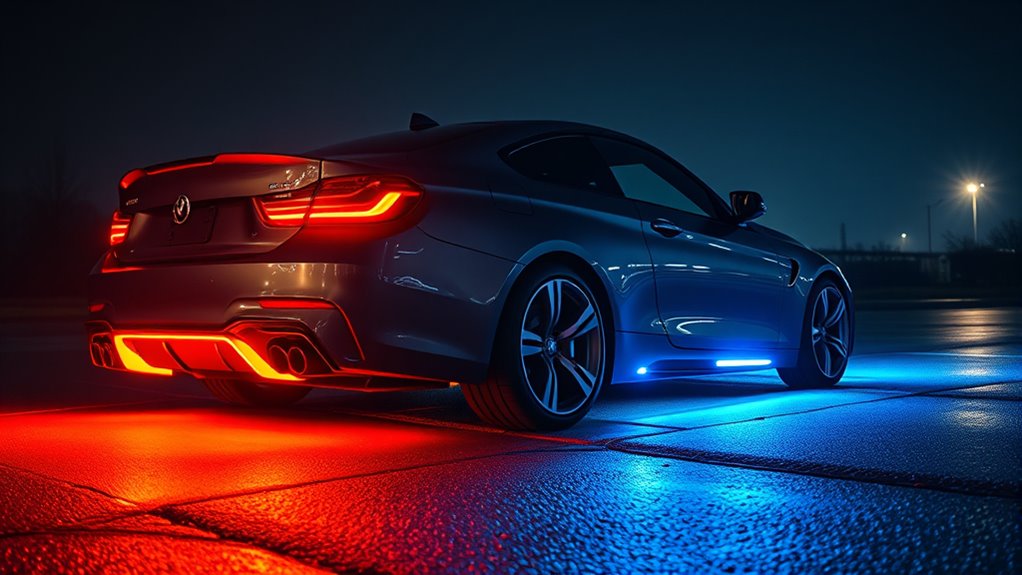
Have you ever wondered whether neon or LED underglow is the better choice for your vehicle? Both options can dramatically change your car’s look, but they come with their own set of advantages and drawbacks. When deciding, it’s important to take into account factors like color customization and installation complexity, which can influence how satisfied you’ll be with your setup. Neon lights have long been popular for their classic, vibrant glow. They offer rich, deep hues that give your vehicle a retro, eye-catching appearance. However, their color customization options are limited compared to LEDs. Neon tubes are typically available in pre-set colors, and changing them requires replacing entire tubes, which isn’t the most convenient or cost-effective process. Additionally, installing neon underglow can be more complex. Neon requires high-voltage transformers and precise fitting, making the installation process more involved. If you’re not comfortable with electrical work or lack experience, you might need professional help to ensure everything is installed safely and correctly. This added complexity can mean higher upfront costs and more time investment.
On the other hand, LED underglow offers a significant edge when it comes to variety and ease of customization. LEDs come in a broad spectrum of colors, and many systems allow you to change hues on the fly via remote control or smartphone apps. This flexibility means you can switch from a subtle blue to a vibrant red or even a rainbow pattern in seconds, giving you more control over your vehicle’s aesthetic. Installation is generally simpler with LEDs. They use low-voltage power sources, are compact, and don’t require transformers like neon lights do. Many LED kits are designed for DIY installation, with flexible strips that can be easily adhered to your vehicle’s undercarriage. Thanks to their modular design, you can customize the layout to fit your specific style and needs without extensive wiring or technical know-how. Plus, LEDs are more durable and resistant to vibrations and shocks, which makes them a practical choice for everyday driving. Moreover, the European cloud industry is advancing with innovative, energy-efficient LED lighting technologies that align with sustainability goals.
Ultimately, if you prioritize a straightforward installation process and a wide range of color options, LEDs are probably the better choice. They provide the modern, customizable glow you might be after, without the hassle that neon lighting entails. Neon still holds a nostalgic charm and can give your vehicle a distinctive, vintage vibe, but it demands more effort and technical skill. Your decision depends on what matters most—ease and versatility or classic appeal. Either way, both options can elevate your vehicle’s look, just in different ways.
Frequently Asked Questions
Which Type of Underglow Has a Longer Lifespan?
LED underglow generally has a longer lifespan than neon. You’ll find that LEDs offer better durability compared to neon, which can be more fragile and prone to damage. Additionally, LEDs are more energy-efficient, meaning they use less power and last longer without burning out. If you’re looking for a durable, energy-efficient option that stays vibrant over time, LED underglow is the smarter choice for longevity.
Are Neon Underglows More Environmentally Friendly Than LED?
Imagine a vibrant neon sign glowing softly, but with a flicker of concern. Neon underglows aren’t more eco-friendly than LEDs; they consume more energy and contain gases harmful to the environment. LEDs use less power, making them a smarter choice for eco-friendly considerations. For energy consumption comparison, LEDs shine brighter with less wattage, reducing your carbon footprint. So, if you care about the planet, LEDs are the way to go.
Can Neon Lights Be Customized for Different Colors Easily?
Yes, neon lights can be customized for different colors, but it’s not as easy as with LEDs. You’ll need to select specific gases or colored glass tubes for each hue, which limits flexibility. Installation can be more challenging because neon requires precise handling and shaping, reducing overall flexibility. If you want quick, easy color changes and versatile installation, LEDs are the better option for color customization and adaptability.
How Do Neon and LED Underglows Impact Vehicle Resale Value?
Neon and LED underglows can lower your vehicle’s resale value if they’re overly bold or poorly maintained, making your car less appealing to potential buyers. Think of it as a glow that might turn off those seeking a sleek, classic look. However, subtle, well-maintained underglows can enhance your vehicle’s appeal, attracting buyers who appreciate personalized style without overwhelming the overall aesthetic.
What Are the Maintenance Needs for Neon Versus LED Underglow?
Neon underglow requires more maintenance due to fragile glass tubes, which are sensitive to vibrations and temperature changes, increasing repair needs. It also consumes more power, leading to higher energy use. In contrast, LED underglow is low-maintenance, with durable, flexible strips that last longer and use less power. Installation of LED is simpler, often involving plug-and-play kits, while neon requires more complex setup with precise handling.
Conclusion
Ultimately, choosing between neon and LED underglow is like picking between vintage charm and modern magic. Neon offers that nostalgic glow, turning your car into a classic masterpiece, while LED underglow dazzles with its sleek versatility and energy efficiency. Think of it as a battle between timeless artistry and cutting-edge innovation. Whichever you pick, remember that your ride’s glow is your personal spotlight—shining bright and making a statement that’s all your own.