

Adding chasing turn signals to an older car enhances safety and gives it a modern, stylish look. You’ll need LED strips or modules designed for sequential signals, along with proper wiring diagrams to guide your installation. Connect these to your existing turn signal circuit and a control module or relay for the chase effect. Securing all connections and testing the system guarantees smooth operation. Keep exploring to discover how to make your upgrade seamless and eye-catching.
Key Takeaways
- Choose compatible LED sequential turn signal kits with clear wiring diagrams for your vehicle.
- Connect LEDs to the vehicle’s turn signal circuit and a relay or control module for proper sequencing.
- Follow detailed wiring diagrams to ensure correct connections to power, ground, and signal inputs.
- Secure all wiring and components to withstand vibrations, and test the system thoroughly after installation.
- Customize LED colors and configurations to match your vehicle’s aesthetic while enhancing visibility.
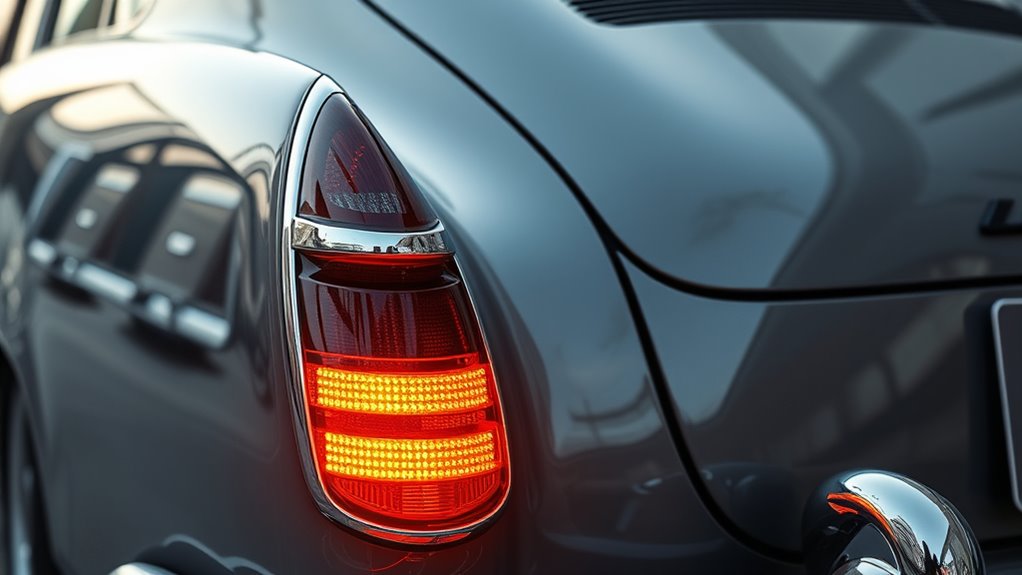
Sequential turn signals have become a popular feature in modern vehicles because they enhance visibility and add a stylish touch to your car’s signaling system. If you’ve ever admired the flowing, eye-catching chase of LEDs in newer models, you might wonder how to bring that sleek look to your older car. The good news is, adding chasing blinkers isn’t as complicated as you might think. With proper LED customization and a good understanding of wiring diagrams, you can upgrade your vehicle’s turn signals to display that modern, sequential effect.
The first step is understanding how to integrate LED lights into your existing system. Unlike traditional incandescent bulbs, LEDs are more energy-efficient, last longer, and can be customized for different effects. When planning your upgrade, you’ll want to focus on LED customization options—such as choosing LED strips or modules designed specifically for sequential signals. These are available in various colors and configurations, making it easier to match your vehicle’s aesthetic. Once you’ve selected the right LEDs, you’ll need to pay close attention to wiring diagrams. These diagrams serve as your map for connecting the LEDs securely and correctly to your vehicle’s turn signal circuit.
Integrate energy-efficient LEDs with custom options, then follow wiring diagrams for seamless turn signal upgrades.
Wiring diagrams are essential because they show you how to connect the LEDs to your car’s existing wiring. Many modern LED conversion kits come with detailed diagrams, making installation straightforward even if you’re not a wiring expert. You’ll typically need to connect the LEDs to a relay or a module that controls the chasing sequence. This module is vital; it creates the distinctive flowing turn signal pattern by sequentially activating each LED segment. When wiring, you’ll need to identify the correct power source, ground, and signal input from your vehicle’s turn signal switch. Proper wiring ensures that the LEDs respond accurately when you activate your turn signals, providing a smooth chase effect.
Additionally, understanding the importance of contrast ratio can help you choose LEDs with better visibility and sharper sequences in various lighting conditions. During installation, ensure you follow the wiring diagrams precisely to avoid shorts or malfunction. Use appropriate connectors, and secure all connections to prevent vibrations or disconnections over time. If you’re comfortable with electrical work, you can often do this yourself, but seeking professional help is always a good idea if you’re unsure. Once wired up, test your new turn signals thoroughly. Adjust the timing or sequencing if needed, which might involve tweaking the relay or control module.
Frequently Asked Questions
Are Sequential Turn Signals Legal in All States?
Sequential turn signals are not legal in all states. You need to check your state’s laws and vehicle regulations, as some states restrict modifications to lighting systems for safety reasons. While they’re popular for style, installing chasing blinkers may require approval or specific standards to be met. Always verify with local authorities to ensure your vehicle remains compliant and avoid potential fines or issues during inspections.
How Much Does Installing Chasing Blinkers Cost?
Adding chasing blinkers can cost you between $50 and $200 for installation, depending on whether you go the DIY route or hire a pro. If you’re handy, DIY installation saves money and feels like assembling a puzzle. A professional install guarantees perfect wiring, but it’ll cost more. Consider your skill level and budget—either way, it’s a fun upgrade that’ll make your car stand out like a shining star.
Can I Retrofit Sequential Signals Myself?
Yes, you can retrofit sequential signals yourself, but expect some installation challenges. You’ll need to make certain of aftermarket compatibility with your car’s existing wiring and switch to compatible relays or modules. Carefully follow instructions, and be prepared for possible electrical work. If you’re comfortable with basic wiring and car electronics, DIY installation is doable. However, if you’re unsure, consulting a professional might save you time and avoid potential damage.
Do Sequential Turn Signals Require Special Wiring?
Sequential turn signals do require special wiring because they need precise wiring requirements to function correctly. You’ll need to verify your wiring setup is compatible with the signals, as not all older cars support the necessary signal compatibility out of the box. Installing these blinkers involves upgrading your wiring harness and possibly adding a sequencer module, so double-check the wiring requirements and signal compatibility before starting your retrofit.
Will Adding Chasing Blinkers Affect My Car’s Warranty?
Adding chasing blinkers may impact your warranty, as it could trigger manufacturer restrictions or void certain coverage if the modification is deemed non-approved. You need to weigh warranty implications carefully, understanding that any change might be seen as altering the vehicle from its original condition. Before proceeding, check your manufacturer’s policies and consult with a professional to avoid unintended consequences that could affect your car’s warranty coverage.
Conclusion
With your new chasing blinkers softly illuminating your old car’s personality, you’ll find yourself gently guiding others’ eyes along your journey. It’s like a subtle dance of light, whispering tales of modern flair blending seamlessly with vintage charm. As you cruise, imagine each signal as a delicate ripple on a calm pond—an elegant touch that keeps your ride both timeless and fresh. Embrace the quiet sophistication these signals bring, turning every turn into a smooth, flowing moment.