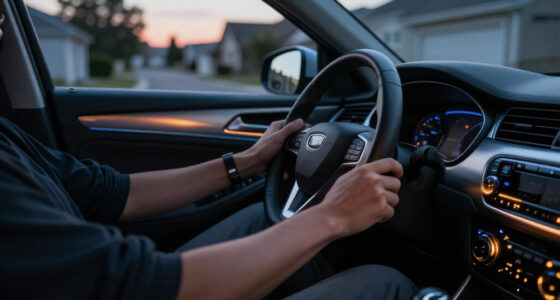
Yes, a blinking third brake light can help prevent rear-endings by making your braking more noticeable to drivers behind. It increases your vehicle’s visibility and clearly signals your intent to slow down or stop, prompting quicker reactions. Flashing brake lights draw more attention than steady lights, especially in heavy traffic or poor conditions. If you want to understand how this technology improves safety even further, you’ll find useful insights below.

Get business pricing on garage and car supplies
- Business-only prices and quantity discounts
- Tax-exempt purchasing
- Multiple users, one account, clear invoices
Key Takeaways
- Flashing third brake lights increase vehicle visibility, alerting drivers earlier during braking situations.
- They help reduce reaction times, giving following drivers more time to slow down safely.
- Enhanced visibility can prevent rear-end collisions, especially in heavy traffic or poor weather.
- Properly used, blinking brake lights clarify braking intentions, reducing driver confusion.
- Overall, they promote proactive communication, contributing to improved road safety and accident prevention.
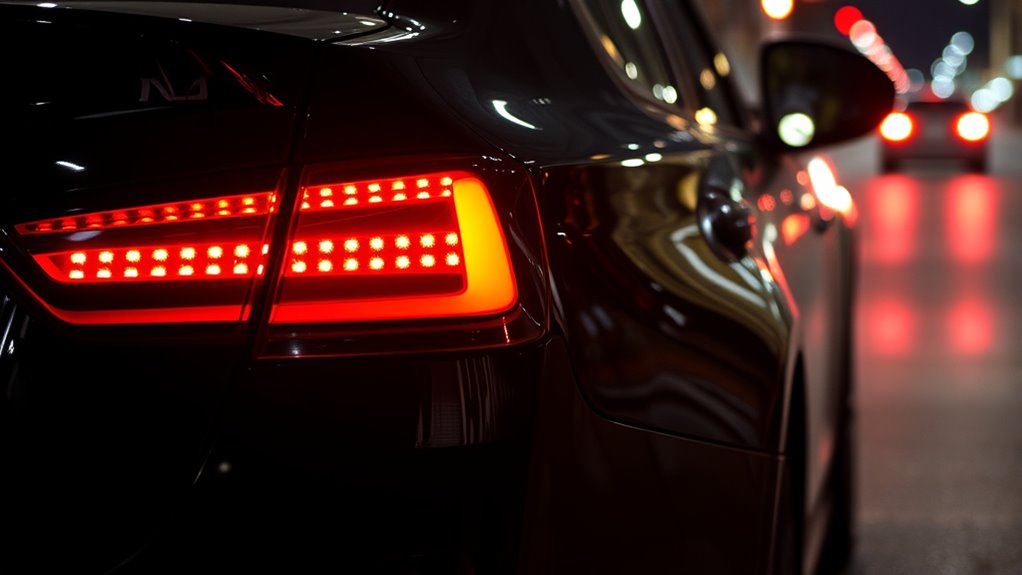
Flashing brake lights are an increasingly common safety feature designed to alert drivers behind you when you’re slowing down or stopping abruptly. These blinking lights serve as an additional signal that can catch the attention of drivers who might otherwise overlook standard brake lights, especially in heavy traffic or poor visibility conditions. When you activate your brakes, the blinking third brake light, often mounted at the top or center of your vehicle, flashes rapidly to enhance visibility. This simple yet effective feature can substantially improve vehicle safety by reducing the chances of rear-end collisions.
Flashing brake lights increase visibility, alert drivers sooner, and help prevent rear-end collisions.
By making your braking intentions more noticeable, flashing brake lights boost driver awareness, a vital factor in preventing accidents. Many drivers might not react quickly enough to steady brake lights alone, particularly if they’re distracted or following at a close distance. The blinking pattern acts as a visual cue that demands attention, prompting drivers behind you to slow down sooner rather than later. This increased alertness can give them more time to respond, especially in situations where sudden stops are necessary, such as when traffic ahead suddenly slows or an obstacle appears unexpectedly.
Using flashing brake lights responsibly can make a real difference in traffic safety. They are especially beneficial during emergency braking or when you need to signal to drivers behind you that you’re reducing your speed rapidly. Since rear-end collisions often occur due to delayed driver responses, the blinking third brake light helps bridge that gap, making your intentions clear and reducing confusion. It’s worth noting, however, that not all vehicles are equipped with this feature, and some drivers may not be accustomed to seeing blinking brake lights. Still, the increased visibility generally outweighs any potential confusion.
Incorporating flashing brake lights as part of your vehicle safety strategy can lead to more mindful driving behaviors behind you. When drivers are more aware of your actions, they tend to react more promptly and appropriately, which creates a safer environment for everyone on the road. Proper use of this technology doesn’t just protect you; it contributes to broader road safety by encouraging attentive driving and reducing the likelihood of rear-end crashes. Ultimately, your choice to enable or install flashing brake lights demonstrates a proactive approach to driver awareness and vehicle safety, helping to prevent accidents before they happen.
As an affiliate, we earn on qualifying purchases.
Frequently Asked Questions
Are Blinking Brake Lights Legal in All States?
Bl blinking brake lights are not legal in all states. State regulations vary, and many states restrict flashing or pulsating brake lights to prevent confusion. You should verify your local laws before installing aftermarket blinking brake lights, as their legality depends on state regulations and whether they meet vehicle safety standards. If you ignore these rules, you risk fines or penalties, so always ensure your modifications comply with your state’s vehicle code.
How Do Flashing Brake Lights Affect Driver Reaction Time?
Flashing brake lights improve driver perception, making your signals more noticeable and reducing reaction time. When you use blinking or flashing lights, drivers behind you recognize the urgency faster, giving them more time to react and prevent accidents. This quick response can considerably enhance accident prevention, especially in heavy traffic or poor weather conditions. By increasing visibility, flashing brake lights help keep everyone safer on the road.
Can Flashing Brake Lights Replace Traditional Brake Lights?
Flashing brake lights can enhance safety, but they shouldn’t replace traditional brake lights entirely. LED enhancements make flashing signals brighter and more noticeable, which can improve driver reactions and reduce rear-end collisions. However, a blinking third brake light works best as a supplementary safety feature, drawing attention quickly. Relying solely on flashing lights might cause confusion; combining them with standard lights offers the best protection on the road.
Do Flashing Brake Lights Drain More Vehicle Battery?
Flashing brake lights do slightly increase power consumption, which can lead to more vehicle battery drain over time. However, modern LED systems are energy-efficient, so the impact on your vehicle battery is minimal. If you regularly use flashing brake lights, make certain your vehicle’s electrical system is in good condition. Generally, the added power consumption isn’t enough to cause significant battery drain, especially with a well-maintained battery and efficient lighting system.
Are There Different Types of Flashing Brake Light Systems?
Think of flashing brake lights as different strokes in a painter’s palette. You’ve got LED technology systems that pulse rapidly, attracting attention like a lighthouse in fog. Others switch between solid and blinking modes, often with bright red brake light color, to signal urgency effectively. Some systems even combine LED and traditional bulbs for a custom warning. The variety guarantees you can pick a system that best highlights your intentions and boosts safety on the road.
vehicle brake light warning system
As an affiliate, we earn on qualifying purchases.
As an affiliate, we earn on qualifying purchases.
Conclusion
In today’s busy roads, a blinking third brake light could be your modern knight in shining armor, helping you avoid rear-end collisions. While it’s not a magic bullet, it certainly draws more attention than a steady light, much like the bright neon signs of yesteryear that caught your eye. So, if you want to stay safe and stand out, consider this simple upgrade — because, in the end, a little extra alertness can make all the difference.
As an affiliate, we earn on qualifying purchases.
As an affiliate, we earn on qualifying purchases.
Columbus Day / Indigenous Peoples' Day Picks
long weekend sales
As an affiliate, we earn on qualifying purchases.