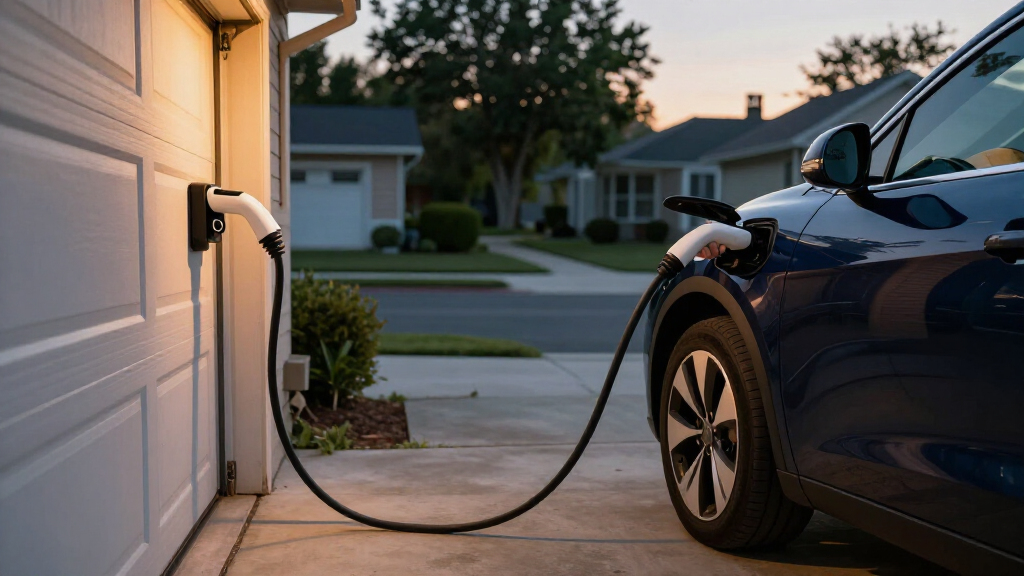
For most drivers with a compatible J1772 vehicle and a suitable 240V circuit, I’d start with the EVIQO 48A hardwired charger for its higher power ceiling; the Emporia 48A plug-in is a flexible alternative, while the ChargePoint HomeFlex is a recognizable connected option. The right choice depends on more than the charger’s advertised amperage: your vehicle’s onboard charging limit, home wiring, installation options, and need for portability all affect the result. A hardwired unit can support a higher output when the circuit and car allow it, while plug-in and portable models can simplify setup or travel. Level 1 models avoid a 240V circuit but add charge time, and compact portable units trade power for flexibility. Read on for how these 15 options differ and which type of buyer each suits.

Get business pricing on garage and car supplies
- Business-only prices and quantity discounts
- Tax-exempt purchasing
- Multiple users, one account, clear invoices
Complete the kit


Key Takeaways
Installation sets the power ceiling: The 48A EVIQO is hardwired, while the Emporia and several other higher-output picks use NEMA 14-50 plugs; neither reaches its advertised output unless the circuit, installation, and vehicle support it.
Portable does not mean fast: The 16A travel chargers offer flexibility across outlets or charging levels, but they deliver less power than the 32A to 48A home units.
Level 1 is a deliberate slow-charge choice: Lectron’s 120V charger avoids a 240V installation, making it useful for modest daily driving or backup, but a depleted battery takes much longer to replenish.
Several models share similar core specs: The two listed SEGUMA 32A chargers and the EVIQO 40A plug-in model overlap in the basics, so cable length, controls, certification details, and support should guide a close comparison.
Vehicle compatibility matters as much as charger output: Most picks use J1772 connectors; drivers with a different inlet should confirm a compatible adapter and its limits before buying.




| electric vehicle charger | Connector | Cable length | Maximum current |
|---|---|---|---|
| EVIQO Level 2 EV Charger J1772 | J1772 | 25 ft | 48A; up to 50A with DIP switch on a 70A circuit |
| EMPORIA Level 2 EV Charger wit | SAE J1772 | 25 ft | 48A hardwired; 40A with NEMA plug |
| Level 2 EV Charger | J1772 | 25 ft | 48A; adjustable from 16A to 48A |
| AIMILER Level 2 EV Charger | J1772 | 25 ft | 32A, adjustable from 16A to 32A |
| VEVOR Level 1 & 2 EV Charger | SAE J1772 | 25 ft | — |
| SEGUMA NEMA 14-50 Level 2 EV C | J1772 | 23 ft | 32A |
| ChargePoint HomeFlex Level 2 E | J1772 | — | — |
| EVDANCE Level 1 & 2 Portable E | J1772 | 25 ft | 16A |
| VDLPOWERVP Portable Level 1 an | — | 20 ft | — |
| Lectron Level 1 EV Charger | J1772 | 16 ft | — |
| bokman Portable Level 1&2 EV C | J1772 | 20 ft | 16A |
| EVDANCE Level 2 EV Charger 40A | J1772 | 25 ft | 40A, adjustable from 10A to 40A |
| EVIQO Level 2 EV Charger J1772 | J1772 | 25 ft | — |
| SEGUMA 32A Level 2 EV Charger | J1772 | 25 ft | 32A |
| Raylix Level 1 & 2 EV Charger | SAE J1772 | — | 16A |
More Details on Our Top Picks
EVIQO Level 2 EV Charger J1772 48A Hardwired 240V Wall Charging Station
The EVIQO EVIPOWER-2 is a strong fit for drivers who want a permanently installed charger with more output than a typical plug-in setup. On a suitable dedicated circuit, it delivers up to 48A, while Wi-Fi scheduling lets owners set charging around their routine and track energy use. Its 25-foot cable and IP66-rated housing make it flexible for many garages and outdoor locations. Compared with the EMPORIA Level 2 EV Charger, EVIQO is hardwired only, so it gives up the option to unplug and move the unit. That tradeoff also means a licensed electrician is needed, and the 48A setup calls for a 60A circuit. Choose it for a dedicated, weather-ready home installation; skip it if you need plug-in flexibility.
Pros:- Up to 48A output on a 60A dedicated circuit
- J1772 connector works with non-Tesla EVs; Tesla use requires an adapter
- Wi-Fi app offers scheduling and energy tracking
- IP66 housing and a 25-foot cable suit many indoor or outdoor installs
Cons:- Hardwired installation requires a licensed electrician
- 48A operation requires a 60A circuit; 50A mode calls for a 70A circuit
- Wi-Fi features require a 2.4 GHz network
Best for: EV owners planning a permanent indoor or outdoor installation who can provide a dedicated 60A circuit and want app scheduling.
Not ideal for: Renters or drivers who need a portable, plug-in charger, since this model requires hardwiring and professional installation.
- Model:EVIPOWER-2
- Connector:J1772
- Maximum current:48A; up to 50A with DIP switch on a 70A circuit
- Voltage:240V
- Cable length:25 ft
- Installation:Hardwired
- Connectivity:2.4 GHz Wi-Fi
- Certifications:UL, ETL, FCC, Energy Star
- Warranty:3 years
Our verdict“Choose the EVIQO if you want a high-output, hardwired home charger with outdoor-rated construction and can support its electrical requirements.”
EMPORIA Level 2 EV Charger with J1772 Connector — 48 Amp, 240V WiFi Enabled Electric Vehicle Charging Station, 25ft Cable, NEMA 14-50, White
The EMPORIA Level 2 EV Charger gives buyers two installation paths: a NEMA 14-50 plug at up to 40A or hardwiring for up to 48A. That choice makes it easier to match the charger to an existing outlet or a more permanent electrical setup. Its app adds energy monitoring and scheduled charging, and the 25-foot cable reaches across many garage bays. Compared with the hardwired-only EVIQO EVIPOWER-2, EMPORIA is the more adaptable pick when plug-in installation matters. The tradeoff is clear: using the included plug limits output to 40A, so full 48A charging requires hardwiring and professional installation. It also depends on 2.4 GHz Wi-Fi for its smart features. I’d favor it for a household that wants a choice of installation styles.
Pros:- Can run at up to 40A from a NEMA 14-50 outlet or 48A when hardwired
- App supports charging schedules and energy monitoring
- 25-foot cable and J1772 connector suit many North American EVs
- UL listed and ENERGY STAR certified
Cons:- Plug-in operation is limited to 40A
- Hardwired 48A installation calls for professional electrical work
- Smart features require 2.4 GHz Wi-Fi
Best for: Homeowners with a NEMA 14-50 outlet who want app controls now and the option to hardwire for higher output later.
Not ideal for: Drivers who need 48A charging without hardwiring or who cannot connect the charger to 2.4 GHz Wi-Fi.
- Connector:SAE J1772
- Maximum current:48A hardwired; 40A with NEMA plug
- Voltage:240V
- Plug type:NEMA 14-50P
- Cable length:25 ft
- Connectivity:2.4 GHz Wi-Fi
- Dimensions:3.39 in D × 9.06 in W × 12.6 in H
- Weight:16.6 lb
- Certifications:UL Listed, ENERGY STAR
Our verdict“Pick EMPORIA if you want the flexibility of plug-in or hardwired installation and can accept 40A output when using the plug.”
Level 2 EV Charger, 48A NEMA 14-50P, 25ft Cable, ETL Certified, WiFi App & Plug-and-Play, J1772 Connector
This 48A Level 2 charger pairs a touch screen with app scheduling, cost tracking, and adjustable current from 16A to 48A. That range gives households more control over charging when the available circuit or daily routine changes. It supports up to 48A when hardwired, while its NEMA 14-50 plug setup is listed for 40A. Unlike the EMPORIA Level 2 EV Charger, which emphasizes two installation paths, this model adds on-unit touch controls for buyers who want settings visible at the charger. Its 25-foot cable is also useful across a long parking space. The tradeoff is outdoor use: despite its IP65 rating, the product data advises against direct rain or sunlight. Tesla drivers also need to supply their own adapter.
Pros:- Adjustable current from 16A to 48A
- Touch screen and Wi-Fi app provide multiple ways to manage charging
- 25-foot cable reaches many garage and driveway parking positions
- ETL, FCC, and Energy Star certifications with a 3-year warranty
Cons:- Full 48A output requires hardwiring and suitable 6 AWG wiring
- Product guidance advises against direct sunlight or rain exposure
- Tesla adapter is not included
Best for: Drivers who want adjustable amperage, on-unit touch controls, and app-based scheduling for a sheltered home charging area.
Not ideal for: Owners who need a charger exposed to direct rain or sunlight, or Tesla drivers who expect an adapter in the box.
- Connector:J1772
- Maximum current:48A; adjustable from 16A to 48A
- Voltage:240V
- Plug:NEMA 14-50P
- Cable length:25 ft
- Ports:1
- Certifications:ETL, FCC, Energy Star
- Warranty:3 years
- Color:Grey
Our verdict“Choose this model for flexible current settings and touch-screen controls in a protected charging location.”
AIMILER Level 2 EV Charger, 32A, 25ft Cable, ETL Certified, 220V-240V NEMA 14-50P Plug with J1772 Connector
The AIMILER 32A charger is a practical match for drivers who want Level 2 charging and app controls without moving up to the 48A class. Its 7.68 kW output and adjustable 16A-to-32A range let owners tune charging to their circuit, while the touch screen and app handle schedules and charge monitoring. Compared with the 48A EMPORIA Level 2 EV Charger, AIMILER gives up peak charging output but offers NEMA Type 4/IP66 weather protection and a 25-foot cable. That makes it a better fit for buyers who value weather resistance and moderate output over the fastest home charging. App setup may take patience on 2.4 GHz Wi-Fi, and Tesla or NACS vehicles need a separate adapter for the J1772 connector.
Pros:- Adjustable 16A-to-32A output up to 7.68 kW
- NEMA Type 4/IP66 weather protection
- App and touch screen support scheduling and charge monitoring
- 25-foot cable and built-in leakage protection
Cons:- Lower maximum output than the 48A EMPORIA and EVIQO options
- App setup requires 2.4 GHz Wi-Fi and may need troubleshooting
- Tesla and NACS vehicles require an additional adapter
Best for: EV and plug-in hybrid owners with a compatible 240V outlet who want adjustable 32A charging, smart controls, and weather-resistant housing.
Not ideal for: Drivers seeking the highest charging output in this group or owners of Tesla/NACS vehicles without a J1772 adapter.
- Output voltage:240V
- Maximum current:32A, adjustable from 16A to 32A
- Maximum charging power:7.68 kW
- Connector:J1772
- Plug:NEMA 14-50P
- Cable length:25 ft
- Weather protection:NEMA Type 4 / IP66
- Connectivity:2.4 GHz Wi-Fi and app control
- Certifications:ETL, FCC
Our verdict“Choose AIMILER if 32A is enough for your routine and weather protection plus app controls matter more than maximum output.”
VEVOR Level 1 & 2 EV Charger, 16 Amp Portable Electric Vehicle Charger with 25 ft Cable, NEMA 6-20P Plug and NEMA 5-15 Adapter, SAE J1772
The VEVOR 16A portable charger is the lineup’s choice for drivers who need a unit they can carry between locations or use with different household outlets. Its NEMA 6-20 plug supports Level 2 charging, and the included NEMA 5-15 adapter adds a Level 1 option where only a standard outlet is available. The 25-foot cable and IP66 control box add reach and weather resistance. Compared with the wall-mounted AIMILER 32A charger, VEVOR is easier to relocate but delivers substantially less current, so it is a better backup or travel companion than a fast daily home charger. Its 16A ceiling and need for a 6-20 outlet for Level 2 operation are the main limits.
Pros:- Portable design supports use at more than one location
- NEMA 6-20 plug and included 5-15 adapter provide Level 2 and Level 1 options
- 25-foot cable offers useful reach
- IP66 control box and multiple built-in electrical protections
Cons:- 16A maximum is slower than the 32A AIMILER and 48A models
- Level 2 charging requires a NEMA 6-20 outlet
- J1772 connector may require an adapter for vehicles with a different inlet
Best for: Drivers who want a portable J1772 charger for travel, backup charging, or homes with both NEMA 6-20 and standard 120V outlets.
Not ideal for: Households that need faster daily charging than 16A can provide or lack a NEMA 6-20 outlet for Level 2 use.
- Model:EV-ACS1601U/K3
- Amperage:16A
- Voltage:120V–240V
- Connector:SAE J1772
- Plug:NEMA 6-20P with NEMA 5-15 adapter
- Cable length:25 ft
- Weight:6.8 lb
- Dimensions:9.72 × 3.82 × 2.32 in
- Weather protection:IP66 control box
Our verdict“Pick VEVOR if portability and two outlet options matter more than charging speed.”
SEGUMA NEMA 14-50 Level 2 EV Charger, 32A J1772 Home Charging Station, 25FT Cable
The SEGUMA suits drivers who want a plug-in Level 2 charger with more control over current than a fixed-output portable unit. Its settings from 10A to 32A let buyers match charging to their circuit, while the display makes status and selected current easy to check. Compared with the ChargePoint HomeFlex, it offers a portable or wall-mounted setup and does not rely on app controls; ChargePoint supports app-based management and advertises higher charging output. The SEGUMA’s IP66 rating and built-in safeguards support outdoor use, but a suitable NEMA 14-50 outlet is required and may call for electrician work. Its J1772 connector also means Tesla drivers need an adapter. Choose it for flexible current settings, not maximum charging speed.
Pros:- Current can be adjusted from 10A to 32A
- Supports portable or wall-mounted use
- IP66 weather resistance and built-in safety protections
- TFT display shows charging information
Cons:- Requires a NEMA 14-50 outlet, which may need professional installation
- 32A output is lower than the ChargePoint HomeFlex’s stated 50A amperage
- Tesla vehicles require a separate J1772 adapter
Best for: J1772 EV owners with a NEMA 14-50 outlet who want to adjust charging current and may move the unit between locations
Not ideal for: Drivers seeking higher output or app-based charging management, or Tesla owners who do not want to use an adapter
- Connector:J1772
- Plug:NEMA 14-50
- Maximum current:32A
- Adjustable current:10A, 16A, 20A, 24A, 32A
- Cable length:23 ft
- Display:1.77-inch TFT
- Ingress protection:IP66
- Mounting:Portable or wall-mounted
Our verdict“Pick the SEGUMA if you want adjustable current and portable or wall-mounted use from a NEMA 14-50 outlet.”
ChargePoint HomeFlex Level 2 EV Charger, J1772, NEMA 14-50 Plug
The ChargePoint HomeFlex is the most feature-oriented pick here for drivers who want to manage home charging through an app. It offers charging controls, reminders, and charging information, while its UL certification and cold-resistant cable add practical reassurance for a fixed indoor or outdoor setup. ChargePoint states up to 45 miles of range per hour, depending on the vehicle; that gives it a speed advantage over the 32A SEGUMA, though actual charging depends on the car and circuit. This model calls for a 240V NEMA 14-50 outlet and electrician installation, so it is less convenient to relocate than the portable EVDANCE Level 1 & 2. Its J1772 connector serves most non-Tesla EVs, while Tesla drivers need an adapter.
Pros:- App provides charging controls, reminders, and charging information
- UL-certified
- Cold-resistant cable
- Rated for indoor or outdoor installation
Cons:- Requires a 240V NEMA 14-50 outlet and a 40A or 50A circuit
- Electrician installation is required
- Tesla vehicles need a separate adapter
Best for: J1772 EV owners setting up a home charging point who want app controls and charging reminders
Not ideal for: Renters or frequent travelers who need a portable charger, and Tesla owners without a J1772 adapter
- Output voltage:240V
- Amperage:50A
- Connector:J1772
- Plug:NEMA 14-50
- Charging speed:Up to 45 miles of range per hour, depending on vehicle
- Certification:UL
- Weight:13.8 lb
- Installation:Indoor or outdoor; electrician installation required
Our verdict“Choose the ChargePoint HomeFlex if app-based controls and a permanent home setup matter more than portability.”
EVDANCE Level 1 & 2 Portable EV Charger, 16A, 25 ft Cable
The EVDANCE Level 1 & 2 is aimed at drivers who want one portable charger for both a standard household outlet and a compatible 240V outlet. It provides up to 12A at 120V or 16A at 240V, so the higher-voltage option can charge faster without reaching the output of the 32A SEGUMA or the ChargePoint HomeFlex. Its 25 ft cable and carry bag make it easier to bring along or position near a vehicle, and the LED display reports status and errors. The tradeoff is a modest 16A ceiling and a J1772 connector: Tesla owners need an adapter, and outlet compatibility depends on the included plugs and available adapters. Pick it for outlet flexibility and portability, not for fast home charging.
Pros:- Supports charging from compatible 120V and 240V outlets
- 25 ft cable and carry bag aid transport and placement
- LED display indicates charging status and errors
- IP66-rated housing
Cons:- Maximum current is 16A, below the 32A SEGUMA and 50A ChargePoint HomeFlex
- Some outlet adapters are sold separately
- Tesla vehicles require a separate J1772 adapter
Best for: J1772 EV or plug-in hybrid owners who need a portable charger for compatible 120V and 240V outlets
Not ideal for: Drivers with a dedicated home circuit who want higher charging output, or Tesla owners who do not have an adapter
- Connector:J1772
- Charging levels:Level 1 and Level 2
- Maximum current:16A
- Input options:120V at 12A; 240V at 16A
- Charging power:Up to 1.44 kW at 120V; 3.68 kW at 240V
- Cable length:25 ft
- Plugs:NEMA 6-20 with 6-20 to 5-15 adapter
- Warranty:1 year
Our verdict“Choose the EVDANCE if you need a portable J1772 charger that can use compatible 120V and 240V outlets.”
VDLPOWERVP Portable Level 1 and Level 2 EV Charger, 16A, 3.5 kW, 20 ft Cable
The VDLPOWERVP provides a straightforward way to charge from either a compatible 240V NEMA 6-20 outlet or a 110V outlet with its NEMA 5-15 adapter. Its 16A, 3.5 kW maximum output puts it in the same general portable class as the EVDANCE, while its 20 ft cable is shorter than that model’s 25 ft lead. The control box has IP65 protection, safety features, and LED indicators for charging status and errors. That makes it a practical option for drivers who value basic plug flexibility, but the product details do not state a Level 1 charging rate, so buyers cannot readily compare expected charging time in that mode. Choose it for a simple J1772 portable setup; the higher-output SEGUMA is better suited to regular home charging from a 240V outlet.
Pros:- Supports Level 1 and Level 2 charging
- Includes NEMA 6-20 plug and NEMA 5-15 adapter
- IP65-rated control box with built-in safety protections
- LED indicators show charging status and errors
Cons:- 20 ft cable is shorter than the EVDANCE’s 25 ft cable
- Level 2 mode requires a NEMA 6-20 outlet
- No Level 1 output rate is stated
Best for: J1772 EV owners who want a portable charger with NEMA 6-20 Level 2 and NEMA 5-15 Level 1 plug options
Not ideal for: Drivers who need a longer cable, a stated Level 1 charging rate, or higher output for regular home charging
- Charging levels:Level 1 and Level 2
- Maximum output:3.5 kW
- Current:16A
- Voltage:110–240V
- Plugs:NEMA 6-20 and NEMA 5-15 adapter
- Cable length:20 ft
- Compatibility:SAE J1772
- Weight:5.61 lb
Our verdict“Pick the VDLPOWERVP if you want a portable J1772 charger for compatible 120V and NEMA 6-20 outlets.”
Lectron Level 1 EV Charger – ETL Certified, 120V, 15 Amp, 16 ft Cable, NEMA 5-15 Plug
The Lectron Level 1 is the simplest fit for drivers who can use a standard household outlet and do not need Level 2 charging. Its 120V NEMA 5-15 plug avoids the dedicated 240V outlet required by the ChargePoint HomeFlex, while its 1.65 kW output keeps expectations in check: it charges more slowly than the SEGUMA or other Level 2 picks. The supplied details estimate roughly 40–50 miles of range overnight, though results vary by vehicle and charging time. J1772 compatibility covers many EVs, and ETL certification, listed as UL2594, plus IP65 protection add practical safeguards. The 16 ft cable is shorter than the 20–25 ft leads on the portable EVDANCE and VDLPOWERVP, so outlet placement matters. Choose it for simple overnight top-ups, not rapid replenishment.
Pros:- Plugs into a standard 120V household outlet
- J1772 connector supports a broad range of compatible EVs
- ETL (UL2594) and FCC certifications
- IP65 rating with overvoltage, overcurrent, and short-circuit protection
Cons:- Level 1 charging is slower than the SEGUMA and other Level 2 chargers
- 16 ft cable is shorter than the EVDANCE and VDLPOWERVP cables
- Limited charging output may not suit drivers who need substantial overnight range
Best for: J1772 EV owners with a standard 120V outlet who need modest overnight charging without a 240V installation
Not ideal for: Drivers who regularly need substantial range added overnight or need a longer cable to reach the vehicle
- Input voltage:120V
- Power output:1.65 kW
- Plug:NEMA 5-15
- Connector:J1772
- Cable length:16 ft
- Certifications:ETL (UL2594), FCC, Energy Star
- Ingress protection:IP65
- Estimated overnight range:Approximately 40–50 miles
Our verdict“Choose the Lectron if a standard household outlet and simple overnight top-ups fit your driving needs.”
bokman Portable Level 1&2 EV Charger, 16A, 20ft Cable, NEMA 6-20P with 5-15 Adapter
The bokman’s clearest advantage is straightforward control: physical buttons, an LED display, and a 1–12-hour delay timer let you set charging without Wi-Fi or an app. Its included NEMA 5-15 adapter also gives J1772 drivers a way to charge from a standard outlet, while a NEMA 6-20 outlet enables its faster, though still limited, 16A mode. Compared with the EVDANCE 40A, bokman is much slower and its 20-foot cable is shorter, but it needs less current and may suit drivers who value portable flexibility over speed. The IP65 enclosure and ETL certification support outdoor use, though the supplied information does not establish that every outlet setup is weatherproof. Choose it for simple overnight charging; skip it if you need high daily charging capacity or Tesla compatibility without an extra adapter.
Pros:- Includes both NEMA 6-20 and NEMA 5-15 charging options
- Physical buttons and LED display show charging information without an app
- Delay timer supports scheduled charging without Wi-Fi
- ETL certification and IP65-rated enclosure
Cons:- 16A maximum is slower than the 32A and 40A options in this group
- 20-foot cable is shorter than the 25-foot cables on the EVDANCE and EVIQO chargers
- Tesla vehicles need a separate J1772 adapter
Best for: J1772 drivers who want a portable charger with physical controls for home and occasional travel, and have access to a NEMA 5-15 or 6-20 outlet.
Not ideal for: Drivers with long daily commutes who need faster replenishment, or Tesla owners without a separate J1772 adapter.
- Maximum current:16A
- Adjustable current:6A, 8A, 10A, 12A, 16A
- Charging plug:NEMA 6-20P
- Included adapter:NEMA 5-15
- Connector:J1772
- Cable length:20 ft
- Ingress protection:IP65
- Delay timer:1–12 hours
Our verdict“Pick the bokman if you want simple, portable J1772 charging from standard or 240V outlets and can accept a 16A ceiling.”
EVDANCE Level 2 EV Charger 40A, 240V 9.6kW Portable Charging Station with NEMA 14-50P, 25FT Cable, Adjustable Current & Timing Delay, J1772
For drivers who want 40A charging without committing to a fixed wall station, this EVDANCE combines a NEMA 14-50 plug, adjustable current, and a 25-foot cable in a portable setup. Its stated maximum of 9.6kW at 240V gives it a substantial speed advantage over the 32A SEGUMA and the 16A bokman, provided the outlet and circuit support the selected current. The TFT display makes live charging data easy to check, and the delay timer can schedule a start without relying on app control. Its IP66 rating and carry bag suit travel or outdoor use, while the holders help manage the cable at home. The tradeoff is outlet dependence: a NEMA 14-50 installation may be needed, and Tesla owners must supply their own adapter.
Pros:- Up to 40A and 9.6kW output for faster charging than the 32A SEGUMA and 16A portable options
- Adjustable 10A–40A current and a 1–12-hour delay timer
- 25-foot cable, carry bag, and storage holders support portable use
- IP66 rating and stated operating range of -22°F to +122°F
Cons:- Requires a NEMA 14-50 outlet and a circuit suitable for the selected current
- Tesla adapter is not included
- Portable setup may be less convenient for daily use than a permanently mounted charger
Best for: J1772 EV owners who need a portable 40A charger for a suitable NEMA 14-50 outlet at home or a second charging location.
Not ideal for: Drivers without access to a properly rated NEMA 14-50 circuit, or Tesla owners who want an adapter included.
- Charging level:Level 2
- Maximum current:40A, adjustable from 10A to 40A
- Voltage:240V
- Maximum power:9.6kW
- Plug type:NEMA 14-50P
- Connector:J1772
- Cable length:25 ft
- Display:2.4-inch TFT
- Ingress protection:IP66
Our verdict“Choose this EVDANCE for portable 40A charging when you already have a suitable NEMA 14-50 outlet.”
EVIQO Level 2 EV Charger J1772, 40A, 240V, NEMA 14-50 Plug-in Wall Charging Station with 25 ft Cable
The EVIQO pairs 40A Level 2 output with Wi-Fi scheduling and energy tracking, making it a stronger fit for a regular home installation than portable chargers such as the SEGUMA 32A. Its 25-foot cable gives more reach across a garage or driveway, and the included Tesla adapter reduces the accessory burden for mixed-vehicle households. UL and ETL certifications, an IP66 housing, and a three-year warranty add useful purchase details that the provided SEGUMA specs do not list. App control is the defining difference: it suits owners who want to manage schedules and charging speed from a phone, but depends on 2.4 GHz Wi-Fi. The NEMA 14-50 plug still requires a suitable dedicated circuit, so this is not a solution for an ordinary household outlet.
Pros:- 40A charging with a 25-foot cable for home garage or driveway reach
- Wi-Fi app offers scheduling, speed adjustment, and energy tracking
- Included Tesla adapter supports Tesla vehicles
- IP66 housing, UL and ETL certifications, and a three-year warranty
Cons:- Requires a suitable dedicated circuit and NEMA 14-50 outlet
- Wi-Fi connection is limited to 2.4 GHz
- App features depend on a working wireless connection
Best for: Households with a suitable NEMA 14-50 circuit that want app scheduling, energy tracking, and J1772 charging, including Tesla charging with the included adapter.
Not ideal for: Drivers who want a simple portable charger without Wi-Fi setup or who only have access to a standard 120V outlet.
- Model:EVIPOWER-2
- Connector:J1772
- Maximum amperage:40A
- Voltage:240V
- Plug type:NEMA 14-50
- Cable length:25 ft
- Wi-Fi:2.4 GHz
- Ingress protection:IP66
- Warranty:3 years
Our verdict“Choose the EVIQO if you want a 40A home charger with app scheduling and an included Tesla adapter.”
SEGUMA 32A Level 2 EV Charger with J1772 Connector and NEMA 14-50 Plug
The SEGUMA lands between the slower 16A dual-level chargers and the 40A EVDANCE: its 32A maximum and adjustable current settings offer a practical Level 2 middle ground for drivers who do not need the highest output in this batch. The 25-foot cable and wall-mounted or portable setup make it adaptable to a home parking spot or occasional relocation. A 1.77-inch TFT display shows charging information locally, while the IP66-rated control box is suited to outdoor exposure. Unlike the app-connected EVIQO, the listed SEGUMA features focus on the charger itself rather than Wi-Fi scheduling or energy tracking. Its main limits are the NEMA 14-50 outlet requirement and J1772 connector; confirm vehicle and circuit compatibility before choosing it.
Pros:- 32A maximum with five adjustable current settings
- 25-foot cable offers useful reach around a parking area
- TFT display shows real-time charging information
- IP66-rated control box and portable or wall-mounted use
Cons:- Requires a NEMA 14-50 outlet for plug-in operation
- Lower maximum current than the 40A EVDANCE and EVIQO
- Other connector types may require an adapter
Best for: J1772 drivers who want a 32A Level 2 charger with a long cable and the option to mount it or move it.
Not ideal for: Drivers seeking 40A charging, app-based tracking, or a charger that works from a standard 120V outlet.
- Charging level:Level 2
- Maximum current:32A
- Adjustable current:10A, 16A, 20A, 24A, 32A
- Connector:J1772
- Plug:NEMA 14-50
- Cable length:25 ft
- Display:1.77-inch TFT
- Ingress protection:IP66
Our verdict“Pick the SEGUMA for adaptable 32A J1772 charging if you have a NEMA 14-50 outlet and do not need app control.”
Raylix Level 1 & 2 EV Charger with J1772 Connector, NEMA 5-15/6-20 Plug, 16A Adjustable
The Raylix stands out among the 16A portable choices for its TFT color display, which reports voltage, current, power, and temperature rather than relying on a basic LED readout. Its NEMA 5-15 and 6-20 plugs support Level 1 charging from a standard outlet and faster Level 2 charging from a suitable 240V outlet. That gives it flexibility similar to the bokman, while its listed display data is more detailed; the bokman, in turn, specifies a wider operating temperature range and ETL certification. The Raylix’s 1–12-hour delay timer and adjustable current help tailor charging to the outlet and schedule. At 16A maximum, it cannot match the 32A SEGUMA or 40A options for charging speed, and Tesla drivers need a separate adapter.
Pros:- NEMA 5-15 and NEMA 6-20 plugs support Level 1 and Level 2 charging
- TFT display reports voltage, current, power, and temperature
- Adjustable 8A–16A current and 1–12-hour delay timer
- IP65 water resistance and a two-year warranty
Cons:- 16A maximum is slower than the 32A SEGUMA and 40A chargers
- Faster Level 2 operation requires a suitable NEMA 6-20 outlet
- Tesla vehicles require a separate J1772 adapter
Best for: J1772 drivers who move between 120V and 240V outlets and want detailed charging information on a color screen.
Not ideal for: Drivers who need fast daily charging, lack a NEMA 6-20 outlet for Level 2 use, or need direct Tesla compatibility.
- Connector:SAE J1772
- Plugs:NEMA 5-15 and NEMA 6-20
- Maximum current:16A
- Adjustable current:8A, 10A, 12A, 16A
- Level 2 output:240V, 16A, 3.68kW
- Level 1 output:120V, 12A, 1.44kW
- Delay timer:1–12 hours
- Display:TFT color display
- Ingress protection:IP65
Our verdict“Choose the Raylix if you want a dual-level portable charger with detailed on-device data and can work within its 16A limit.”
How We Picked
I compared the 15 listed chargers by the factors that shape a real purchase: charging level and amperage, connector type, power source and installation, cable length, portability, and stated controls or certification. I gave more weight to the match between a charger’s capability and a clear buyer need than to a high amperage figure alone. A higher-output unit only earns that advantage when the home circuit and vehicle can use it; plug-in, hardwired, Level 1, and portable designs each serve different setups.
The ranking favors versatile home charging first, then useful alternatives for buyers who prioritize app features, portability, simpler setup, or a standard 120V outlet. Where multiple entries have similar listed specifications, I treat them as close alternatives rather than implying unverified performance differences. Product descriptions do not establish independent test results, long-term durability, or the quality of customer support, so I do not use those as ranking claims. Buyers should confirm current electrical requirements, certification marks, compatibility, and warranty terms with the manufacturer and a qualified electrician.
| electric vehicle charger | Connector |
|---|---|
| EVIQO Level 2 EV Charger J1772 | J1772 |
| EMPORIA Level 2 EV Charger wit | SAE J1772 |
| Level 2 EV Charger | J1772 |
| AIMILER Level 2 EV Charger | J1772 |
| VEVOR Level 1 & 2 EV Charger | SAE J1772 |
| SEGUMA NEMA 14-50 Level 2 EV C | J1772 |
| ChargePoint HomeFlex Level 2 E | J1772 |
| EVDANCE Level 1 & 2 Portable E | J1772 |
| VDLPOWERVP Portable Level 1 an | — |
| Lectron Level 1 EV Charger | J1772 |
| bokman Portable Level 1&2 EV C | J1772 |
| EVDANCE Level 2 EV Charger 40A | J1772 |
| EVIQO Level 2 EV Charger J1772 | J1772 |
| SEGUMA 32A Level 2 EV Charger | J1772 |
| Raylix Level 1 & 2 EV Charger | SAE J1772 |
Factors to Consider When Choosing Best Electric Vehicle Chargers
I’d choose an EV charger by working outward from the car and the home electrical setup. That order helps prevent paying for capability the vehicle cannot use or buying a plug-in unit that does not match the outlet already installed.
Match Charger Output to the Car and Circuit
Start with the vehicle manual: it states the maximum AC charging rate the car can accept. Then check the circuit rating and the charger’s installation instructions, since a charger’s advertised amperage is not the same as continuous charging amperage. A 48A unit may call for a higher-rated circuit and hardwiring, while a 14-50 plug-in setup has its own electrical limits. If the car accepts less power, buying a higher-output charger may not shorten your normal charging session. Ask an electrician to assess the panel, wiring, and outlet before selecting the unit. This step can save you from choosing around a headline spec that your setup cannot deliver.
Choose Hardwired or Plug-In Based on the Installation
Hardwired chargers can suit a permanent outdoor or garage location and may support higher current, but removal or replacement generally involves electrical work. A plug-in model can be easier to disconnect or take along, provided your outlet matches its plug and the outlet is properly installed for sustained EV charging. Do not assume a household-looking receptacle is suitable just because the plug fits. Repeated use, loose contacts, or inadequate wiring can create heat and safety risks. Decide where the charger will live and whether you may move before you compare models. The cheapest-looking path can change once outlet installation or circuit work enters the picture.
Treat Level 1 as a Use-Pattern Decision
Level 1 charging uses a standard 120V outlet, so it can avoid adding a 240V circuit. The tradeoff is a much slower refill, which may work for short daily driving when the car sits plugged in for long stretches. Drivers who regularly arrive home with a low battery or need a quick turnaround may find that pace frustrating. Level 1 can still be a useful backup even when a faster charger handles routine charging. Check that the outlet is grounded, in good condition, and not sharing a heavily loaded circuit. A realistic estimate of daily miles and parking hours is more useful than assuming every driver needs the fastest option.
Plan Cable Reach and Weather Exposure
Measure from the planned mounting point to the vehicle’s charge port, including the route around doors, shelves, and parked cars. A 25-foot cable offers more placement flexibility than a shorter lead, but extra length can take up storage space and may be awkward in a tight garage. Outdoor buyers should confirm the charger’s published weather rating, operating range, and installation requirements rather than infer durability from product photos. Keep connectors off the ground and avoid stretching a cable across a walkway where it can be damaged or tripped over. The port location on your car also matters: a cable that reaches one side easily may be inconvenient on another. These simple measurements can narrow the field before comparing app functions.
Decide Whether Smart Controls Solve a Real Need
WiFi apps, schedules, and adjustable current can help coordinate charging with a utility time window or household routine. They also add setup steps and depend on a working network where the charger is installed. If you only need to plug in after arriving home, basic controls may be enough. If more than one driver shares the charger, scheduling and current adjustment can make day-to-day use easier, but verify what features work without internet access. A timed delay is not the same as a whole-home energy management system, so check the exact function before relying on it. Choose connected features for a specific routine you want to manage, rather than for the label alone.
Confirm Connector, Certification, and Support
Check the car’s inlet and the charger connector, then verify any adapter is approved for the vehicle and rated for the intended use. Most models in this lineup use J1772, so owners of cars with another inlet should not assume direct compatibility. Look for certification details on the product itself and confirm that the exact model and configuration carry the relevant listing. Read the warranty and support terms before purchase, especially for lesser-known brands where replacement parts or service procedures may be less familiar. Keep a copy of installation instructions and electrical requirements for the electrician. These checks reduce the chance of discovering a compatibility or service gap after the charger is mounted.
Frequently Asked Questions
Should I choose the 48A charger if my car supports only a lower AC rate?
Not for charging speed alone: the car’s onboard charger caps how much AC power it can accept. A higher-output unit can still make sense if you expect a future vehicle with a higher limit or want a charger that can serve another compatible car. Check whether the installation cost and electrical work are justified for that flexibility. Also confirm the unit can be configured safely for the circuit in use. Compare the full setup, not only the charger’s maximum amperage.
Can I use a NEMA 14-50 charger with an outlet I already have?
Only if the outlet, wiring, breaker, and charger instructions all match the intended continuous load. A 14-50 receptacle’s presence does not prove that it was installed or maintained for regular EV charging. Have an electrician check its condition and the circuit rating, particularly if the outlet is older or has seen heavy use. Confirm the charger’s current setting and plug type before connecting it. If the existing setup does not meet requirements, a new circuit or hardwired charger may be the safer fit.
Is a portable 16A charger enough for everyday home charging?
It can be, depending on how far you drive and how long the vehicle stays parked. The 16A models in this roundup prioritize portability and outlet flexibility, so they replenish the battery more slowly than the 32A to 48A home units. Estimate your daily energy use and the available charging hours rather than relying on a broad range estimate. A portable charger can also serve as a travel backup while a fixed unit handles faster home charging. If your schedule leaves only a short overnight window, check the vehicle’s charging needs before settling on 16A.
Will a J1772 charger work with a car that has a different charge port?
It may, if the vehicle maker supports an appropriate adapter for that car and charging level. Confirm compatibility in the vehicle manual or with the manufacturer; connector fit by itself is not enough. Adapter ratings and restrictions can affect the charging rate, and some vehicles may have different requirements for AC charging. Most chargers listed here use J1772, so this check matters before ordering. Do not rely on an unverified adapter for routine charging.
When is a Level 1 charger a better choice than installing Level 2?
Level 1 can suit drivers with modest daily mileage, long parking periods, and a suitable 120V outlet near the car. It can also work as a backup when a faster home charger is unavailable. The tradeoff is slower recovery after longer trips or repeated high-mileage days. Compare your typical weekly driving with the time the car is parked, and account for cold-weather or other conditions that can affect charging needs. If that schedule leaves too little time to recharge, the convenience of Level 2 may outweigh the installation work.
Conclusion
For a permanent home setup with a compatible circuit and vehicle, I’d make the EVIQO 48A hardwired charger my best overall pick because its output suits buyers seeking higher-capacity Level 2 charging. The Emporia 48A plug-in is my best value direction for shoppers who want a connected home option and already have a suitable 14-50 setup, while the ChargePoint HomeFlex is the premium-leaning choice for buyers who prioritize a familiar connected charging ecosystem. Beginners who want a straightforward route without 240V work can start with the Lectron Level 1, accepting slower charging. For travel and outlet flexibility, compare the VEVOR, EVDANCE 16A, VDLPOWERVP, bokman, and Raylix by plug adapters, cable reach, and supported settings. Drivers who prefer a portable Level 2 unit can look at the EVDANCE 40A or EVIQO 40A plug-in, after confirming circuit and vehicle limits. The best match is the one that fits your car, electrical setup, and charging routine without paying for unused capacity.
Fall Picks
fall essentials
As an affiliate, we earn on qualifying purchases.