TL;DR

Get business pricing on garage and car supplies
- Business-only prices and quantity discounts
- Tax-exempt purchasing
- Multiple users, one account, clear invoices
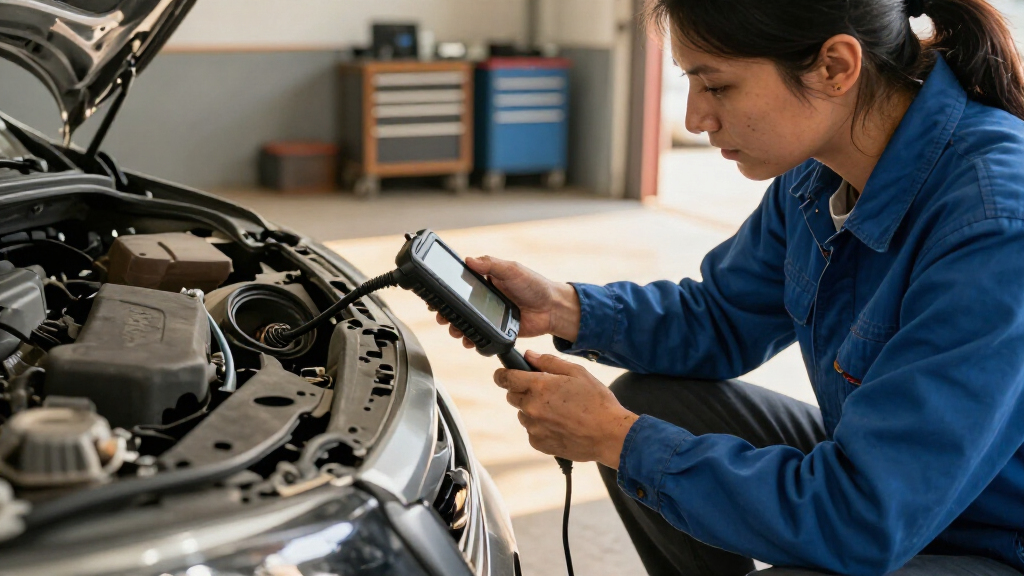
A car diagnostic scanner reads trouble codes and vehicle data through a diagnostic port, helping you investigate a warning such as the check-engine light. The code points to a system or condition, not automatically to a failed part, and scanner features vary by vehicle. Check exact compatibility, save diagnostic information before clearing codes, and leave safety-related or high-voltage repairs to qualified technicians.
Your check-engine light flickers on during a rainy commute, and a small scanner gives you a code in seconds. That number can narrow the search, but it can’t tell you on its own whether the cause is a loose gas cap, a wiring problem, or a failed component.
Car diagnostic scanner tools read information from a vehicle’s onboard computer. You’ll learn what the scanner can show, how to choose one for your car, and what to do with the results. Think of it as a flashlight under the hood: useful for finding a direction, but not a substitute for checking what’s actually there.
That distinction can save you money. If you replace a sensor just because a code mentions it, you may spend hundreds of dollars while the real fault sits in a corroded connector. Used carefully, a scanner helps you ask better questions before you approve a repair.
A diagnostic trouble code identifies a system or condition for investigation; it does not confirm a failed part.
Check a scanner’s supported makes, model years, modules, and functions for your exact vehicle before buying.
Save stored and pending codes, freeze-frame data, and symptoms before clearing anything.
Clearing codes may erase useful clues and reset emissions readiness monitors that need drive cycles to run again.
Use qualified technicians for brake, airbag, and high-voltage vehicle repairs.
What a car diagnostic scanner can tell you about a warning light
A car diagnostic scanner reads trouble codes and selected operating data through the vehicle’s diagnostic system. A code usually describes a detected condition or the system that reported it; it is a starting point for diagnosis. A more capable tool may also show what the car was doing when it stored the fault, which can help distinguish an intermittent problem from one that happens repeatedly. Neither the code nor the snapshot confirms by itself which part has failed.
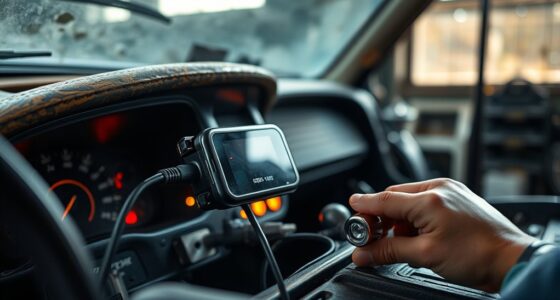
Most cars and light trucks sold in the United States from model year 1996 onward use OBD-II, a standardized diagnostic interface. Connect a compatible scanner to the diagnostic port, often beneath the dashboard, and it can request information from the onboard computer. The standard makes basic emissions-related information widely accessible, but it does not mean every scanner can communicate with every module or perform every procedure. Other markets adopted OBD requirements on different schedules, so an imported vehicle or older car deserves an extra compatibility check.
Codes use standardized formats, but they’re clues, not verdicts. A code related to an oxygen sensor, for example, may result from the sensor itself, damaged wiring, an exhaust leak, or another issue that changes the reading. Replacing the sensor without testing can leave the fault in place and add the cost of a part that was working. Symptoms help narrow the possibilities: a rough idle, for instance, may point a technician toward checks that would be less relevant if the engine runs smoothly.
Some scanners show a pending code, which means the computer has noticed a fault but hasn’t yet met its criteria to confirm it. A stored code has met those criteria, but that still doesn’t establish the root cause. It may come with freeze-frame data: a snapshot of selected conditions, such as engine load or temperature, when the fault appeared. The snapshot can help answer whether the problem happened during a cold start, under load, or at operating temperature. It is like a photograph from one moment, though, so it cannot show the sequence of events or replace live testing.
A code points to a system or condition that needs investigation. Its value is that it narrows the search and preserves a clue; it does not, by itself, prove which part needs replacing.
Products Worth Considering

DEWALT 20V MAX XR Hammer Drill and Impact Driver Combo Kit with Two 4Ah Batteries and Charger

VIOFO A229 Plus Front and Rear Dash Cam with Dual 2K HDR
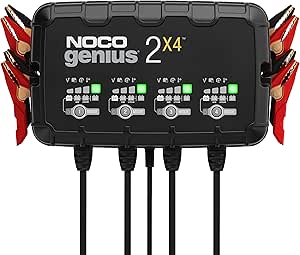
NOCO GENIUS2X4 6V/12V Four-Bank Battery Charger and Maintainer
As an affiliate, we earn on qualifying purchases.
Choose a scanner that supports the features your car needs
Scanner choice depends on your vehicle and the job: a basic engine-code check needs less capability than diagnosing an ABS fault or running a service procedure. Two devices with nearly identical shells may cover different makes, model years, computer modules, and special functions. Check the manufacturer’s current compatibility information for your exact car before buying. This matters because a scanner that reads engine codes may still be unable to reach the module that triggered another dashboard warning.
A basic reader may retrieve and clear generic engine codes. More capable tools can show live sensor readings, freeze-frame details, emissions readiness, and manufacturer-specific codes. Advanced models may also reach systems such as transmission, airbag, ABS, or battery management, but those functions depend on the scanner’s coverage for your particular vehicle. A broader feature set can help you gather more context, but it can also cost more and may require subscriptions or updates. Pay for functions you expect to use, and confirm they work on your car rather than assuming that “advanced” means universal.
Here’s a common garage scenario: you drive a 2012 compact car with the check-engine light on. A basic reader might identify an emissions-related code, which helps you prepare for a repair visit. If the car also has an ABS warning, though, that same reader might provide no useful information about the brake system. In that case, the low-cost tool may still have served its limited purpose, but it cannot answer the second question. A bigger feature list only helps if it includes the modules your vehicle uses.
Review the practical details as well. Live data, data logging, code explanations, updates, language support, and subscriptions can change how useful a tool feels. Live readings can show whether a value changes as the engine warms up, while logging can preserve that change for later review; neither interprets the result automatically. A handheld unit keeps its screen and controls together. A Bluetooth adapter may display readings on your phone, but its features can depend on the adapter, app, phone, subscription, or internet connection. That flexibility can be convenient, while compatibility and ongoing costs deserve checking before purchase.
| Tool type | What it may offer | Good fit |
|---|---|---|
| Basic code reader | Generic engine codes and, often, code clearing | Occasional check-engine-light questions |
| Midrange scanner | Live data, freeze-frame information, readiness monitors | Owners who want more context before visiting a shop |
| Advanced scanner | Selected extra modules, active tests, or service functions | Specific supported tasks on a confirmed vehicle |
The labels code reader and scanner aren’t applied consistently across products. Compare actual supported functions instead of relying on the name or a low price. A tool is useful when it can access the information needed for your task; an unsupported feature is effectively absent, whatever the box promises in general terms.
Read the code first, then follow these five steps
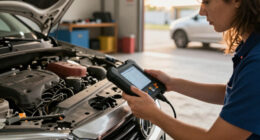
When a warning appears, save the code and its surrounding information before you clear anything. A careful scan can preserve useful clues and help you decide whether the car needs immediate attention or a scheduled inspection. Codes, symptoms, and the conditions recorded at the time can help a technician reproduce or prioritize a fault. Use these steps at the roadside or in your driveway, with the car parked safely.
- Check the warning. Note whether it’s the check-engine light, ABS light, or another warning, and whether it stays on or flashes. The type and behavior of a warning affect urgency; a flashing check-engine light can signal a problem that risks damaging the emissions system. Follow your owner’s manual if the car displays a serious warning or runs poorly.
- Park and connect. Place the vehicle in a safe location, switch it off if the scanner’s instructions call for that, and connect it as directed. Don’t handle a tool while driving. Safe setup also avoids distracting yourself or interfering with pedals and controls while the vehicle is in use.
- Record what the scanner finds. Save stored and pending codes, freeze-frame data, and any readings the tool provides. Write down symptoms too: a rough idle, a fuel smell, or a hesitation under acceleration. The code describes what the computer detected; your notes describe what you experienced, and those two kinds of evidence can point toward different tests.
- Check the exact code and vehicle coverage. Look up the code in reliable vehicle-specific service information. A generic description may tell you which system is involved without identifying the cause. The vehicle-specific procedure matters because the same code can have different diagnostic checks depending on engine, model year, and equipment.
- Choose the next check, then decide whether to get help. A loose fuel cap may be a simple owner check on some cars; brake, airbag, and high-voltage problems call for qualified service. Starting with a low-risk check can be sensible, but stop when the next step requires specialized tools, safety procedures, or access you don’t have.
Imagine you scan a car after its engine begins stumbling at a traffic light. The code helps direct attention toward a system, while the rough idle and when it began add evidence. If the problem only appears after the engine warms up, that timing may influence which readings or connections a mechanic checks first. A mechanic can then test wiring, connectors, and readings before recommending a part. That sequence can take longer than ordering the first component named in a search result, but it reduces the chance of paying for a repair that changes nothing.
If you use a phone app with a wireless adapter, review its permissions and data policies. Wireless does not mean universal coverage, and a connection can depend on the adapter and app as well as the vehicle. You should remove an adapter after use if its instructions advise against leaving it plugged in.
Know why clearing a code can make diagnosis harder
Clearing a code can turn off a warning temporarily, but it doesn’t repair the cause. It may also erase stored clues and reset emissions readiness monitors, which track whether certain vehicle self-checks have run. Those monitors matter because an emissions inspection may check their status, not just whether the warning light is currently on. If the checks are incomplete, the vehicle may not be ready for inspection even when the light has gone out.
For example, you scan a car after a check-engine warning and clear the code before writing it down. The light disappears, so the dashboard looks calm. A week later, the same warning returns, but you no longer have the original freeze-frame snapshot to show the mechanic when the fault first occurred. The fault may be easier to investigate while its conditions and history are still available; clearing first can remove context that would help focus the diagnosis.
After a code clear or battery disconnection, some readiness monitors need drive cycles to run again. The exact process depends on the vehicle and its operating conditions; stop-and-go trips may not complete every check. The car’s computer needs to see particular conditions before it can finish each self-test, so simply driving a short distance may not be enough. That’s why a blank screen immediately after clearing shouldn’t be treated as proof that the underlying issue has vanished.
Some advanced tools also perform service functions, such as electronic parking-brake service mode, battery registration, or certain resets. These functions need vehicle-specific support and the right service instructions. A menu option alone doesn’t make a procedure appropriate: the procedure may change how a system operates or require follow-up steps. Using the wrong function at the wrong time can complicate a repair. For a normal check-engine scan, keep a record and let a technician interpret uncertain results before making changes.
Save the evidence before you erase it. Codes and readiness status can help explain what happened and what the car still needs to check.
Know when a scan points to a mechanic
A scanner is useful for gathering information; repairs involving brakes, airbags, or high-voltage electric and hybrid systems belong with qualified technicians. If an ABS or airbag warning appears, don’t treat a generic code reader as a repair guide. These systems can affect occupant safety, and specialized diagnosis may require training and vehicle-specific equipment. A tool that can display a code does not necessarily provide the tests or procedures needed to confirm a fault safely.
Picture a hybrid owner who gets a warning about the high-voltage battery. A generic OBD-II tool might retrieve some standard information, yet still lack the depth needed to evaluate the battery or power electronics. A code can flag a system concern without revealing whether the problem is a sensor, wiring, battery module, or control issue. Opening or probing high-voltage components without the correct training and protective equipment can expose you to serious injury. Arrange service with a technician qualified for that vehicle.
For a conventional engine warning, the scanner can still make a shop visit more productive. Bring the exact code, whether it was pending or stored, a photo of the dashboard, and a short symptom note. “The light came on after a cold start, and the engine shook for two minutes” gives a technician far more to work with than “the scanner said oxygen sensor.” The added timing and behavior help connect the computer’s record to conditions a technician can check, while avoiding the assumption that the named system identifies the failed part.
If your vehicle could be affected by a recall, check its VIN through the National Highway Traffic Safety Administration (NHTSA) and contact the manufacturer or dealer about open recalls. A scanner doesn’t replace recall information or a proper inspection. Keep the tool as a source of clues, and let evidence, safe procedures, and the right expertise decide the repair.
Frequently Asked Questions
Will an OBD-II scanner work with my car?
Many cars and light trucks in the United States from model year 1996 onward use OBD-II, but market, protocol, and feature coverage still matter. Check the scanner’s compatibility details against your vehicle’s year, make, model, and the task you want to do, especially for older or imported cars.
Can a scanner tell me exactly which part to replace?
Usually, it can’t. A code identifies a detected condition or system, and the cause could involve a component, its wiring, a connector, or another fault. Combine the code with symptoms and test results before replacing parts.
Can I turn off the check-engine light with a scanner?
Many scanners can clear codes, which may turn off the light temporarily. If the cause remains, the warning can return; clearing may also erase diagnostic information and reset emissions readiness monitors. Save the code and related details first.
Can an inexpensive scanner read ABS or airbag faults?
A basic engine-code reader typically won’t read those systems. Some advanced scanners support ABS or airbag modules on selected vehicles, so confirm coverage for your exact car. Have a qualified technician handle safety-system diagnosis and repair.
Will a generic scanner fully diagnose a hybrid or electric car?
It may read some standard codes, but it may not provide detailed access to high-voltage batteries or manufacturer-specific systems. For a high-voltage warning or repair, use a technician qualified for the vehicle and its specialized systems.
Conclusion
Use a scanner to collect clues, not conclusions. Confirm that the tool supports your car, record what it finds, and match the code with the symptoms before you approve a repair or clear the evidence.
When a warning touches brakes, airbags, or high-voltage systems, take that information to a qualified technician. A small scan can point the way; the right diagnosis keeps the road ahead clear.