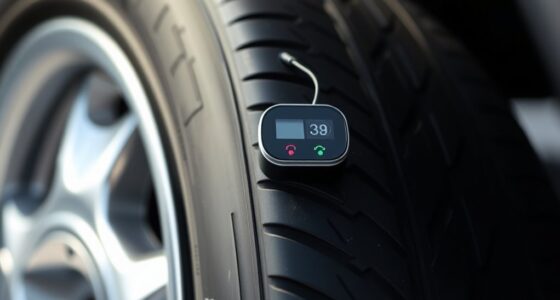

Technologies like tire pressure sensors, TPMS alerts, and run-flat tires help you monitor and respond to tire issues early. They can warn you of low pressure or damage before a blowout occurs and allow limited driving after a puncture. However, tech alone can’t replace regular maintenance like checking tire pressure, inspecting for damage, and keeping your tires in good condition. Keep reading to discover more ways to stay safe and prevent tire emergencies.
Key Takeaways
- TPMS alerts drivers to low tire pressure early, allowing timely intervention before a blowout occurs.
- Run-flat tires enable temporary driving after a puncture, reducing immediate danger during a blowout.
- Modern tire pressure sensors continuously monitor conditions and can prevent blowouts through proactive alerts.
- Emergency kits with tools and repair systems assist in handling tire emergencies safely and efficiently.
- While technology aids prevention and response, regular maintenance remains essential to minimize blowout risks.
A tire blowout can happen suddenly and catch you off guard, often leading to a loss of control or a dangerous situation on the road. When it occurs, your immediate focus should be on maintaining control of your vehicle. Staying calm is essential; resist the instinct to slam on the brakes or jerk the steering wheel abruptly, as this can worsen the situation. Instead, keep a firm grip on the wheel and gently ease off the accelerator. By doing so, you give yourself time to regain stability and prepare to pull over safely. Regularly practicing emergency procedures can help you respond more effectively if such an event occurs.
Prevention is your best line of defense against tire blowouts. Regular tire maintenance plays a critical role in reducing the risk. Check your tire pressure frequently, ensuring it aligns with the manufacturer’s recommendations. Under-inflated or over-inflated tires are more prone to blowouts because they compromise the tire’s structural integrity. Inspect your tires for visible signs of damage, such as cuts, punctures, or uneven wear, which can indicate underlying issues. Rotating your tires regularly and ensuring proper alignment not only extends their lifespan but also enhances safety by promoting even wear.
Emergency preparedness is equally important. Keep a well-stocked emergency kit in your vehicle, including a tire repair kit, a portable air compressor, and a spare tire in good condition. Familiarize yourself with how to change a flat tire safely; knowing this process can save you precious time when you’re in a stressful situation. Modern vehicles often come equipped with tire pressure monitoring systems (TPMS), which alert you before a tire becomes critically low or is at risk of blowout. Paying attention to these alerts can give you an early warning, allowing you to address potential problems before they escalate.
Technology continues to advance, offering features like run-flat tires and tire pressure sensors that can mitigate the severity of blowouts or alert you immediately when something’s wrong. While these innovations don’t eliminate the risk entirely, they considerably improve your ability to handle emergencies effectively. In the end, staying vigilant with tire maintenance and being prepared for emergencies makes a big difference. It’s about proactive care and knowing what to do if disaster strikes, so you can keep yourself and others safe on the road.
Frequently Asked Questions
Can Tire Blowouts Be Predicted Before They Happen?
You can’t predict a tire blowout with certainty, but regular checks help. Keep an eye on your tire pressure and make sure it stays within the recommended range, as under- or over-inflation weakens the tire. Also, inspect tread depth to spot wear that could lead to failure. Staying proactive with these checks minimizes the risk, giving you better chances to prevent a blowout before it happens.
What Are the Best Safety Measures During a Tire Blowout?
During a tire blowout, your best safety measures include gripping the steering wheel firmly, staying calm, and gradually slowing down. Keep your eyes on the road and avoid abrupt steering. Use emergency handling tips like signaling and safely pulling over. Regularly check tire pressure safety to prevent blowouts. Remember, staying composed and following these steps helps you control the vehicle and guarantees your safety during such emergencies.
How Often Should I Check My Tires for Potential Issues?
You should check your tires at least once a month, including Tire pressure and Tread depth, to catch potential issues early. Regular inspections help you spot uneven wear or low pressure that could lead to blowouts. Don’t forget to verify Tire pressure when tires are cold and use a tread depth gauge to ensure your treads are safe. Staying proactive keeps you safer on the road and prevents unexpected emergencies.
Do Different Vehicle Types Have Varying Risks of Tire Blowouts?
Different vehicle types face vastly different risks of tire blowouts, thanks to vehicle-specific risks and tire design. Heavy trucks, for example, carry more weight and endure more stress, making blowouts more likely. Sports cars with high-speed tires are also at greater risk because of their unique tire design, which prioritizes performance over durability. Regular checks, tailored maintenance, and understanding your vehicle’s specific risks can save you from unexpected blowouts.
Can Regular Maintenance Prevent All Tire Blowouts?
Regular maintenance greatly reduces your risk of tire blowouts, but it can’t prevent all incidents. By consistently checking tire pressure, you guarantee your tires aren’t under or over-inflated, which weakens them. Also, inspecting tread depth helps you avoid tires that are too worn, reducing blowout chances. While these steps are essential, unforeseen hazards or extreme conditions can still cause blowouts, so stay alert and maintain your tires regularly.
Conclusion
With the right tech, you could dodge a blowout disaster that feels like a thunderclap ripping through your car! Imagine your tires suddenly bursting like fireworks, sending sparks flying and chaos erupting around you. But with alerts and maintenance reminders, you’re armed with a shield that can stop this catastrophe before it starts. Stay vigilant, keep your tech up-to-date, and turn what could be a nightmare into a smooth, safe ride—your journey’s guardian angel on wheels!