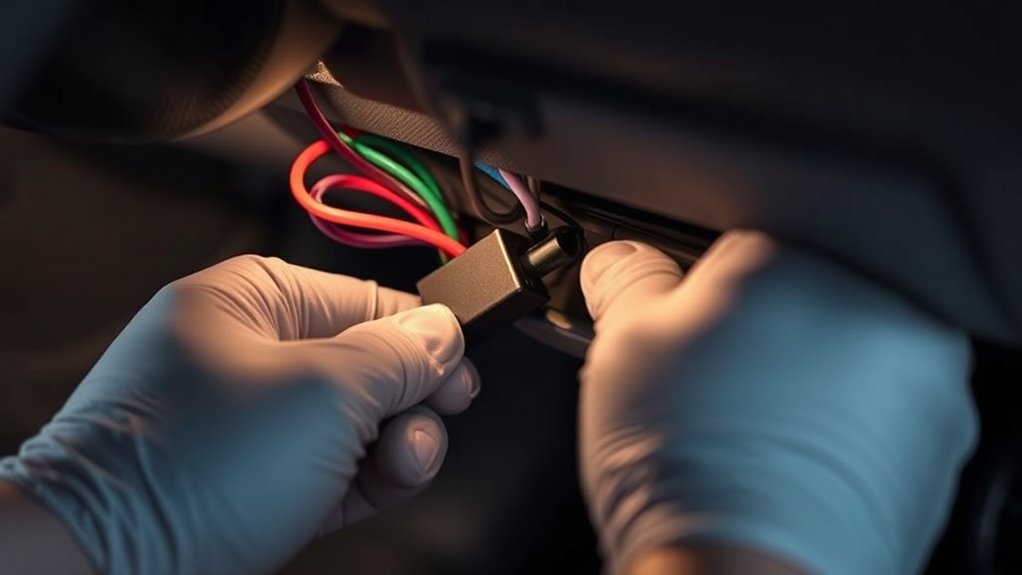

To secretly hardwire a GPS tracker into your vehicle, start by locating a suitable fuse in the fuse box that supplies power when the ignition is on. Turn off the vehicle, disconnect the battery, and use a fuse tap to connect the tracker’s power wire to the fuse. Ground the device to the chassis, keep the wiring hidden, and reconnect the battery. If you keep going, you’ll discover step-by-step tips for a discreet and secure installation.
Key Takeaways
- Choose a discreet location near the fuse box for seamless installation.
- Use a fuse tap or piggyback fuse connector to hardwire the tracker securely to the vehicle’s power source.
- Turn off the vehicle and disconnect the battery before wiring to ensure safety.
- Connect the tracker’s power wire to the fuse tap, grounding it to the vehicle chassis for reliability.
- Test the device after reconnecting the battery, then conceal wiring and device for discreet monitoring.
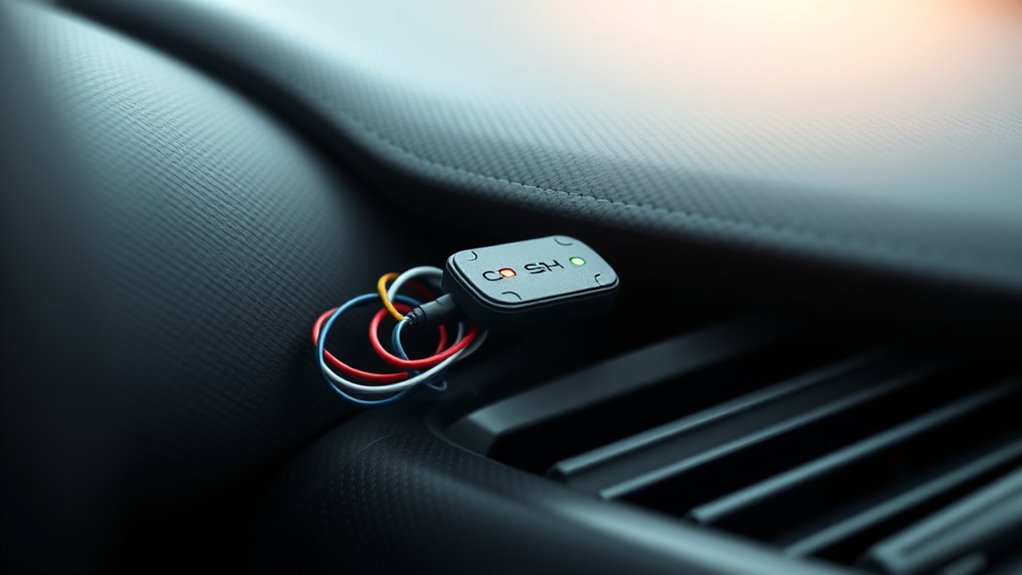
Installing a DIY car tracker is a practical way to keep tabs on your vehicle without breaking the bank. Whether you’re trying to enhance vehicle security or keep an eye on a loved one’s car, a GPS tracker provides peace of mind. However, before you start, it’s important to understand the legal considerations involved. Laws regarding vehicle tracking vary by location, and in some areas, secretly installing a tracker on someone else’s vehicle can be illegal. Make sure you’re aware of local regulations and only track vehicles you own or have explicit permission to monitor. Respecting privacy rights is key to avoiding legal issues down the road.
When you’re ready to install the tracker, the goal is to hide it effectively while ensuring it functions properly. Hardwiring the device not only keeps it discreet but also prevents theft or accidental discovery. To do this, you’ll first locate an accessible power source in your vehicle, usually the fuse box. Turning off your vehicle and disconnecting the battery is a safe step to prevent electrical mishaps. Once the battery is disconnected, identify a fuse that supplies power when the ignition is on but turns off when you switch off the engine. Using a fuse tap or a piggyback fuse connector simplifies the process, allowing you to connect the tracker’s power wire directly to the fuse without damaging your vehicle’s wiring.
Next, carefully connect the tracker’s power wire to the fuse tap, ensuring a secure and insulated connection. Ground the tracker by attaching its ground wire to a metal part of the vehicle’s chassis, which acts as a grounding point. Keep the wires tidy and hidden behind panels or under carpets to maintain the vehicle’s aesthetic and prevent accidental disconnection. Once everything is connected, reconnect your vehicle’s battery and turn on the ignition to test the tracker. Check that it powers up and transmits data properly. If all looks good, conceal the wiring and device completely to guarantee it remains hidden and protected from damage. Additionally, choosing a reliable GPS tracker with good customer reviews can help ensure consistent performance over time.
Frequently Asked Questions
Can I Install a GPS Tracker Without Technical Experience?
Yes, you can install a GPS tracker without technical experience, but it might be challenging. Focus on maintaining vehicle security and ensuring tracker accuracy by carefully following instructions. Use simple tools and seek online tutorials or professional help if needed. This approach helps you keep your vehicle secure without risking damage or losing track of its location. Patience and attention to detail will make the process smoother and more effective.
How Long Does a DIY Car Tracker Installation Take?
On average, a DIY car tracker installation takes about 1 to 3 hours, depending on your experience. For example, if you’re comfortable with basic wiring, you might complete it in just an hour. However, if it’s your first time, plan for a longer diy project duration, around 2 to 3 hours. Preparing tools and following step-by-step guides helps streamline the process and reduces installation time.
Will Installing a GPS Tracker Void My Vehicle Warranty?
Installing a GPS tracker may impact your vehicle warranty if it’s considered tampering or if it damages components. However, most reputable DIY installations won’t void your warranty unless the manufacturer explicitly states so. To avoid installation impact issues, follow proper procedures, use quality parts, and keep documentation. Check your vehicle’s warranty policy or consult your dealer beforehand to guarantee your DIY tracker won’t cause warranty problems.
What Are the Legal Considerations for Hidden GPS Tracking?
A stitch in time saves nine, so consider privacy concerns and legal restrictions before hiding GPS trackers. You could face legal consequences if you track someone without their consent, especially in states with strict privacy laws. Always check local regulations, as laws vary. Respect others’ privacy and avoid invasive tracking to stay within legal boundaries, and you’ll navigate the legal considerations more smoothly.
How Do I Troubleshoot if the Tracker Stops Working?
If your tracker stops working, start by checking for battery issues—make sure it’s charged or replace the batteries if needed. Next, troubleshoot the signal by ensuring the tracker is within range of the GPS satellites or mobile network. Confirm wiring connections are secure and free of damage. Restart the device and test it in different locations to identify if signal interference or hardware problems are causing the issue.
Conclusion
So, now you’ve successfully hidden your GPS tracker, feeling like a true spy. Just remember, the real trick isn’t installing it secretly, but trusting your own skills enough not to get caught. After all, if you’re so good at sneaking devices, maybe you should consider a career in espionage—just don’t forget that even the best trackers can be found by the most determined. Happy tracking, and stay one step ahead!