
New vehicle fire detection and suppression systems can quickly identify smoke, heat, and flames with advanced sensors integrated into your car’s safety system. When potential fire hazards are detected, these systems activate onboard extinguishers like foam or gas to suppress the fire immediately. They also communicate fire details directly to emergency services, speeding up response times. To learn more about how this innovative tech keeps you safer, keep exploring these next-generation safety features.
Key Takeaways
- Advanced fire sensors detect smoke, heat, and flames rapidly to identify vehicle fires early.
- Integrated suppression systems activate instantly to contain and extinguish fires before they spread.
- Vehicles communicate fire details directly to emergency services for quicker response.
- Fire detection technology enhances passenger safety and reduces property damage.
- Ongoing innovations aim to create smarter, more responsive vehicle fire safety systems.
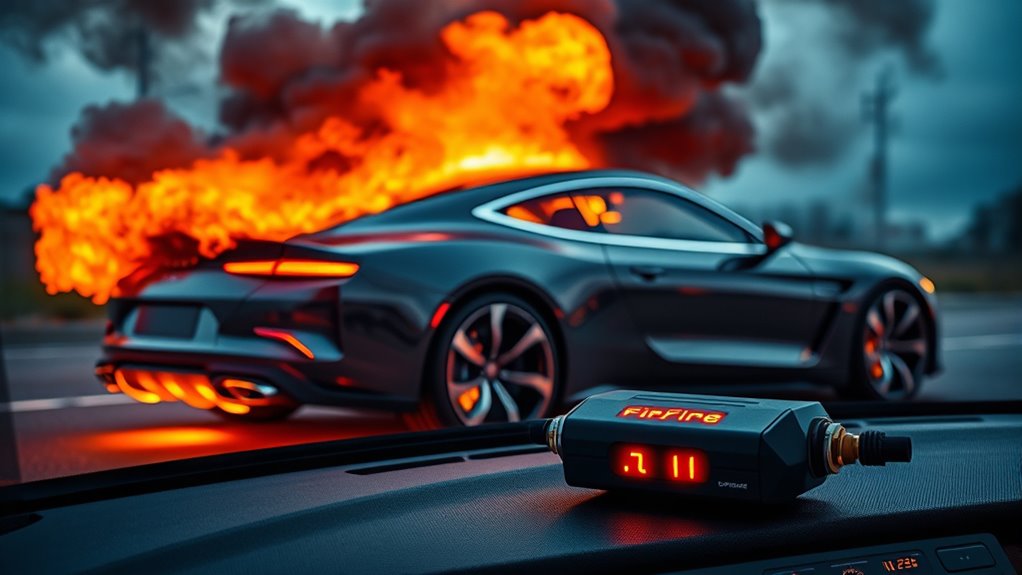
Have you ever wondered how modern fire detection systems can save lives and property? In today’s world, vehicle fires pose substantial risks, but advances in fire detection technology are making a real difference. One of the key innovations involves integrating fire sensors directly into the vehicle’s safety systems, especially in autonomous vehicles. These vehicles rely heavily on an array of sensors and computer systems to operate safely, and fire detection is now an essential part of guaranteeing their safety. By embedding advanced sensors that can quickly identify smoke, heat, or even tiny flames, these systems can activate suppression mechanisms almost instantly, reducing damage and preventing harm to passengers.
Autonomous vehicle safety isn’t just about avoiding accidents; it also encompasses protecting occupants when something does go wrong. When a fire is detected early, the vehicle’s onboard systems can initiate immediate responses. This might include activating fire suppression systems tailored specifically for vehicles, such as foam or gas-based extinguishers, to contain the blaze before it spreads. The rapid detection and response considerably lower the risk of injury or fatality. Furthermore, these systems are designed to work seamlessly with emergency response integration, which means that once a fire is detected, relevant authorities can be alerted instantly. This integration guarantees that fire departments or emergency services are dispatched without delay, even if the vehicle is in a remote or hard-to-access location.
Emergency response integration is a game-changer in vehicle fire safety. When a fire detection system communicates directly with emergency services, it eliminates the need for passengers or drivers to manually call for help. Instead, the vehicle itself becomes an active participant in the emergency response process, transmitting exact location data and details about the fire. This instant communication accelerates response times, which can be vital in preventing the fire from causing further damage or spreading to nearby vehicles and structures. It also reduces the risk to first responders, who are better prepared when they receive detailed information ahead of arriving at the scene.
Together, autonomous vehicle safety features and emergency response integration form an exhaustive approach to vehicle fire protection. They not only detect fires faster but also guarantee that help arrives swiftly and efficiently. This synergy minimizes risks, preserves property, and most importantly, saves lives. As fire detection technology continues to evolve, you can expect even smarter, more responsive systems that make every trip safer. With innovations like these, modern vehicles are becoming safer environments, capable of protecting their occupants and assisting emergency responders in times of need. Advanced sensors and the integration with emergency systems ensure that vehicle fires are managed with unprecedented speed and precision.
Frequently Asked Questions
How Quickly Can Fire Detection Systems Respond to a Vehicle Fire?
Your fire detection system can respond within seconds of detecting a fire, providing a rapid fire alarm to alert you immediately. Modern systems are designed to minimize response time, often activating suppression mechanisms almost instantly to prevent the fire from spreading. This quick response is vital for safety, helping to protect you and your vehicle by catching fires early and reducing potential damage.
Are These Fire Suppression Systems Effective on All Vehicle Types?
You might think these systems are a one-size-fits-all solution, but they’re not. Their effectiveness depends on vehicle compatibility and system customization. Some systems are designed for specific car types, while others adapt better to various models. To get the best protection, verify the system suits your vehicle’s make and model. Think of it as tailoring a suit—proper fit makes all the difference in staying safe.
What Maintenance Is Required for the Fire Detection and Suppression Tech?
You need to regularly perform sensor calibration and run system diagnostics to keep your fire detection and suppression tech effective. Check the sensors for dirt or damage, and recalibrate them as recommended by the manufacturer. System diagnostics help identify any faults early, ensuring your safety system works properly when you need it. Schedule maintenance according to the user manual, and promptly address any issues to maintain peak performance.
Do These Systems Work During All Weather Conditions?
Think of these systems as vigilant guardians, standing firm through rain, snow, or shine. They’re designed to handle weather challenges, ensuring sensor reliability in most conditions. While heavy storms or extreme temperatures might test their limits, advancements have made them remarkably resilient. You can trust that, rain or shine, your vehicle’s fire detection and suppression tech will respond swiftly, helping keep you safe no matter the weather’s mood swings.
Can the Tech Be Integrated With Existing Vehicle Safety Features?
Yes, the tech can be integrated with your vehicle’s safety features. It often offers retrofit possibilities, making it compatible with various vehicle models. Manufacturers design these systems to work seamlessly alongside existing safety equipment, enhancing overall protection. You should check the vehicle compatibility and installation options to guarantee a smooth integration process, so your car benefits from advanced fire detection and suppression capabilities without needing a complete upgrade.
Conclusion
You’ve seen how this breakthrough technology brings blazing breakthroughs, boldly bridging the gap between danger and safety. With swift sensors and smart suppression systems, you’ll stay secure, saving lives and safeguarding vehicles. Embrace this evolving innovation that eliminates the fear of fiery foes, fostering confidence on every commute. Let this luminous leap in tech light your way, turning terrifying flames into tiny twinkles, and transforming threats into tranquil travels. Safety, smartness, and speed—your new standard for vehicle vigilance.