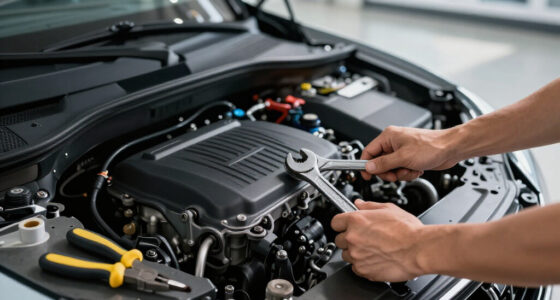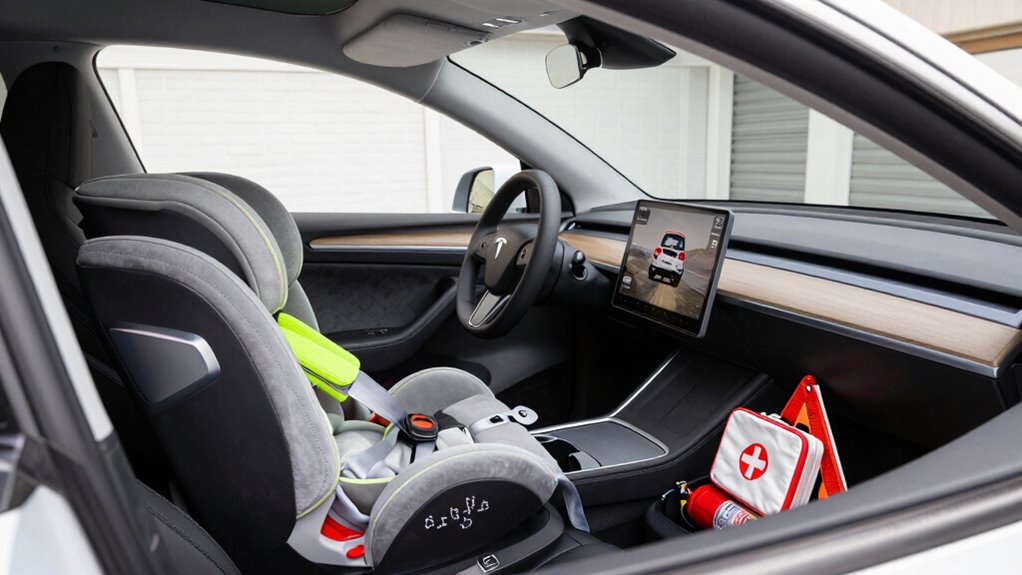

To create a better safety setup for your family car, start by ensuring proper child seat installation based on your child’s age and size, and regularly check that seats are tightly secured. Keep an emergency kit handy with essentials like first aid, water, and tools, and familiarize yourself with basic procedures. Maintain your vehicle with regular inspections, focusing on brakes and tires. Designate safe zones in your garage for parking, and stay informed about the latest safety features and standards to keep everyone protected.
Open a free Amazon Business account
Business pricing, bulk buying and tax-exempt orders.
As an affiliate, we earn on qualifying purchases.
Key Takeaways
- Install child seats correctly, ensuring they are secure and harnesses are snug, following manufacturer instructions and safety guidelines.
- Keep an accessible emergency kit with essentials like first aid supplies, water, and tools in the vehicle.
- Regularly inspect and maintain vehicle components such as brakes, tires, and safety features for optimal performance.
- Choose vehicles with high safety ratings and incorporate advanced safety features for added protection.
- Designate and organize specific safe zones in the garage or driveway for parking and maneuvering to prevent accidents.
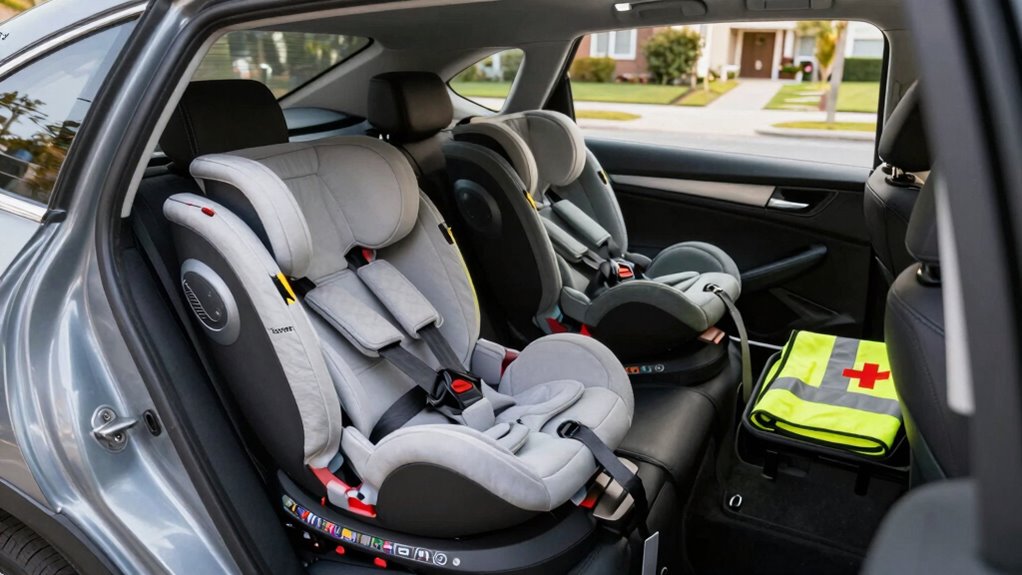
Ensuring your family car is as safe as possible should be a top priority, especially when you’re responsible for loved ones. The foundation of a safer vehicle environment begins with proper child seat installation. You need to understand the specific requirements for your child’s age and size, ensuring the seat is secured tightly using the vehicle’s seat belt or LATCH system. Check that the child’s harness is snug and that the seat doesn’t move more than an inch side to side or front to back. Proper child seat installation can significantly reduce injury risks during a crash, so take the time to read both your car manual and the child seat instructions carefully. Many local fire stations and hospitals offer free assistance in installing car seats correctly, which can give you peace of mind that your little one is as protected as possible.
Beyond child seat safety, emergency preparedness plays a critical role in creating a better safety setup for your family car. You should have an emergency kit readily available inside your vehicle, including first aid supplies, water, non-perishable snacks, a flashlight, and basic tools. Regularly check the kit to ensure everything is in working order and up-to-date. It’s also wise to familiarize yourself with emergency procedures, such as how to change a tire or handle a minor injury, so you’re prepared for unexpected situations. Keeping a list of emergency contacts in your glove compartment can save time during stressful moments, ensuring help is just a quick call away. Additionally, consider installing a roadside assistance app on your phone or subscribing to a service that can send help quickly if needed. Proper maintenance of your vehicle is also essential, as it can prevent breakdowns and ensure safety features like brakes and tires are functioning optimally. Incorporating regular vehicle inspections can further enhance your safety measures by catching issues early before they become serious problems. Furthermore, being aware of vehicle safety ratings can help you choose the safest options when purchasing or upgrading your family car. Moreover, creating designated safe zones in your garage or driveway can help prevent accidental collisions or damage when parking or maneuvering your vehicle.
As an affiliate, we earn on qualifying purchases.
Frequently Asked Questions
What Are the Latest Safety Features Available for Family Cars?
The latest safety features for family cars include advanced child safety systems like rear-seat reminder alerts, ensuring you don’t forget your little ones. You’ll also find upgraded vehicle alarms that enhance security against theft. Modern cars now incorporate automatic emergency braking, lane departure alerts, and blind-spot monitoring, all designed to protect your family. These innovations give you peace of mind, knowing your loved ones are safer and better protected on every journey.
How Can I Ensure Proper Seat Belt Fit for Children?
To guarantee proper seat belt fit for children, always use child harnesses or a booster seat suited to their size. Child harnesses keep younger kids securely restrained, while booster seats position the seat belt correctly across their hips and shoulders as they grow. Regularly check the fit each time you ride, making sure the lap belt sits low on the hips and the shoulder belt crosses the chest comfortably.
Are There Any Safety Apps or Gadgets Recommended for Family Vehicles?
Yes, you should consider safety apps and gadgets like emergency preparedness tools and road trip essentials. Install apps that offer real-time traffic updates, navigation, and emergency alerts to stay informed. Gadgets like portable first aid kits, car chargers, and GPS trackers enhance safety during family trips. These tools help you respond quickly to emergencies, ensuring everyone remains secure and prepared no matter where the road takes you.
How Often Should Safety Equipment Be Inspected or Replaced?
You should inspect your safety equipment at least once a year and replace items like fire extinguishers or expired first aid kits promptly. While emergency preparedness involves regular checks, maintenance scheduling keeps everything functioning reliably. Don’t wait for a problem to arise; proactive inspections guarantee your family’s safety. Regularly reviewing and updating safety gear minimizes risks, giving you peace of mind knowing your vehicle is always ready for any emergency.
What Are Tips for Safe Driving Habits With Kids in the Car?
To guarantee safe driving with kids, prioritize child safety by always using appropriate car seats and seat belts. Keep children in the back seat and ensure they’re properly secured. Practice parent monitoring by avoiding distractions, such as phone use, and stay focused on the road. Set a good example with calm driving habits, and frequently remind children about safety rules. These habits create a safer environment for everyone.
emergency car kit with first aid and tools
As an affiliate, we earn on qualifying purchases.
As an affiliate, we earn on qualifying purchases.
Conclusion
By prioritizing proper car seats, regular maintenance, and staying alert, you can greatly improve your family’s safety on the road. Remember, children are 75% more likely to survive a crash when properly restrained in a car seat. Small steps like checking tire pressure or updating your airbags can make a big difference. Stay proactive, keep safety at the forefront, and you’ll create a safer driving environment for your loved ones every time you hit the road.
As an affiliate, we earn on qualifying purchases.
roadside assistance app subscription
As an affiliate, we earn on qualifying purchases.
As an affiliate, we earn on qualifying purchases.
Fall Picks
fall essentials
As an affiliate, we earn on qualifying purchases.