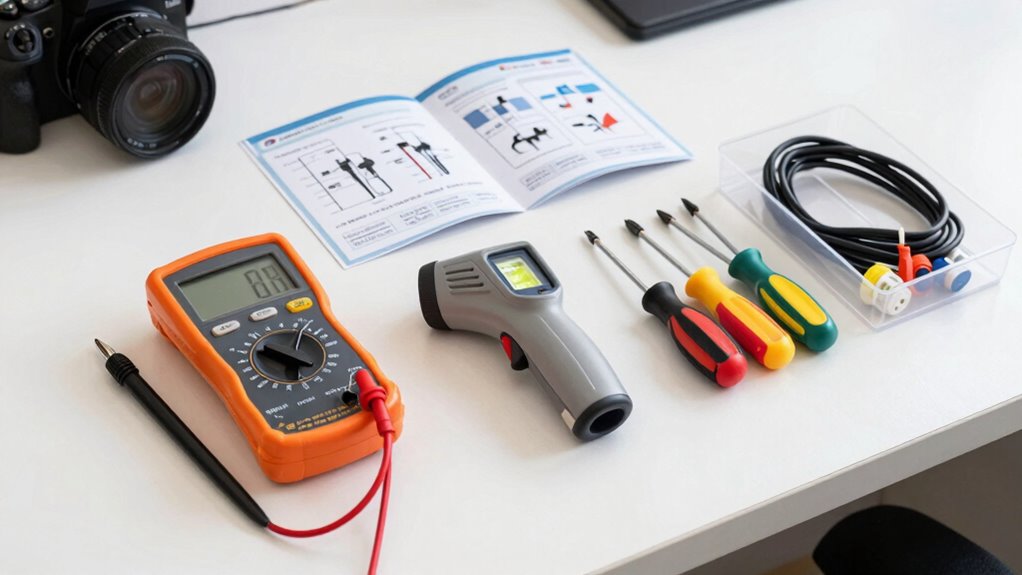
A useful diagnostic toolkit for non-mechanics includes an easy-to-use OBD-II scanner, basic hand tools, a multimeter, and a bright flashlight to help you identify car issues without specialized training. Clear instructions and reliable apps make troubleshooting straightforward, saving you time and money. Designed for simplicity and portability, this kit helps you understand common problems and decide when to seek professional help. Keep exploring to discover how to build the perfect setup.

Get business pricing on garage and car supplies
- Business-only prices and quantity discounts
- Tax-exempt purchasing
- Multiple users, one account, clear invoices
Key Takeaways
- Includes a user-friendly OBD-II scanner with clear instructions for easy code reading and interpretation.
- Features basic electrical testing tools like a multimeter and fuses to assess vehicle health.
- Contains a bright LED flashlight for visibility during inspections in low-light conditions.
- Offers simple-to-use tools such as screwdrivers, pliers, and wrenches for basic repairs and connections.
- Comes with reliable resources or app access for troubleshooting guidance and determining when professional help is needed.
In today’s diverse fields, professionals who aren’t mechanics still need effective ways to identify and solve problems quickly. A well-designed diagnostic toolkit becomes essential, especially if you’re dealing with vehicles or machinery. Even if you’re not a trained mechanic, understanding the basics of automotive diagnostics can save you time and money. The key is to have the right tools at your fingertips—tools that are simple to use, reliable, and capable of providing clear insights.
A useful diagnostic toolkit for non-mechanics usually includes a quality OBD-II scanner. This device connects to your vehicle’s onboard diagnostic port, allowing you to read trouble codes that indicate issues in your engine or other systems. You don’t need to be an expert to interpret these codes with a good scanner, which often comes with user-friendly apps or digital displays. This makes engine troubleshooting straightforward, as you get specific error codes that point directly to the problem areas. Along with the scanner, a basic multimeter is invaluable. It helps you test electrical components like batteries, sensors, and fuses, giving you a clear picture of the electrical health of your vehicle.
A flashlight is another essential item. When you’re troubleshooting, especially in low-light conditions, it helps to see clearly under the hood or around electrical connections. A compact, bright LED flashlight is durable and easy to carry, making it convenient for quick inspections. Additionally, having a set of basic hand tools—like screwdrivers, pliers, and wrenches—lets you perform simple checks or tighten loose connections without hassle. Being familiar with diagnostic technology and how it integrates with traditional tools can help you stay ahead and utilize new tools as they become available.
Most importantly, your toolkit should come with clear instructions or access to reliable online resources. When you’re faced with a diagnostic challenge, being able to interpret findings accurately is vital. Using modern diagnostic devices can significantly reduce guesswork and improve troubleshooting efficiency. The goal is to have a set of user-friendly tools that provide actionable insights, so you can decide whether a problem is something you can fix yourself or if you need professional help. With the right diagnostic toolkit, you gain confidence in tackling automotive diagnostics and engine troubleshooting—even without a mechanic’s background.
As an affiliate, we earn on qualifying purchases.
Frequently Asked Questions
Can Non-Mechanics Safely Use Diagnostic Tools Without Training?
You shouldn’t use diagnostic tools without training, especially when dealing with issues like a faulty sensor or engine performance problems. Incorrect use can lead to misreading data or even damaging your vehicle’s systems. Stick to simple troubleshooting or seek professional help if you’re unsure. Proper training guarantees you interpret diagnostics accurately, preventing errors that could worsen engine performance issues or misdiagnose faulty sensors.
What Is the Most Affordable Diagnostic Toolkit for Beginners?
For beginners in automotive repair, an affordable diagnostic toolkit like the Autel AutoLink AL319 or the BlueDriver Bluetooth Pro offers great value. When tool shopping, prioritize devices that are user-friendly and compatible with your vehicle. These tools often include essential functions like reading codes and clearing errors, helping you troubleshoot common issues without breaking the bank. Always check reviews and features to make certain they meet your specific repair needs.
How Accurate Are DIY Diagnostic Tools Compared to Professional Equipment?
DIY diagnostic tools can be fairly accurate for basic issues, but their precision varies depending on vehicle compatibility and tool durability. You might find them reliable for common problems, but they often lack the depth of professional equipment, especially for complex diagnostics. Always check if the tool is compatible with your vehicle and consider its build quality to guarantee accurate readings. For critical repairs, professional diagnostics are still the best choice.
Are There Specific Tools for Diagnosing Electrical Issues?
Yes, there are specific tools for diagnosing electrical issues. You can use advanced automotive sensors that monitor electrical circuits and detect faults, providing precise data. Wireless diagnostic devices are also handy; they connect to your vehicle’s OBD-II port and transmit information to your smartphone or tablet. These tools make troubleshooting easier, faster, and more accurate, empowering you to identify electrical problems without needing professional equipment.
How Often Should Diagnostic Tools Be Calibrated or Maintained?
Think of your diagnostic tools as the compass guiding you through a maze; without regular calibration, they lose their sense of direction. You should calibrate your tools at least annually, or more often if you use them frequently or in harsh environments. Follow maintenance best practices like keeping them clean, storing them properly, and checking for wear. This keeps your toolkit sharp, reliable, and ready to uncover hidden issues with confidence.
digital multimeter for automotive use
As an affiliate, we earn on qualifying purchases.
As an affiliate, we earn on qualifying purchases.
Conclusion
Having the right diagnostic toolkit empowers you to troubleshoot effectively in non-mechanical fields. With over 70% of professionals relying on specialized tools to identify issues quickly, you can save time and avoid costly mistakes. By equipping yourself with essential items like diagnostic apps, troubleshooting guides, and basic testing devices, you’re better prepared to tackle problems confidently. Remember, a well-stocked toolkit isn’t just useful — it’s a game-changer in achieving accurate, efficient solutions.
LED flashlight for car inspections
As an affiliate, we earn on qualifying purchases.
As an affiliate, we earn on qualifying purchases.
As an affiliate, we earn on qualifying purchases.
Halloween Picks
halloween
As an affiliate, we earn on qualifying purchases.