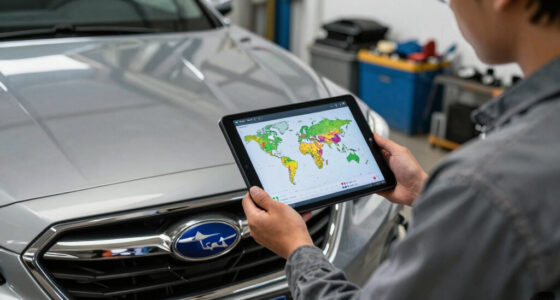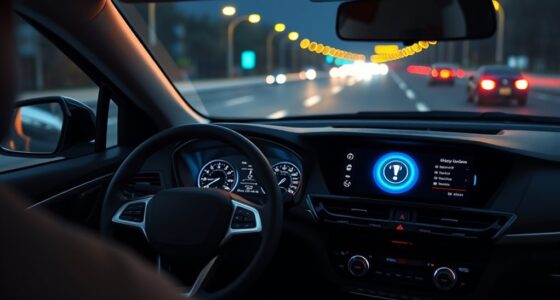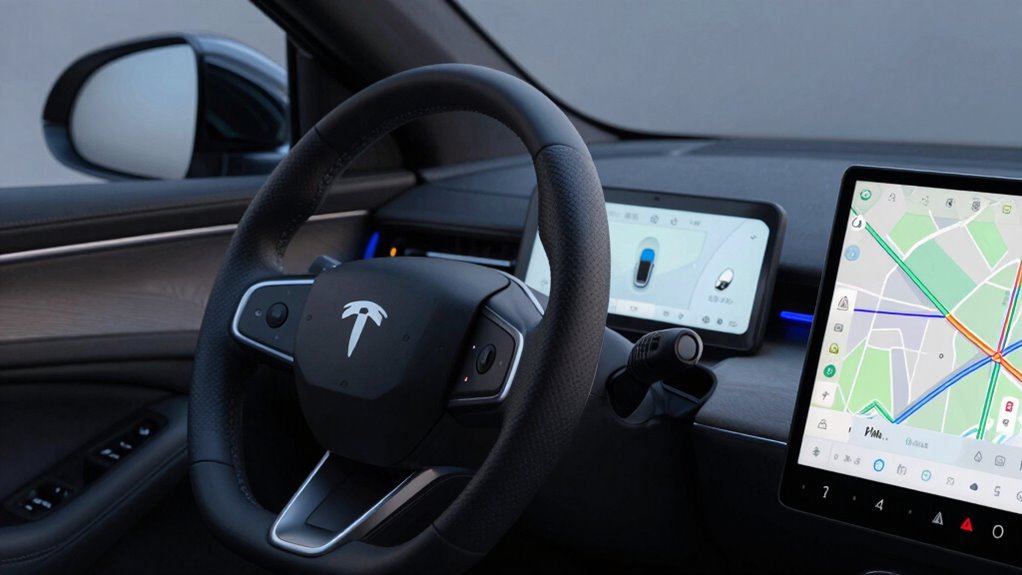

To make your navigation setup safer at speed, focus on clear, high-contrast icons and minimize visual clutter on your screen, so you’re not distracted. Mount your device at eye level within your line of sight and use simple controls or voice commands to keep your attention on the road. Keep software updated for accurate info and adjust screen brightness for visibility in different lighting. Staying aware of how to interpret signs and quick system responses can make a big difference—learn more to stay safer.

Get business pricing on garage and car supplies
- Business-only prices and quantity discounts
- Tax-exempt purchasing
- Multiple users, one account, clear invoices
Key Takeaways
- Mount devices at eye level within the natural line of sight to minimize distraction during quick glances.
- Use large, high-contrast icons and minimal visual clutter for rapid recognition of directions.
- Enable auto-brightness and night modes to ensure visibility without glare in varying lighting conditions.
- Incorporate voice commands and audio alerts to reduce the need for physical interaction while driving.
- Keep maps updated and rely on current data to prevent re-routing and confusion at high speeds.
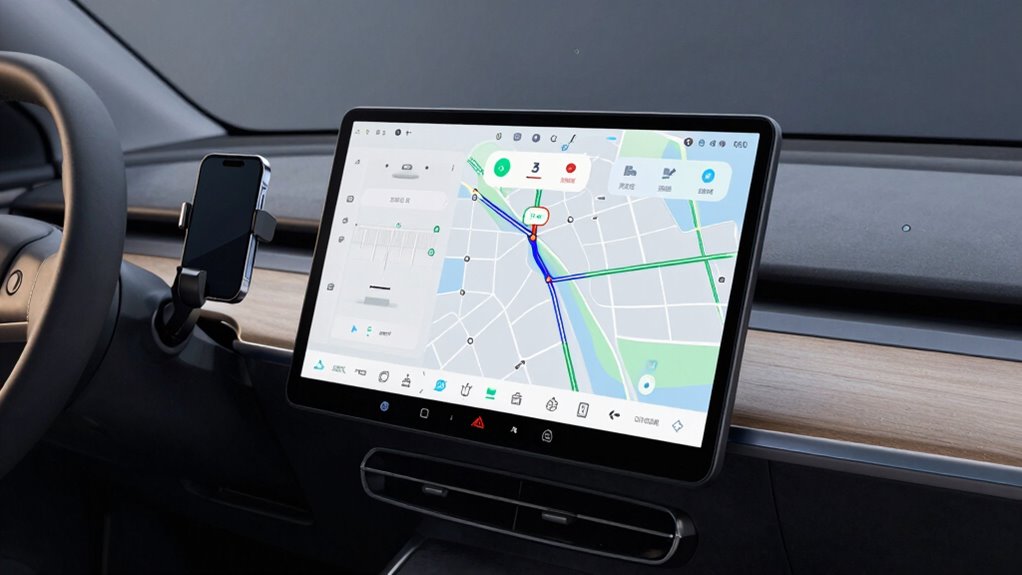
Have you ever considered how crucial proper navigation setup is for a safe journey? When you’re traveling at speed, every second counts, and having a well-configured navigation system can make all the difference. One of the key aspects is guaranteeing good road sign visibility, which means your navigation setup should complement rather than compete with real-world signage. Clear, easily recognizable icons and minimal clutter on your screen help you spot important signs quickly. For instance, avoid overly busy maps or tiny fonts that force you to take your eyes off the road longer than necessary. Instead, opt for larger, high-contrast visuals that stand out against the background, allowing you to process information swiftly without distraction.
Prioritize clear, high-contrast visuals to enhance road sign visibility and reduce driver distraction at speed.
Mitigating driver distraction is another critical factor. A cluttered or confusing interface can tempt you to divert your attention from the road, especially when you’re traveling at higher speeds. To keep your focus where it needs to be, set up your navigation system with simple, intuitive controls. Use voice commands whenever possible to reduce the need to touch the screen. Voice prompts alert you about upcoming turns, speed changes, or hazards, helping you stay engaged with driving rather than fumbling with settings. Additionally, customizing alerts to be clear but unobtrusive ensures you receive necessary information without overwhelming your senses. Being aware of how up-to-date information influences navigation accuracy can further enhance your safety. Regular updates help ensure your device reflects current road conditions and signage, reducing the chances of confusion or sudden re-routing. Staying informed about map updates and software also ensures your navigation system remains reliable and precise.
Furthermore, the placement of your device plays a significant role in safety. Mount your GPS or smartphone at eye level and within your natural line of sight, so you can glance at it briefly without shifting your focus from the road. A stable mount prevents bouncing or slipping, which can be distracting or even dangerous if the device shifts unexpectedly. Brightness settings are equally crucial—adjust screen brightness to match ambient lighting, preventing glare or dimness that could hinder visibility. Many systems now include night modes or auto-brightness adjustments, which help keep the display visible without causing eye strain or drawing unnecessary attention away from driving.
In addition, guarantee your navigation system is up to date with the latest maps and software. Outdated data can lead to confusion or missed signs, forcing you to double-check or re-route, increasing distraction. A reliable, current setup means you can trust the system to guide you accurately, reducing the need to verify information and allowing your focus to stay on the road ahead. Proper navigation setup can also include understanding how to interpret and respond to road signs effectively, which is essential for safe driving at speed. Regularly reviewing your system’s features and settings can help you stay prepared for any unexpected changes or new road layouts. Being familiar with navigation system features further enhances your ability to adapt quickly and safely during your journey.
Ultimately, making your navigation setup safer at speed involves a combination of clear road sign visibility, distraction mitigation, proper device placement, and up-to-date information. When these elements work together seamlessly, you’re less likely to be sidetracked, and your attention remains where it needs to be—on driving safely.
As an affiliate, we earn on qualifying purchases.
Frequently Asked Questions
How Does Weather Affect Navigation Setup Safety?
Weather hazards like fog, rain, or snow can considerably reduce visibility, making navigation setup safety more challenging. You’ll need to rely more on instruments and less on visual cues, so ensure your navigation system is accurate and well-calibrated. Visibility challenges demand extra caution, slow down when necessary, and double-check your settings. Being prepared for changing weather conditions helps you maintain safe navigation at speed and avoid potential hazards.
Can Outdated Maps Compromise Navigation Safety?
Outdated maps can definitely compromise your navigation safety because they often lack current information, leading to mistakes or missed turns. Relying on outdated technology increases this risk since it may not update routes automatically or show recent changes in road layouts. You should always verify your map accuracy with real-time data or GPS updates to stay safe at speed and avoid unexpected hazards or detours.
What Safety Features Are Essential in Navigation Devices?
Imagine driving through foggy roads, relying on your navigation device for clarity. Essential safety features include voice commands, allowing you to keep your eyes on the road, and real-time alerts that warn you of hazards or sudden turns. These features help you stay focused, react promptly, and navigate confidently at speed. Combining clear voice guidance with timely alerts guarantees your journey remains safe, even in challenging conditions.
How Often Should Navigation Equipment Be Inspected?
You should inspect your navigation equipment regularly, ideally before each trip, to guarantee it’s functioning correctly. Consistent checks help you stay compliant with traffic regulations and prepare you for emergency procedures if needed. Look for updates, battery life, and any physical damage. Regular inspections minimize risks at speed, keeping you safe and ensuring your device provides accurate directions when you need them most.
Does Screen Size Impact Safe Navigation at Speed?
Yes, screen size impacts safe navigation at speed by reducing driver distraction and screen glare. Larger screens are easier to read quickly, so you spend less time glancing away from the road. Bigger displays also minimize glare, making it easier to see in bright conditions. This helps you stay focused on navigation, decreasing the risk of accidents. So, choosing a suitable screen size enhances safety while driving at higher speeds.
high contrast car navigation screen
As an affiliate, we earn on qualifying purchases.
As an affiliate, we earn on qualifying purchases.
Conclusion
To keep your navigation setup safe at speed, remember it’s your trusty compass in a sea of chaos. Keep your display clear, minimize distractions, and set your routes beforehand. Think of it as your safety net—when you trust it and keep your focus sharp, you’ll navigate smoothly through any rush hour storm. A well-prepared setup isn’t just a tool; it’s your co-pilot guiding you home safely, no matter how fast the road ahead.
As an affiliate, we earn on qualifying purchases.
As an affiliate, we earn on qualifying purchases.
Fall Picks
fall essentials
As an affiliate, we earn on qualifying purchases.