
When a sudden road change occurs, navigation apps immediately analyze live traffic data from sensors, user reports, and road authorities. They detect closures, accidents, or slowdowns and instantly recalculate routes, offering alternative options tailored to your preferences. Clear visual cues and updated guidance help you navigate the new path smoothly. For a deeper look into how these apps adapt so quickly, there’s more to discover behind the technology they use.
Key Takeaways
- Navigation apps instantly detect road closures or incidents via real-time data sources like sensors and user reports.
- They analyze multiple inputs to identify congestion or blockages and determine the need for a detour.
- Upon detecting a change, apps recalculate routes and offer alternative paths prioritized by shortest distance or quickest time.
- Clear visual cues and updated instructions guide users along the new detour effectively.
- Accurate, timely traffic data ensures smooth rerouting, reducing delays and enhancing user trust during sudden road changes.

Navigation apps have become indispensable tools for drivers, helping you reach your destination efficiently. When unexpected road changes occur, these apps play a vital role in guiding you through alternative routes, guaranteeing you avoid delays and frustration. The key to their effectiveness lies in real-time traffic data accuracy, which allows them to adapt quickly to sudden road closures, accidents, or construction. With accurate traffic data, your navigation app can swiftly identify the best alternative routes, rerouting you around obstacles and keeping you on track. This means you won’t have to rely on guesswork or outdated maps; instead, you get instant updates that reflect current road conditions.
Reliable navigation apps rely on real-time traffic data for quick, accurate route adjustments.
As soon as a road closure or blockage is detected, your navigation app analyzes multiple data sources—such as traffic sensors, user reports, and road authorities—to determine the most efficient detour. The app then recalculates your route, often presenting you with several options, so you can choose based on your preferences, like shortest distance or quickest travel time. This process hinges on traffic data accuracy because outdated or incorrect information can lead you down longer routes or into traffic jams. That’s why trusted apps prioritize data integrity, constantly updating their information to provide the most reliable guidance possible.
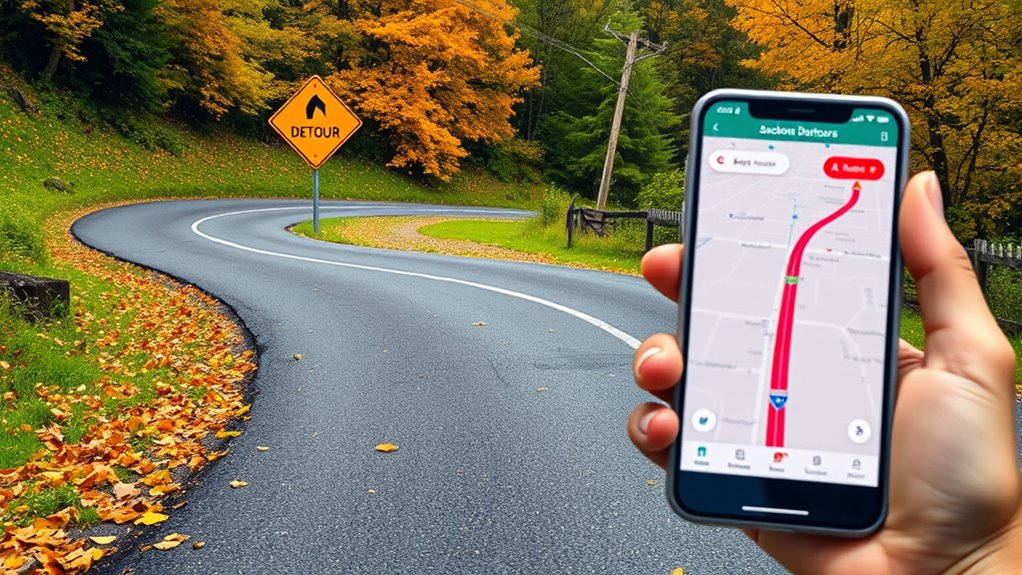
When encountering a sudden road change, you’ll notice how seamlessly your navigation app switches to alternative routes. You don’t have to manually search for new directions or worry about missing important detours. Instead, the app alerts you with clear instructions, visually highlighting the new path and updating your estimated time of arrival. This real-time adaptability is invaluable, especially in busy urban environments where road conditions can change rapidly. The app’s ability to interpret traffic data accurately ensures you’re not just reacting to road closures but proactively avoiding congestion and delays.
Furthermore, your navigation app’s ability to handle sudden changes depends heavily on the quality and timeliness of traffic data. Apps that integrate multiple data sources and employ advanced algorithms offer superior traffic data accuracy. This means they can detect even minor incidents or slowdowns and adjust your route accordingly. By trusting these tools, you benefit from fewer surprises on the road and smoother journeys, even when faced with unexpected road closures or congestion. In essence, accurate traffic data and well-planned alternative routes work hand-in-hand to keep you moving efficiently, making your driving experience less stressful and more predictable, even in unpredictable conditions. Additionally, incorporating field recording techniques can enhance the accuracy of data collection, leading to even more precise route adjustments and improved navigation reliability.
Frequently Asked Questions
How Do Navigation Apps Prioritize Alternative Routes During Major Road Closures?
You rely on navigation apps’ detour algorithms to prioritize alternative routes by analyzing live traffic data, road closures, and user reports. When major road closures happen, the app quickly recalculates routes, favoring less congested and accessible options. It continuously updates, ensuring you get the fastest, safest detour possible. This seamless route recalculation helps you avoid delays and reach your destination efficiently, even during unexpected road closures.
Can Users Manually Report Sudden Road Changes in Navigation Apps?
Think of yourself as a vigilant lighthouse, guiding others through the storm. Yes, you can manually report sudden road changes in navigation apps through user reports or map corrections. Your input acts as a beacon, helping app developers update their maps accurately. By sharing real-time issues, you make certain future travelers avoid hazards and stay on the safest routes, making navigation smarter and more responsive for everyone.
How Quickly Do Navigation Apps Update Their Maps After New Road Developments?
Navigation apps typically update their maps within a few days to weeks, depending on the map update frequency. When you encounter new road developments, the route recalculation speed is usually instant, allowing you to get real-time directions. Your app constantly processes data from various sources, including user reports, to guarantee the map stays current. To stay updated, regularly check for app updates and enable automatic map updates for the latest information.
Do Navigation Apps Account for Real-Time Traffic and Weather Conditions?
Yes, navigation apps account for real-time traffic and weather conditions to improve map accuracy and traffic prediction. You’ll see live updates that reflect current congestion, accidents, and weather impacts, helping you avoid delays. By continuously gathering data from sensors, user reports, and weather services, these apps adapt your route dynamically, ensuring you get the most accurate, efficient directions based on real-time conditions.
Are There Differences in How Various Apps Handle Unexpected Road Changes?
Yes, different navigation apps handle unexpected road changes differently. Some prioritize map accuracy, updating routes quickly when they detect road closures or detours, while others may lag behind or rely heavily on user reports. Your user interface plays a role too, as clear alerts and easy access to alternate routes help you respond swiftly. Choose an app that offers real-time updates and intuitive features to stay ahead of sudden road changes.
Conclusion
Next time you’re rerouted unexpectedly, remember how navigation apps quickly adapt to sudden road changes. Imagine you’re heading to a concert, and a construction zone pops up. Your app reroutes you seamlessly, saving time and frustration. These apps use real-time data to keep you moving smoothly, turning a potential hassle into a minor detour. So, trust the technology—it’s designed to get you there, even when the road ahead suddenly shifts.