
When off-grid during navigation emergencies, satellite messengers guarantee you stay connected when cell signals fail. These compact devices use orbiting satellites to send texts, share your location, and activate emergency signals instantly. With dedicated SOS buttons, you can quickly alert rescue services and provide critical data, enhancing your safety in remote areas. If you want to discover how to maximize these tools for your adventures, there’s more to explore on how they can keep you safe.
Key Takeaways
- Satellite messengers provide reliable off-grid communication when cell networks are unavailable.
- They enable immediate emergency signaling with dedicated SOS buttons and location sharing.
- Satellite coverage ensures connectivity in remote terrains like forests, mountains, and deserts.
- Quick distress alerts help coordinate rescue efforts, enhancing safety during navigation emergencies.
- These devices are essential for peace of mind and safety during outdoor adventures in isolated areas.
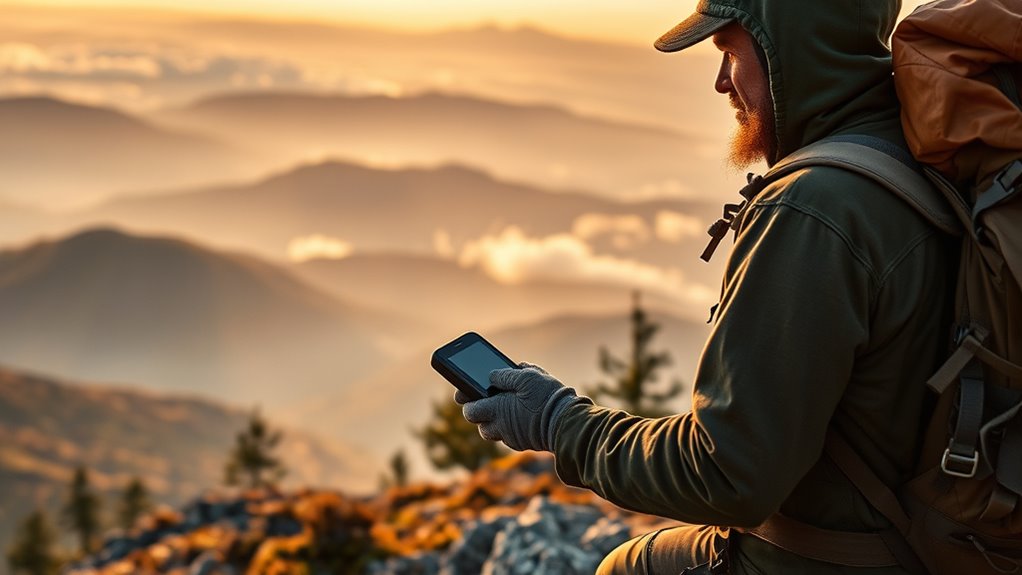
When you’re off the grid, reliable communication becomes a critical challenge. You might find yourself in remote wilderness, mountain ranges, or deep forests where traditional cell networks don’t reach. In these situations, satellite coverage is your lifeline. Unlike cell towers that depend on ground infrastructure, satellite networks use orbiting satellites to provide connectivity everywhere on the planet, from dense forests to open deserts. This broad coverage ensures you can send messages, access your location, or call for help, no matter how far you’ve strayed from civilization. Satellite messengers are compact devices that harness this technology, letting you communicate through text or emergency signaling even in the most isolated spots. With a satellite messenger, you’re not just relying on luck; you’re equipped with a tool designed for off-grid survival. reliable communication is essential for safety and peace of mind during outdoor adventures.
Emergency signaling becomes especially essential when unexpected situations arise. Whether you’re injured, lost, or facing a natural disaster, being able to send a distress signal can be the difference between rescue and prolonged danger. These devices typically feature dedicated SOS buttons that transmit a distress signal via satellite, alerting rescue services or trusted contacts of your predicament. Unlike traditional GPS devices, satellite messengers are built to prioritize emergency communication. They often include a one-touch emergency button that, when pressed, sends your exact location along with a distress message. This immediate contact can trigger rescue operations, saving critical time when every second counts. In remote areas where no cell signal exists, emergency signaling through satellite coverage guarantees that your call for help gets through, providing peace of mind whether you’re exploring alone or guiding a group.
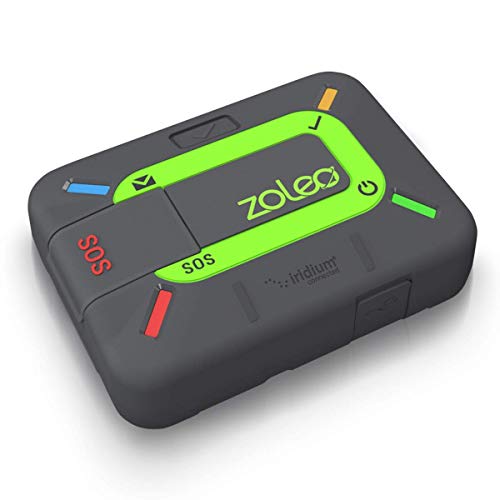
ZOLEO Satellite Communicator – Two-Way Global SMS Text Messenger & Email, Emergency SOS Alerting, Check-in & GPS Location – Android iOS Smartphone Accessory
Global satellite messaging: Stay connected beyond cell coverage, use ZOLEO with your smartphone to transmit text messages and…
As an affiliate, we earn on qualifying purchases.
As an affiliate, we earn on qualifying purchases.
Frequently Asked Questions
How Long Do Satellite Batteries Typically Last During Emergencies?
Satellite batteries during emergencies typically last between 12 to 48 hours, depending on battery longevity and usage. To maximize power, you should enable power management features, such as turning off non-essential functions and reducing screen brightness. Using your satellite messenger efficiently guarantees you get the most out of its battery life when it matters most, helping you stay connected and safe until help arrives or your situation stabilizes.
Can Satellite Messengers Be Used Underwater or Submerged?
You might think satellite messengers work underwater, but they don’t. Underwater communication relies on acoustic signals, which satellite devices can’t send or receive. When submerged, signal limitations become significant, and the device’s radio frequencies can’t penetrate water effectively. If you get caught underwater, your satellite messenger won’t be able to help with navigation or emergency alerts. Always keep your device dry and use specialized underwater communication tools if needed.
Are There Legal Restrictions on Satellite Communication Use in Remote Areas?
You should know that legal restrictions on satellite communication use vary by country and region. Some areas have specific satellite communication regulations, especially in sensitive zones like military or government sites. Before heading into remote areas, check local laws regarding satellite communication to avoid legal issues. Staying informed helps you use satellite messengers responsibly and guarantees you’re compliant with all relevant regulations during your travels.
How Do Satellite Signals Perform in Extreme Weather Conditions?
In extreme weather, satellite signals are surprisingly resilient, yet you might notice signal degradation during heavy storms or thick clouds. While weather resilience varies, most satellite messengers are designed to perform well in harsh conditions. You’ll want to guarantee your device has a clear view of the sky for ideal signal. Don’t be discouraged—advanced technology helps maintain communication when you need it most, even amidst fierce weather.
What Is the Cost Difference Between Satellite Messengers and Traditional Radios?
You’ll find that satellite messengers generally cost more upfront than traditional radios, but their advanced features and global coverage can justify the price. The pricing comparison shows satellite devices often range from $150 to $500, plus subscription fees, while radios are usually under $100. When considering budget considerations, think about your needs—if reliable, global communication is essential, investing in a satellite messenger might be worth the extra cost for peace of mind.

ACR Bivy Stick Satellite Communicator – Two-Way Global SMS, GPS Tracker, Off-Grid Communication, SOS Emergency Beacon, Satellite Messenger & Location Sharing – iOS/Android App
Global Iridium Satellite Coverage: Stay connected anywhere on Earth with 100% global Iridium satellite coverage for two-way SMS,…
As an affiliate, we earn on qualifying purchases.
As an affiliate, we earn on qualifying purchases.
Conclusion
When you’re deep in the wilderness, satellite messengers become your lifeline—a shining beacon guiding you back when all else is darkness. They turn the vast, silent sky into your personal emergency hotline, ensuring you’re never truly lost in the shadows. With this technology, you hold a compass not just for navigation, but for peace of mind. So, next time you venture off-grid, let satellite comms be your guiding star—bright, dependable, and always there when you need it most.
ZOLEO Satellite Communicator – Two-Way Global SMS Text Messenger & Email, Emergency SOS Alerting, Check-in & GPS Location – Android iOS Smartphone Accessory
Global satellite messaging: Stay connected beyond cell coverage, use ZOLEO with your smartphone to transmit text messages and…
As an affiliate, we earn on qualifying purchases.
As an affiliate, we earn on qualifying purchases.

Garmin inReach Mini 2, Lightweight and Compact Satellite Communicator, Hiking Handheld, Orange – 010-02602-00
Compact, lightweight satellite communicator enables two-way messaging and interactive SOS globally (Active satellite subscription required. Some jurisdictions regulate…
As an affiliate, we earn on qualifying purchases.
As an affiliate, we earn on qualifying purchases.