To improve your setup for rural, mountain, and low-signal routes, choose rugged, water-resistant satellite devices with GPS, two-way messaging, and SOS features. Use signal boosters and antenna extenders to amplify signals in poor reception areas. Keep spare batteries and portable power sources handy. Familiarize yourself with device operation and emergency protocols. Combining reliable communication tools with safety gear and environmental awareness guarantees you stay connected and safe. Keep exploring further tips to enhance your preparedness.

Get business pricing on garage and car supplies
- Business-only prices and quantity discounts
- Tax-exempt purchasing
- Multiple users, one account, clear invoices
Key Takeaways
- Use signal boosters and antenna extenders to improve satellite reception in low-signal areas.
- Carry portable power banks or solar chargers to ensure device operation in remote locations.
- Regularly test and calibrate devices, optimizing antenna placement for better signal strength.
- Familiarize yourself with emergency protocols and share your itinerary with trusted contacts.
- Equip with additional survival gear, maps, and personal locator beacons for comprehensive safety.
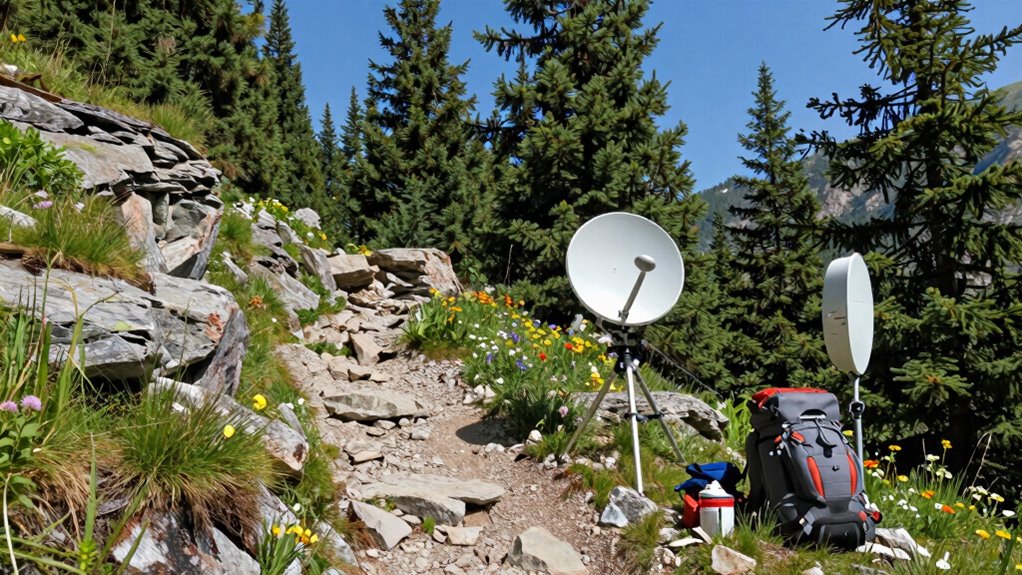
Have you ever been caught in a remote area with little or no signal, wishing your device could still keep you connected and safe? When you’re venturing into rural, mountainous, or low-signal routes, staying connected becomes a serious challenge. That’s where a well-thought-out setup for satellite communication can make all the difference. It’s not just about convenience; it’s about emergency preparedness. If something goes wrong—like an injury or vehicle breakdown—you need a reliable way to call for help, and cellular networks might not cut it in these areas.
To improve your setup, start with a satellite communication device. Unlike traditional cell phones, these devices connect directly to satellites orbiting the Earth, offering coverage in the most isolated spots. Invest in a device that’s rugged, water-resistant, and easy to operate, especially if you’re planning extended stays or challenging terrain. Some units also offer two-way messaging, GPS tracking, and emergency SOS features, which are essential in critical situations. Keep the device charged with a portable power bank or solar charger, since power sources can be scarce in remote locations.
Start with a rugged satellite device with two-way messaging, GPS, and emergency SOS for reliable remote communication.
Beyond just having the device, familiarize yourself with its operation and test it regularly. Knowing how to activate emergency features quickly can save vital seconds in a crisis. It’s also wise to carry additional accessories like antenna extenders or signal boosters if your device supports them. These can amplify satellite signals in areas with poor reception, giving you a stronger connection when you need it the most. In addition, understanding the contrast ratio of your communication devices can help ensure you have a clear and reliable signal in challenging environments. Also, staying informed about regulatory considerations related to satellite communication can prevent potential legal issues in certain regions.
Additionally, understanding the emergency communication protocols** can streamline your response during a crisis, ensuring you use your device most effectively when it matters. Your emergency preparedness plan should include clear communication protocols. Share your itinerary with someone you trust, and establish check-in times, so they know when to expect your updates. In case of an emergency, activating your satellite communication device should be your top priority, providing your exact location and situation details to rescue teams or emergency contacts. Remember, in these areas, traditional radios or cell phones** might be useless, so relying on satellite communication becomes your lifeline.
Finally, consider supplementing your setup with basic survival gear, maps, and a personal locator beacon (PLB). These tools, combined with a satellite communication device, create a thorough safety net that allows you to navigate and respond to emergencies confidently. Properly understanding signal boosting techniques can also help optimize your device’s performance in tough environments. The key to a successful setup for rural, mountain, and low-signal routes is preparation—thinking ahead and equipping yourself with reliable tools ensures you stay connected, safe, and ready for anything.
rugged satellite communication device with GPS
As an affiliate, we earn on qualifying purchases.
As an affiliate, we earn on qualifying purchases.
Frequently Asked Questions
What Are the Best Portable Power Sources for Remote Routes?
You should consider solar chargers and portable batteries as your best power sources for remote routes. Solar chargers harness sunlight, providing renewable energy during the day, perfect for extended trips. Portable batteries store power from various sources, offering reliable backup when sunlight isn’t available. Combining these options guarantees you stay connected and powered up, even in low-signal, mountain, or rural areas, giving you peace of mind on your journey.
How Can I Protect My Devices From Extreme Weather Conditions?
To protect your devices from extreme weather conditions, you should use device insulation to shield them from harsh temperatures and moisture. Additionally, invest in weatherproof cases that safeguard against rain, snow, and dust. Make sure these cases are tightly sealed and durable. Regularly check the insulation and cases for any wear or damage, and keep your devices stored in a protected area when not in use to extend their lifespan in challenging environments.
What Are the Recommended Apps for Offline Navigation?
You’ll love these apps because they’re like your trusty compass in a wilderness of uncertainty! For offline navigation, Google Maps and Maps.me top the list, delivering incredible offline map accuracy and reliable GPS signal even when signals vanish like magic. Gaia GPS and OsmAnd are perfect for rugged adventures, ensuring you never lose your way in remote areas. With these, you’re always in control, no matter how wild the terrain gets!
How Do I Stay Connected With Emergency Services in Low-Signal Areas?
You stay connected with emergency services in low-signal areas by using satellite communication devices, like a satellite phone or GPS messenger. These tools provide reliable communication when cellular signals drop. Incorporate emergency preparedness by carrying these devices, especially for remote routes. Test them beforehand, keep batteries charged, and know how to operate them. This guarantees you can summon help quickly, even in the most isolated locations.
What Gear Is Essential for Long-Duration Mountain Expeditions?
For long mountain expeditions, you need essential gear like a durable GPS device, compass, and detailed maps for navigation techniques. Pack a reliable weather radio and layered clothing to stay prepared for sudden weather changes. Bring a portable power bank, first aid kit, and high-energy snacks. Prioritize staying informed about weather forecasts, and practice navigation and emergency procedures to guarantee safety during your adventure.
satellite signal booster for remote areas
As an affiliate, we earn on qualifying purchases.
As an affiliate, we earn on qualifying purchases.
Conclusion
As you venture through rural, mountain, and low-signal routes, think of your setup as a trusty companion, quietly supporting your journey. With a little preparation and the right gear, you’ll find that even the quietest paths can become the most enriching adventures. Embrace these moments of serenity, knowing your setup is there to guide you softly along the way. After all, the best experiences often come from the calmest, most uncharted routes.
portable solar power bank for devices
As an affiliate, we earn on qualifying purchases.
As an affiliate, we earn on qualifying purchases.
emergency two-way satellite messenger
As an affiliate, we earn on qualifying purchases.
As an affiliate, we earn on qualifying purchases.
Halloween Picks
halloween
As an affiliate, we earn on qualifying purchases.