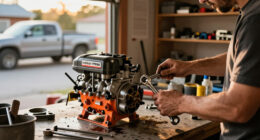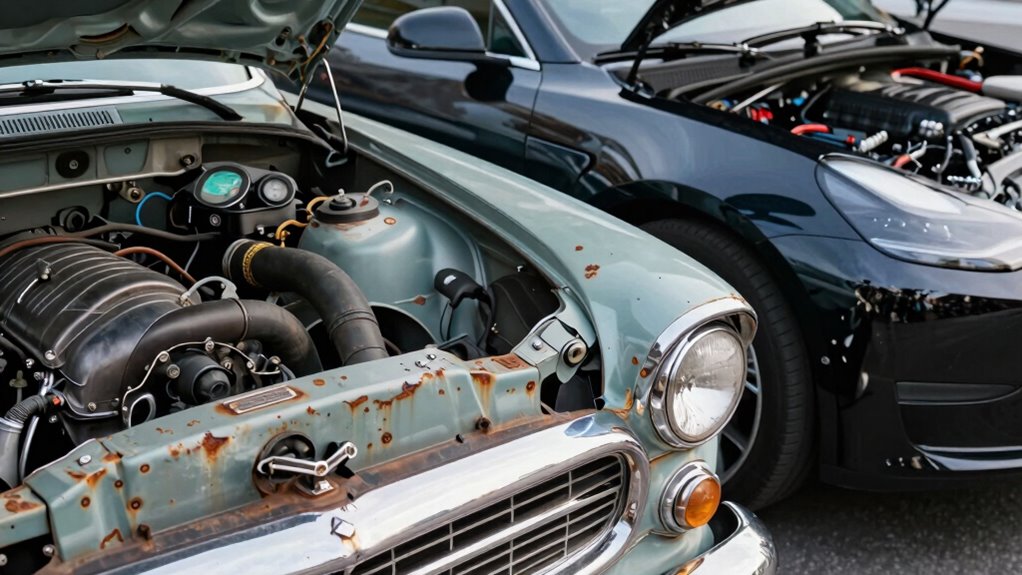

Old cars benefit more from basic diagnostics because their mechanical systems and manual sensors are simpler and easier to understand. You can troubleshoot with tools like multimeters and vacuum gauges, which don’t require advanced software or electronic scan tools. This makes repairs more accessible and cost-effective. Plus, manual sensors give you immediate feedback, helping you maintain and fix your vehicle confidently. Keep exploring to discover how these simple methods keep vintage cars running smoothly.

Get business pricing on garage and car supplies
- Business-only prices and quantity discounts
- Tax-exempt purchasing
- Multiple users, one account, clear invoices
Key Takeaways
- Vintage engines rely on mechanical and analog sensors, making basic diagnostics more effective and straightforward.
- Older cars lack complex electronic systems, reducing the need for specialized, costly diagnostic tools.
- Manual sensors provide immediate, real-time feedback, simplifying troubleshooting without electronic fault codes.
- Basic tools like multimeters and vacuum gauges are sufficient for maintenance, unlike advanced software required for modern vehicles.
- Simpler diagnostics promote independent repair, cost savings, and a better understanding of engine mechanics in old cars.

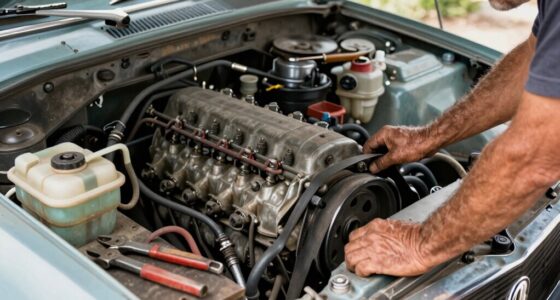
Even old cars can run smoothly with simple maintenance, especially when you use basic diagnostics. Unlike modern vehicles packed with complex electronics, vintage engines rely heavily on mechanical parts and manual sensors. This makes them more straightforward to troubleshoot and repair using basic diagnostic tools. When you understand how your engine works and can interpret simple sensor readings, you’re better equipped to keep your classic car running efficiently. These manual sensors provide essential data, such as temperature or pressure levels, which you can monitor and adjust without specialized computer systems. This hands-on approach makes diagnosing issues more accessible and less costly. Additionally, knowing how to use vintage diagnostic tools empowers you to maintain your car independently, avoiding expensive trips to the mechanic. With vintage engines, the lack of advanced electronics means you don’t need high-tech scanners or software updates to identify problems. Instead, you can use basic diagnostic tools like a multimeter or a simple vacuum gauge to gauge engine performance. Manual sensors, which are often mechanical or analog in nature, give you immediate feedback on engine conditions, and understanding sensor signals can help you pinpoint issues more precisely. If something isn’t working right, you can physically inspect and adjust these components, making repairs more intuitive. This simplicity is especially beneficial for older cars, as it avoids the confusion and expense associated with deciphering complex electronic fault codes. Additionally, practicing diagnostic techniques enhances your ability to troubleshoot effectively and maintain your vehicle’s longevity.
As an affiliate, we earn on qualifying purchases.
Frequently Asked Questions
Can Basic Diagnostics Identify All Issues in Old Cars?
Basic diagnostics can identify many issues in old cars, but they don’t catch everything. For example, problems like failing oxygen sensors or engine misfires might be detected, but more complex issues often require advanced tools. You might find some problems early, saving money and time, but for a thorough check, especially with older vehicles, a professional inspection is usually necessary to catch hidden or developing issues.
Are There Risks in Using Basic Diagnostics on New Cars?
Yes, using basic diagnostics on new cars carries risks. While they can detect some issues, advanced sensors and sophisticated software in modern vehicles often aren’t fully compatible with basic tools. This can lead to missed problems or misdiagnoses. Relying solely on basic diagnostics might overlook critical system faults, potentially causing costly repairs or safety issues. For accurate results, professional diagnostic tools are recommended for newer models.
How Often Should Old Cars Undergo Basic Diagnostics?
You should run basic diagnostics on your old car every 3 to 6 months, like a regular health check-up. Think of it as a maintenance schedule that keeps your vehicle running smoothly, preventing small issues from turning into costly repairs. These cost-effective solutions help you catch trouble early, saving money and extending your car’s life. Regular diagnostics guarantee your vintage ride stays reliable and ready for the road.
Do Basic Diagnostics Replace Professional Mechanical Inspections?
Basic diagnostics don’t substitute professional mechanical inspections because sensors have limitations, and software updates may not address all issues. You should still have a mechanic check your car regularly, especially for complex problems or wear and tear that basic scans can’t detect. Diagnostics are great for quick trouble-shooting, but a professional inspection guarantees your car’s overall health, safety, and longevity.
What Tools Are Needed for Effective Basic Diagnostics on Old Cars?
You don’t need a spaceship to diagnose your old car—just an OBD II scanner or a handy handheld device. These simple tools cut through the mystery, letting you read error codes and spot issues early. With these, you can tackle basic diagnostics yourself, saving time and money. Forget fancy tech; your old car’s secrets are just a scanner away, making maintenance straightforward and surprisingly satisfying.
As an affiliate, we earn on qualifying purchases.
Conclusion
As you explore your old car’s quirks with basic diagnostics, you might uncover secrets that could save you a fortune—or reveal deeper issues lurking beneath the surface. Don’t underestimate the power of simple tools; they could be your best allies in keeping your vintage ride alive. But remember, what you discover might just change your entire perspective on your beloved car. Are you ready to face what’s hidden? The next step is up to you.
As an affiliate, we earn on qualifying purchases.
As an affiliate, we earn on qualifying purchases.
Columbus Day / Indigenous Peoples' Day Picks
long weekend sales
As an affiliate, we earn on qualifying purchases.