To build a smarter maintenance routine for your aging vehicle, start by integrating predictive diagnostics to monitor its health in real-time. Regularly review diagnostic reports and perform targeted preventative measures like oil changes, tire rotations, and fluid checks based on data insights. Adjust your schedule as needed to address wear and component interactions quickly. Staying attentive to early signs and leveraging technology will help prevent costly repairs and keep your vehicle running smoothly longer—discover how to optimize this process further.
Open a free Amazon Business account
Business pricing, bulk buying and tax-exempt orders.
As an affiliate, we earn on qualifying purchases.
Key Takeaways
- Implement predictive diagnostics to monitor vehicle health and identify issues early.
- Tailor maintenance schedules based on diagnostic insights and component wear.
- Perform routine preventive tasks, such as oil changes and tire rotations, proactively.
- Use advanced diagnostic tools to gather accurate data for informed decisions.
- Regularly review diagnostic reports and act promptly to prevent costly breakdowns.
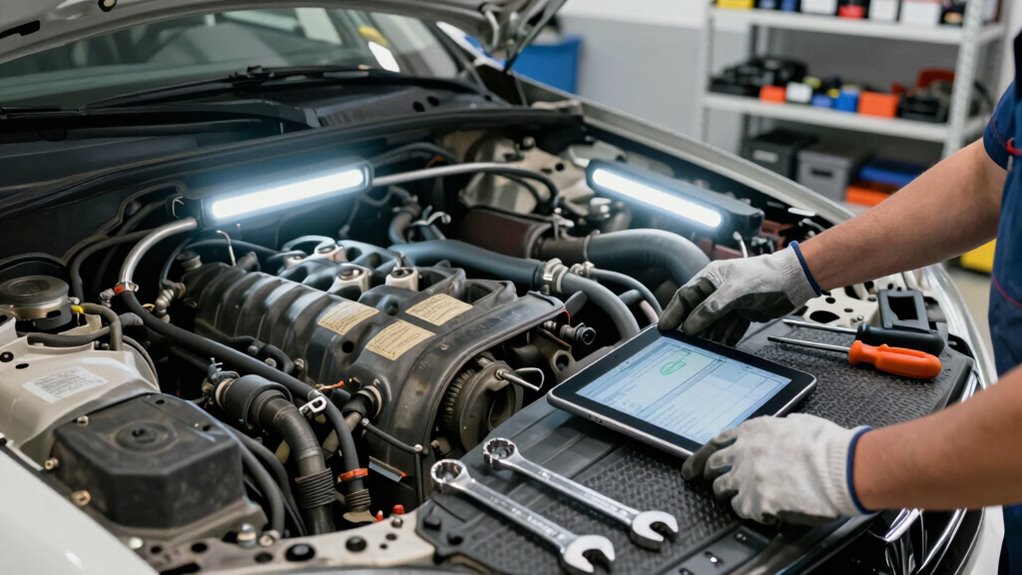
As your vehicle ages, maintaining its performance and reliability becomes increasingly important, but traditional maintenance routines may no longer suffice. Instead of sticking to reactive repairs or generic schedules, you should focus on building a smarter maintenance routine that anticipates problems before they happen. This is where predictive diagnostics come into play. By using advanced tools and sensors, you can monitor your vehicle’s essential signs in real-time, catching issues early. For example, if your vehicle’s engine begins to show signs of wear or abnormal vibrations, predictive diagnostics can alert you immediately, giving you the chance to address the problem before it develops into a costly repair or breakdown.
Predictive diagnostics monitor your vehicle in real-time, catching issues early to prevent costly repairs.
Incorporating predictive diagnostics into your maintenance routine helps you shift from reactive to proactive care. It enables you to pinpoint potential issues with greater accuracy, saving you time and money in the long run. Regularly checking data from onboard systems or external diagnostic tools allows you to identify patterns that indicate wear and tear. This early detection means you can schedule repairs or replacements during routine service visits, rather than risking roadside breakdowns or engine failures. It’s a smarter way to extend your vehicle’s lifespan and maintain peak performance. Advanced diagnostic tools can also improve your understanding of how different components interact and influence overall vehicle health. Additionally, learning to interpret diagnostic data enhances your ability to predict future issues more effectively.
Alongside predictive diagnostics, preventative measures are essential for keeping your aging vehicle in top shape. Preventative measures involve routine tasks like oil changes, tire rotations, and brake inspections, but they should be tailored based on diagnostic data. For instance, if diagnostics reveal that your transmission fluid is degrading faster than expected, you’ll want to adjust your schedule accordingly. Preventative measures also include keeping an eye on fluid levels, belt conditions, and tire tread depths, all of which contribute to your vehicle’s overall health. Incorporating technological tools and data analysis can further refine your maintenance approach, ensuring more precise and timely interventions. Using diagnostic data to inform your maintenance decisions ensures you are acting on accurate information rather than estimates or guesswork. By staying ahead of issues, you reduce the risk of sudden failures and avoid costly repairs down the line.
Building a smarter maintenance routine means combining technology with attentive care. Regularly review diagnostic reports and perform targeted preventative measures based on the insights you gather. This approach not only helps you catch problems early but also maximizes your maintenance schedule, making it more efficient and less invasive. Ultimately, your goal is to keep your aging vehicle running smoothly, reliably, and safely for as long as possible. With predictive diagnostics guiding your decisions and preventative measures acting as your safety net, you can confidently navigate the challenges of maintaining an older vehicle, saving money and preventing inconvenience along the way. Utilizing advanced tools can significantly enhance your ability to monitor and maintain your vehicle effectively.
OBD II diagnostic scanner for cars
As an affiliate, we earn on qualifying purchases.
As an affiliate, we earn on qualifying purchases.
Frequently Asked Questions
How Often Should I Change the Oil in an Older Vehicle?
You should typically change the oil in your older vehicle every 3,000 to 5,000 miles, but it’s best to follow your vehicle’s specific maintenance schedule. Check your owner’s manual for recommended oil change intervals, as they can vary based on driving habits and oil type. Regular oil changes help keep your engine running smoothly and extend its lifespan, especially as your vehicle ages.
What Are Signs My Vehicle Needs a Tune-Up?
You notice your engine sputtering like a tired old smoker, or your car hesitates before moving. It’s time for a tune-up. Keep an eye on engine diagnostics, which reveal hidden issues, and don’t forget tire inspections—uneven wear hints at misalignment or suspension problems. These signs signal your vehicle needs a tune-up, ensuring it runs smoothly and reliably, just like a well-oiled machine.
Can Regular Maintenance Improve My Car’s Fuel Efficiency?
Yes, regular maintenance can boost your car’s fuel efficiency. Follow fuel efficiency tips like keeping tires properly inflated, changing air filters, and using the recommended motor oil. These steps help your engine run smoothly, saving you money on fuel and maintenance costs. Staying consistent with maintenance not only improves performance but also prevents costly repairs, making your vehicle more economical and reliable in the long run.
How Do I Identify Potential Brake Issues Early?
Think of your brakes like the heartbeat of your car—if it’s irregular, trouble’s nearby. To spot potential issues early, check your brake fluid level regularly; low fluid can signal leaks. Also, listen for squealing or grinding sounds, which may indicate worn brake pads. Visually inspect for uneven brake pad wear or damage. Catching these signs early keeps your braking system reliable and your driving safe.
Are There Specific Parts That Wear Out Faster With Age?
Yes, with age, parts like tires tend to experience uneven tire wear faster, especially if your alignment isn’t perfect. Your battery lifespan decreases over time, leading to starting issues. You should regularly check tire tread and pressure, and keep an eye on your battery’s performance. Replacing worn tires and testing your battery before it fails helps you avoid unexpected breakdowns and keeps your vehicle running smoothly.
vehicle maintenance predictive diagnostics tool
As an affiliate, we earn on qualifying purchases.
As an affiliate, we earn on qualifying purchases.
Conclusion
As your vehicle ages, staying ahead with a smarter maintenance routine becomes essential. But what if the next unexpected issue lurks just around the corner? By paying close attention to subtle signs and sticking to a strategic schedule, you might avoid costly repairs. The key isn’t just in routine checks—it’s in knowing when to act before small problems turn into big ones. Are you truly prepared to keep your car running smoothly for the long haul?
As an affiliate, we earn on qualifying purchases.
tire rotation and tread depth gauge
As an affiliate, we earn on qualifying purchases.
As an affiliate, we earn on qualifying purchases.
College move-in / dorm season Picks
dorm essentials
As an affiliate, we earn on qualifying purchases.