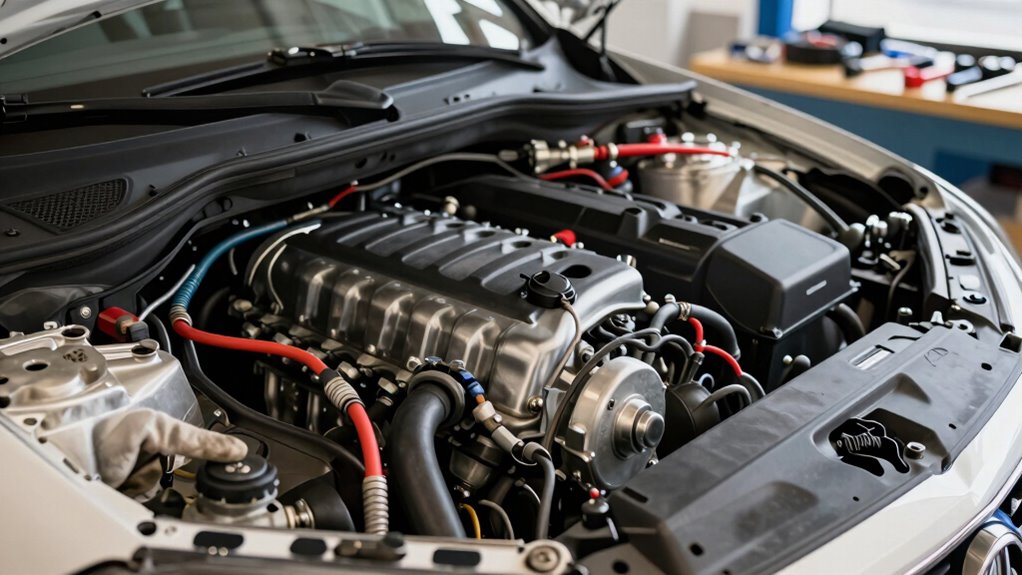

Start by understanding how your car’s main systems work together, including the engine, electrical system, brakes, and suspension. Get familiar with the basics so you can recognize common issues and use diagnostic tools effectively. Learn how to interpret error codes and perform visual checks like looking for leaks or worn belts. Building this foundational knowledge will boost your confidence in troubleshooting. Keep exploring, and you’ll uncover even more ways to keep your car running smoothly.

Get business pricing on garage and car supplies
- Business-only prices and quantity discounts
- Tax-exempt purchasing
- Multiple users, one account, clear invoices
Key Takeaways
- Understand basic vehicle systems like the engine, electrical system, brakes, and suspension.
- Learn how to safely operate and interpret diagnostic tools and error codes.
- Prioritize safety procedures, including disconnecting the battery and supporting the vehicle properly.
- Conduct visual inspections for leaks, worn parts, and damaged wiring to support diagnostics.
- Practice regularly with diagnostic tools to build confidence and improve troubleshooting skills.
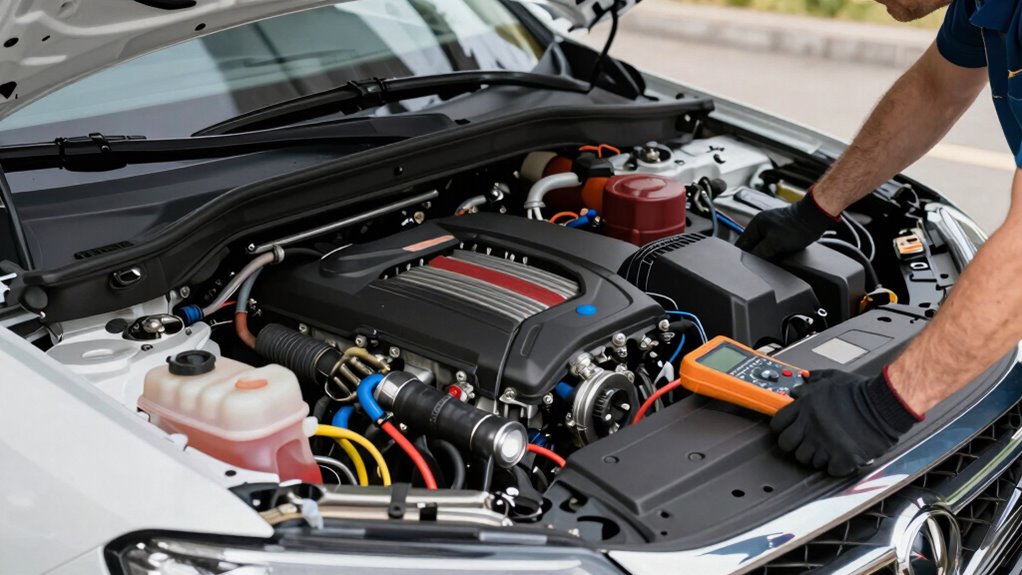
If you want to diagnose your own car, the first step is understanding the basics of how your vehicle works. Knowing how different systems interact helps you identify problems more efficiently. Start by familiarizing yourself with the engine, electrical system, brakes, and suspension. This foundational knowledge gives you context for what you’ll see when you start using diagnostic tools.
Understanding your vehicle’s systems is the first step to effective self-diagnosis and repairs.
When you’re ready to get hands-on, investing in good diagnostic tools is vital. These devices connect to your car’s onboard computer, allowing you to read error codes that reveal issues you might not notice otherwise. Many affordable scanner tools are user-friendly, making it easier for you to interpret the data. Remember, before you begin working on your car, you need to follow safety precautions. Disconnect the battery if you’re working on electrical components, wear gloves and eye protection, and ensure the vehicle is on a flat surface with the parking brake engaged. These safety measures prevent accidents and damage to your vehicle or yourself.
Learning how to operate diagnostic tools takes some practice, but it’s worth the effort. Most tools come with instructions, and many have live support or online tutorials. When you connect the scanner, turn on the ignition without starting the engine, and carefully follow the prompts. The scanner will display trouble codes—these are standardized codes that point to specific issues. Once you have the codes, you can look them up to understand what’s causing the problem. This process saves you time and money by pinpointing issues before diving into more complex repairs. Developing a basic understanding of vehicle systems can significantly improve your diagnostic accuracy and confidence. Understanding electrical systems is especially important because many modern vehicles rely heavily on electronic components that communicate through complex networks.
It’s also essential to develop a habit of inspecting your vehicle visually before relying solely on diagnostic tools. Look for leaks, worn belts, cracked hoses, or loose wires. Combining visual checks with diagnostic readings gives you a more complete picture of your car’s health. Understanding the contrast ratio of your vehicle’s lighting and displays can also help you better interpret warning signals and dashboard indicators, leading to more accurate diagnostics. As you become more familiar with your vehicle’s systems, you’ll learn to interpret error codes more effectively, making repairs less intimidating. Always remember to follow safety precautions every step of the way—working with a car can be dangerous if you’re not careful. Keep the area well-ventilated, avoid working under the car without proper supports, and disconnect the battery when necessary.
In the end, learning these basics empowers you to diagnose issues confidently. With the right tools, safety awareness, and a solid understanding of your car’s systems, you’re well on your way to becoming your own mechanic.
As an affiliate, we earn on qualifying purchases.
Frequently Asked Questions
What Tools Are Essential for Basic Car Diagnostics?
You need basic diagnostic equipment to start vehicle maintenance effectively. An OBD-II scanner is essential, allowing you to read error codes and identify issues quickly. A multimeter helps you check electrical components, while a flashlight improves visibility under the hood. These tools empower you to diagnose common problems, save money, and gain confidence in maintaining your car yourself. With the right diagnostic equipment, you can tackle most basic vehicle maintenance tasks efficiently.
How Do I Interpret Diagnostic Trouble Codes?
When you interpret diagnostic trouble codes, start with the OBD II codes you retrieve using your scanner. Note the specific code numbers, like P0171, and look them up in a code reference or online database. This helps you understand what system or component is malfunctioning. Use the code retrieval process to pinpoint issues accurately, then investigate further based on the details provided by the codes, making repairs more straightforward.
Can I Diagnose Engine Problems Without Professional Help?
You can definitely diagnose engine problems without professional help, especially with some DIY troubleshooting. Don’t let fear stop you—many common car issues, like a rough idle or strange noises, are manageable with basic tools and knowledge. While complex problems might need a pro, understanding symptoms and using diagnostic codes can help you identify issues early. Your car’s health is within reach if you stay curious and patient.
What Safety Precautions Should I Take While Diagnosing My Car?
When diagnosing your car, prioritize vehicle safety by wearing gloves and eye protection, ensuring the engine is cool before working on it. Use well-maintained tools to prevent accidents and malfunctions. Keep your workspace clear of hazards, disconnect the battery if needed, and follow manufacturer instructions carefully. Regular tool maintenance helps avoid injuries or damage, and staying alert minimizes risks. These precautions keep you safe while effectively diagnosing your vehicle.
How Often Should I Perform Basic Diagnostic Checks?
You should perform basic diagnostic checks at least once a month to catch issues early. Regular vehicle maintenance helps prevent costly repairs and guarantees safety. Incorporating troubleshooting techniques, like checking engine lights or fluid levels, keeps your car running smoothly. An estimated 60% of vehicle breakdowns could be avoided with routine checks, so make it a habit. Staying proactive helps you identify problems before they become serious.
As an affiliate, we earn on qualifying purchases.
Conclusion
As you start diagnosing your car, you’ll find that understanding basic mechanics is like learning to read a map—suddenly, the confusing turns become clear. With each skill you pick up, it’s like tuning into a secret language that helps you spot issues early. Before long, you’ll notice how small clues, like a flickering light or strange smell, guide you to the problem. Just like a detective, you’ll connect the dots, making your car’s health feel less mysterious and more manageable.
As an affiliate, we earn on qualifying purchases.
As an affiliate, we earn on qualifying purchases.
Fall Picks
fall essentials
As an affiliate, we earn on qualifying purchases.