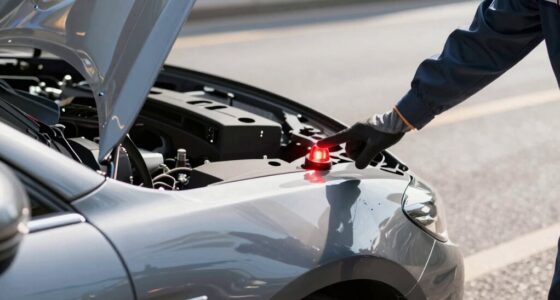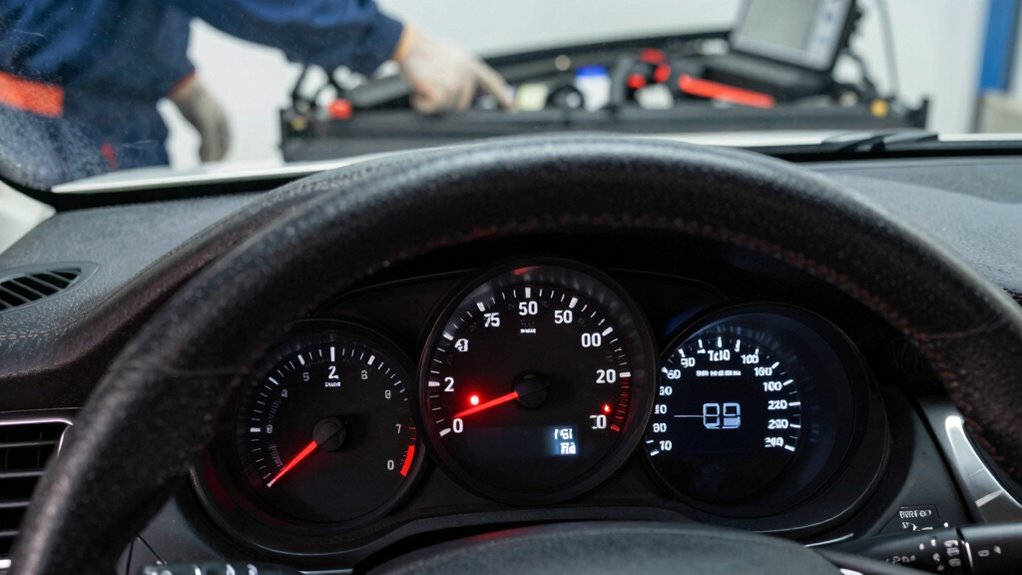
When your check engine light comes on, start by checking simple issues like your gas cap to see if it’s loose or damaged. Use a diagnostic scanner or visit a parts store to get trouble codes, which point to specific problems like sensors or fuel issues. Inspect fluid levels and look for obvious signs of trouble. Addressing these quickly can boost fuel efficiency and prevent more serious damage. If you want to learn more, keep exploring the key steps to diagnose and fix the issue.

Get business pricing on garage and car supplies
- Business-only prices and quantity discounts
- Tax-exempt purchasing
- Multiple users, one account, clear invoices
Key Takeaways
- Use a diagnostic scanner to read trouble codes and identify specific issues.
- Inspect basic components like the gas cap and check for loose or damaged sensors.
- Monitor engine performance for symptoms such as rough idling or reduced power.
- Check fluid levels (oil, coolant) that may indicate underlying problems.
- Schedule a professional inspection if unsure or if warning lights persist.
When your check engine light comes on, it’s a clear signal that something in your vehicle’s systems needs attention. Ignoring it can lead to bigger problems down the road, so it’s essential to identify the cause promptly. One of the first things to consider is how the issue might be affecting your car’s fuel efficiency. If your vehicle starts to consume more fuel than usual, it could be related to a malfunctioning sensor or an issue with the fuel injection system. Addressing these problems early not only helps save you money at the pump but also prevents further strain on other engine components.
A flashing check engine light signals urgent issues that can harm fuel efficiency and engine health.
Another key aspect to check is your car’s emission controls. Modern vehicles are equipped with sophisticated systems designed to reduce harmful pollutants, and if these systems aren’t functioning correctly, the check engine light will alert you. A faulty oxygen sensor or a loose gas cap can trigger the warning light, so start by inspecting these simple parts. Ensuring your gas cap is tight and undamaged can sometimes resolve the issue immediately. If the problem persists, diagnostic tools can help pinpoint whether an emissions control component is malfunctioning. Keeping these systems in check is crucial, not only for compliance with environmental regulations but also for maintaining your vehicle’s overall health. Additionally, understanding the role of emission control systems can help you better grasp the importance of timely maintenance.
Next, pay attention to your engine’s performance. If you notice rough idling, hesitation during acceleration, or a decrease in power, these symptoms often accompany the check engine light. These signs point to underlying issues such as spark plug problems, ignition coil failures, or fuel delivery inconsistencies. Addressing these early can prevent further damage and keep your engine running smoothly. Additionally, check your vehicle’s fluid levels—especially oil and coolant—as low levels can sometimes trigger warning lights and cause engine trouble. Regularly monitoring these fluids can help catch issues before they escalate.
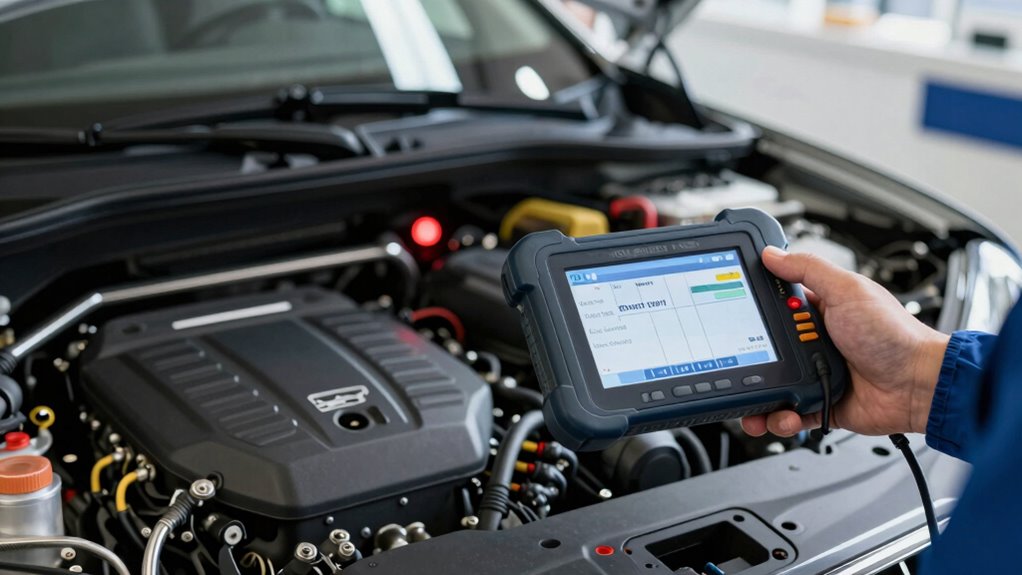
Finally, it’s wise to use a diagnostic scanner to read the trouble codes stored in your vehicle’s computer. Many auto parts stores offer free code readings, which can give you a clearer picture of what’s causing the warning. Once you have the code, research or consult a mechanic to determine the best course of action. Remember, while some issues are minor and easy to fix, others may require professional attention. By taking these steps promptly, you’re not only safeguarding your vehicle’s emission controls and fuel efficiency but also avoiding costly repairs in the future. Proper maintenance and understanding of engine diagnostics are essential for keeping your vehicle in top condition.
OBD2 diagnostic scanner for cars
As an affiliate, we earn on qualifying purchases.
As an affiliate, we earn on qualifying purchases.
Frequently Asked Questions
Can I Continue Driving With the Check Engine Light On?
You can technically keep driving with the check engine light on, but it’s not recommended. The warning signs from engine diagnostics might indicate minor issues or serious ones. Ignoring these signs can lead to engine damage or reduced fuel efficiency. If the light blinks or if you notice unusual sounds or smells, stop driving and get your vehicle checked promptly. Addressing the warning signs early helps prevent costly repairs later.
How Long Can I Drive Before Causing Damage?
You shouldn’t drive long after the check engine light appears, especially if it’s due to a sensor malfunction or emission control issue. Continuing to drive can cause damage, increase emissions, or worsen the problem. Usually, you can drive for a few days or up to 200 miles, but it’s best to have your vehicle inspected soon. Prompt action helps prevent costly repairs and keeps your car running efficiently.
Will the Light Turn off on Its Own?
Think of your car’s check engine light like a warning siren; it might turn off on its own, but don’t count on it. Usually, the light stays on until a mechanic resets it after fixing the issue. Ignoring it can hurt fuel efficiency and increase emissions impact. If it flickers or turns off suddenly, it’s best to get your vehicle checked promptly to prevent further damage.
Does the Type of Engine Light Indicate Severity?
The type of engine warning light can indicate the severity of the issue. A flashing light usually signals a critical problem requiring immediate attention, while a steady light might mean a less urgent concern. When the light comes on, you should check the diagnostic codes with a scanner. These codes help you understand the specific problem, guiding you on whether to seek urgent repairs or schedule a routine check-up.
Is It Safe to Ignore the Check Engine Light Temporarily?
Ignoring the check engine light temporarily isn’t safe because warning indicators signal potential issues. You might miss critical problems that could worsen if left unchecked. While some Diagnostic codes may point to minor issues, others indicate serious faults. It’s best to address the warning indicators promptly by using a scanner to read the Diagnostic codes or visiting a mechanic. This prevents costly repairs and guarantees your vehicle’s safe operation.
As an affiliate, we earn on qualifying purchases.
Conclusion
Once the check engine light pops on, don’t ignore it—think of it as a red flag warning you to stay alert. Check the basics first, like your gas cap and oil levels, then proceed to scan for codes if needed. Remember, a stitch in time saves nine; addressing issues early can prevent bigger, more costly problems down the road. Stay proactive, and your vehicle will thank you for it.
As an affiliate, we earn on qualifying purchases.
car emission control system tester
As an affiliate, we earn on qualifying purchases.
As an affiliate, we earn on qualifying purchases.
Halloween Picks
halloween
As an affiliate, we earn on qualifying purchases.