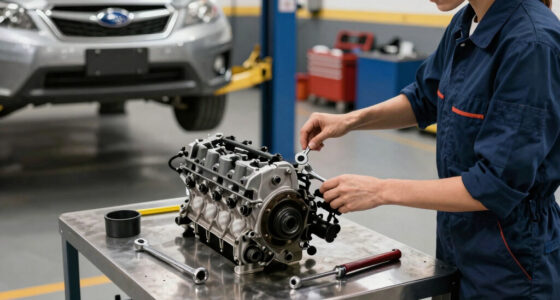
To test your AC and cooling system safely, start by disconnecting the power and guaranteeing the vehicle is in a well-ventilated area. Always use proper protective gear and certified equipment when handling refrigerants to prevent leaks or accidents. Conduct pressure tests carefully, monitoring gauges for abnormal readings, and fully evacuate refrigerant beforehand. If you’re unsure about the process or experience issues, seeking professional help guarantees safety and system integrity—continue to discover essential safety tips if you want to stay protected.

Get business pricing on garage and car supplies
- Business-only prices and quantity discounts
- Tax-exempt purchasing
- Multiple users, one account, clear invoices
Key Takeaways
- Always disconnect the vehicle’s power and ensure proper refrigerant handling before testing the AC system.
- Use certified equipment and follow safety protocols to prevent leaks and exposure to refrigerants.
- Fully evacuate refrigerant before pressure testing to avoid accidental releases and system damage.
- Perform pressure tests in well-ventilated areas and monitor pressure readings carefully for anomalies.
- Seek professional assistance if unsure about handling refrigerants or conducting system tests safely.

Testing your AC and cooling systems safely is essential to guarantee they operate efficiently and prevent potential hazards. When it comes to maintaining your vehicle’s AC, understanding refrigerant safety is critical. Refrigerants are the chemicals responsible for cooling your car’s interior, but they can be dangerous if mishandled. Proper handling involves wearing protective gear and ensuring the system is depressurized before opening any components. Mishandling refrigerant can lead to leaks, fires, or health issues, so it’s important to follow safety protocols. Always use certified equipment designed for refrigerant handling, and never attempt to recharge or repair the system without proper training. Additionally, being aware of the role of pressure testing** helps ensure system integrity and safety. Pressure testing is another key aspect of safe AC system maintenance. This process involves evaluating the integrity of the system’s components by applying a controlled pressure to check for leaks or weak points. Performing pressure testing correctly helps you identify issues early, preventing more severe damage or system failure down the line. It’s important to use the appropriate gauges and tools to avoid over-pressurizing, which could cause components to rupture or become damaged. When pressure testing, make sure the system is fully evacuated of refrigerant to prevent accidental releases, and monitor the pressure readings carefully. If you notice inconsistent or abnormal pressure levels, it might indicate leaks or other faults that require professional attention. Safety should always be your top priority during these procedures. Before starting any testing, disconnect the system from power sources and ensure the vehicle is parked in a well-ventilated area. Proper handling of refrigerants is essential to prevent environmental harm and health risks. Using the correct procedures and tools minimizes the risk of accidents or damage. Additionally, understanding refrigerant regulations can help you stay compliant with environmental laws and safety standards. Being familiar with refrigerant properties** can also help you better understand the risks associated with different types of refrigerants and how to handle them safely. If you’re not fully confident in handling refrigerants or performing pressure tests, it’s best to seek help from a qualified technician. They have the experience, tools, and safety measures needed to conduct these tests without risking your health or damaging your vehicle. Remember, improper handling of refrigerants and pressure testing can lead to costly repairs or serious injuries, so don’t cut corners.
As an affiliate, we earn on qualifying purchases.
Frequently Asked Questions
Can I Test My AC System Without Professional Tools?
You can attempt DIY troubleshooting of your AC system, but testing it thoroughly without professional tools isn’t recommended. Handling refrigerant without proper equipment poses safety risks, especially regarding refrigerant safety. If you notice issues, check for simple problems like dirty filters or leaks, but for accurate diagnosis and safe testing, it’s best to consult a professional. This guarantees your system operates safely and efficiently without risking injury or damage.
How Often Should I Have My AC System Inspected?
Think of your AC as a garden needing regular care. You should inspect it at least once a year, ideally before summer hits, to catch issues early. During DIY maintenance, prioritize refrigerant safety, ensuring proper handling and avoiding leaks. Regular inspections help prevent costly repairs, keep your system running efficiently, and protect your comfort. Don’t wait for a breakdown—stay proactive, and your AC will serve you reliably season after season.
What Are the Signs of a Failing Cooling System?
If your cooling system shows signs like weak airflow, strange noises, or unpleasant odors, it might be failing. During cooling system diagnostics, professionals check for refrigerant leaks and perform refrigerant leak detection to identify issues. You may also notice inconsistent cooling or higher energy bills. Address these signs promptly, as early testing and diagnostics can prevent costly repairs and guarantee your system functions efficiently when you need it most.
Is It Safe to Add Refrigerant Myself?
Adding refrigerant yourself might seem like a quick fix, but it’s risky. DIY refrigerant can lead to overcharging or leaks, which could damage your system and harm the environment. Home cooling systems require precise amounts of refrigerant and proper handling. For safety and efficiency, it’s best to leave refrigerant refills to professional technicians who understand the nuances of AC systems, ensuring your cooling stays reliable and safe.
What Precautions Should I Take During AC Testing in Hot Weather?
During AC testing in hot weather, prioritize safety by wearing proper safety gear like gloves and goggles to protect against refrigerant leaks or high-pressure releases. Make sure good ventilation precautions are in place to avoid inhaling fumes, especially if testing involves system repairs or refrigerant handling. Stay hydrated, work in shaded areas if possible, and take regular breaks to prevent heat exhaustion, keeping safety your top priority.
refrigerant recovery machine for vehicles
As an affiliate, we earn on qualifying purchases.
As an affiliate, we earn on qualifying purchases.
Conclusion
Testing your AC and cooling systems safely is like steering through a busy street—you need to stay alert and cautious to avoid surprises. Always follow safety guidelines, wear protective gear, and handle refrigerants with care. By doing so, you protect yourself and guarantee your system runs smoothly, just like a well-tuned engine. Remember, safety isn’t just a step; it’s the road to keeping your cool without any breakdowns or accidents.
automotive AC refrigerant handling safety gear
As an affiliate, we earn on qualifying purchases.
As an affiliate, we earn on qualifying purchases.
As an affiliate, we earn on qualifying purchases.
Fall Picks
fall essentials
As an affiliate, we earn on qualifying purchases.