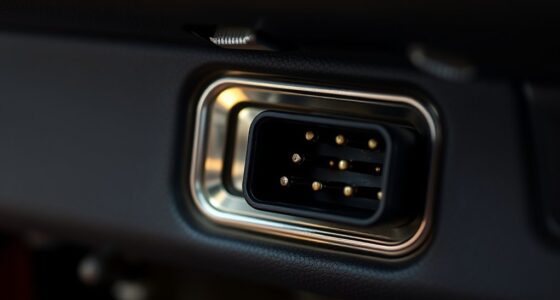
Using advanced OBD scan tools before buying a used car helps you identify hidden issues quickly and accurately. These devices connect wirelessly via Bluetooth or Wi-Fi, allowing you to scan the vehicle for trouble codes, check sensor data, and analyze maintenance history on your smartphone or tablet. This proactive approach saves you time and money by revealing potential problems before purchase. Keep exploring to discover more tips that guarantee you make a smart, confident decision.
Key Takeaways
- Use wireless OBD scanners for quick, cable-free vehicle diagnostics during inspections.
- Access real-time engine data and trouble codes to identify hidden mechanical or electronic issues.
- Review historical maintenance data to assess the vehicle’s condition and ongoing problems.
- Detect red flags or potential repairs before purchasing, saving money and avoiding future costs.
- Utilize user-friendly apps for instant insights, making thorough inspections efficient even for non-mechanics.
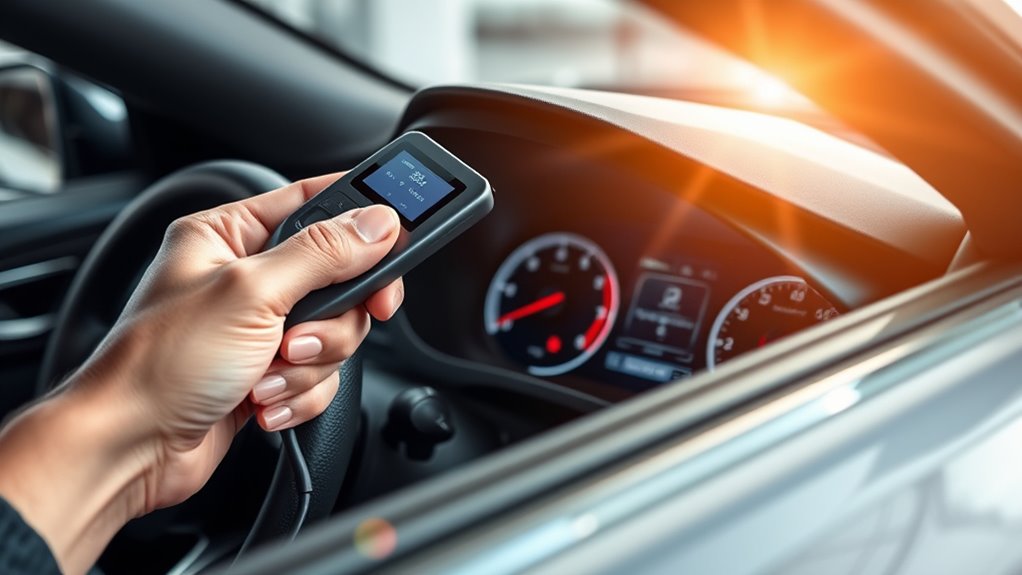
When shopping for a used car, leveraging technology can make the inspection process more detailed and reliable. One of the most effective tools at your disposal is wireless diagnostics, which allows you to connect to the vehicle’s onboard computer system without the hassle of cables. Using wireless diagnostics, you can run quick scans to identify any existing issues or hidden problems that might not be visible during a visual inspection. This technology transmits data directly to your smartphone or tablet, giving you instant access to vital information about the engine, transmission, emissions system, and more. Additionally, responsible use and privacy considerations should be kept in mind when utilizing connected diagnostic tools to ensure your data remains secure. Digital inspection tools have revolutionized how you evaluate a used car, making it easier to detect potential red flags before making a purchase. With these tools, you can perform thorough scans in a matter of minutes, checking for trouble codes that indicate underlying mechanical or electronic issues. Modern digital inspection devices are user-friendly, so even if you’re not a mechanic, you can navigate the process with confidence. They often come with intuitive apps that interpret the raw data, highlighting areas that need attention. This proactive approach helps you avoid costly surprises after buying the car and gives you leverage when negotiating the price.
Wireless diagnostics reveal hidden issues quickly and conveniently during used car inspections.
Wireless diagnostics are especially handy because they eliminate the need for bulky cables and connectors, which can sometimes be cumbersome or inaccessible in certain vehicle models. You simply plug in a compact wireless OBD-II scanner, pair it with your device via Bluetooth or Wi-Fi, and run the scan. The instant feedback allows you to assess the car’s health on the spot, saving you time and reducing the guesswork. Many of these devices also store historical data, giving you insights into the vehicle’s maintenance history and potential recurring issues. This detailed information helps you make an informed decision, backed by real-time diagnostics.
In addition, digital inspection tools often include features that go beyond basic code reading. Some can monitor live sensor data, such as fuel efficiency, engine temperature, or sensor performance, providing a more extensive picture of the vehicle’s condition. This real-time monitoring can reveal inconsistencies or anomalies that might indicate deeper problems. When combined with wireless diagnostics, these digital tools give you a powerful advantage, enabling thorough inspections that were once only possible in professional repair shops.
Frequently Asked Questions
Can OBD Scans Detect Previous Accident Damage?
Yes, OBD scans can sometimes reveal accident history through damage detection. When you run an OBD scan, you might find codes indicating past repairs or unusual sensor readings from previous damage. While not foolproof, this damage detection can alert you to hidden problems caused by accidents, helping you make a more informed decision before purchasing. Keep in mind, additional inspections may be needed for a complete assessment.
How Accurate Are OBD Scans for Hidden Issues?
Think of an OBD scan as a lighthouse guiding you through foggy waters. While it highlights obvious hazards, its sensor reliability can sometimes miss hidden dangers lurking beneath the surface. The data interpretation depends on the scanner’s quality and your understanding. So, it’s generally accurate for current issues, but for hidden problems, it’s wise to combine it with a thorough visual inspection and expert advice.
Do All Used Cars Have Compatible OBD Ports?
Not all used cars have compatible OBD ports. While most vehicles meet used car standards, some older models or imports might lack the standard OBD-II port, making compatibility an issue. Before you buy, check the vehicle’s OBD port location and type. If you’re unsure, consult the seller or a mechanic. Ensuring OBD port compatibility helps you accurately scan and diagnose hidden issues during your inspection.
How Much Does a Professional OBD Inspection Cost?
Wondering about the cost of a professional OBD inspection? It typically ranges from $50 to $150, depending on location and service provider. Is it worth the investment? Absolutely. A professional inspection offers a thorough diagnosis, saving you money on potential repairs down the line. Comparing costs helps you find the best value, while the inspection benefits include peace of mind and confidence in your purchase decision.
Can OBD Scans Predict Future Car Failures?
OBD scans can’t predict future car failures with certainty, but they help with predictive maintenance by revealing current issues that could lead to future repairs. When you use an OBD scanner, you identify potential problems early, allowing for timely fixes. This proactive approach reduces the risk of unexpected breakdowns and costly repairs down the line, helping you maintain your car’s health and avoid surprise future repair expenses.
Conclusion
By now, you see how modern tech, like OBD scans, empowers you to make smarter choices when inspecting a used car. Don’t rely solely on looks or gut feelings—think of it as your own personal, Victorian-era detective tool, uncovering hidden truths beneath the surface. With these digital insights, you’re better equipped than ever to avoid surprises and drive away confident, knowing your purchase is sound. The future of car buying is truly at your fingertips.