TL;DR

Get business pricing on garage and car supplies
- Business-only prices and quantity discounts
- Tax-exempt purchasing
- Multiple users, one account, clear invoices
ZF has introduced a high-speed integrated EV drive unit designed to deliver 200 to 268 horsepower in a smaller package. The company claims nearly 25% less weight and volume and half the magnet material than a comparable ZF unit, with production targeted for 2030. No automaker or vehicle application has been named.
ZF has introduced a new integrated electric drive unit whose motor spins at up to 30,000 rpm, aiming to provide everyday electric vehicles with the same power from less hardware. ZF says the High Revolution Drive could weigh and occupy nearly 25% less than a comparable unit and use half the magnet material; production is targeted for 2030, but no vehicle customers have been identified.
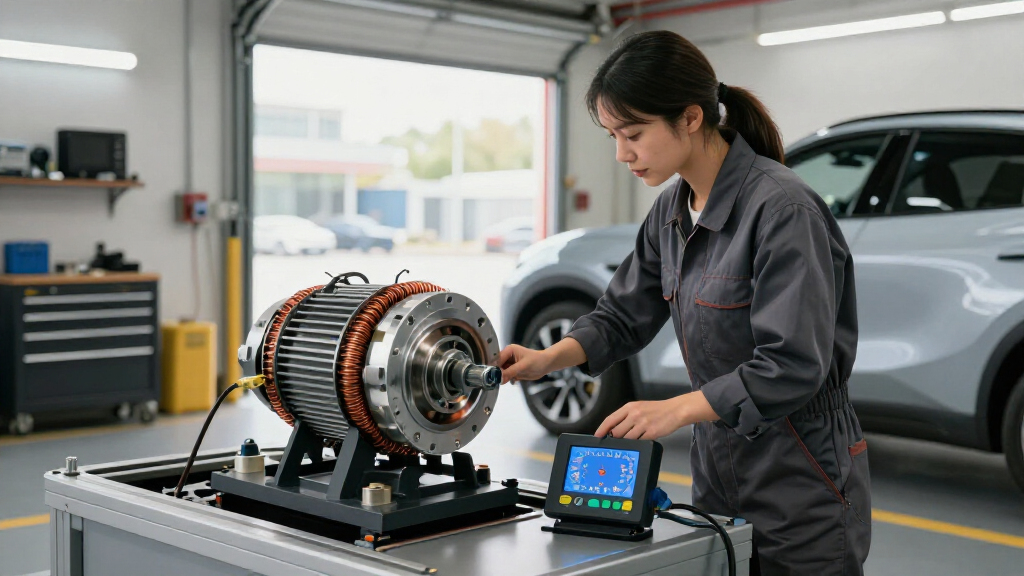
The High Revolution Drive combines the motor, power electronics and transmission in one housing. ZF says its faster-spinning motor makes it possible to deliver the same power from a smaller, lighter assembly. The company compared it with one of its Select drive units, which operates at up to 18,000 rpm, and claims the new design has nearly 25% less weight and volume, uses half the magnet mass and retains similar efficiency of almost 93%.
The version ZF presented produces up to 268 horsepower. Its gearing reduces motor speed and increases torque delivered to the wheels, with a reduction ratio of about 18:1 and a stated peak wheel torque of 2,581 pound-feet (3,500 Nm). That torque figure is after the gearing multiplies the motor’s output. ZF says the production drive is intended to offer 200 to 268 horsepower and support both 400- and 800-volt platforms.
ZF describes the transmission as two-stage, but that refers to successive gear reductions, not a two-speed gearbox with separate selectable driving ratios. The company says the drive reuses its modular Select architecture, which could help automakers with installation, development time, costs and manufacturing flexibility. ZF says talks with automakers are underway, while keeping the identities of potential customers private.
Less Drive Hardware for EVs
Reducing the size and mass of a drive unit could give vehicle makers more flexibility in how they package an EV’s powertrain. Lower mass can support efficiency and range, although ZF has not provided a range estimate for a vehicle using this unit. A smaller assembly could also free up space for other components or cabin packaging, depending on how a manufacturer uses the gains.
The claimed reduction in magnet material may also matter for cost and supply chains. Fewer magnets could reduce exposure to materials used in motor production, but ZF has not stated a price for the drive or quantified any supply-chain benefit. Whether the engineering changes lead to lower vehicle prices, better range or other consumer gains remains unknown until a production vehicle and its specifications are announced.
Products Worth Considering
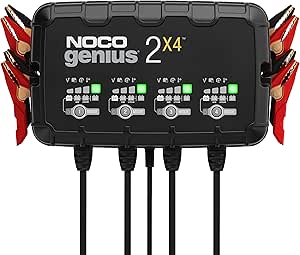
NOCO GENIUS2X4 6V/12V Four-Bank Battery Charger and Maintainer

Chemical Guys 10-Piece Car Wash Kit with Foam Gun

Nextbase Piqo 2K Smart Dash Cam with App
As an affiliate, we earn on qualifying purchases.
How Higher Motor Speed Works
Electric motors generate rotational speed and torque, while a vehicle’s gearing adjusts that output for the wheels. In ZF’s design, the motor spins faster than the comparable Select unit, and the transmission reduces that speed while multiplying turning force. This approach lets ZF target a smaller motor package without claiming that the wheels themselves turn at 30,000 rpm.
Other motor projects use different designs and report different measures. For example, a Yasa axial-flux motor prototype has been described as producing more than 1,000 horsepower at short-term peak output and weighing 28 pounds. That figure refers to the motor alone; ZF’s weight comparison covers an integrated drive unit. The two figures are not directly comparable because the integrated unit also includes power electronics and gearing.
ZF has separately introduced repair kits intended to let workshops replace certain components, such as gearbox bearings, rather than an entire drive assembly. The company has not said whether those kits are connected to the High Revolution Drive or whether this new unit will be repairable in the same way.
“The company claims nearly 25% less weight and volume, half the magnet mass, and similar efficiency of almost 93% compared with a comparable Select drive unit.”
— ZF
Vehicle Applications Still Unknown
ZF has not named an automaker, vehicle or launch date beyond its 2030 production target. It has also not published a vehicle-level estimate for range, efficiency, cost or space savings. The company’s comparisons describe its drive unit against a comparable ZF product; they do not establish how much a complete EV would weigh less or how much farther it would travel.
It is also unclear whether the weight, volume, magnet and efficiency figures will be unchanged in production. ZF has not said whether the new drive will use the repair kits it has introduced for certain drive-unit components, or whether any manufacturing savings would be passed on to buyers.
Automaker Deals and Production Details
The next key milestones are the outcome of ZF’s discussions with automakers and confirmation of which vehicles, if any, will use the drive. Before production, buyers and manufacturers will need final specifications, including production weight, efficiency, pricing, service arrangements and performance in a complete vehicle.
ZF’s stated target is to begin production by 2030. Until the company or an automaker announces a vehicle program, the unit remains a development intended for future EV platforms rather than a drive buyers can currently order.
Key Questions
What does 30,000 rpm mean for an electric car?
It is the motor’s rotational speed, not the speed of the wheels. ZF says gearing reduces motor speed and increases the torque delivered to the wheels.
How much smaller and lighter does ZF say the unit is?
ZF claims nearly 25% less weight and volume than a comparable Select drive unit and half the magnet mass. The company has not provided a vehicle-level weight or range comparison.
How powerful is the High Revolution Drive?
The version ZF presented produces up to 268 horsepower. ZF says the production version is planned to cover a range from 200 to 268 horsepower.
When will the drive unit be available in cars?
ZF is targeting production for 2030 and says discussions with automakers are underway. It has not named a vehicle or customer.
Does the two-stage transmission give the car two gears?
No. ZF uses “two-stage” to describe successive gear reductions, not two selectable driving ratios.
Source: insideevs.com