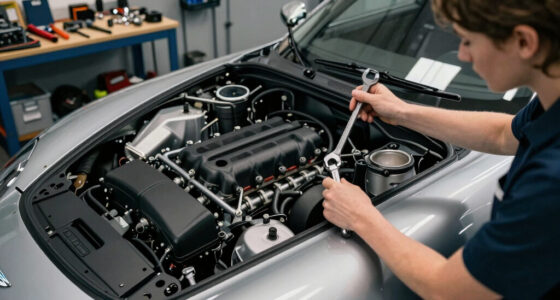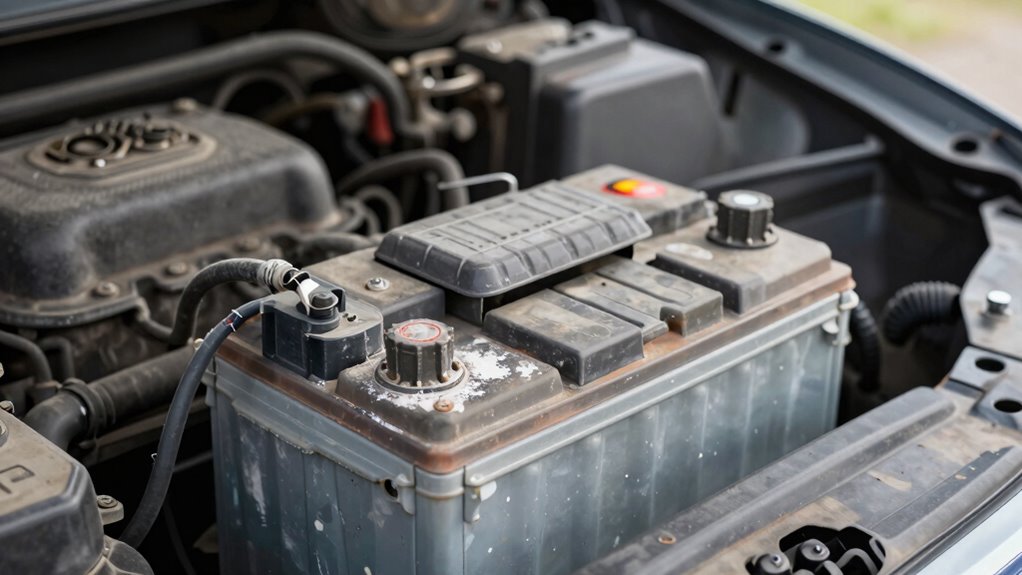

To spot battery trouble early, look for signs like slow engine cranking, dimming headlights, or flickering dashboard lights. Check for corrosion on terminals, which appears as a white powder or greenish crust, and clean it off to improve connections. Be aware of electrical issues or warning lights that often signal a weakening battery. Keep in mind that environmental factors like extreme temperatures can speed up deterioration. If you want to catch problems before failure, there’s more to know to keep your car running smoothly.
Open a free Amazon Business account
Business pricing, bulk buying and tax-exempt orders.
As an affiliate, we earn on qualifying purchases.
Key Takeaways
- Inspect battery terminals regularly for white powder or greenish crust, indicating corrosion that can hinder electrical flow.
- Watch for slow engine cranking and dimming headlights, signs of a weakening or aging battery.
- Check for dashboard warning lights related to battery or charging system issues.
- Monitor for environmental effects like extreme cold or heat, which can accelerate battery deterioration.
- Test battery voltage periodically to detect early signs of declining performance before failure occurs.
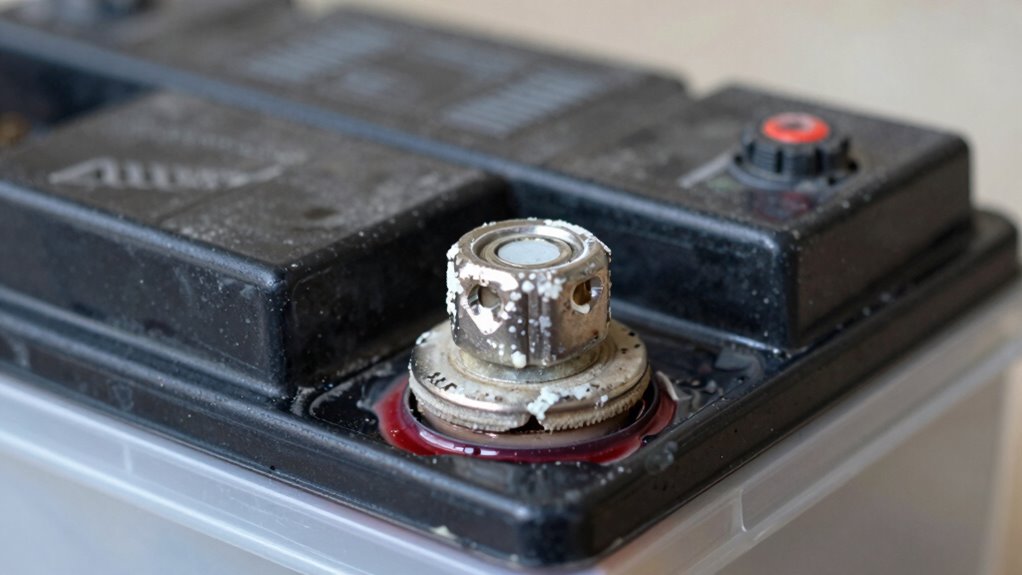
Ever wonder how to tell if your car’s battery is starting to fail? One of the first signs to look for is corrosion buildup around the battery terminals. If you notice a white, powdery substance or a greenish crust on the metal connectors, it’s a clear sign that your battery’s connections are compromised. Corrosion can hinder the flow of electricity, making it harder for your car to start and operate properly. Regularly inspecting and cleaning these terminals can prevent future problems, but don’t ignore persistent buildup—it often indicates a deeper issue with your battery or charging system.
Corrosion on battery terminals indicates compromised connections and potential charging system issues. Regular inspection helps prevent breakdowns.
Another red flag is if your car exhibits signs of alternator issues. The alternator’s job is to keep your battery charged while you drive. If it’s malfunctioning, your battery may drain quickly, leading to starting problems, dimming headlights, or flickering dashboard lights. When you notice these symptoms, it’s wise to get your alternator tested along with the battery. Sometimes, what seems like a dead battery is actually an alternator failure, which requires a different fix. If your car struggles to start after being parked overnight or stalls shortly after starting, it might be due to a failing alternator that isn’t replenishing the battery’s power.
Pay attention to the overall health of your battery. When the battery is nearing the end of its lifespan—usually around three to five years—you might experience slow cranking or strange electrical issues. These symptoms often come gradually, so staying vigilant can save you from being stranded unexpectedly. Additionally, if your vehicle’s electrical systems behave erratically or if you notice a persistent warning light on your dashboard, it could point to a weak battery or an underlying charging problem. Battery maintenance is essential to ensure that your vehicle remains reliable and starts smoothly every time. Regular battery testing can help detect early signs of deterioration, preventing unexpected breakdowns. Being aware of corrosion buildup and other indicators can help you address problems early, especially since environmental factors like temperature can influence battery performance.
Furthermore, understanding how temperature fluctuations impact your battery’s efficiency can help you plan for seasonal changes and extend its lifespan. Regular maintenance, like testing the battery’s voltage and inspecting for corrosion, helps catch problems early. If you notice any of these signs—corrosion buildup, alternator issues, slow starts, or electrical quirks—you’ll have time to address the problem before your car refuses to start completely. Environmental factors, such as extreme cold or heat, can significantly accelerate battery deterioration, so staying aware of these conditions can help you take preventative measures. Acting promptly can save you both money and frustration down the road.

CRC Tech Grade Battery Cleaner w/Acid Indicator – 11 oz
- Suitable for fleet maintenance: Fleet and vehicle maintenance use
- Brand: Crc
- Country of origin: Made in the United States
As an affiliate, we earn on qualifying purchases.
As an affiliate, we earn on qualifying purchases.
Frequently Asked Questions
How Often Should I Check My Car Battery?
You should check your car battery every 3 to 6 months. Regular inspections help you spot issues like battery corrosion or declining charging habits early. Keep an eye on corrosion around terminals and verify your charging habits are consistent, especially in extreme weather. If you notice slow starts or dim lights, it’s time for a check-up. Routine maintenance prevents unexpected failures and prolongs your battery’s lifespan.
Can Extreme Temperatures Damage My Car Battery?
Imagine your battery as a delicate ice cube melting in a summer sun. Extreme heat accelerates battery corrosion, weakening internal components, while freezing cold reduces its ability to hold a charge. To protect it, maintain good charging habits, like avoiding frequent short trips and ensuring proper alternator function. Keep the terminals clean and insulated to shield against temperature swings, helping your battery endure the harshest weather without failing unexpectedly.
What’s the Lifespan of a Typical Car Battery?
A typical car battery lasts about three to five years with proper battery maintenance. To extend its lifespan, follow charging tips like avoiding deep discharges and keeping terminals clean. Regularly check the battery’s age and condition, especially before extreme weather, and replace it when signs of weakness appear. Proper care guarantees reliable starts and prevents unexpected breakdowns, so stay proactive with your battery health.
How Do I Jump-Start a Dead Battery Safely?
Jump-start safety is key; you carefully connect the jumper cables, ensuring the positive terminal matches with positive and negative with negative. Before starting the process, check for battery terminal corrosion, which can interfere. Keep metal tools away from the terminals to avoid sparks. Once connected, start the donor vehicle, then your car. After it runs, disconnect cables in reverse order, and inspect for corrosion to prevent future issues.
When Should I Replace My Car Battery?
You should replace your car battery if you notice persistent battery corrosion or your charging system isn’t maintaining proper voltage. Signs include slow engine cranking, dim headlights, or frequent jump-starts. Regularly check your battery’s health, especially if it’s over three years old. When you see corrosion buildup or suspect your charging system isn’t working correctly, it’s time for a replacement to prevent unexpected breakdowns.
As an affiliate, we earn on qualifying purchases.
Conclusion
Think of your car’s battery as the heart of your vehicle’s life force. When you notice flickering lights or sluggish starts, it’s like the heartbeat weakening. Catching these signs early is your way of tending to this essential organ, keeping your journey smooth and steady. Don’t wait for the engine to breathe its last—listen closely, nurture your battery, and keep your car’s spirit alive on the road.
car battery corrosion repair kit
As an affiliate, we earn on qualifying purchases.
As an affiliate, we earn on qualifying purchases.
As an affiliate, we earn on qualifying purchases.
College move-in / dorm season Picks
dorm essentials
As an affiliate, we earn on qualifying purchases.