
Paid car health monitors can offer advanced diagnostics and real-time alerts, but their accuracy and usefulness often depend on proper setup and calibration. Many features may overlap with existing vehicle warning lights or free apps, making the subscription seem redundant. Plus, concerns about data privacy and ongoing costs might outweigh the benefits for some drivers. If you’re curious about whether these devices truly deliver value or if better options exist, there’s more to explore below.
Key Takeaways
- Paid monitors often provide advanced diagnostics and real-time alerts but may overlap with existing vehicle warning systems.
- Their accuracy depends heavily on proper calibration and sensor quality, which can affect data reliability.
- Subscription costs are justified mainly if they offer unique insights or predictive features not available through free tools.
- Many paid systems deliver redundant information, making their added value questionable for basic vehicle health monitoring.
- Privacy and data security concerns are significant; users should ensure proper protections before opting for connected paid monitors.
What Features Do Paid Car Monitors Offer?

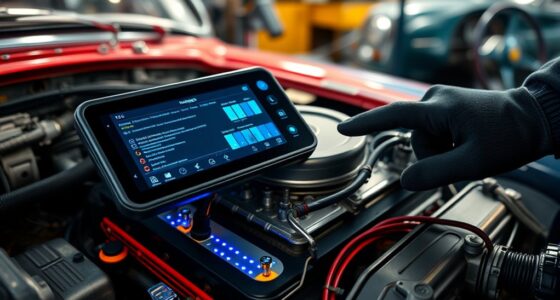
Paid car monitors offer a range of advanced features designed to keep your vehicle running smoothly and safely. You can customize these devices with various settings to monitor engine health, tire pressure, battery status, and more, tailoring the system to your driving habits. Many monitors include real-time alerts that notify you immediately of issues, helping you address problems before they escalate. Customer support plays a vital role, offering assistance with setup, troubleshooting, and upgrades, ensuring you get the most out of your investment. Some devices even sync with your smartphone, giving you remote access and detailed diagnostics. Additionally, these tools can provide preventative maintenance insights, helping you identify potential issues before they lead to costly repairs. Incorporating advanced diagnostic tools can further enhance your ability to identify potential problems early, making your vehicle management more proactive. Evaluating the cost-benefit ratio of paid options can help determine if the features offered justify the investment for your specific needs.
How Accurate Are These Devices Compared to Built-In Systems?
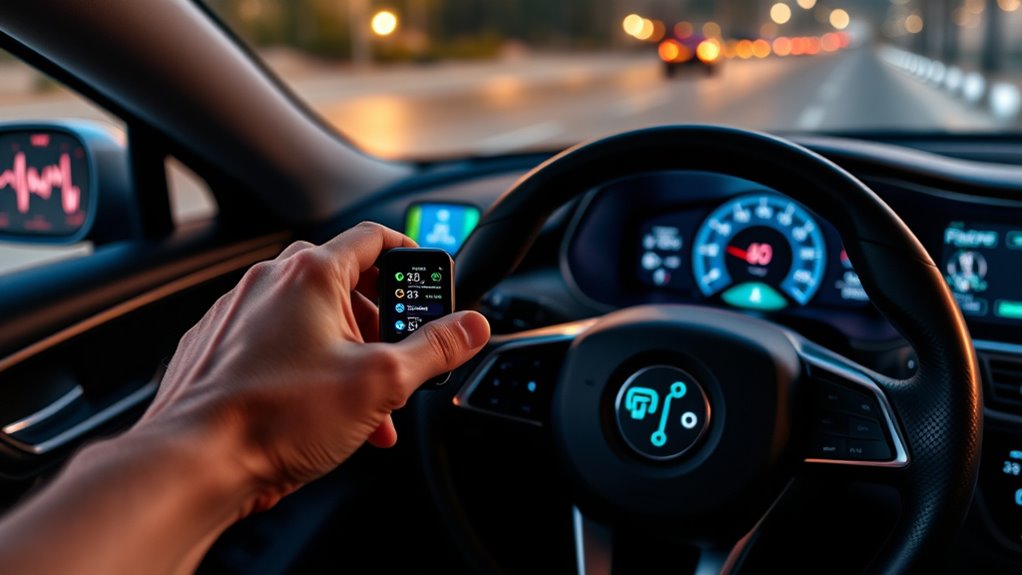
You want to know how accurate paid car health monitors are compared to your vehicle’s built-in systems. These devices vary in measurement precision, which can affect their reliability. Understanding how they stack up helps you decide if they’re worth the investment. Since some monitors may rely on external sensors and algorithms, their performance can differ significantly from the built-in diagnostics, making it important to evaluate their capabilities carefully. Additionally, the importance of SSD organization tips for audio production highlights that proper setup and calibration are essential for obtaining accurate readings from these monitors, ensuring you get trustworthy data. Moreover, factors like wiring basics and ventilation considerations can influence the overall accuracy and performance of external monitoring devices. Proper calibration procedures are vital to achieve consistent and dependable measurements.
Device Measurement Precision
While many paid car health monitors promise high accuracy, their measurement precision can vary considerably compared to built-in vehicle systems. This variation often stems from inconsistent sensor calibration, which affects how accurately the device reads data. If calibration isn’t regularly maintained, measurements can fluctuate, leading to unreliable results. Additionally, measurement consistency is vital; some devices struggle to provide stable readings over time or across different driving conditions. Unlike integrated systems that are finely tuned for vehicle specifics, aftermarket monitors may lack the same level of precision, especially if their sensors aren’t properly calibrated or if they rely on cheaper components. As a result, you might find these devices less reliable for tracking subtle changes in your car’s health, raising questions about their overall measurement accuracy.
Built-In System Reliability
Built-in vehicle systems generally provide more accurate and reliable data than aftermarket monitors because they are specifically calibrated and integrated with the car’s hardware. These systems undergo rigorous sensor calibration, ensuring measurements are precise and consistent. Plus, they’re backed by warranty coverage that protects against calibration drift or sensor failure. In contrast, aftermarket devices may not match this level of accuracy due to less precise calibration processes and limited integration.
| Built-In System | Aftermarket Monitor |
|---|---|
| Calibrated during manufacturing | Calibrated by user or manufacturer |
| Seamless integration | May require manual setup |
| Covered by warranty | Limited or no warranty coverage |
| Higher reliability | Variable accuracy and reliability |
Are Subscription Fees Justified by the Benefits?

Subscription fees for car health monitors are often questioned, but their value depends on the benefits they provide. If the subscription costs unlock useful features like real-time diagnostics, personalized maintenance alerts, or advanced data analysis, they can be worth it. These added services might help you catch issues early, saving money and preventing breakdowns. Additionally, some monitors may offer leasing options that include maintenance or upgrades, which could influence your decision. When selecting a monitor, consider whether a reliable data connection is necessary for your needs, as this can impact the overall value. Moreover, integrating AI-driven insights can further enhance the diagnostic accuracy, making the subscription more beneficial. A good understanding of vehicle technology can also help you evaluate whether the features are truly necessary. However, if the features offered are basic or redundant with existing vehicle systems, the subscription fee may not justify the feature value. Consider whether the ongoing costs align with your needs and how much you value the extra insights. Ultimately, the justification for subscription fees hinges on whether the benefits provide enough convenience, safety, or savings to offset the expense. Additionally, researching protecting your savings and verifying the credibility of the monitor provider can help ensure you’re making a wise investment.
Do Paid Monitors Provide Unique Insights or Redundant Data?
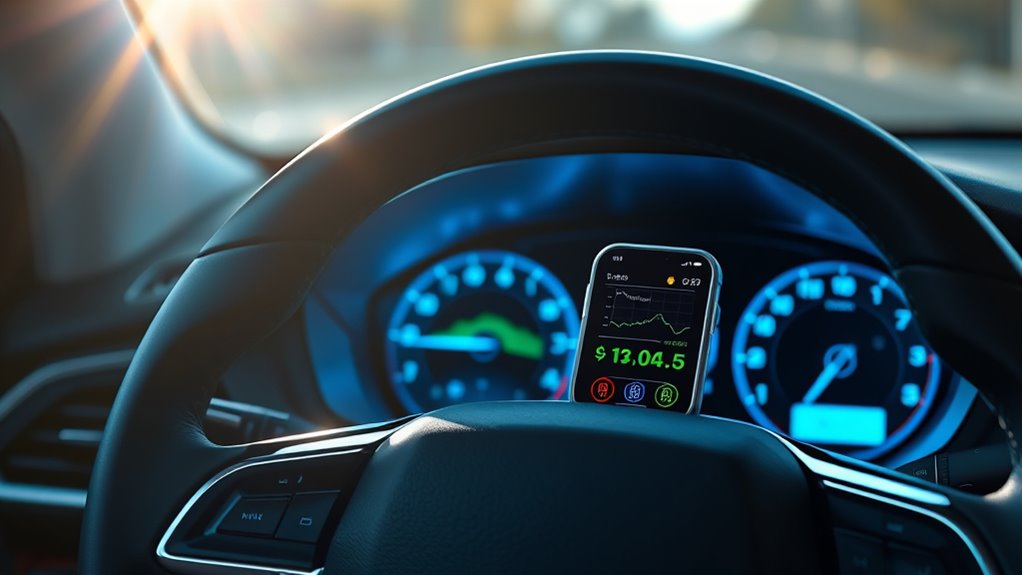
You might wonder if paid car monitors offer insights you can’t get elsewhere or just repeat data from free systems. Some features, like advanced metrics and personalized alerts, claim to add value, but it’s worth questioning if they truly provide new information. Consider whether the benefits justify the potential overlap with existing data from free options. Additionally, exploring free tools can sometimes reveal sufficient data for many users’ needs. In fact, understanding the basic features offered by free systems can help you assess whether paid options offer meaningful improvements. For example, knowing about regional traffic conditions can be a crucial aspect of effective vehicle management that free monitoring services may include. Moreover, integrating auditory processing techniques from speech therapy into vehicle alerts could improve driver responsiveness and safety. Implementing safety features that enhance alert clarity might be a key factor in maximizing the usefulness of these monitors.
Data Overlap With Free
While paid car health monitors often promise thorough insights, they frequently overlap with data provided by free alternatives. This sensor overlap leads to data redundancy, making it hard to justify extra costs. You might find that many paid options simply replicate basic metrics like tire pressure, engine temperature, or fuel efficiency, which are often available through your car’s built-in systems or free apps.
- Core diagnostics are often identical to free versions
- Additional paid features may just compile existing data
- Redundant alerts can cause confusion or annoyance
This overlap means you’re paying for information you could already access without extra expense. Before investing, consider whether the paid monitor offers genuinely new insights or just rehashes data you already have.
Advanced Metrics Offered
Paid car health monitors often claim to offer advanced metrics that go beyond basic diagnostics. These tools analyze data such as sensor calibration, providing more precise readings of engine performance, tire pressure, and battery health. Unlike free options, paid monitors often integrate data from multiple sensors to deliver a detailed view of your vehicle’s condition. This data integration allows you to identify subtle issues before they become costly repairs. They might also track metrics like fuel efficiency trends or emissions levels, which aren’t typically available through standard diagnostics. Additionally, some paid monitors incorporate principles from vehicle maintenance, utilizing algorithms that predict potential failures before they occur. These predictive capabilities rely on diagnostic data analysis, which can help anticipate problems before they manifest. Moreover, many paid systems offer real-time alerts, enabling immediate action to prevent further damage or safety risks. However, you should question whether these advanced metrics truly offer unique insights or simply present the same information in a more complex way. Ultimately, the value depends on how much you trust these additional data points to improve your vehicle maintenance decisions.
Personalized Alerts Value
Are personalized alerts from paid car health monitors truly offering unique insights, or are they just redundant notifications? Paid monitors often promise tailored updates, but you might wonder if they deliver real value. Personalized alerts provide real-time notifications about specific issues, helping you address problems promptly. However, sometimes these alerts overlap with basic diagnostics, offering little new information. Consider these points:
- They focus on your vehicle’s unique data, aiming for relevance
- Real-time notifications enable quick responses to urgent issues
- Some alerts may be redundant if similar info is available through free apps or dashboards
- Free diagnostic tools can sometimes provide comparable data without additional cost
- The development of connected vehicle technology has expanded the capabilities of vehicle monitoring systems, making it easier to access critical information without paid services
While personalized alerts can enhance awareness, their true worth depends on whether they deliver insights you can’t get elsewhere or simply flood you with unnecessary updates.
Compatibility and Ease of Use: Are They User-Friendly?
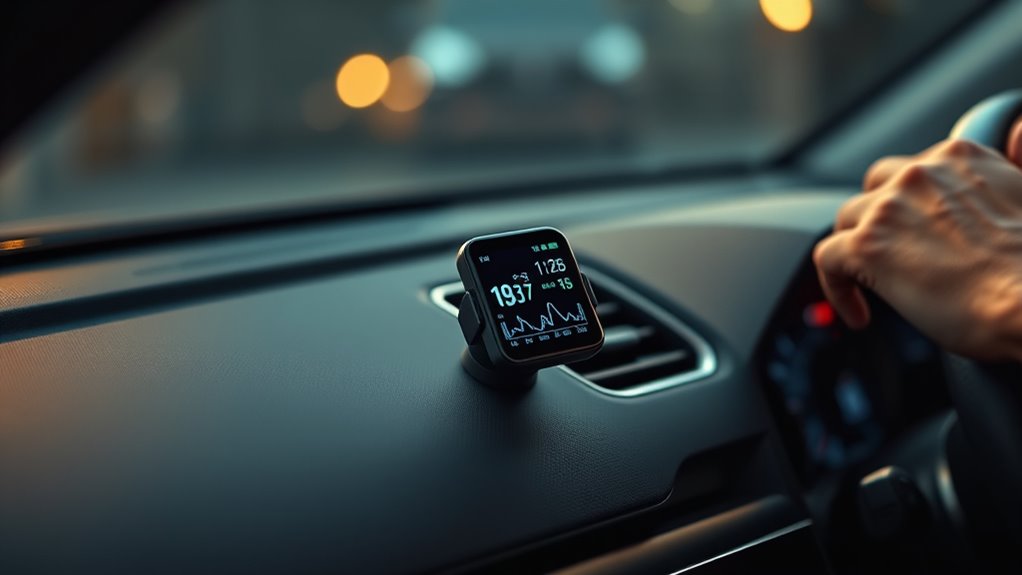
Many car health monitors are designed with user-friendliness in mind, making it easy for you to set up and start using them quickly. The user interface is often intuitive, guiding you through the setup process without confusion. Most devices connect seamlessly to your car and smartphone, providing clear instructions along the way. To help you visualize, here’s a quick overview:
| Aspect | What to Expect |
|---|---|
| User Interface | Simple, easy-to-navigate menus |
| Setup Process | Quick, guided steps |
| Compatibility | Works with most vehicles |
| Connectivity | Bluetooth or Wi-Fi enabled |
| Support & Instructions | Clear, accessible guidance |
This combination makes it straightforward to get started without frustration.
Security and Privacy Concerns With Connected Devices
Have you considered how connected car health monitors handle your personal data? These devices collect sensitive information, raising privacy concerns. If not properly protected, your data could be vulnerable to breaches or unauthorized access. Key security measures include:
- Data encryption: Protects your information during transmission and storage, preventing interceptors from reading it.
- Device authentication: Ensures only trusted devices can access your data, reducing risks of impersonation or hacking.
- Regular software updates: Fix security vulnerabilities and keep protections current.
Without strong encryption and authentication protocols, your personal driving habits, location, and health data might be exposed. Always verify that your connected device uses robust security features to safeguard your privacy.
Alternatives to Paid Car Health Monitors
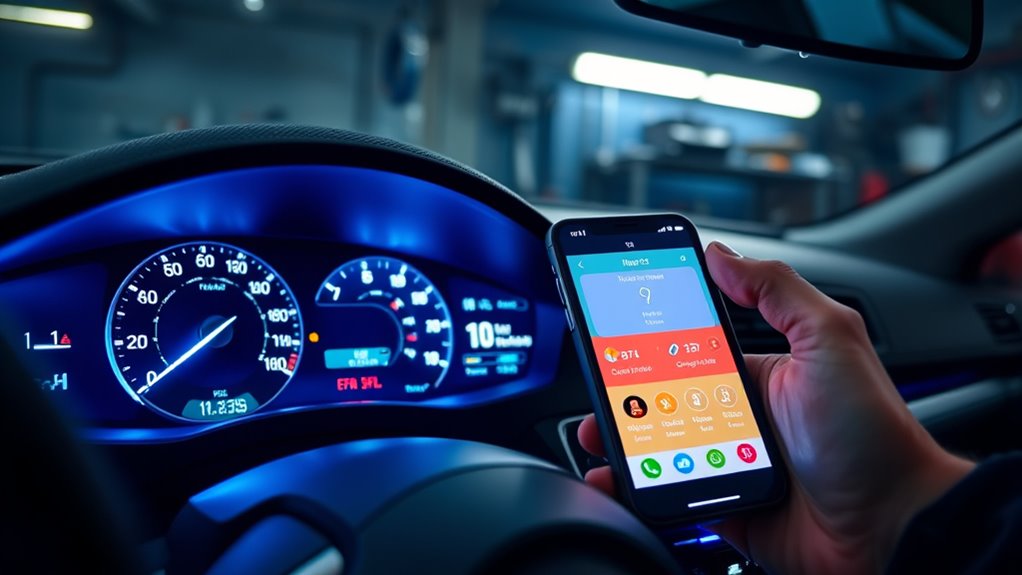
Instead of investing in paid car health monitors, you can rely on free or lower-cost alternatives that still provide valuable insights into your vehicle’s condition. Regularly checking your dashboard warning lights helps you catch issues early, saving money and preventing breakdowns. Using smartphone apps connected to your vehicle’s OBD-II port offers detailed diagnostics without the hefty price tag. Additionally, maintaining your vehicle’s aesthetics through routine cleaning and repairs preserves its value and appearance. Improving driver comfort with proper seating adjustments and regular maintenance also enhances your driving experience. While these options might not offer real-time alerts, they keep you informed and proactive about your car’s health, ensuring longevity and a smoother ride without breaking the bank.
Factors to Consider Before Making a Purchase Decision
Before purchasing a car health monitor, you should carefully evaluate your specific needs and budget. Consider whether the features offered justify the cost versus benefit. If you’re investing in a paid monitor, check the brand reputation to guarantee reliability and good customer support.
Key factors to weigh include:
- The monitor’s accuracy and whether it provides actionable insights
- The long-term value versus the initial investment
- The credibility of the brand and its customer reviews
Frequently Asked Questions
Can Paid Car Monitors Detect Upcoming Mechanical Failures Early?
Yes, paid car monitors can detect upcoming mechanical failures early through predictive maintenance technology. They analyze data from sensors to identify patterns indicating potential issues before they become serious. This early failure detection helps you schedule repairs proactively, saving money and preventing breakdowns. While not perfect, these monitors offer valuable insights, giving you peace of mind and enabling better maintenance management for your vehicle.
Do These Devices Improve Vehicle Safety Beyond Standard Diagnostics?
Think of paid car health monitors as your vigilant co-pilot, constantly watching with high sensor accuracy. They don’t just diagnose issues; they alert you to potential dangers, enhancing vehicle safety beyond standard diagnostics. With user convenience in mind, these devices simplify monitoring, giving you peace of mind on the road. While they won’t replace regular maintenance, they act as an extra layer of protection, helping you respond swiftly to emerging risks.
How Often Do Subscription Fees Increase Over the Device Lifespan?
Subscription costs for car health monitors can increase over the device lifespan, often annually or after promotional periods end. You might see fee increases due to added features or inflation adjustments. It’s wise to review the provider’s policy on fee increases before committing, as these fee increases can impact long-term value. Staying informed helps you decide if the ongoing costs are worth the benefits the device offers.
Are Paid Monitors Compatible With All Vehicle Makes and Models?
Paid car health monitors aren’t compatible with all vehicle makes and models due to device limitations. You need to check the manufacturer’s specifications to confirm your vehicle’s compatibility before purchasing. Some monitors work only with newer cars or specific brands, so if you have an older or less common vehicle, it might not be compatible. Always verify compatibility to avoid investing in a device that won’t suit your vehicle’s requirements.
What Steps Are Taken to Protect User Data From Hacking or Breaches?
Think of your data as a treasure chest, and security measures are your trusted guards. Paid car health monitors protect your privacy concerns through robust data encryption, ensuring your personal information stays locked away. They also employ regular security updates and strict access controls, acting as vigilant sentinels. By taking these steps, they aim to prevent hacking or breaches, giving you peace of mind that your vehicle’s health data remains safe and confidential.
Conclusion
So, before you splurge on a paid car health monitor, ask yourself if you’re ready to unlock a world of insights that could transform your driving experience forever. Will it save you from catastrophic breakdowns or turn you into a car whisperer? If you’re ready to embrace the future of vehicle health—privacy risks and all—then go ahead. But remember, sometimes the simplest check-up can be just as powerful as the most high-tech gadget.