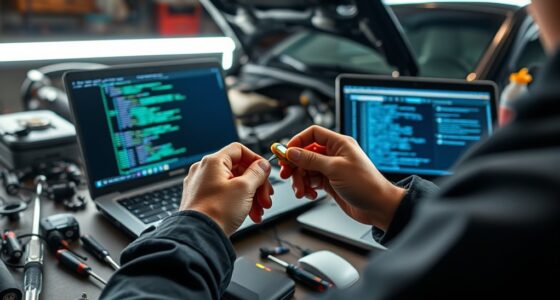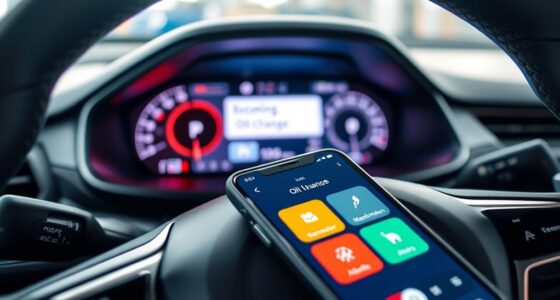
Using an OBD-II scanner won’t harm your car if you follow proper procedures. These devices are designed to communicate safely with your vehicle’s computer, and modern models are tested to prevent any damage. As long as you verify compatibility and disconnect the scanner after use, you won’t risk voiding your warranty or causing problems. Curious about common misconceptions and expert tips? Keep exploring to get the full picture and guarantee safe, effective diagnostics.
Key Takeaways
- Modern OBD-II scanners are designed to communicate safely with vehicle systems without causing damage.
- Proper connection and adherence to instructions prevent scanners from harming your car’s electronic components.
- Using the scanner to read or clear error codes does not automatically reset sensors or affect vehicle calibration.
- Reputable diagnostic tools, when used correctly, do not void warranties or damage vehicle systems.
- Complex diagnostics and repairs should be handled by professionals to avoid misdiagnosis or unintended harm.
Understanding How OBD-II Scanners Work
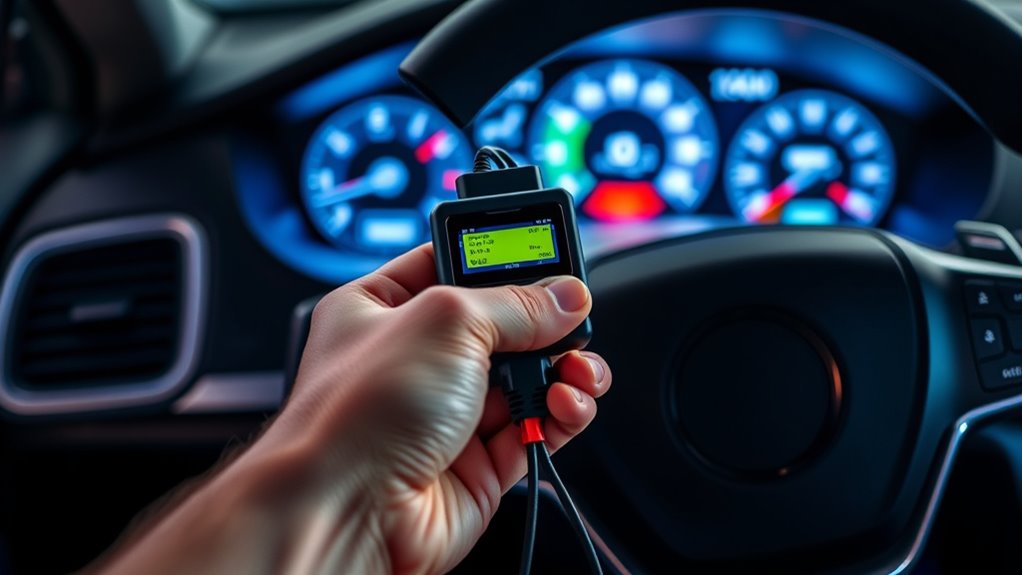
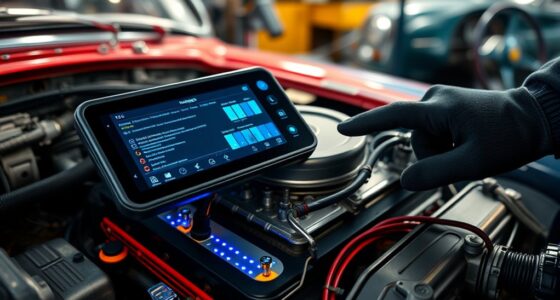
To understand how OBD-II scanners work, it’s important to know that they connect directly to your vehicle’s onboard computer system. Over the years, the technological evolution of these devices has markedly improved their capabilities. Historically, OBD systems date back to the 1980s, but the OBD-II standard, introduced in the mid-1990s, brought uniformity and better data access. This upgrade enhanced diagnostic accuracy, allowing mechanics and car owners to pinpoint issues more precisely. Modern scanners analyze real-time data and stored error codes, providing clearer insights into your vehicle’s health. The historical accuracy of these devices has increased alongside technological advancements, making OBD-II scanners reliable tools for maintaining your car and avoiding costly repairs. Additionally, the development of high-resolution displays in these scanners has improved user interface readability and diagnostic clarity. Furthermore, ongoing technological innovations continue to expand the capabilities of these diagnostic tools, ensuring they remain essential for modern vehicle maintenance. These innovations include wireless connectivity and cloud-based data storage, which further enhance user convenience and diagnostic efficiency.
Common Concerns About Scanner-Induced Damage

Many vehicle owners worry that using an OBD-II scanner might cause damage to their car’s electronic systems. Concerns often include electrical interference that could disrupt sensitive circuits or sensor damage from improper connections. However, modern scanners are designed to communicate safely with your vehicle’s onboard computers without injecting harmful signals. When used correctly, they don’t send power or signals that could cause electrical interference or harm sensors. Properly connecting the scanner and following manufacturer instructions minimizes risks. Remember, these devices are tested and built to prevent damage, so you can confidently use them to diagnose issues without fear of damaging your vehicle’s electronic systems. Additionally, understanding vehicle communication protocols can help users operate scanners more safely. It is also important to stay informed about electrical system protections in modern vehicles to prevent accidental issues. Recognizing the importance of manufacturer guidelines can further ensure safe usage of diagnostic tools. Being aware of electrical safeguards can help prevent accidental malfunctions during diagnostics. In reality, using a scanner responsibly is a safe and effective way to identify problems.
The Impact of Using a Scanner on Your Car’s Warranty

Using a scanner generally won’t void your warranty if you follow your manufacturer’s guidelines and use compatible tools. However, some warranty terms and repair policies can vary, so it’s important to understand what’s covered. Keep in mind that DIY diagnostics won’t automatically cause issues or invalidate your claims if you don’t interfere with the manufacturer’s designated repair processes. Additionally, ensuring your scanner is easy to clean and maintain can help prevent any potential issues during use. Properly calibrating your scanner can also ensure accurate readings and prevent misdiagnoses that might lead to unnecessary repairs. Being aware of auditory processing and feedback techniques can also assist you in understanding the diagnostic data more effectively and avoid misinterpretations that could lead to unnecessary repairs. Incorporating cybersecurity best practices when connecting your scanner to digital systems can further protect your vehicle’s data integrity during diagnostics. Moreover, understanding the thermal behavior of your diagnostic tools can help you avoid overheating or damaging sensitive electronic components.
Scanner and Warranty Terms
Worrying about voiding your car’s warranty often leads people to avoid using scan tools altogether. However, using a scanner generally won’t invalidate your warranty if you stick to reputable devices with proper aftermarket compatibility and ensure correct scanner calibration. Manufacturers understand that many vehicle owners and independent mechanics use scanners for diagnostics without affecting warranty coverage. The key is to avoid making any unauthorized repairs or modifications based solely on scanner data. Using a scanner to read and clear codes won’t harm your car or its warranty, as long as you don’t tamper with the vehicle’s systems beyond diagnostic purposes. Additionally, understanding wave and wind can help you recognize the importance of proper device handling and calibration to avoid damage. Always choose a quality scanner and follow manufacturer instructions to prevent any potential warranty issues. Proper device operation and adherence to manufacturer guidelines are essential to maintaining warranty protection. Being aware of manufacturer warranty policies can further help you navigate safe diagnostic practices. Recognizing the significance of correct load calculations can also prevent unintended system issues when using diagnostic tools.
Manufacturer’s Repair Policies
Manufacturers’ repair policies often specify how diagnostic tools like scan tools should be used without affecting warranty coverage. Many automakers now recognize that using an OBD-II scanner for basic diagnostics doesn’t void the warranty, as long as the tools are used correctly and in accordance with manufacturer’s policies. It’s important to note that tampering or attempting repairs beyond diagnostics can jeopardize your warranty coverage. Manufacturers typically allow the use of authorized or reputable scan tools to identify issues, and doing so won’t automatically void your warranty. However, if repair work is performed improperly or if non-approved tools cause damage, your warranty could be at risk. Always review your vehicle’s warranty terms to understand what’s permitted under the manufacturer’s policies. Understanding warranty policies can help you avoid unintentional violations when using diagnostic tools.
DIY Diagnostics and Claims
When you perform DIY diagnostics with an OBD-II scanner, it generally won’t void your warranty if you stick to proper procedures. Using a scanner to check for sensor malfunctions or read error codes is a safe way to troubleshoot issues without risking warranty coverage. However, avoid making unauthorized software updates or tampering with vehicle settings, as these actions could be viewed as alterations that void your warranty. It’s important to follow manufacturer guidelines and only perform diagnostics that do not involve invasive procedures or modifications. Keep records of any scans or diagnostic steps you take, in case you need to demonstrate that you’ve adhered to proper procedures. Proper use of an OBD-II scanner helps you identify problems without jeopardizing your warranty protections.
Safety Tips for Using OBD-II Scanners Properly
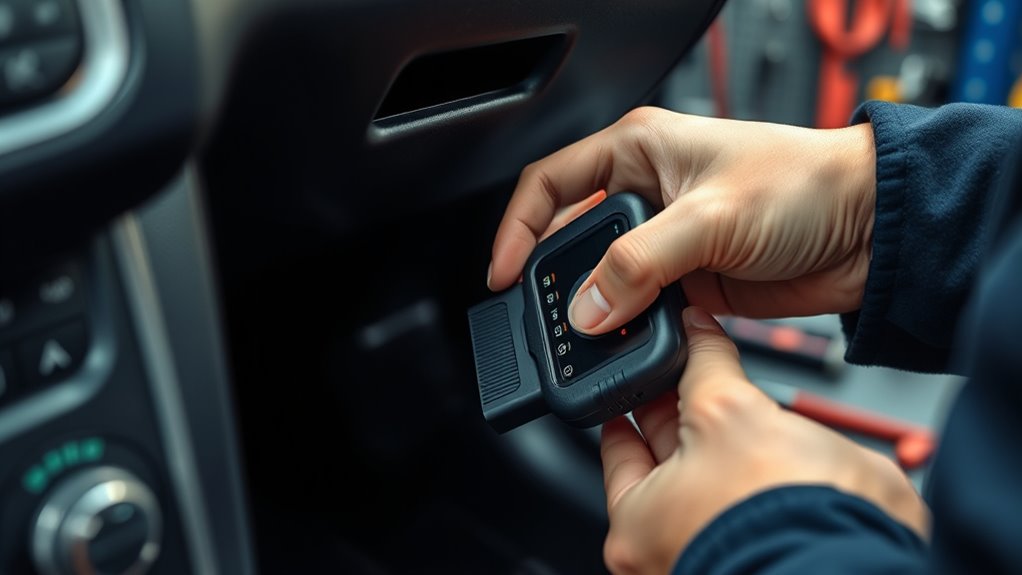
Using an OBD-II scanner safely is essential to avoid damage to your vehicle or injury to yourself. First, verify your scanner is compatible with your car’s make and model to prevent incorrect readings or potential damage. Second, check battery safety by disconnecting the battery if working near electrical components or if instructed by your vehicle’s manual. Third, always read the scanner’s instructions thoroughly before use to understand proper connection procedures. Fourth, avoid forcing the connector; if it doesn’t fit, verify compatibility or try a different port. Additionally, understanding the proper use of diagnostic tools helps prevent errors and ensures accurate results. Being aware of electrical safety procedures can further prevent mishaps during diagnostics. Also, knowing how to interpret the diagnostic trouble codes correctly can save time and prevent unnecessary repairs. Familiarizing yourself with vehicle electrical systems can help you identify potential issues early and ensure safe diagnostics. Incorporating preventive maintenance practices can prolong your vehicle’s lifespan and improve safety. By following these steps, you reduce the risk of electrical mishaps and ensure accurate diagnostics. Proper safety practices protect both you and your vehicle, making your diagnostic experience safer and more effective.
Differentiating Between Myths and Facts
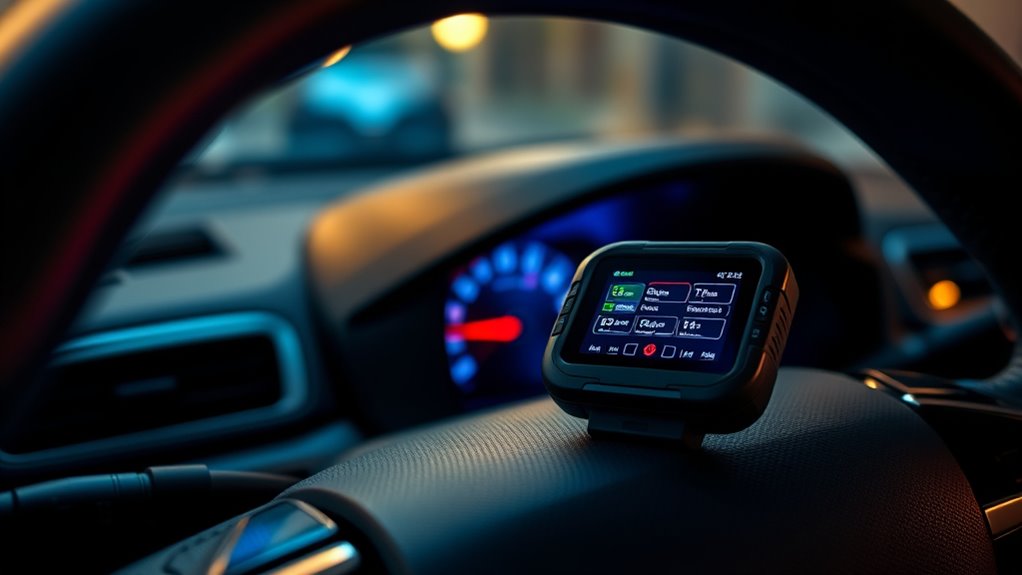
Many common beliefs about OBD-II scanners are actually myths that can lead to misconceptions or improper use. For example, some think using a scanner will automatically reset sensor calibration, which isn’t true. Sensor calibration often requires specific procedures beyond just scanning; it’s not something a simple device can do on its own. Others believe that software updates can harm your car’s system, but updating scanner software actually ensures compatibility with the latest vehicle models and improves accuracy. Recognizing these facts helps you avoid unnecessary worries and misuse. It’s essential to differentiate between myths and facts to make informed decisions about scanning, diagnostics, and maintenance. This knowledge empowers you to use your scanner effectively, without fearing it will damage your vehicle. Additionally, understanding the limitations of scanners can help prevent false diagnoses and unnecessary repairs.
When to Consult a Professional Mechanic

If you encounter complex diagnostics or persistent engine codes that won’t clear, it’s a good idea to see a professional mechanic. Unusual symptoms or safety concerns also signal that expert help is needed. Don’t hesitate to consult a pro when in doubt—your safety and vehicle’s health depend on it.
Complex Diagnostics Require Expertise
While some diagnostic issues are straightforward enough to troubleshoot on your own, complex problems often require expert knowledge. If you encounter:
- Persistent or inconsistent codes that don’t clear after basic fixes
- Symptoms like strange noises, unusual vibrations, or safety concerns
- The need for advanced troubleshooting beyond basic scanner functions
- The requirement for software updates or specialized diagnostic tools
it’s time to see a professional. Advanced troubleshooting often involves interpreting complex data, understanding vehicle-specific systems, and making critical repairs. Professionals have the expertise to handle these challenges safely and accurately, preventing further damage. Remember, attempting to resolve these issues without proper knowledge can lead to costly mistakes. When in doubt, consulting a mechanic ensures your vehicle gets the proper care it needs.
Persistent or Unclear Codes
Persistent or unclear codes can be frustrating, especially when they don’t respond to basic fixes or clear up on their own. If you notice error codes that keep reappearing despite your efforts, it’s a sign you should seek professional help. Sometimes, error codes are ambiguous or stem from complex issues beyond DIY scope. Additionally, scanner compatibility matters; using a generic scanner might not read all error codes accurately, leading to confusion. When codes persist or remain unclear after multiple attempts, it’s best to consult a mechanic who can interpret the data correctly and perform advanced diagnostics. Relying solely on an OBD-II scanner isn’t always enough—experts can identify underlying problems and ensure your vehicle gets the proper attention it needs.
Safety Concerns or Unusual Symptoms
When you notice unusual symptoms like strange noises, persistent vibrations, or a sudden loss of power, it’s a clear sign to see a professional mechanic. These issues could stem from sensor malfunction or false readings that an OBD-II scanner might reveal. However, attempting repairs without expertise can be risky. Consider consulting a mechanic if:
- The check engine light stays on despite clearing codes
- You experience inconsistent or conflicting sensor data
- Unusual noises or vibrations persist during driving
- Symptoms worsen or don’t improve after basic troubleshooting
Ignoring these signs can lead to more significant damage or unsafe driving conditions. Trusting a professional ensures accurate diagnosis and safe repair, especially when sensor malfunction or false readings are involved.
Frequently Asked Questions
Can Using an OBD-II Scanner Cause Long-Term Engine Problems?
Using an OBD-II scanner won’t cause long-term engine problems if you choose one with good scanner quality and make sure it’s compatible with your car. Poor-quality or incompatible scanners might lead to incorrect readings or accidental resets, but proper use is safe. Always follow the manufacturer’s instructions, and avoid tinkering with settings unless you’re sure about what you’re doing. This way, you protect your engine and get accurate diagnostics.
Are There Specific Car Models More Prone to Scanner Damage?
Certain car models are more prone to scanner damage due to model-specific risks and manufacturer warnings. For example, some vehicles have sensitive electronic systems that can be affected by improper scanner use. Always check your vehicle’s manual or manufacturer warnings before connecting a scanner. Using the right scanner for your car and following safety guidelines minimizes risks and helps prevent potential damage, ensuring safe and effective diagnostics.
Does Frequent Scanning Affect Fuel Efficiency or Emissions?
Frequent scanning doesn’t harm your car, but it can influence fuel consumption and emission levels if you ignore ongoing issues. By regularly checking your vehicle, you catch problems early, enhance performance, and reduce unnecessary fuel use. Conversely, neglecting diagnostics might lead to unresolved issues that increase emissions and decrease fuel efficiency. So, stay proactive with scans to maintain ideal fuel consumption and keep emission levels in check, ensuring your car runs smoothly and eco-friendly.
Can Using a Scanner Interfere With Other Vehicle Electronic Systems?
Using a scanner can sometimes cause electronic interference, but it’s rare and usually unlikely to interfere with other vehicle electronic systems or cause system malfunctions. If you follow the manufacturer’s instructions and avoid forcing connections or disconnecting wires, you minimize risks. Modern vehicles are designed to be compatible with diagnostic tools, so responsible use shouldn’t lead to system malfunctions or damage, ensuring safe and effective diagnostics.
Is It Safe to Share My Scanner Data With Third-Party Apps?
Yes, sharing your scanner data with third-party apps can be safe if you pay attention to data privacy and app permissions. Always review what data the app requests and verify it’s reputable. Avoid apps that ask for unnecessary permissions or seem suspicious. By staying cautious and understanding how your data is used, you can protect your privacy while benefiting from useful insights provided by third-party apps.
Conclusion
So, don’t let the myths steer you wrong. An OBD-II scanner is like a trusted map, guiding you through your car’s health without causing harm—unless you ignore safety tips. Think of it as a tool, not a trap. Use it wisely, and you’ll navigate your vehicle’s mysteries confidently. After all, isn’t knowing your car better than guessing in the dark? Embrace the truth and steer clear of unnecessary worries.