
If you see common OBD-II codes like P0171 (system too lean), P0420 (catalyst efficiency), or P0300 (random misfire), it means your car has sensor or emission system issues. These codes help you identify problems with fuel mixture, exhaust, or sensors that affect performance and emissions. Addressing them quickly can prevent costly damage. Keep going to discover what specific codes mean and how you can resolve them to keep your car running smoothly.
Key Takeaways
- OBD-II codes identify specific issues, such as sensor failures or emission system problems, aiding quick diagnosis.
- Common codes like P0130 and P0171 relate to sensor malfunctions affecting fuel mixture and engine performance.
- Emission-related codes like P0420 indicate catalytic converter issues that impact pollution control and efficiency.
- Addressing these codes promptly prevents further engine damage, reduces emissions, and maintains vehicle legality.
- Using an OBD-II scanner helps interpret codes and guides necessary repairs, ensuring vehicle health and compliance.

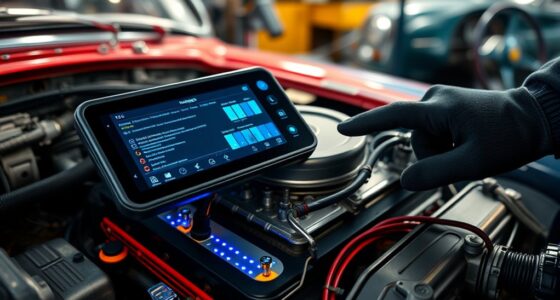
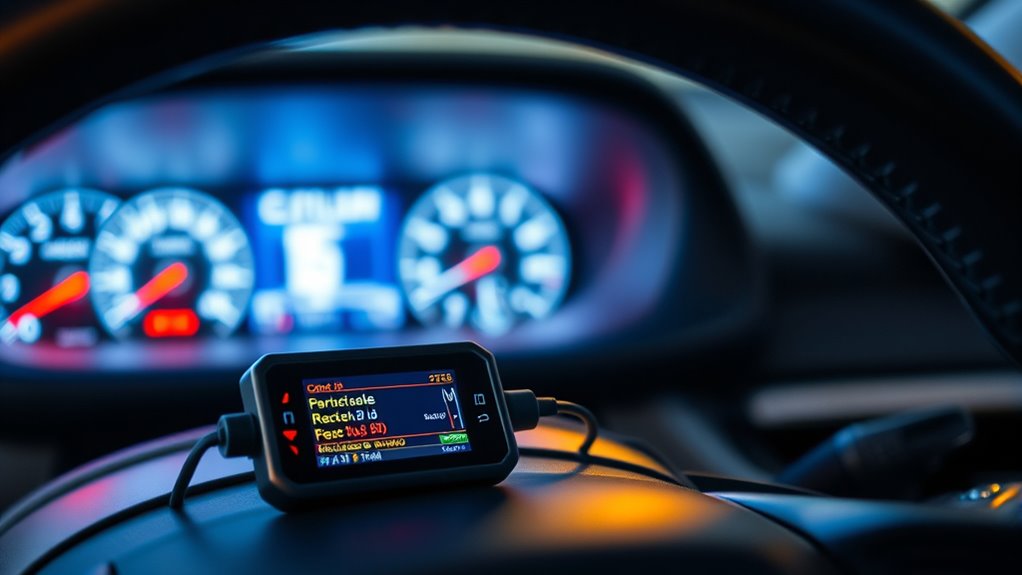
Understanding OBD-II codes can be a game-changer when diagnosing car troubles. When your vehicle’s check engine light comes on, it often signals an issue that needs attention. Instead of guessing, you can use OBD-II codes to identify the specific problem, saving time and possibly money. These codes are standardized, meaning they work across most vehicles built after 1996, and they provide valuable insight into what’s happening under the hood. One common area these codes point to involves sensor malfunctions, which can cause a range of problems, including emission issues. For example, if your oxygen sensor isn’t working correctly, the engine control module (ECM) might throw a code like P0130 or P0171. These codes indicate that the sensor isn’t reading properly, leading to incorrect fuel mixture adjustments. This, in turn, can cause your car to run inefficiently and increase emissions. Addressing sensor malfunctions early helps prevent more serious damage, saves fuel, and keeps your emissions within legal limits, avoiding potential fines or failed inspections. Additionally, understanding the contrast ratio of your vehicle’s sensors can help you determine how well they perform in different lighting conditions, ensuring your diagnostics are accurate. Many of these codes are designed to alert you to issues that impact emissions. Emission problems can stem from various sources, including faulty sensors, worn-out catalytic converters, or issues with the fuel system. When an emission-related code appears, such as P0420 or P0440, it’s a sign that your vehicle isn’t burning fuel cleanly or that part of your exhaust system isn’t functioning properly. These problems can lead to increased pollution output, reduced fuel economy, and even engine damage if left unresolved. That’s why recognizing these codes quickly is vital. By connecting a scanner to your vehicle’s OBD-II port and retrieving the codes, you gain immediate insight into what needs fixing. If the code points to a sensor malfunction, replacing or repairing the sensor can often resolve the issue. If it’s an emission-related problem, it might require further diagnosis to identify the faulty component.
Frequently Asked Questions
Can I Drive Safely With a Pending OBD-II Code?
You shouldn’t drive with a pending OBD-II code if you’re concerned about vehicle safety. While the car may seem fine, a pending code indicates a potential issue that could worsen or affect diagnostic accuracy later. Driving may be safe temporarily, but it’s best to get your vehicle checked promptly. Ignoring the code can lead to more serious problems, so prioritize repairs to maintain safety and guarantee accurate diagnostics for future issues.
How Often Should I Check My OBD-II Codes?
You should check your OBD-II codes regularly, ideally every few months or during routine diagnostic intervals. Doing so helps you catch warning signs early and address issues before they worsen. If you notice any unusual performance or warning lights, check your codes immediately. Regular checks keep your vehicle running smoothly, prevent costly repairs, and guarantee safety. Staying proactive with diagnostics is the best way to maintain your car’s health.
Do All OBD-II Codes Require Immediate Repair?
Not all OBD-II codes require immediate repair. Some indicate minor issues and can be monitored, while others signal urgent problems needing prompt diagnostic urgency and repair prioritization. If a code lights up your dashboard, assess its severity and consult a mechanic if necessary. Ignoring serious codes can lead to further damage, but minor ones often allow you to schedule repairs at your convenience. Always prioritize safety and proper vehicle maintenance.
Can Weather Affect OBD-II Sensor Readings?
Weather impact can definitely affect OBD-II sensor readings, potentially causing fluctuations in sensor accuracy. Extreme temperatures, humidity, rain, or snow might interfere with sensor signals, leading to false or inconsistent data. You should be aware that harsh weather conditions can temporarily influence your vehicle’s sensors, but typically, once conditions improve, sensor accuracy returns to normal. Regular diagnostics help ensure your vehicle’s systems stay reliable regardless of weather.
Are There Legal Implications for Ignoring OBD-II Codes?
Ignoring OBD-II codes can lead to serious legal repercussions, especially if your vehicle causes an accident or fails emissions tests. You might face fines or penalties for non-compliance with state regulations. Additionally, insurance implications exist; if you neglect to fix issues indicated by the codes, your insurer could deny claims or raise premiums. Always address OBD-II warnings promptly to avoid legal trouble and protect your insurance coverage.
Conclusion
Don’t worry if you see an OBD-II code pop up—you’re not alone, and it’s often easier to fix than you think. While it might seem intimidating at first, understanding these codes helps you catch issues early and save money on repairs. Remember, your car wants to tell you what’s wrong; all you need is a little knowledge to keep it running smoothly. So, stay confident and keep your car in top shape!