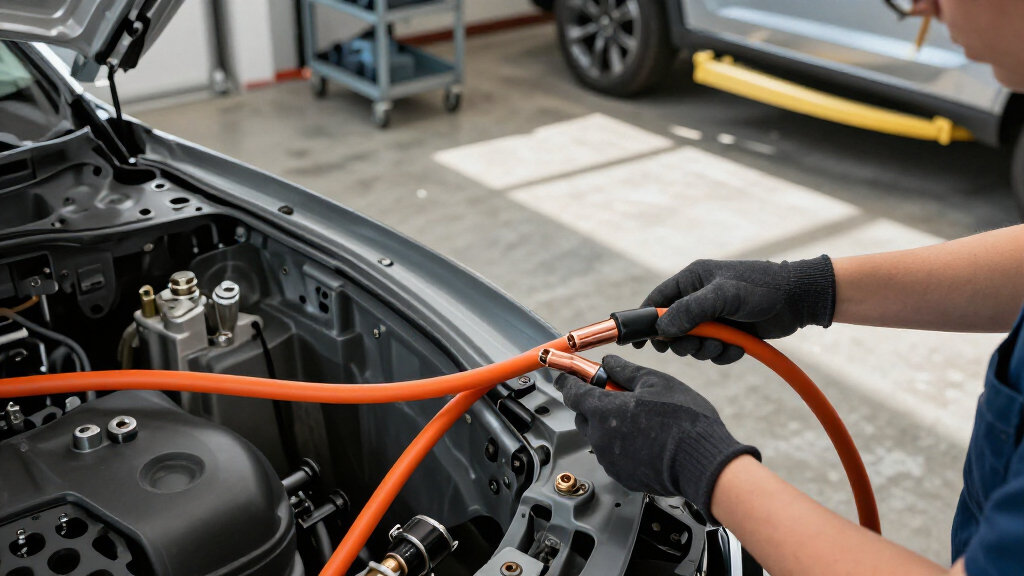
Choosing among the best high voltage automotive cables depends first on the job: ignition wiring, an EV battery circuit, and a flexible battery lead call for different cable designs. I rank the Shielded High-Voltage EV Battery Cable first for its stated 1500 V DC rating, shielding, and automotive-oriented jacket; the Taylor Cable ThunderVolt is my ignition-set pick for six-cylinder engines; and the CHANGNAN silicone wire suits buyers who need a short, soft single conductor. The main tradeoff is straightforward: voltage rating and shielding matter for high-voltage systems, while engine fit, flexibility, and conductor size matter more for ignition and battery applications.

Get business pricing on garage and car supplies
- Business-only prices and quantity discounts
- Tax-exempt purchasing
- Multiple users, one account, clear invoices
These products are not interchangeable. The ACDC welding cable offers a large, flexible 2 AWG conductor, but its stated 600 V rating is below the EV cable’s 1500 V DC rating. I use the listed specifications and intended applications to separate the options, and I recommend confirming vehicle requirements, terminals, current capacity, and applicable safety standards before installation.
Complete the kit


Key Takeaways
- For EV battery wiring, the Shielded High-Voltage EV Cable is the clearest match because its product details state a 1500 V DC rating, foil-and-braid shielding, XLPE insulation, and a 30 ft length.
- For a six-cylinder ignition system, Taylor Cable’s 8.2 mm ThunderVolt set is purpose-built and includes RFI/EMI suppression, but the supplied information does not identify exact vehicle fitment.
- For short, flexible single-conductor routing, CHANGNAN offers 5 m of 13 AWG silicone-insulated wire with a tin-plated copper core; confirm the exact voltage and configuration before buying.
- For heavy low-voltage power runs, the ACDC 2 AWG welding cable has a flexible 624-strand conductor and a tough EPDM jacket, but its stated voltage rating is 600 V, not 1500 V DC.
- Do not select by gauge alone: voltage rating, insulation, shielding, engine compatibility, current capacity, cable length, and termination requirements all affect whether a cable is suitable.
| Shielded High-Voltage EV Battery Cable, 16 mm² (6 AWG), 30 ft |  | Best Overall for EV Battery Wiring | Selected size: 16 mm² (6 AWG) | Length: 30 ft | Conductor: Fine-stranded oxygen-free copper | VIEW LATEST PRICE | See Our Full Breakdown |
| Taylor Cable ThunderVolt 8.2 mm Spark Plug Wire Set for 6-Cylinder Engines, Red |  | Best for Six-Cylinder Ignition Systems | Wire diameter: 8.2 mm | Engine compatibility: 6-cylinder | Core: Helically wound | VIEW LATEST PRICE | See Our Full Breakdown |
| CHANGNAN 13 AWG Silicone High-Voltage Ignition Wire, 200 kV, 5 m |  | Best Short Silicone Wire for Flexible Routing | Wire gauge: 13 AWG | Length: 5 m | Color: Red | VIEW LATEST PRICE | See Our Full Breakdown |
| ACDC 2 AWG Flexible Welding Cable, 50 ft, Black |  | Best for Flexible Heavy-Gauge Power Runs | Gauge: 2 AWG | Length: 50 ft | Conductor: 624 strands of 30-gauge bare copper | VIEW LATEST PRICE | See Our Full Breakdown |
| high voltage automotive cable | Length | Conductor | Insulation | Operating temperature |
|---|---|---|---|---|
| Shielded High-Voltage EV Batte | 30 ft | Fine-stranded oxygen-free copper | Cross-linked polyethylene (XLPE) | -40°C to +125°C |
| Taylor Cable ThunderVolt 8.2 m | — | — | — | — |
| CHANGNAN 13 AWG Silicone High- | 5 m | — | — | — |
| ACDC 2 AWG Flexible Welding Ca | 50 ft | 624 strands of 30-gauge bare copper | EPDM jacket with paper separator | -50°C to +105°C |
More Details on Our Top Picks
Shielded High-Voltage EV Battery Cable, 16 mm² (6 AWG), 30 ft
I rank this cable first because it is the most clearly specified option for a modern high-voltage automotive circuit. The product information identifies a 1500 V DC rating, an orange outer jacket, XLPE insulation, and combined aluminum foil and tinned copper braid shielding. That combination gives buyers more application-relevant information than CHANGNAN’s ignition-wire listing or ACDC’s welding cable, whose stated voltage ceiling is 600 V.
The 16 mm² (6 AWG) version is a single-core cable supplied in a 30 ft length. Its fine-stranded oxygen-free copper conductor is described as supporting flexible routing, while the oil-resistant PE jacket and operating range from -40°C to 125°C address demanding surroundings. Shielding can help reduce electromagnetic interference, a useful design feature around electronic systems, though it does not replace correct installation or grounding practices.
The main limitation is that the available information does not state current capacity. I would not assume that 6 AWG is sufficient for a particular battery, inverter, or charging circuit just because the voltage rating is high. It is also a single conductor, so a circuit requiring multiple conductors needs additional cable. Compared with the Taylor set, this is for battery and power wiring rather than spark-plug connections; compared with ACDC, it has a much higher stated voltage rating but lacks the welding cable’s 2 AWG size. Confirm the system design and local requirements before relying on it.
Pros:- Stated rating up to 1500 V DC
- Foil and tinned copper braid shielding
- Fine-stranded oxygen-free copper with XLPE insulation
- Oil-resistant jacket and -40°C to 125°C operating range
Cons:- Single-core construction may require separate cables for a complete circuit
- Current capacity is not specified in the supplied details
- The 16 mm² size must be checked against the installation’s load and requirements
Best for: EV conversion builders and automotive electrical professionals who need a shielded, single-core cable with a stated 1500 V DC rating and can verify the required current capacity for their circuit.
Not ideal for: Buyers seeking a complete multi-conductor harness, an ignition wire set, or a cable choice based on current capacity alone; the supplied product details do not provide an ampacity figure.
- Selected size:16 mm² (6 AWG)
- Length:30 ft
- Conductor:Fine-stranded oxygen-free copper
- Insulation:Cross-linked polyethylene (XLPE)
- Shielding:Aluminum foil and tinned copper braid
- Jacket:Oil-resistant polyethylene
- Operating temperature:-40°C to +125°C
Our verdict“I make this my first choice for high-voltage EV wiring because it lists the strongest voltage rating and most relevant shielding details, provided its current capacity is verified for the job.”
Taylor Cable ThunderVolt 8.2 mm Spark Plug Wire Set for 6-Cylinder Engines, Red
This is the most application-specific pick in the group: Taylor Cable supplies a complete spark plug wire set intended for six-cylinder automotive engines, rather than a length of general-purpose battery cable. Its 8.2 mm wires use a helically wound core for conductivity, and the silicone inner core is described as adding heat protection and flexibility. For buyers replacing ignition leads, those design details are more relevant than the EV cable’s shielding or the ACDC cable’s large 2 AWG conductor.
The standout point is stated RFI and EMI suppression. That can matter in vehicles with electronic ignition and onboard electronics, including computers, stereos, or pit radios. The red finish also makes the set easy to distinguish visually in an engine bay, though color should not substitute for checking firing order and lead routing. Compared with CHANGNAN’s single-core wire, Taylor is packaged for a defined ignition use and a six-cylinder layout; it is not a general-purpose cable for an EV battery circuit.
Its limits are equally clear. The listing specifies six-cylinder compatibility but does not provide vehicle make, model, year, engine code, lead lengths, or terminal details. I would confirm exact fitment before ordering instead of assuming every six-cylinder engine uses the same arrangement. The product information also does not provide a high-voltage insulation rating comparable to the EV cable’s stated 1500 V DC. Choose this for a compatible ignition system, not as a substitute for rated high-voltage battery cable.
Pros:- Designed as a spark plug wire set for six-cylinder engines
- Helically wound core described as highly conductive
- Silicone inner core provides stated heat protection and flexibility
- RFI/EMI suppression for ignition and onboard electronics
Cons:- Engine application is limited to six-cylinder setups
- Specific vehicle fitment details are not supplied
- No comparable 1500 V DC cable rating is listed
Best for: Owners of a compatible six-cylinder vehicle who need an ignition-wire set with a helically wound core, silicone inner core, and stated RFI/EMI suppression.
Not ideal for: EV conversion work, battery or inverter circuits, and buyers who cannot confirm engine-specific fitment from the vehicle and product details.
- Wire diameter:8.2 mm
- Engine compatibility:6-cylinder
- Core:Helically wound
- Inner core:Silicone
- Color:Red
- Connector gender:Male-to-male
- Model:84224
- Item weight:2.3 pounds
Our verdict“I recommend this set for verified six-cylinder ignition applications, but not for battery wiring or vehicles whose fitment has not been confirmed.”
CHANGNAN 13 AWG Silicone High-Voltage Ignition Wire, 200 kV, 5 m
CHANGNAN is a straightforward option for buyers who need a short, soft single-core wire rather than a preassembled ignition set or a long EV battery cable. The 13 AWG conductor is tin-plated oxygen-free copper, which the manufacturer describes as oxidation-resistant and low-resistance. A silicone exterior is the main practical draw: compared with ACDC’s EPDM-jacketed 2 AWG cable, this wire is a much smaller-gauge option for a different class of wiring task.
At 5 m long, it may suit a short run, a repair, or a custom installation where a flexible wire is easier to route than a stiffer cable. It is not supplied as a multi-lead set like Taylor Cable’s ThunderVolt, so buyers should plan for their own cutting, termination, and routing needs. The listing presents it as high-voltage ignition wire, but its product title includes several voltage and gauge options; I would check that the selected configuration is actually the 13 AWG, 5 m version and verify the relevant rating before installation.
The biggest concern is specification clarity. The listing title says 200 kV, but the provided details do not explain a test method, insulation standard, or conditions for that figure. I would not treat that number alone as proof that the wire is suitable for a particular system. The listed color is red, while the description mentions red and black availability, adding another configuration question. Compared with the EV cable, CHANGNAN has no stated shielding, XLPE insulation, or detailed operating range; compared with Taylor, it is a single wire, not a vehicle-specific spark plug set. Its appeal is flexibility and a compact length, not a complete high-voltage system specification.
Pros:- Soft, flexible silicone construction
- Tin-plated oxygen-free copper core
- Manufacturer describes the core as oxidation-resistant and low-resistance
- 5 m length suits short custom runs
Cons:- Exact configuration may be unclear because the title references multiple options
- Supplied details do not explain the stated 200 kV figure or test conditions
- Only red is specified in the selected product details
Best for: Buyers who need a short, flexible, 13 AWG single conductor for a custom ignition-related or other verified wiring task and can confirm the selected configuration and rating.
Not ideal for: Anyone choosing cable for an EV battery system, a complete six-cylinder spark plug replacement, or an installation requiring clearly documented voltage and current ratings.
- Wire gauge:13 AWG
- Length:5 m
- Color:Red
- Core material:Tin-plated oxygen-free copper
- Number of cores:Single
- Construction:Silicone high-voltage wire
- Manufacturer:CHANGNAN
- Model:CHANGNAN159659
Our verdict“I would choose CHANGNAN for a short, flexible wire run only after confirming the exact gauge, color, and applicable voltage rating.”
ACDC 2 AWG Flexible Welding Cable, 50 ft, Black
ACDC’s cable stands apart through its 2 AWG size and flexible multi-strand conductor. The 50 ft length and 624 strands of 30-gauge bare copper make it a plausible choice for heavy-gauge battery, car audio, solar, or welding applications listed by the manufacturer. Its EPDM jacket is described as resisting abrasion, cuts, tears, flame, grease, oil, and water, so it is aimed at rougher handling than CHANGNAN’s lighter 13 AWG silicone wire.
For buyers prioritizing a rugged power lead, the cable offers an operating range from -50°C to +105°C and a stated 600 V rating. That voltage ceiling is the deciding distinction: it is below the EV cable’s listed 1500 V DC rating, so I would not select it as a direct replacement for that cable in a high-voltage EV system. It also lacks the EV cable’s foil-and-braid shielding. Compared with Taylor’s ignition set, ACDC is a single heavy power conductor, not a collection of spark plug leads.
The listing identifies SAE J1127 and RoHS compliance, but the supplied details do not give a current-capacity figure or explain the specific conditions behind its voltage rating. A large gauge does not by itself settle whether a cable is suitable for a given circuit; run length, load, temperature, installation, and protection all matter. It weighs 15 pounds, which can make handling and routing more cumbersome than the other options. I see it as a robust general power cable, not the most clearly specified answer for high-voltage automotive wiring.
Pros:- Flexible 624-strand bare copper conductor
- 50 ft length and heavy 2 AWG gauge
- EPDM jacket resists abrasion, cuts, tears, flame, grease, oil, and water
- Listed SAE J1127 and RoHS compliance
Cons:- Stated voltage rating is 600 V, below the EV cable’s 1500 V DC rating
- Single conductor with no shielding listed
- 15-pound weight can make routing and handling less convenient
Best for: Buyers who need a long, flexible 2 AWG single-conductor cable for a compatible battery, car audio, solar, or welding application and have checked the circuit requirements.
Not ideal for: EV high-voltage battery systems requiring a higher stated voltage rating or shielded cable, and anyone who needs a complete multi-conductor assembly.
- Gauge:2 AWG
- Length:50 ft
- Conductor:624 strands of 30-gauge bare copper
- Insulation:EPDM jacket with paper separator
- Operating temperature:-50°C to +105°C
- Standards and compliance:SAE J1127; RoHS compliant
- Item weight:15 pounds
Our verdict“I recommend this cable for flexible, heavy-gauge power runs, but its 600 V rating makes it a poor stand-in for the dedicated EV cable above.”
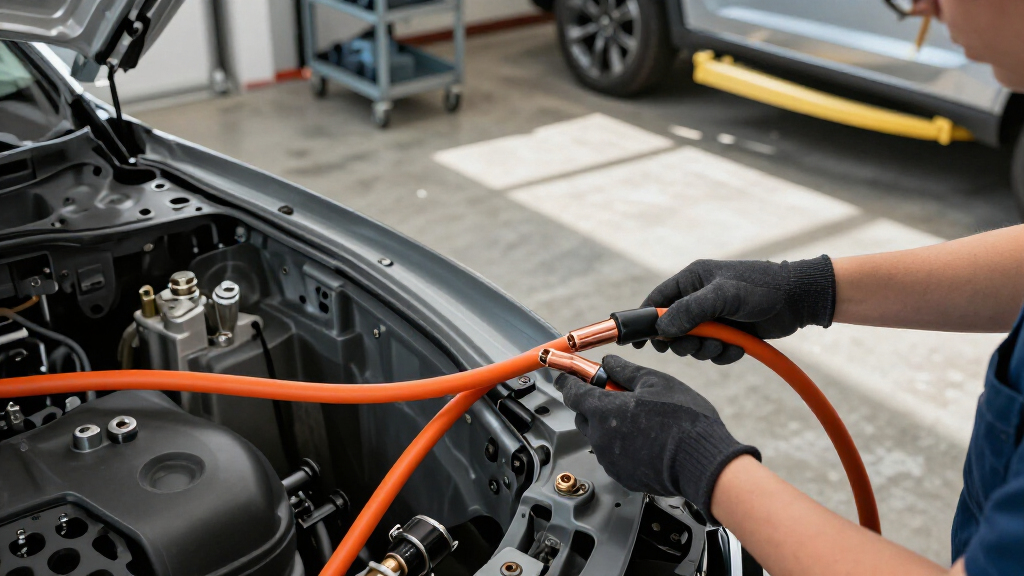
How We Picked
I ranked these four options by how clearly their listed construction and ratings match a particular automotive use, not by treating every cable as a substitute for every other one. For a high-voltage EV installation, I gave weight to a stated voltage rating, insulation type, shielding, temperature range, and an automotive-oriented jacket. That puts the Shielded High-Voltage EV Battery Cable at the top of the lineup: it is the only option here that explicitly lists a rating of up to 1500 V DC and describes both foil and braided shielding.
I judged the ignition set by its intended engine application and ignition-specific features. The Taylor Cable ThunderVolt is a set for six-cylinder engines, with a helically wound core and stated RFI/EMI suppression. Those traits distinguish it from the other single-conductor cables, but the absence of specific vehicle fitment information keeps it from being a universal recommendation. I ranked CHANGNAN for short, flexible high-voltage wire needs because of its silicone construction and tin-plated copper core; its title and supplied details leave the exact voltage configuration less clear.
The ACDC welding cable earns a place for flexible, heavy-gauge power wiring rather than high-voltage EV circuits. Its 2 AWG conductor, 50 ft length, EPDM jacket, and stated 600 V rating make it a different kind of choice from the EV cable. Across all four, I treated missing details as limits rather than filling them in with assumptions. I would verify cable ratings, current capacity, vehicle compatibility, routing conditions, connector type, and relevant regulations against the requirements of the specific installation before purchase or use.
| high voltage automotive cable | Insulation | Operating temperature |
|---|---|---|
| Shielded High-Voltage EV Batte | Cross-linked polyethylene (XLPE) | -40°C to +125°C |
| Taylor Cable ThunderVolt 8.2 m | — | — |
| CHANGNAN 13 AWG Silicone High- | — | — |
| ACDC 2 AWG Flexible Welding Ca | EPDM jacket with paper separator | -50°C to +105°C |
Factors to Consider When Choosing Best High Voltage Automotive Cables
I would start by identifying the circuit, then check the cable against that system’s documented requirements. The four picks cover different jobs: EV battery wiring, spark plug leads, short flexible ignition-related wire, and heavy-gauge power cable. Their labels may all reference automotive or high voltage, but their construction and stated ratings do not make them interchangeable.
Match the Cable to the Circuit
Decide whether you need an EV battery cable, an ignition set, or a general power lead before comparing gauge or length. The Shielded EV cable is the most direct match for battery and inverter systems because its details state a 1500 V DC rating. Taylor’s ThunderVolt is instead a spark plug wire set for six-cylinder engines, while CHANGNAN supplies one 13 AWG wire and ACDC supplies one 2 AWG welding-style conductor. A cable’s automotive label does not make it suitable for every automotive circuit.
Use the vehicle or equipment manufacturer’s wiring requirements as the reference point. If the required cable type, rating, or terminal arrangement is unclear, pause and get the system specification rather than choosing by appearance or a broad product title.
Read Voltage and Current Ratings Separately
A voltage rating describes an electrical limit under stated conditions; it does not tell you how much current a cable can carry in a particular installation. The EV cable lists up to 1500 V DC, while the ACDC cable lists 600 V. The supplied information for CHANGNAN and Taylor does not give a comparable system voltage rating in enough detail to make a direct ranking by voltage. I would avoid treating CHANGNAN’s title figure as a complete specification because the description does not explain its test conditions.
Current capacity is also central. None of the supplied product details gives a complete ampacity answer for the EV cable or ACDC cable, so buyers must check the applicable cable data and circuit design. Gauge alone cannot establish capacity: conductor material and construction, temperature, routing, length, bundling, and protective devices all affect the result. If an installation is safety-critical, use a qualified automotive electrician or follow the vehicle manufacturer’s service documentation.
Compare Conductor and Insulation Construction
Flexible stranded copper can make routing easier, while insulation and jacket materials must suit the heat, abrasion, chemicals, and exposure expected in the installation. The EV cable combines fine-stranded copper with XLPE insulation and an oil-resistant PE jacket. ACDC uses many fine bare-copper strands with an EPDM jacket described as resistant to several common hazards. CHANGNAN highlights its soft silicone construction, and Taylor describes a silicone inner core for its ignition leads.
These descriptions point to different intended roles; they do not establish that one material is automatically better in every location. Check the complete cable data for bend limits, installation conditions, insulation rating, and any required standard. Also verify whether the wire must pass through areas with heat, oil, moving parts, sharp edges, or moisture, and protect it accordingly.
Check Shielding, Engine Fit, and Terminations
Shielding is a meaningful differentiator for the EV cable: it lists both aluminum foil and a tinned copper braid. Taylor’s spark plug set instead calls out RFI/EMI suppression, a feature relevant to ignition noise around electronic equipment. ACDC and CHANGNAN do not list shielding in the supplied details. These features serve different purposes, so I would not treat ignition suppression as equivalent to a shielded EV cable.
For Taylor, confirm make, model, year, engine, lead lengths, and terminal compatibility before ordering; “six-cylinder” alone may not identify a fit. For single-core cable, plan for the correct number of conductors and suitable terminals, connectors, and protective routing. Do not improvise a high-voltage termination based only on a cable’s gauge or color.
Choose Length and Gauge for the Actual Route
Length affects both installation convenience and the electrical design. CHANGNAN provides 5 m, the EV cable 30 ft, and ACDC 50 ft; Taylor is a set rather than a continuous cable run. Longer cable can help with routing, but the required conductor size must account for the circuit and the full installed length. Unneeded excess may also complicate securing and protecting a run.
The listed sizes vary widely: CHANGNAN is 13 AWG, the EV version is 16 mm² (6 AWG), and ACDC is 2 AWG. Do not choose the largest conductor simply because it appears more robust, or assume a smaller cable works because it is easier to route. Match the size to the system specification, terminal capacity, and installation conditions.
Treat Unclear Listings as a Reason to Verify
Product titles and configuration menus can combine several sizes, colors, or ratings. CHANGNAN’s supplied description mentions multiple options, while the specified configuration is red, 13 AWG, and 5 m. I would confirm that the order selection matches those details and seek documentation for the applicable rating. Taylor’s listing identifies a six-cylinder application but does not provide exact vehicle fitment; its title should not replace a fitment check.
Before installation, confirm the cable’s full data sheet, system voltage and current needs, connector compatibility, and any applicable automotive standards. The information provided for these products is useful for comparison, but missing specifications should be resolved with the manufacturer or a qualified installer rather than guessed.
Frequently Asked Questions
Which cable in this lineup is intended for EV battery wiring?
The Shielded High-Voltage EV Battery Cable is the clearest match for EV battery wiring: its product information states a rating up to 1500 V DC and lists XLPE insulation, foil-and-braid shielding, and an oil-resistant jacket. It is a single 16 mm² (6 AWG) conductor, and its current capacity is not provided here, so I would verify that figure and the system requirements before using it.
Can I use the ACDC welding cable instead of the EV cable?
I would not assume that they are interchangeable. ACDC is a flexible 2 AWG single-conductor cable with a stated 600 V rating, while the EV cable lists up to 1500 V DC and includes shielding. The correct cable depends on the circuit’s voltage, current, installation conditions, and required standards; have those requirements checked before selecting a substitute.
Is Taylor Cable ThunderVolt suitable for every six-cylinder vehicle?
No. The supplied details describe it as a 6-cylinder spark plug wire set, but they do not identify exact makes, models, years, engine codes, lead lengths, or all terminal details. I would confirm the set’s fitment against the vehicle before buying. It is an ignition product, not a replacement for battery or EV high-voltage cable.
What should I verify before choosing the CHANGNAN wire?
Confirm that the selected listing configuration is the specified 13 AWG, 5 m, red single-core wire, and request or check documentation for the voltage rating and test conditions that apply to it. The supplied details describe a silicone construction and tin-plated copper core, but do not explain the title’s 200 kV figure. I would not use that figure alone to approve the wire for a particular circuit.
Does a thicker gauge automatically mean a safer automotive cable?
No. Gauge is only one part of cable selection. Voltage rating, conductor material, insulation, current capacity, run length, operating temperature, routing, connectors, and circuit protection all matter. ACDC’s 2 AWG size does not make it a substitute for the EV cable’s higher stated voltage rating, and the EV cable’s voltage rating does not establish its current capacity for every application.
Conclusion
For EV battery and inverter wiring, I would start with the Shielded High-Voltage EV Cable because it has the clearest stated high-voltage rating and shielding, then confirm current capacity and installation requirements. For a verified six-cylinder ignition replacement, Taylor Cable ThunderVolt is the purpose-built choice, provided the exact vehicle fitment matches. If you need a short, flexible single wire, CHANGNAN may fit after its selected configuration and rating are checked. For a heavy-gauge general power run, ACDC offers flexible 2 AWG construction, but its stated 600 V rating makes it a different choice from the EV cable.
I would not buy any of these based on gauge, color, or the phrase “high voltage” alone. Match the cable to the circuit, verify the full rating and current requirements, and confirm terminals and routing before installation. Where the system specification is missing or the work involves high-voltage EV components, I would rely on manufacturer documentation and a qualified automotive professional.