Bright LED headlights can seem like the best choice for bad weather, but more brightness isn’t always better. Excessive light can cause glare, making it harder for you and other drivers to see clearly. It also reflects off fog, rain, and snow, reducing your visibility instead of improving it. Properly designed headlights with adaptive features cut through moisture and fog more effectively. Keep exploring to discover how you can maximize safety with the right lighting choices.
Key Takeaways
- Brightness must be balanced with beam control to avoid glare and improve visibility in fog, rain, and snow.
- Cooler LED light wavelengths penetrate fog better but can cause more scatter if not properly focused.
- Properly designed LED headlights minimize glare and reflections, enhancing safety without overwhelming other drivers.
- Adaptive lighting adjusts beam patterns based on weather, ensuring optimal illumination without excessive brightness.
- Effective LED headlights prioritize fog penetration and beam precision over maximum lumens for better visibility in bad weather.

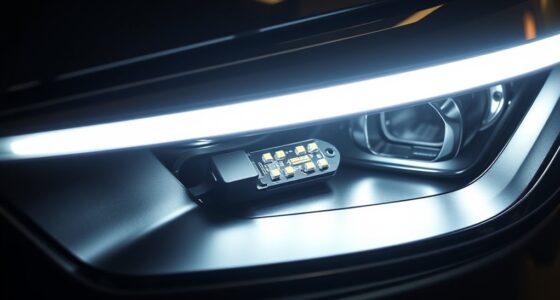
When driving in bad weather, LED headlights can markedly improve your visibility and safety on the road. Unlike traditional halogen bulbs, LEDs emit a brighter, more focused beam that can cut through fog, rain, and snow more effectively. However, it’s important to understand that brighter isn’t always better. While LEDs are known for their high intensity, their effectiveness depends heavily on how well they manage glare reduction and fog penetration. Bright headlights can sometimes do more harm than good, especially if they cause glare for other drivers or scatter light off moisture in the air, reducing your overall visibility.
One of the key advantages of LED headlights is their ability to reduce glare. In poor weather conditions, glare from overly bright lights can reflect off wet surfaces or fog, creating a halo effect that makes it harder to see. Properly designed LED systems incorporate features like precise beam patterns and adaptive lighting, which direct light where it’s needed without blinding oncoming traffic. This glare reduction ensures you can see the road clearly without causing discomfort or danger to other drivers. It’s not just about brightness; it’s about how intelligently the light is projected.
Fog penetration is another critical factor where LED headlights shine. Fog, rain, and snow scatter light, often rendering traditional headlights ineffective. LEDs with a cooler color temperature tend to penetrate fog better because their shorter wavelengths are less prone to scattering. Some LED systems are specifically engineered with this in mind, offering optimized light patterns that cut through moisture-laden air more effectively. This means you can see farther ahead in adverse conditions, giving you more time to react and navigate safely. Additionally, advancements in light beam control**** help enhance visibility in challenging weather.
However, more power doesn’t always equate to better performance in bad weather. Excessively bright headlights can cause glare and reduce your own visibility by reflecting off moisture particles or wet surfaces. The goal should be to choose LED headlights that balance brightness with proper beam control. Features like adaptive headlights, which adjust the beam pattern based on driving conditions, can considerably improve fog penetration while minimizing glare. Remember, the right LED headlight isn’t just about how bright it is but how well it manages the environment around you.
Frequently Asked Questions
How Do LED Headlights Compare to Halogen in Foggy Conditions?
In foggy conditions, LED headlights generally outperform halogen bulbs because they offer better street lighting and more controlled beam patterns. Their brightness helps with fog penetration, making it easier to see the road ahead. However, LEDs can sometimes cause more glare, reducing visibility for other drivers. So, while LEDs provide sharper illumination, you should select fog lights designed specifically for poor weather to ensure safe driving.
Can Brighter LEDS Cause Glare for Other Drivers During Bad Weather?
Brighter LEDs can cause glare issues for other drivers during bad weather, affecting driver safety. When your headlights are overly intense, they reflect off fog, rain, or snow, creating blinding spots and reducing visibility. To guarantee safety, choose headlights with proper beam pattern and brightness levels, and avoid ultra-bright options that may compromise glare issues. Responsible headlight use helps protect everyone on the road in challenging weather conditions.
Are There Specific LED Headlight Features Designed for Winter Driving?
Yes, there are winter-specific features designed for LED headlights. Look for headlights with snow-resistant coatings that prevent snow and ice buildup, ensuring clear visibility. Many models also include adjustable beam patterns tailored for winter driving conditions, reducing glare and improving safety. These features help you maintain peak illumination in snowy and icy environments, making winter driving safer and more comfortable without compromising visibility or causing glare for other drivers.
How Does Weather Affect the Lifespan of LED Headlights?
Did you know that UV degradation and moisture infiltration can cut an LED headlight’s lifespan by up to 30%? Weather directly impacts your headlights, as exposure to harsh conditions accelerates UV breakdown and allows moisture to seep in. Constant temperature fluctuations and rain cause moisture buildup, leading to corrosion and dimming. To prolong their life, guarantee proper sealing and avoid prolonged exposure to extreme weather.
What Maintenance Tips Optimize LED Headlight Performance in Rain or Snow?
To keep your LED headlights performing well in rain or snow, regularly clean the lenses to prevent dirt and moisture buildup that can reduce brightness. Check your battery performance, ensuring terminals are clean and connections are secure, as cold weather can drain power. Additionally, inspect seals around headlights for leaks, and consider using protective covers. These steps help maintain peak visibility and extend the lifespan of your headlights during harsh weather conditions.
Conclusion
While brighter headlights might seem like the best choice, they aren’t always your safest bet in bad weather. Think of them like a lighthouse shining too brightly—sometimes, they can cause glare and make visibility worse. Instead, choose headlights designed to cut through fog, rain, or snow. Remember, in poor conditions, it’s not about having the brightest lights, but the right ones that help you see and stay safe on the road.