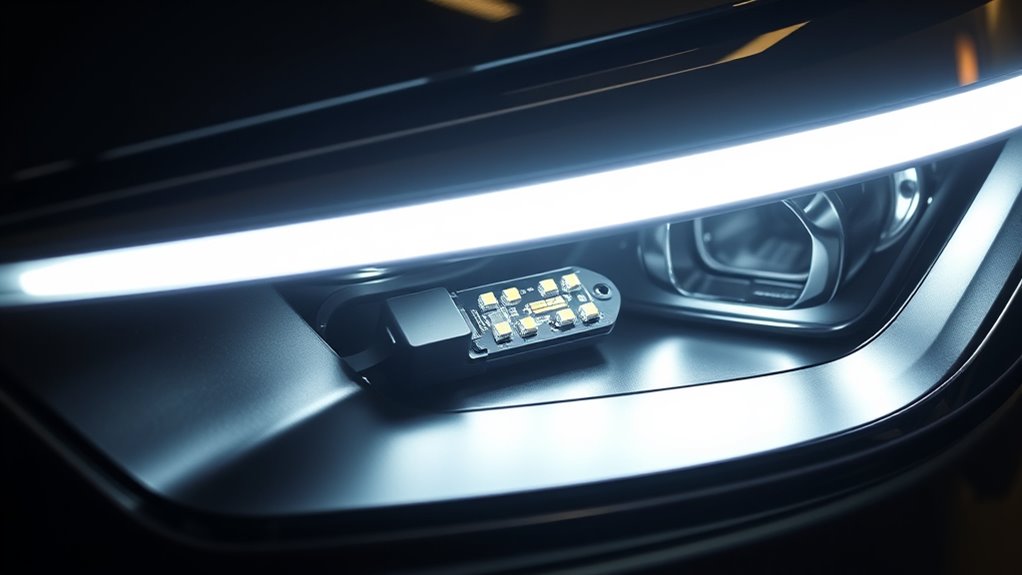

Anti-flicker modules help stop LED headlight errors and flickering by stabilizing power flow and preventing voltage fluctuations that cause instability. They are compatible with many LED setups and must be installed correctly, following manufacturer instructions. Proper placement and secure wiring are key to ensuring consistent performance and longer lifespan. If you’re experiencing flickering or error messages, using an anti-flicker module can greatly improve your lighting stability—continue to explore how to optimize your setup for safer, clearer driving.
Key Takeaways
- Use compatible anti-flicker modules designed for your LED headlights to prevent flickering and error warnings.
- Properly install the module following manufacturer instructions, ensuring secure and correct wiring connections.
- Position the anti-flicker module in a location protected from heat, moisture, and vibration for optimal performance.
- Adjust settings on adjustable modules to fine-tune flicker suppression for specific LED setups.
- Ensure proper grounding and use quality electrical components to enhance stability and extend the lifespan of the system.
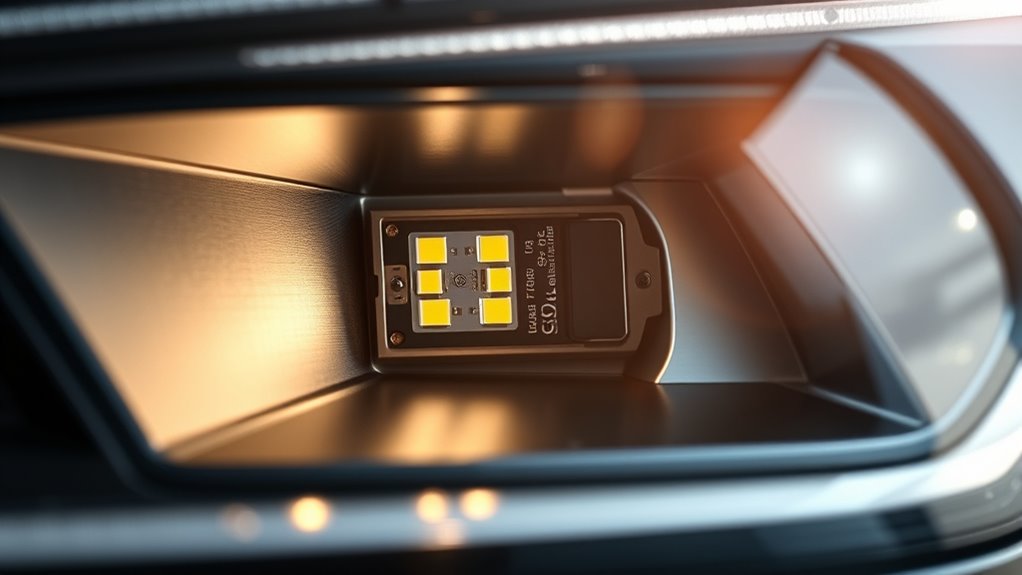
Flickering in displays and camera systems can cause discomfort, reduce image quality, and even harm sensitive equipment. When dealing with LED headlights, flickering becomes more than just an annoyance; it can interfere with safety, visibility, and the overall driving experience. This is where anti-flicker modules come into play, offering a practical solution to eliminate flickering issues and guarantee consistent, stable light output. If you’re installing LED headlights, understanding LED compatibility is essential to prevent flickering. Not all LEDs are designed to work seamlessly with existing vehicle electrical systems or with each other. Some LED units may draw inconsistent power or create interference that leads to flickering. To avoid this, choose LED headlights and anti-flicker modules that are compatible with your vehicle’s electrical system. Compatibility information is typically provided by the manufacturer and can save you from troubleshooting headaches later on.
When installing anti-flicker modules, keep in mind some fundamental tips for a smooth process. First, double-check your vehicle’s specifications and the LED headlight’s requirements to guarantee compatibility. Some modules are designed specifically for certain voltage ranges or types of LED bulbs. Next, carefully follow the installation instructions provided by the manufacturer. Most anti-flicker modules are straightforward to install—often involving wiring between the vehicle’s power source and the LED headlight. Make sure to secure all connections tightly and insulate exposed wiring to prevent any shorts or corrosion. Proper grounding is critical; poor grounding can lead to flickering or inconsistent light output, so verify that the module and LEDs are grounded correctly. Additionally, selecting appropriate electrical components can further enhance stability and performance.
Another key tip is to position the anti-flicker module in a location where it won’t be exposed to excessive heat, moisture, or vibration—these conditions can compromise its performance over time. If you’re unsure about the wiring process, consulting a professional or referencing detailed installation guides can make a significant difference. Additionally, some anti-flicker modules come with adjustable settings, allowing you to fine-tune the flicker suppression to match your specific LED headlight setup. This flexibility ensures peak performance and reduces the likelihood of flickering returning after installation.
Frequently Asked Questions
Do Anti-Flicker Modules Work With All Vehicle Types?
Anti-flicker modules don’t work perfectly with all vehicle types because of compatibility issues and installation challenges. You might find that some cars, especially older models or those with complex electrical systems, need additional adjustments or may not work with certain modules. Before installing, you should check your vehicle’s specifications and consult a professional to verify compatibility and smooth installation, avoiding unnecessary problems down the line.
Are Anti-Flicker Modules Legal for Street Use?
Anti-flicker modules are generally legal for street use if they meet regulatory standards and guarantee legal compliance. You should check local laws because regulations vary by region. While many jurisdictions allow them, some may restrict modifications that alter vehicle lighting. Always verify that the anti-flicker module you choose complies with your area’s safety and emission standards to avoid legal issues and ensure safe operation on public roads.
How Do Anti-Flicker Modules Affect LED Lifespan?
Anti-flicker modules can positively impact your LED’s lifespan by stabilizing power flow, which reduces stress on the LEDs. This improved power efficiency means your LEDs use energy more effectively, potentially extending their longevity. By preventing flickering and voltage fluctuations, you help maintain consistent performance and prevent premature failure, ensuring your LED headlights stay bright and reliable for longer periods.
Can Anti-Flicker Modules Interfere With Vehicle Electronics?
Yes, anti-flicker modules can interfere with your vehicle’s electronics if not installed correctly. They may cause electrical interference, leading to issues with other electronic components. You might encounter installation challenges, especially in modern vehicles with complex wiring. To avoid problems, guarantee proper installation by a professional or follow the manufacturer’s guidelines closely, reducing the risk of electrical interference and ensuring your LED headlights function smoothly.
What Maintenance Is Required for Anti-Flicker Modules?
Think of your anti-flicker module as a vigilant guardian; it needs regular check-ups to stay effective. You should perform wiring inspections to verify all connections remain tight and corrosion-free. Additionally, keep firmware updates current, like giving your guardian new tools to tackle flickering issues. This simple maintenance keeps your LED headlights shining bright and prevents unexpected errors, ensuring your vehicle’s lighting system stays reliable and efficient.
Conclusion
With anti-flicker modules, you can finally put an end to those annoying LED headlight errors and flickering issues. They’re a smart fix that keeps your lights steady and reliable, so you won’t be left in the dark when you need your headlights most. Think of it as hitting two birds with one stone—saving you time, money, and frustration. Install one today and enjoy a smoother, safer drive that’s as clear as day.