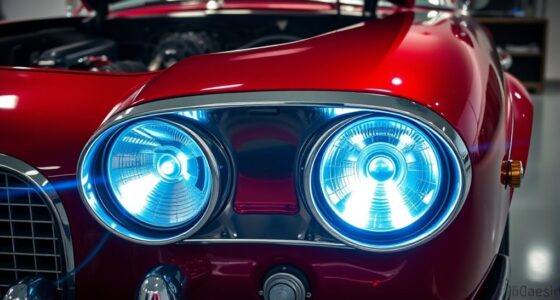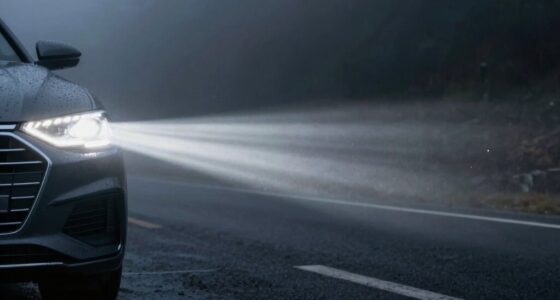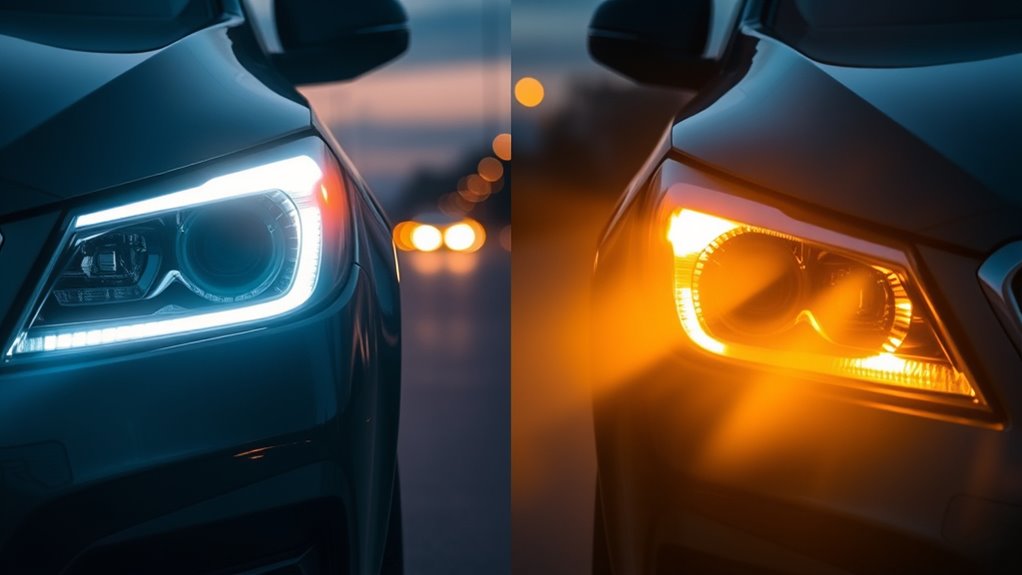

Choosing between bright white and warm yellow headlights depends on your driving needs and style. Bright white lights, usually around 5000K-6000K, offer better visibility in urban settings and give your vehicle a modern look. Warm yellow, around 3000K-3500K, reduces glare and improves safety in foggy or rainy weather. Consider your typical driving conditions to make the best choice. If you want to learn more about these options and their effects, there’s plenty more to explore.

Get business pricing on garage and car supplies
- Business-only prices and quantity discounts
- Tax-exempt purchasing
- Multiple users, one account, clear invoices
Key Takeaways
- Bright white headlights (5000K-6000K) improve visibility and give a modern, crisp appearance, ideal for urban driving conditions.
- Warm yellow headlights (3000K-3500K) reduce glare and enhance safety in foggy or rainy weather by minimizing light scattering.
- LED lights emit higher color temperatures, offering brighter, bluish-white illumination, while halogen bulbs tend to produce warmer, yellowish light.
- Choosing the right color temperature depends on driving environment, weather conditions, and personal style preferences.
- Proper headlight selection enhances safety, visibility, and vehicle aesthetics, with high-quality projectors improving light focus regardless of color.
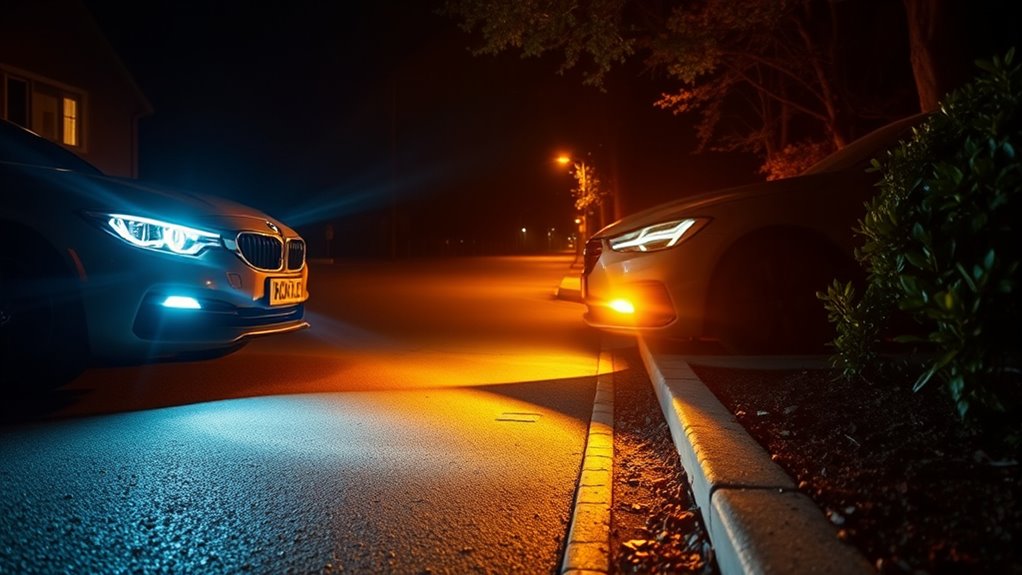
Have you ever wondered why some headlights appear more bluish while others look more yellowish? The difference boils down to color temperature, which influences how clearly you see the road and how your vehicle looks. When choosing headlights, understanding the impact of color temperature helps you make an informed decision that enhances safety and style. LED versus halogen lights are the main options in this arena. LEDs tend to emit a bright, bluish-white light with higher color temperatures, typically around 5000K to 6000K, mimicking daylight. They’re more energy-efficient, last longer, and provide a crisper, more modern appearance. Halogen bulbs, on the other hand, usually produce a warmer, yellowish hue with lower color temperatures around 3000K to 3500K, offering a more traditional look. While halogens are generally less expensive upfront, they’re less bright and consume more power over time.
When it comes to fog light options, the choice of color temperature becomes even more critical. Fog lights are designed to cut through fog, rain, or snow, and their effectiveness hinges on the color of the light. Bright white or bluish hues from LED fog lights tend to penetrate fog better because they’re less likely to scatter in moisture-laden air. This means you get better visibility with LED fog lights, especially if they’re designed with a higher color temperature. Conversely, warm yellow fog lights are also popular because they reduce glare and reflection, helping you see better in fog or heavy rain. They work by bouncing less off water droplets, which can be a big advantage in adverse weather conditions.
Understanding these differences guides your choice, depending on your driving environment and aesthetic preferences. If you prefer a modern, crisp look and better visibility in various conditions, LED options with cooler color temperatures are appealing. For a classic or warmer aesthetic, halogen bulbs with yellowish light can still serve well on less demanding roads. The fog light options further influence your decision; if you often drive in foggy weather, opting for yellowish fog lights could improve safety, while white LED fog lights excel in clear conditions or urban settings. Ultimately, selecting the right headlight color temperature involves balancing visibility needs, vehicle style, and personal preference. Your choice impacts how well you see and how others perceive your vehicle, making it a crucial aspect of your driving experience. Additionally, high-quality projectors can enhance the effectiveness of different headlight types by improving light focus and distribution.
As an affiliate, we earn on qualifying purchases.
Frequently Asked Questions
How Does Headlight Color Affect Night Vision Clarity?
Your headlight color substantially impacts night vision clarity by influencing glare reduction and visibility enhancement. Bright white lights improve clarity and make objects stand out, but they can cause more glare, straining your eyes. Warm yellow lights reduce glare and improve contrast, making it easier to see in fog or rain. Choosing the right color depends on your driving conditions, but balancing glare reduction with visibility enhancement helps ensure safer, clearer nighttime driving.
Are Certain Colors Better for Specific Weather Conditions?
In foggy conditions, warm yellow headlights cut through the haze like a lighthouse guiding ships safely. They reduce glare and improve visibility, preventing your vision from being overwhelmed. On sunny days, bright white headlights mimic daylight, making them perfect for clear weather and enhancing contrast. Choosing the right color for each weather condition isn’t just smart—it’s your secret weapon for safer, sharper driving every time you hit the road.
Can Changing Headlight Color Impact Vehicle Resale Value?
Changing headlight color can impact your vehicle resale value, especially if you choose aftermarket headlight options that look unusual or poorly installed. Buyers may see modified headlights as a sign of neglect or potential maintenance issues. Proper headlight maintenance guarantees safety and keeps your vehicle appealing. While a unique headlight color might attract specific buyers, sticking to standard options often appeals to a broader audience and maintains your vehicle’s value.
Do Different Colors Comply With Traffic Regulations Worldwide?
Imagine yourself in a bustling city, feeling like a knight in shining armor. Different headlight colors may not always comply with regulations worldwide, as regulatory standards vary by region. Some areas restrict certain colors for safety reasons, while others are more lenient. Always check regional differences before choosing a headlight color, ensuring you stay within legal limits and avoid fines or safety hazards on the road.
How Does Headlight Color Influence Other Drivers’ Perception?
You notice that headlight color influences how other drivers perceive you. Bright white lights suggest modernity and clarity, enhancing your vehicle’s aesthetic appeal, while warm yellow headlights evoke a cozy, traditional feel. Color psychology shows that white headlights may be seen as more alerting, but they can also cause glare, affecting safety. Choosing the right color balances visibility, safety, and your vehicle’s style to positively impact others’ perceptions.
As an affiliate, we earn on qualifying purchases.
Conclusion
Ultimately, choosing between bright white and warm yellow headlights comes down to seeing clearly and feeling comfortable. Bright white lights offer sharp visibility and modern style, perfect for nighttime driving and clarity. Warm yellow lights provide a softer glow, reducing glare and easing your eyes during long drives. Whether you prioritize brightness or comfort, selecting the right headlight color temperature guarantees safer, more enjoyable journeys. Make your choice wisely, drive confidently, and enjoy the perfect balance of visibility and comfort.
car headlight color temperature conversion kit
As an affiliate, we earn on qualifying purchases.
As an affiliate, we earn on qualifying purchases.
As an affiliate, we earn on qualifying purchases.
Fall Picks
fall essentials
As an affiliate, we earn on qualifying purchases.