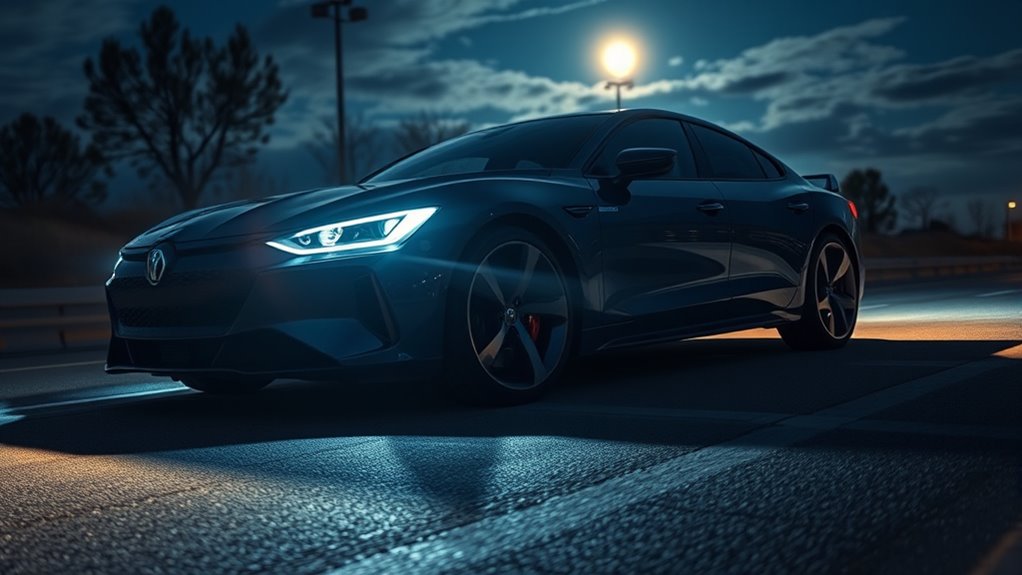

Adaptive headlights automatically adjust their beam pattern based on your driving conditions, improving night visibility and safety. They sense steering input, vehicle speed, and road curves to provide a broader, better-illuminated view, especially on tricky terrains. Retrofitting these systems into your vehicle can be complicated and costly, usually best left to new vehicle purchases with factory-installed options. If you want to know more about how they work and what’s possible, keep exploring the details below.
Key Takeaways
- Adaptive headlights automatically adjust beam patterns based on steering input, speed, and road conditions to improve visibility and safety.
- They provide broader, clearer illumination on curves and hilly terrain, reducing blind spots and enhancing driver awareness.
- Retrofitting adaptive headlights into existing vehicles is complex, costly, and requires precise calibration and compatible components.
- Factory-installed adaptive headlights offer optimal performance and safety benefits, making them preferable over aftermarket retrofit options.
- Upgrading to adaptive headlights during new vehicle purchase ensures full functionality and maximizes safety features.
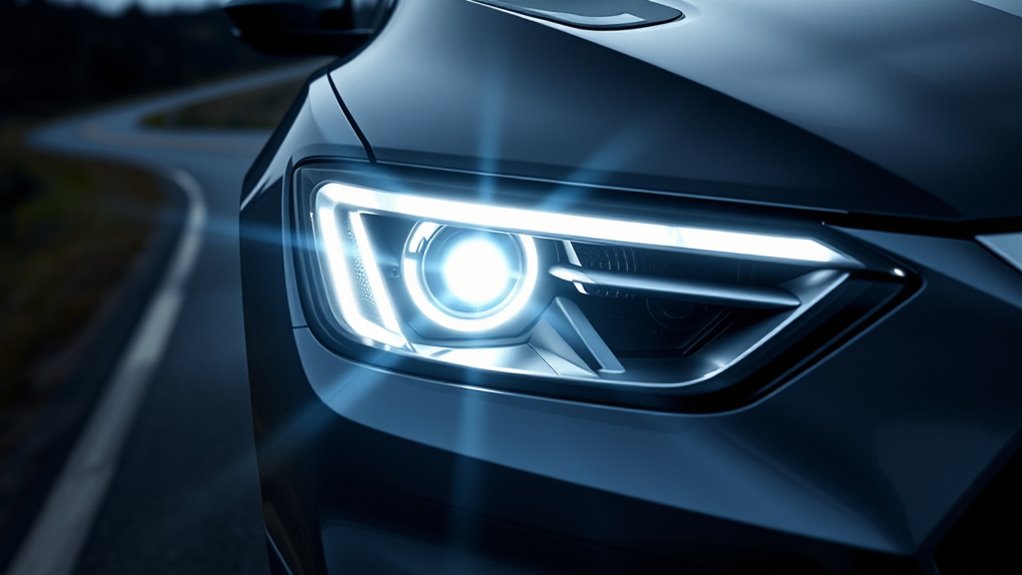
Have you ever wondered how modern headlights improve nighttime driving? The answer lies in adaptive headlights, a cutting-edge safety technology that’s transforming how we see and be seen on the road after dark. Unlike traditional headlights that stay fixed in their beam pattern, adaptive headlights automatically adjust their direction and intensity based on your driving conditions. This means you get a broader, better-illuminated view of the road ahead, especially on curves or hilly terrain, where static headlights might leave blind spots. These advanced features are often regarded as luxury features in high-end vehicles, but their core purpose is safety, making nighttime driving safer for everyone.
When you turn on adaptive headlights, they work seamlessly, sensing your steering input and vehicle speed to adjust their beams accordingly. For example, as you navigate a bend, the headlights pivot to illuminate the road’s edge, giving you a clearer view of potential hazards and pedestrians. This dynamic lighting reduces the need for you to manually adjust your high beams or rely on auxiliary lights, allowing for a more relaxed and confident drive. Safety technology like this is designed to minimize blind spots and improve visibility, especially in poorly lit areas or during adverse weather conditions. It’s a significant upgrade over conventional headlights, helping you see farther and clearer without blinding oncoming drivers. Vehicle lighting systems have become more sophisticated, integrating features like adaptive headlights to enhance safety and driving comfort.
You might be wondering if adaptive headlights can be retrofitted into your vehicle. The short answer is, it’s possible but often complicated and costly. Retrofitting involves replacing or modifying your existing headlight system with the necessary sensors, motors, and control modules. While some aftermarket kits claim to add adaptive features, the integration process can be complex, requiring precise calibration and compatibility with your vehicle’s electrical system. It’s usually more practical to consider this upgrade when purchasing a new vehicle that already comes equipped with adaptive headlights. Doing so ensures you get the full benefits of the system’s safety technology and luxury features without risking improper installation or subpar performance.
Frequently Asked Questions
How Much Does It Cost to Retrofit Adaptive Headlights?
Retrofitting adaptive headlights typically costs between $1,000 and $3,000, depending on your vehicle and the complexity of the installation process. You’ll need to factor in retrofit costs for parts and labor, which varies by shop. The installation process involves replacing or upgrading your existing headlight assemblies and integrating new sensors and modules, so it’s best to seek professional help to make certain of proper setup and functionality.
Are Adaptive Headlights Legal in All States?
Adaptive headlights are not legal in all states; you need to check your state’s regulations first. Some states have strict rules about headlight modifications, while others allow retrofit options if they meet specific standards. Before installing adaptive headlights, confirm they comply with local laws to avoid tickets or fines. Always verify your state’s regulations to stay within legal limits and consider consulting a professional for proper installation.
Do Adaptive Headlights Improve Nighttime Visibility Significantly?
You’ll find that adaptive headlights do more than just light the way—they offer notable glare reduction, making nighttime driving safer for everyone. Their visibility enhancement is significant, especially on dark, winding roads, helping you see around curves and over hills more clearly. While they might not turn night into day, these headlights definitely improve your overall driving experience by providing better illumination and reducing eye strain on long drives.
Can Adaptive Headlights Be Installed on Any Vehicle?
You can’t install adaptive headlights on just any vehicle; compatibility depends on your vehicle’s make, model, and existing wiring. The retrofit process varies in difficulty, often requiring modifications to the electrical system and sometimes custom parts. It’s best to consult a professional to assess your vehicle’s suitability and ensure the retrofit is done correctly. This way, you get the benefits of adaptive lighting without risking damage or safety issues.
What Maintenance Is Required for Adaptive Headlight Systems?
You’ll want to regularly check your adaptive headlight system for proper headlight alignment, ensuring they illuminate correctly without blinding others. Keep the bulbs clean and replace them promptly when they burn out, as adaptive headlights depend on functioning bulbs for peak performance. Also, schedule routine inspections to verify sensors and wiring are in good condition. Proper maintenance helps your adaptive headlights work safely and efficiently, especially during night driving or adverse weather.
Conclusion
Adaptive headlights enhance your safety by adjusting to road conditions and improving visibility. Did you know that they can reduce nighttime accidents by up to 25%? If your vehicle doesn’t have them, retrofitting might be worth considering, especially since technology is becoming more accessible. Staying informed about these innovations can make a real difference on the road. Protect yourself and others by exploring how adaptive headlights can upgrade your driving experience today.