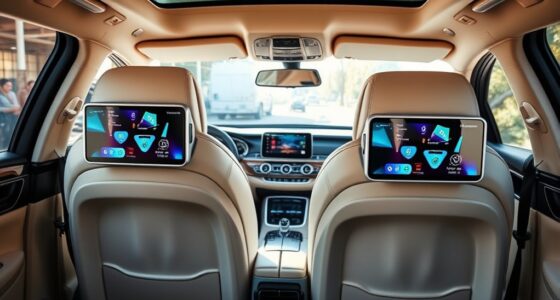

Choosing between mounting a tablet on your dash and installing an aftermarket head unit depends on your budget, needs, and how integrated you want your system. Tablets are cheaper and easier to install but may lack seamless vehicle integration. Aftermarket head units offer better sound quality, features, and durability but come with higher costs and complexity. To find the best fit for your vehicle and lifestyle, explore the details below for a clear comparison.
Key Takeaways
- Tablets are budget-friendly and quick to install but may lack seamless vehicle integration.
- Aftermarket head units offer advanced audio features and better integration with vehicle systems.
- Choose a tablet for versatility and ease, or a head unit for durability and professional-grade functionality.
- Compatibility and wiring complexity are higher with head units; tablets connect via Bluetooth or auxiliary.
- Long-term, head units provide a more reliable, integrated, and high-quality audio experience.
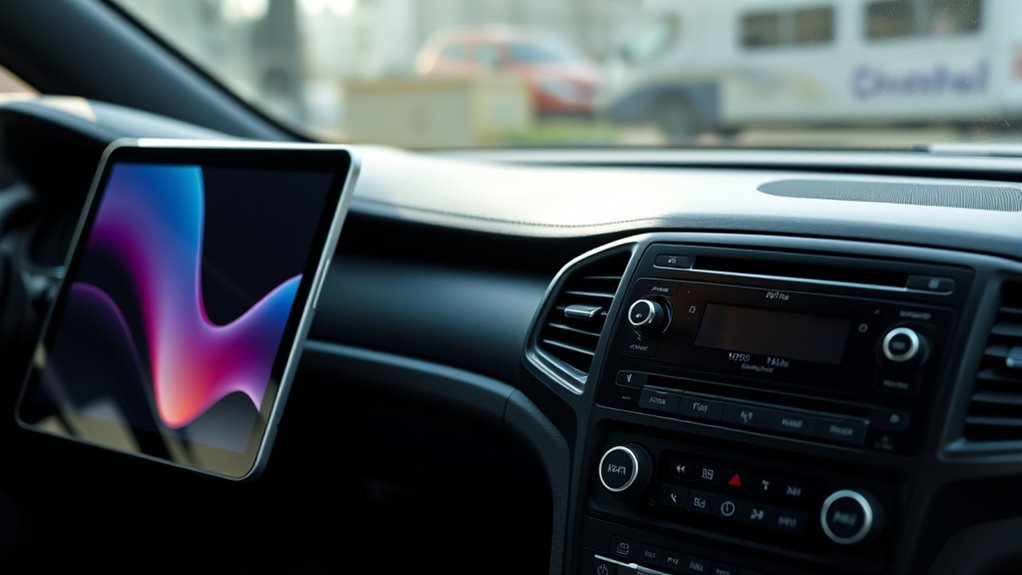
When it comes to upgrading your car’s infotainment system, you have two main options: placing a tablet on the dash or installing an aftermarket head unit. Both choices aim to boost your car audio experience and provide modern features, but they differ markedly in installation, functionality, and long-term usability. Your decision will depend on your priorities, budget, and technical comfort level.
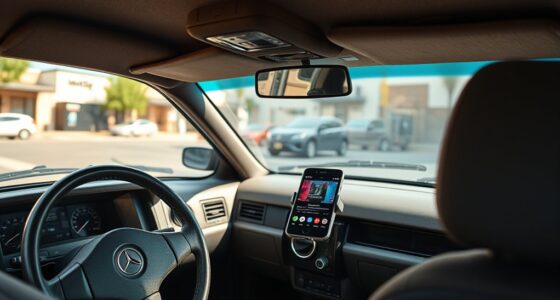
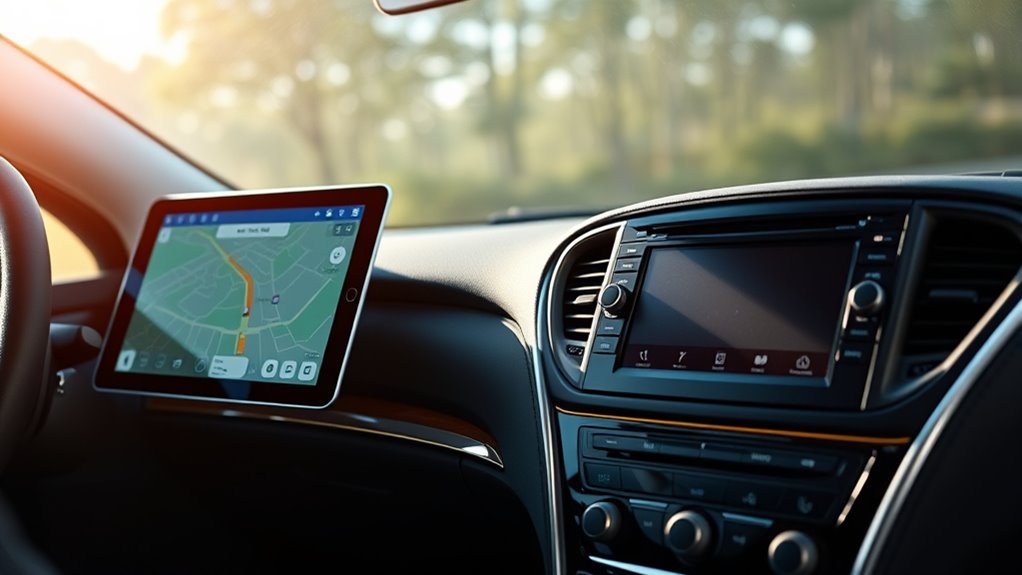
A tablet on the dash offers a quick, versatile solution. You can easily buy a compatible tablet, mount it securely, and have access to apps, navigation, music, and even video. It’s a cost-effective way to upgrade your car audio without extensive modifications. However, keep in mind that securing the tablet properly is vital. Use a sturdy, adjustable mount designed for automotive use to prevent it from sliding or falling during turns or sudden stops. Make sure the tablet is positioned for easy reach and visibility, minimizing distractions while driving. When installing, consider power sources—use a dedicated charger or USB port to keep the tablet charged during longer trips. For sound, you might connect the tablet to your car’s audio system via Bluetooth or auxiliary input. These options are straightforward, but you’ll want to check compatibility and confirm your car’s existing audio system can handle the connection. If you’re not tech-savvy, look for installation tips online—many tutorials guide you through mounting, wiring, and connecting your device seamlessly.
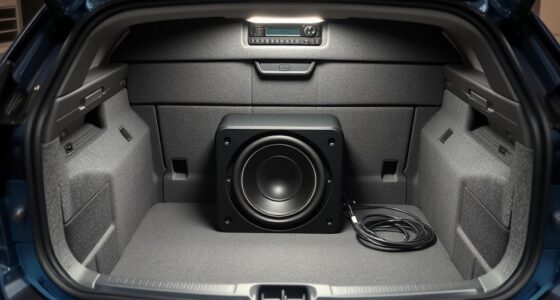
An aftermarket head unit, on the other hand, provides a more integrated and professional upgrade. It typically includes a touchscreen display, better car audio processing, and compatibility with features like Apple CarPlay or Android Auto. Installing one requires removing the factory radio and wiring the new unit into your vehicle’s electrical system, which can be complex. To do it right, follow installation tips such as disconnecting the battery first, using the correct mounting brackets, and ensuring all connections are secure. If you’re unfamiliar with car wiring, consider consulting a professional to avoid damaging your vehicle or compromising safety. The benefit here is a cleaner, more reliable setup that enhances your overall driving experience and provides robust car audio quality. Many aftermarket units also come with built-in amplifiers, equalizers, and additional ports for connecting external speakers or subwoofers, making your audio sound better than ever.
Frequently Asked Questions
Can a Tablet Be Integrated With a Vehicle’s Existing Sound System?
Yes, you can integrate a tablet with your vehicle’s sound system. To do this, you need to guarantee sound system compatibility and use appropriate adapters or Bluetooth connections. Vehicle integration may require additional wiring or apps to control audio and other functions seamlessly. Keep in mind, some vehicles may need specific interfaces or aftermarket solutions to optimize compatibility, so check your vehicle’s specifications before proceeding.
What Are the Safety Considerations for Mounting a Tablet on the Dash?
Did you know that over 60% of drivers have reported accidents caused by unsecured devices? When mounting a tablet on the dash, prioritize mounting stability to prevent it from falling or becoming a distraction. Also, consider theft prevention; use secure mounts and hide the device when parked. These steps help keep your focus on the road and your device safe, ensuring safer driving and peace of mind.
How Does Touchscreen Responsiveness Compare Between Tablets and Head Units?
You’ll notice that tablets typically offer better touchscreen accuracy and faster interface response times compared to aftermarket head units. Tablets are designed for touch interaction, so they respond swiftly with minimal latency, making navigation and control smoother. Head units might have slightly laggier responses due to specialized hardware, but they’re optimized for in-car use. Overall, if touchscreen responsiveness is a priority, tablets usually provide a superior experience.
Are There Any Legal Restrictions on Using Tablets or Head Units While Driving?
Sure, you can indulge in your high-tech dreams, but beware—legal restrictions often ban using tablets or head units while driving, citing driver distraction as the villain. Many jurisdictions view these devices as potential hazards, making multitasking behind the wheel a no-go. So, before you get carried away with your dashboard gadgets, check local laws. After all, the road’s no place for tech experiments that could land you in hot water.
What Maintenance Is Required for Aftermarket Head Units Versus Tablets?
You need to regularly check for software updates on both aftermarket head units and tablets to guarantee peak performance and security. For head units, updates often come from the manufacturer and may require connecting to a computer or Wi-Fi. Tablets need frequent software updates and proper power management to extend battery life. Keep devices clean, monitor for glitches, and follow maintenance instructions to keep them functioning smoothly.
Conclusion
Choosing between a tablet on the dash and an aftermarket head unit is like picking a trusted compass or a guiding star. Each offers its own path, but ultimately, it’s about what aligns with your journey—ease, customization, or simplicity. Think of your decision as setting your course; whichever you choose, make sure it points you toward safer, more enjoyable drives. After all, your car’s core is your destination, and your tech should lead you there seamlessly.