TL;DR

Get business pricing on garage and car supplies
- Business-only prices and quantity discounts
- Tax-exempt purchasing
- Multiple users, one account, clear invoices
Paul Seixas has urged cycling organisers to improve race safety after 19-year-old Finlay Tarling died in August in a collision with a non-race vehicle on the Volta a Portugal course. Seixas’s comments follow a rider protest at Il Lombardia and renewed calls for action, while a police investigation into Tarling’s death remains ongoing.
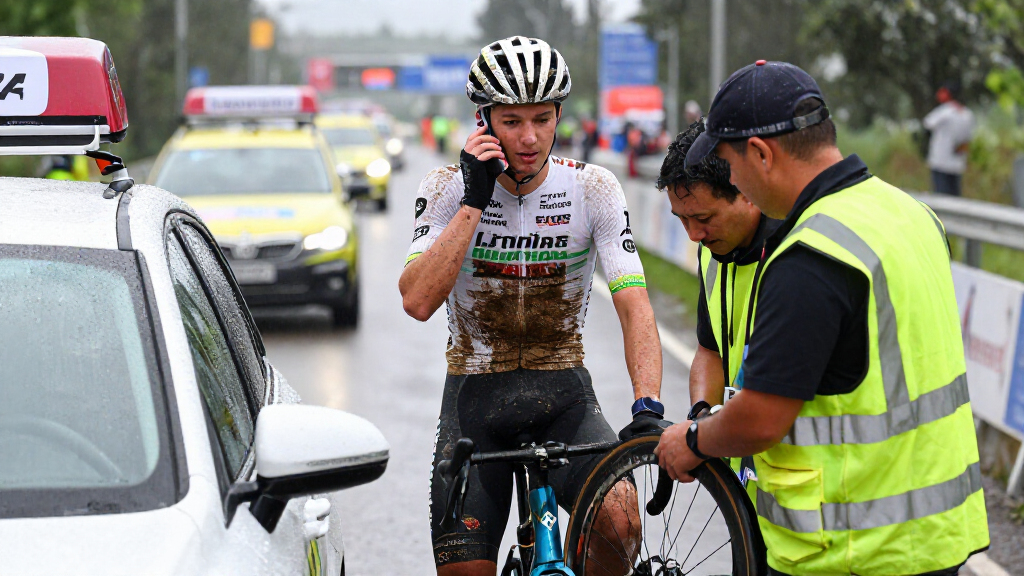
French rider Paul Seixas has called for higher safety standards in professional cycling after 19-year-old Finlay Tarling died in a collision with a non-race vehicle at the Volta a Portugal on August 14. Seixas said riders being struck by cars during races “shouldn’t happen,” as debate over how organisers protect riders on public roads continues.
Speaking this week on Canal+’s Clique show, the Decathlon CMA CGM rider said Tarling’s death had affected him and other cyclists. Seixas said he had raced with Tarling and described the news as “terrible,” adding that riders were left thinking, “That’s yet another cyclist who’s lost their life in a race this year.”
Tarling died after colliding with a non-race vehicle that had entered the course, according to the report. A police investigation into the incident is ongoing. Seixas said race organisers were doing their best, but that there were times when concerns about organisation pointed to the need for better standards.
Seixas also took part in a five-minute safety protest before Il Lombardia, which he later won. Riders including Tom Pidcock and Ben Healy shared a joint statement on social media calling on the UCI and race organisers to “take accountability and act” against cars on race courses.
Pressure to Keep Cars Off Courses
Seixas’s comments add a prominent rider’s voice to demands for action after a fatal collision. The issue is not limited to the circumstances of Tarling’s death: the source report describes further incidents involving vehicles on race routes after August, including a rider swerving to avoid a car during a time trial in Germany, a delivery van entering the route at Coppa Bernocchi and an SUV on course at the Eneco Tour.
Vehicles entering a live race can put riders and others at risk, while repeated incidents may undermine confidence in race safety arrangements. The riders’ call for accountability also puts focus on how responsibility is shared between organisers, governing bodies and others involved in professional cycling. The available report does not establish that any particular proposed measure would have prevented Tarling’s death.
Products Worth Considering

DEWALT 20V MAX XR Impact Driver, 1/4 Inch High Torque Brushless 3-Speed Cordless with LED Light, Extended Runtime (DCF845B)

VIOFO A329S 4K+2K+2K Dash Cam Front Cabin and Rear, STARVIS 2 HDR, Wi-Fi 6

Milwaukee M18 FUEL 1/2-Inch High Torque Impact Wrench with Friction Ring Kit
As an affiliate, we earn on qualifying purchases.
Safety Debate After Tarling’s Death
The UCI launched SafeR in 2023 as a cycling safety body. The report describes it as claiming independence, while noting that it is funded by the governing body, organisers, riders and teams. In September, the UCI called for safety-tracking systems to be introduced across professional road races “as quickly as possible.”
British rider Matthew Brennan separately called for an independent safety body, telling BBC Sport that it was “disgraceful” that “nothing has changed” after Tarling’s death. Race organisers have also stressed the practical challenge of securing long routes that use public roads. Kiko García, technical director of the Vuelta a España and managing director of the International Association of Cycling Race Organisers, told Cycling Weekly that a 200-kilometre race can have hundreds of smaller roads connecting to its route.
““We will not stand for this any longer.””
— Riders’ joint statement shared on social media
Investigation and Safety Measures
The police investigation into Tarling’s death is ongoing, and the source report does not provide its findings or say whether any charges or formal conclusions have been announced. It also does not specify what changes, if any, will follow from the investigation.
Although the UCI has called for safety-tracking systems across professional road races, the report does not give a rollout timetable or explain how the systems would work in practice. It remains unclear what further measures the UCI or race organisers plan to adopt, how responsibility for implementation will be divided, and whether the rider calls will lead to agreed changes.
UCI and Organisers’ Next Steps
The next confirmed development to watch is the outcome of the police investigation into Tarling’s death. The UCI has called for safety-tracking systems to be put in place as quickly as possible, but the report gives no date for implementation across professional races.
Seixas’s comments and the riders’ protest renew pressure on the UCI and organisers to respond to concerns about cars entering race courses. No specific new policy or timetable is reported. Further details from investigators and any formal announcement of safety changes would clarify what action is planned.
Key Questions
What happened to Finlay Tarling?
Tarling, 19, died on August 14 after colliding with a non-race vehicle that had entered the Volta a Portugal course. A police investigation is ongoing.
What did Paul Seixas say about race safety?
Seixas said riders being hit by cars during races “shouldn’t happen” and called for better standards in race organisation. He also said Tarling’s death had affected him and other cyclists.
What action has the UCI announced?
The UCI launched the SafeR safety body in 2023 and called in September for safety-tracking systems across professional road races to be introduced as quickly as possible. The report does not give an implementation date.
Are new safety rules confirmed?
No specific new rule or rollout timetable is confirmed in the source report. The police investigation remains ongoing, and further action by the UCI and race organisers is unclear.
Source: cyclingweekly.com