TL;DR

Get business pricing on garage and car supplies
- Business-only prices and quantity discounts
- Tax-exempt purchasing
- Multiple users, one account, clear invoices
Electric vehicle sales in Europe have surged, now representing 25% of all new car registrations. This rapid growth reflects shifting consumer preferences and policy support, signaling a major transition in the automotive industry.
European electric vehicle (EV) sales now account for approximately 25% of all new car registrations, marking a significant milestone in the continent’s automotive market. This surge reflects a rapid shift away from traditional internal combustion engine vehicles, driven by policy measures, automaker commitments, and changing consumer preferences. The growth of EVs in Europe is now reshaping industry dynamics and supply chains, with implications for global automotive trends.
According to the latest data from industry analysts and European automotive associations, EVs have captured a quarter of the new car market in Europe as of this year. This represents a substantial increase from just a few years ago, when EVs comprised less than 10% of new registrations. Major markets such as Germany, France, and the UK have led this growth, with EV sales rising sharply due to government incentives, stricter emissions regulations, and expanding charging infrastructure.
Automakers have responded by increasing their EV offerings, with many committing to electrify their entire lineups within the next decade. For example, Volkswagen, Stellantis, and BMW have announced plans to expand their EV portfolios significantly. Analysts attribute the rapid adoption to a combination of falling battery costs, consumer environmental awareness, and regulatory pressure aimed at achieving climate targets.
Market analysts estimate that the total number of EVs on European roads has also increased substantially, contributing to a broader shift toward sustainable mobility. While traditional car sales remain strong, EVs are now becoming the dominant choice among new car buyers in several countries, signaling a long-term transition rather than a temporary spike.
Why the Surge in EV Sales Matters for Europe’s Automotive Future
This rapid growth in EV adoption is transforming Europe’s automotive landscape, with implications for industry competitiveness, energy consumption, and environmental policy. Achieving a 25% market share indicates that EVs are no longer a niche segment but a central component of the continent’s transportation system. This shift supports Europe’s climate commitments, such as the European Green Deal, and accelerates the phase-out of internal combustion engines.
For consumers, this means greater access to a wider range of electric models, improved charging infrastructure, and potentially lower operating costs. For automakers, the trend necessitates significant investment in EV technology, supply chains, and dealer networks. Policymakers view this as a critical step toward reducing greenhouse gas emissions and meeting international climate targets, but challenges remain in ensuring equitable access and managing grid capacity.
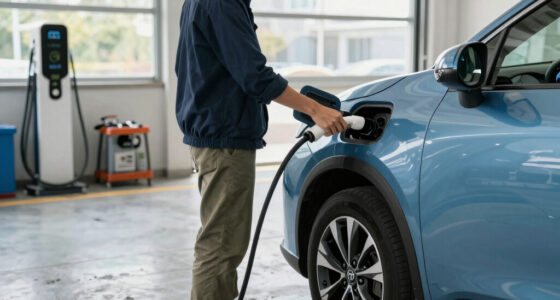
European electric vehicle charging station
As an affiliate, we earn on qualifying purchases.
As an affiliate, we earn on qualifying purchases.
European EV Market Growth Driven by Policy and Industry Investment
The rise of EVs in Europe has been driven by a combination of government policies, industry commitments, and technological advances. Since the European Union introduced stricter emissions standards and incentives for zero-emission vehicles, automakers have accelerated their EV development programs. Countries like Norway, the Netherlands, and Sweden have already achieved high EV market shares, often exceeding 50%, serving as models for broader adoption.
Battery costs have fallen significantly over the past decade, making EVs more affordable for consumers. Meanwhile, the expansion of public charging networks has alleviated range anxiety, a key barrier to EV adoption. The European Commission has also set ambitious targets for reducing vehicle emissions, including banning the sale of new internal combustion engine cars by 2035, which further incentivizes automakers to prioritize electric models.
Despite these positive trends, challenges such as supply chain constraints, raw material shortages, and infrastructure gaps still exist, which could influence future growth trajectories. Experts note that the pace of EV adoption varies across countries, depending on local policies, economic conditions, and consumer preferences.
“EVs now make up 25% of new car registrations in Europe, reflecting a significant shift in consumer preferences and policy support.”
— European Automobile Manufacturers Association (ACEA)
As an affiliate, we earn on qualifying purchases.
Factors That Could Slow or Accelerate Future EV Adoption
While current data shows a rapid increase in EV market share, uncertainties remain regarding supply chain resilience, raw material availability, and infrastructure expansion. Economic shifts or policy changes could either accelerate or slow this trend, and the long-term impact of technological innovations remains uncertain. Additionally, regional disparities in adoption rates suggest that some countries may lag behind or outpace others, depending on local conditions.
As an affiliate, we earn on qualifying purchases.
Upcoming Policies and Industry Strategies to Sustain Growth
Industry and policymakers plan to continue investing in EV infrastructure, including fast-charging networks and battery manufacturing. The European Commission is expected to reinforce its emission reduction targets, potentially tightening regulations and incentives. Automakers are set to unveil new electric models, aiming to meet increasing consumer demand. Monitoring these developments over the coming months will be key to understanding whether the current growth trend can be sustained.
As an affiliate, we earn on qualifying purchases.
Key Questions
What is driving the rapid growth of EVs in Europe?
Key drivers include government incentives, stricter emissions regulations, falling battery costs, and expanding charging infrastructure, combined with automaker commitments to electrify their lineups.
Which countries are leading EV adoption in Europe?
Norway, the Netherlands, and Sweden are among the leaders, with market shares exceeding 50% in some cases. Germany and France are also experiencing significant growth.
What challenges could hinder further EV growth?
Potential obstacles include supply chain disruptions, raw material shortages, infrastructure gaps, and economic or policy shifts that could impact consumer incentives or automaker investments.
When will internal combustion engine sales be phased out in Europe?
The European Union has set a target to ban the sale of new internal combustion engine vehicles by 2035, aiming for a complete transition to electric mobility.
How will the increase in EVs impact energy demand and the environment?
Increased EV adoption will raise electricity demand, necessitating cleaner energy sources to maximize environmental benefits. It also supports Europe’s climate goals by reducing transportation emissions.
Source: rss
Halloween Picks
halloween
As an affiliate, we earn on qualifying purchases.