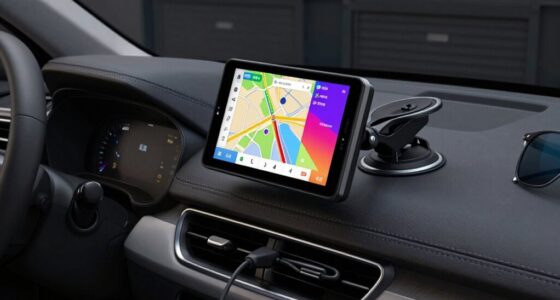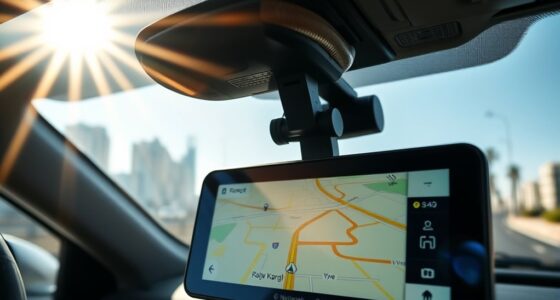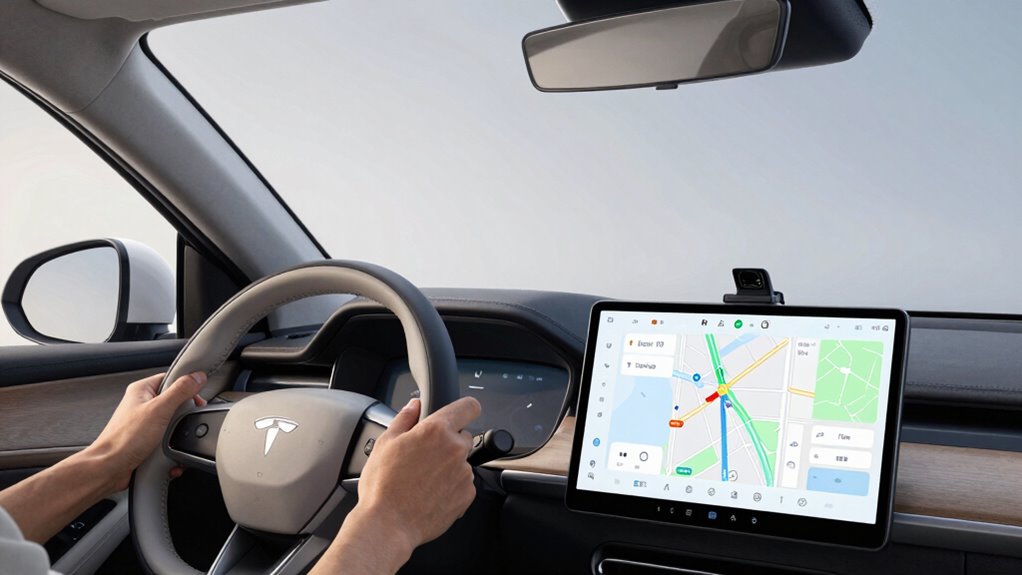

Before mounting a navigation device, make certain it’s securely placed within your line of sight without obstructing your view of the road. Check local laws to avoid fines and follow regulations about placement height and position. Choose a sturdy mount to prevent shifting or falling, and position the device where you can easily use voice commands or manual controls. Proper setup minimizes distractions and keeps you safe. Keep exploring to learn more about ideal mounting strategies and safety tips.
Key Takeaways
- Ensure the device is mounted within your line of sight without obstructing your view of the road.
- Familiarize yourself with local laws regarding device placement and mounting height to avoid penalties.
- Use a sturdy, vehicle-compatible mount to keep the device secure and prevent distractions or accidents.
- Choose a location near the center of the dashboard or windshield for easy access and optimal visibility.
- Opt for voice control features to minimize manual interaction and maintain focus on driving.
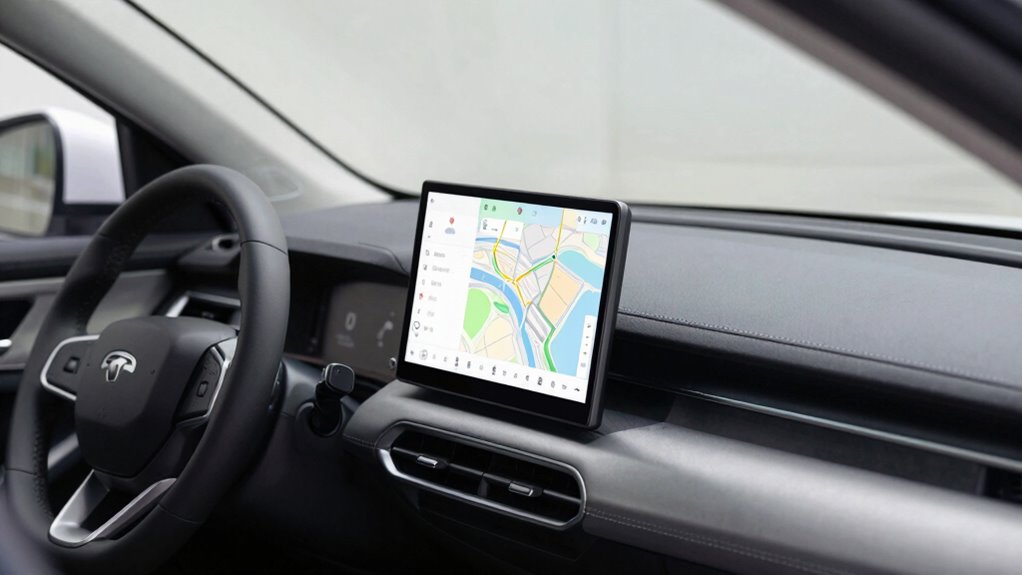
Mounting your navigation device correctly is essential for safe and easy driving. When you set up your device, you want it to be within your line of sight without obstructing your view of the road. A properly mounted device helps you keep your focus on driving, reducing distractions and potential hazards. Consider the placement carefully—ideally, it should be near the center of your dashboard or on the windshield, but never so close that it blocks your view of traffic signals or pedestrians. Many modern devices support voice commands, allowing you to control navigation without taking your hands off the wheel. Learning how to use these features can significantly improve your safety, enabling you to input destinations or adjust routes with simple voice prompts. This not only keeps your eyes on the road but also minimizes the temptation to fiddle with controls while driving. Proper mounting also ensures your device remains stable and secure, preventing accidents caused by shifting or falling mounts. Selecting the right mounting technique is crucial to ensure stability and longevity of your setup. Additionally, choosing the right electric power source for your navigation device can help ensure continuous operation during long drives. Understanding local regulations can help you avoid fines and ensure compliance with legal requirements.
Legal considerations are equally important when mounting your navigation device. Different states have specific laws about where and how close a device can be to the windshield or dashboard. For instance, some regions prohibit mounting devices in the driver’s direct line of sight, while others restrict the height or angle of the mount. Ignoring these rules can lead to fines or penalties, so it’s wise to familiarize yourself with local regulations before installing your device. Besides legal issues, improper mounting can also be dangerous. If your device falls or shifts unexpectedly, it could distract you or interfere with your ability to control the vehicle. Always use a sturdy mount designed for your specific device and vehicle, and double-check that it’s securely attached before hitting the road. Proper installation techniques can help ensure your device remains safely in place during your drive.
Additionally, understanding the placement considerations can help you make an informed decision about where to position your device for optimal visibility and safety. Ensure your device’s placement allows for easy interaction while driving, whether through voice commands or manual controls. Many devices are now equipped with hands-free capabilities, so you can ask for directions or traffic updates without diverting your attention. Using voice commands effectively can make your navigation safer and more efficient, especially in unfamiliar areas or heavy traffic. Remember, the goal is to keep your focus on driving, not on fiddling with gadgets. By choosing the right mounting position, understanding legal considerations, and mastering voice command features, you set yourself up for a safer, more comfortable journey. Proper setup minimizes distractions, keeps you compliant with the law, and makes navigation a seamless part of your driving experience.
As an affiliate, we earn on qualifying purchases.
Frequently Asked Questions
Can I Use Any Adhesive for Mounting My Navigation Device?
You can’t use any adhesive for mounting your navigation device. Choose the right adhesive types, like double-sided tape or suction cups, that match your mounting technique. Avoid strong glues that could damage your device or windshield. Instead, opt for compatible, removable adhesives that provide a secure hold without residue. Proper mounting techniques guarantee your device stays in place and is easy to remove without leaving marks or risking damage.
Is It Legal to Mount a Device on the Windshield?
Mounting a device on your windshield is legal in many areas, but you need to know local laws about windshield regulations. Think of it like a game of chess—knowing the rules helps you avoid penalties. In some states, placing a device near the driver’s line of sight can violate legal restrictions, so always check your local regulations. Stay informed to avoid fines and keep your focus on the road.
How Do I Prevent Glare on the Screen While Driving?
To prevent glare on your navigation screen and improve visibility, tilt or adjust the device to minimize sun glare. Use anti-glare screen protectors or matte finishes to reduce reflections. Position the mount so that sunlight doesn’t directly hit the screen, and consider using a sunshade if available. Regularly clean the screen to remove smudges that can worsen glare, ensuring clear visibility and safer driving.
What Is the Best Height for Mounting a Navigation Device?
Research shows that proper navigation placement can reduce driver distraction by 50%. You should mount your navigation device at eye level, roughly 18 to 24 inches from the ground. This height ensures ideal driver visibility, letting you glance at the screen without taking your eyes off the road. Keep it within your natural line of sight, so you stay aware of your surroundings while following directions safely.
Will Mounting Affect My Vehicle’s Warranty?
Mounting a navigation device can potentially affect your vehicle’s warranty, especially if it involves drilling or permanent modifications. You should review your warranty considerations and mounting restrictions before installation. Some manufacturers may void certain parts of your warranty if mounting causes damage or bypasses safety features. To avoid issues, opt for non-invasive mounts and follow the manufacturer’s guidelines. Always check your vehicle’s warranty terms and consult with your dealer if unsure.
windshield navigation device holder
As an affiliate, we earn on qualifying purchases.
As an affiliate, we earn on qualifying purchases.
Conclusion
Before you hit the road, remember that a well-mounted navigation device is your trusted co-pilot, guiding you through winding streets and bustling highways. Picture it as a steady lighthouse, its screen glowing softly in your line of sight, illuminating your journey amid the chaos of traffic. When mounted correctly, it becomes an unobtrusive yet reliable companion, ensuring your focus stays on the road ahead. With the right setup, your navigation device transforms chaos into clarity, making every trip safer and more confident.
As an affiliate, we earn on qualifying purchases.
voice control car navigation device
As an affiliate, we earn on qualifying purchases.
As an affiliate, we earn on qualifying purchases.