TL;DR

Get business pricing on garage and car supplies
- Business-only prices and quantity discounts
- Tax-exempt purchasing
- Multiple users, one account, clear invoices
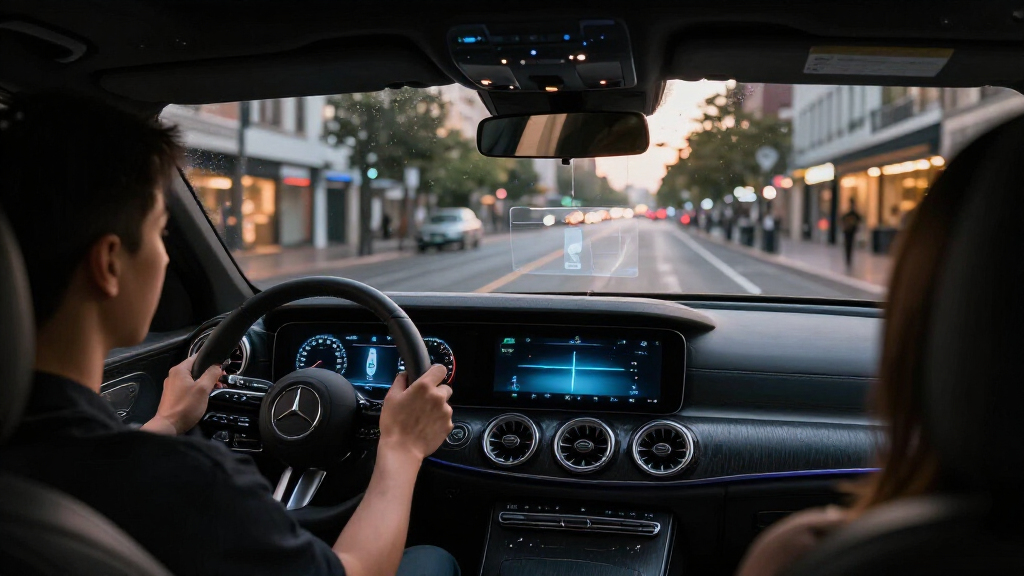
Mercedes-Benz has outlined a holographic windshield display it is considering for future production vehicles. A dashboard projector and specially laminated glass would put images on the windshield, with viewing zones intended to keep passenger content from the driver. The company has not announced when, or whether, the feature will reach a production car.
Mercedes-Benz is considering a holographic windshield display for future production models, using a dashboard projector and specially laminated glass to show information such as navigation and points of interest. The automaker described the technology in a recent announcement, but did not name a vehicle or production date, leaving its eventual availability uncertain.
According to Mercedes-Benz’s press release, a projector built into the dashboard would send light toward a windshield laminated with what the company calls “holographic optical elements.” Those elements selectively reflect certain wavelengths from the projector, forming images on the glass. Mercedes says the projection is concentrated so the images remain visible in direct sunlight.
The company also says the system can control what is visible from different angles. That could allow a passenger to see content on their side of the windshield without the driver seeing it. Mercedes’ proposed uses include navigation, points of interest and video. Because the images are projected rather than permanently displayed on the glass, the company says the windshield view would not be covered when the feature is not in use.
The windshield display was one of several technologies Mercedes presented for possible future vehicles. The company also showed LED projection for rear-window warnings and a battery “power converter” designed to manage current flow at the cell level in electric-vehicle battery packs. The announcement did not set production plans for these features.
A Larger Display, With Driver-Safety Questions
A windshield display could give automakers another place to present navigation and other information without adding a conventional screen to the dashboard. For passengers, angle-dependent viewing could also make it possible to show separate content without putting the same images in the driver’s line of sight.
But adding more content in front of occupants raises questions about distraction and how drivers will distinguish useful driving information from entertainment. The report notes that automakers have faced negative consumer feedback about screens and digital interfaces. Mercedes has not supplied evidence in the material provided about how the proposed system would affect driver attention or how its content would be limited while the car is moving.
Products Worth Considering

Chemical Guys 10-Piece Car Wash Kit with Foam Gun

Chemical Guys 17-Piece Car Detailing Kit for Interior, Exterior, and Wheels

Chemical Guys 14-Piece Arsenal Builder Car Wash Kit with Foam Blaster
As an affiliate, we earn on qualifying purchases.
From Head-Up Displays to Full Windshields
The idea builds on a familiar automotive feature: the head-up display, which projects selected information into a driver’s forward view. Mercedes’ proposal would extend projection across more of the windshield and could serve passengers as well as drivers. The company’s existing Hyperscreen and Superscreen products already place large displays across the dashboard, but the new concept would use the windshield instead.
Mercedes is not the only company to discuss a windshield as a screen. In a 2024 interview cited by The Drive, Nissan design chief Alfonso Albaisa predicted that the windshield would become a screen. Apple also filed a patent application for similar technology in 2023, before cancelling its much-discussed electric-vehicle project, according to the report. Those examples indicate interest in the concept, not that a comparable system is in production.
““holographic optical elements””
— Mercedes-Benz, in its press release
No Model or Launch Date Yet
Mercedes has not confirmed that the windshield system will enter production, and the announcement does not identify a vehicle, market, price or timeline. It also gives no detailed specifications for the display’s resolution, size, brightness, operating conditions or passenger-viewing controls.
The company’s statements about visibility in sunlight and separate viewing zones are claims in its release; the supplied material includes no independent testing or safety assessment. It remains unclear how the system would manage video while driving, what content drivers could see, or whether regulations would limit its use. The same production questions apply to the rear-window projection and battery converter.
Production Plans Remain the Next Test
The next concrete step would be a Mercedes announcement tying the technology to a named production vehicle, with specifications and an availability schedule. Until then, the windshield display should be treated as a technology under consideration, not a confirmed feature buyers can order.
Further details would also be needed to judge how the system works in real driving conditions, including its visibility, passenger privacy controls and safeguards against driver distraction. Mercedes has not said when it will provide those details.
Key Questions
Has Mercedes-Benz confirmed a production windshield screen?
No. Mercedes has described the technology as something it is considering for future production models, but it has not announced a vehicle or launch date.
How would the projected display work?
Mercedes says a dashboard projector would direct light onto specially laminated windshield glass containing “holographic optical elements,” which reflect selected wavelengths to form images.
What could appear on the windshield?
Mercedes has proposed uses including navigation, points of interest and video. The company has not detailed which content would be available while driving.
Could passengers see content the driver cannot?
Mercedes says the system can control visibility from different angles, potentially separating passenger and driver views. The company has not provided detailed test results or specifications for that feature.
What other technologies did Mercedes present?
The company also showed LED projection intended to display warning messages in the rear window and a power converter designed to manage current flow at the cell level in EV battery packs. No production timing was given for either.
Source: thedrive.com